Guide
How Long Can Houseplants Go Without Water?
The answer is published, it varies by a factor of four between plant types, and pot size moves it as much as species does.
By Scooter M. - Enthusiast. Reads the manuals, compiles the specs, does the math. | Published
The short answer
The published bands
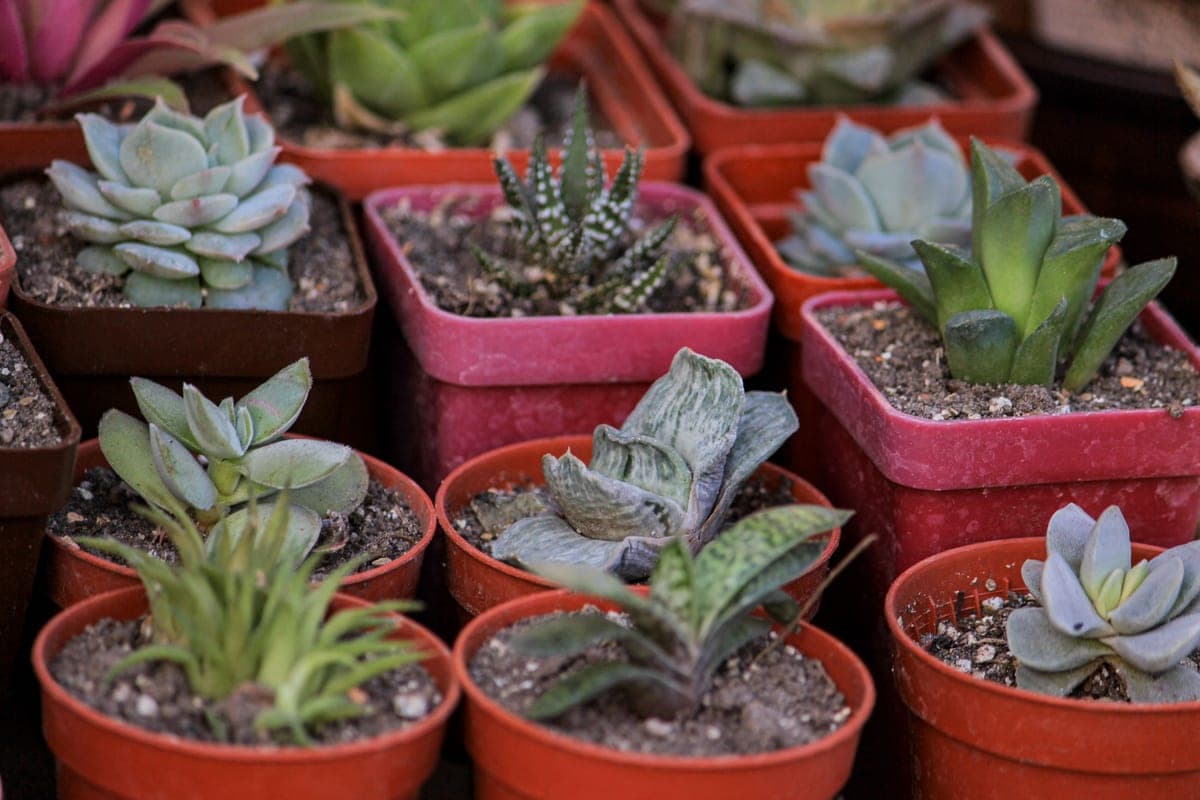
There is no single answer to this question and anyone giving you one is guessing. What is published is a frequency band by plant type, and it is worth quoting exactly: Virginia Cooperative Extension gives succulents and cacti as needing water “once or twice a month” and tropical houseplants as “sometimes once or twice a week.”
Those two bands do not overlap and they differ by a factor of about four. That is why the plant you own matters more than any device you buy: the same fortnight is two to four missed waterings for a pothos and zero missed waterings for a snake plant.
| Plant type | Published cadence | Days between waterings | Two weeks away |
|---|---|---|---|
| Tropical foliage (pothos, monstera, calathea, ferns) | Once or twice a week | 3.5 to 7 | 2 to 4 waterings missed |
| Succulents and cacti | Once or twice a month | 15 to 30 | 0 to 1 missed |
Pot size moves it as much as species does
A 4-inch pot holds about 0.5 liters of mix. A 12-inch pot holds about 14. The large pot has twenty-eight times the water storage, and it does not have twenty-eight times the leaf area, so it dries far more slowly in relative terms.
The practical consequence for a trip is that a small plant in a small pot is the one at risk, not the impressive floor specimen. Most people worry about the big plant and lose the 4-inch one on the windowsill.
What else moves the number
Virginia Cooperative Extension lists the drivers directly: potting soil type, container type and size, time of year, plant species, temperature, humidity, light intensity and water type. Practically:
- Light. The biggest single lever. Direct sun can double the rate against indirect.
- Season. Winter dormancy plus lower light can easily double or triple the safe interval. The same plant that needed water twice a week in July may want it every ten days in January.
- Container material. Unglazed terracotta breathes and dries faster than glazed ceramic or plastic. A terracotta pot is a shorter interval than a plastic one of the same size.
- Humidity. A dry heated room in winter and a humid bathroom are meaningfully different environments for the same plant.
What actually happens as a plant runs dry
The sequence is fairly consistent. The mix shrinks away from the pot wall and the container becomes noticeably light in the hand. Then the leaves lose turgor and droop. Then tips and margins go brown and brittle, and leaves start to curl. Then leaves drop, oldest first. Virginia Cooperative Extension’s underwatering list is exactly this: wilting, dry and brittle leaves, brown leaf tips and edges, curling leaves, leaf drop, stunted growth, shrunk soil and a lightweight container.
Most tropical foliage plants recover from the first two stages within hours of a thorough watering. Recovery from the browning and dropping stages is partial - the damaged tissue does not come back, though the plant usually does.
How to use this before a trip
Sort your plants into the two bands. Anything succulent - snake plant, ZZ, jade, cacti, hoya - genuinely needs nothing for a fortnight, and rigging a watering device on it is more likely to hurt than help. Everything tropical needs cover proportional to pot size, and the numbers are on the indoor vacation page.
If you travel frequently and this is a recurring problem, that sort is also a shopping list. Shifting your collection toward the succulent band is the cheapest and most durable fix available, and we have ranked the plants that do it.
Questions people actually ask
- How long can a houseplant go without water?
Tropical foliage plants are published at once or twice a week, so most show stress within a week and real damage by two. Succulents and cacti are published at once or twice a month and can genuinely be left for a month.
- Can I leave my plants for two weeks?
Succulents, yes, with nothing at all. Tropical foliage plants need cover, and how much depends on pot size: a 6-inch pot needs 700 ml to 1.4 liters over a fortnight, an 8-inch one needs 1.6 to 3.2 liters.
- Do plants need less water in winter?
Yes, substantially. Lower light and slower growth both cut water use, and time of year is one of the factors extension guidance lists explicitly. The same plant can easily go two to three times longer between waterings in January than in July.
- Will my plant recover if it dries out completely?
Usually, if you catch it at the drooping stage - most tropical foliage plants perk up within hours of a thorough watering. Once leaf tips have gone brown and brittle, that tissue does not recover even though the plant generally does.
- Which dries out faster, a terracotta or a plastic pot?
Terracotta, noticeably. Unglazed clay is porous and loses water through the pot wall as well as the surface. That is an advantage for succulents and a disadvantage before a trip.
Sources