Guide
Which Plants Suit Watering Globes?
The answer is the plant's published watering cadence, which varies by a factor of four and decides everything.
By Scooter M. - Enthusiast. Reads the manuals, compiles the specs, does the math. | Published
Disclosure
We earn a commission if you buy through our links. It does not change what we recommend or what you pay. Full disclosure.
The short answer
The rule behind every recommendation here
Virginia Cooperative Extension publishes two cadence bands: succulents and cacti need water once or twice a month, and tropical houseplants sometimes once or twice a week. The gap between those is a factor of about four, and it dominates everything else about globe compatibility.
So the question “which plants like watering globes” is really “which plants have a wide enough cadence band that a small reservoir stretches to something useful.” That is a published fact, not a matter of plant temperament.
| Plant type | Published cadence | Computed interval | Verdict |
|---|---|---|---|
| Succulents and cacti | Once or twice a month | 21 to 42 days | Best fit in the category |
| Snake plant, ZZ, jade, hoya | Succulent band | 21 to 42 days | Excellent |
| Pothos, philodendron, monstera | Once or twice a week | 5 to 10 days | Good for a long weekend |
| Ferns, calathea, peace lily | Once or twice a week, wants consistency | 5 to 10 days | Good, and they benefit most |
| Orchids in bark | Bark mix, soak and dry cycle | Not applicable | Do not use |
| Cacti in gritty mix | Once or twice a month | Drains fast | Do not use |
The plants that benefit most
Counterintuitively, it is not the drought-tolerant ones. Ferns, calathea, peace lily and other plants that dislike drying out are the ones a globe genuinely helps, because their problem is the swing rather than the total. A globe flattens the saturate-then-dry cycle that top-watering produces, and for a calathea that browns at the edges every time it dries too far, that is worth more than a longer interval.
Succulents get the longest interval, but they do not need one - their whole adaptation is to survive the gap. A globe on a succulent is useful for a long absence and unnecessary the rest of the time. Do not leave one in permanently: continuous moisture against a plant published at once or twice a month is how succulents rot.
The plants that should never have one
Orchids in bark. Phalaenopsis and most other commonly sold orchids grow in coarse bark, not soil. There is nothing for a globe to wet, the water runs straight through, and the whole cultivation model is a thorough soak followed by a genuine dry period. A globe defeats it.
Cacti in gritty mix. The mix is deliberately fast-draining and the plant is deliberately kept dry for long periods. Both facts work against a continuous supply.
Anything in a very chunky aroid or bark mix. Large pores admit air to the stem easily, so the globe empties fast and unpredictably. Physically it is the same problem as the angle mistake, and pushing the globe deeper into finer material lower down is the only fix short of switching to a spike.
Seedlings and freshly propagated cuttings. These need a carefully controlled surface moisture and a very small volume. A globe delivers into a zone, which for a seed tray is either too much or nothing.
Pot size still beats plant type
One more time, because it is the point most easily lost: the same globe in a 4-inch pot lasts more than three times as long as in a 6-inch pot, because a thorough watering scales with pot volume. A tropical plant in a small pot may be a better globe candidate than a succulent in a large one. If succulents are most of your collection, reading the pot before you water it matters more than any device on this page.
If you want the general answer rather than the per-plant one, the quantified verdict on globes is here, and if the plant list above told you your plants are in the once-or-twice-a-week band and you travel a lot, changing the plant is a bigger lever than changing the device.
What we would buy for this
The gear that fits this problem
Chosen from the same registry as our roundups, on published specifications and the computed refill interval.
Large Hand-Blown Glass Watering Globes
A 6-inch houseplant over a long weekend, where a small globe fails
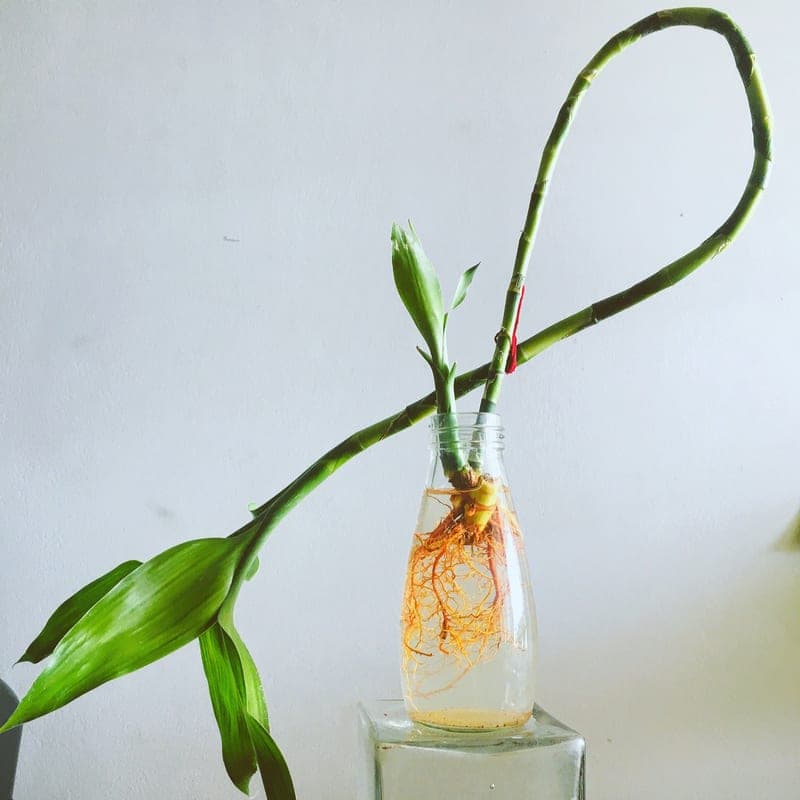
The large end of the globe category, in the 200 to 500 ml bracket rather than the 80 to 120 ml bracket most globes actually occupy. At 500 ml the arithmetic finally supports something close to the category's promise, which is the whole reason size is the only spec that matters here.
#ad We do not currently hold a live price for this, so we do not show one. How we make money.
Published specification
- Reservoir capacity
- Typically listed 200 to 500 ml for large globes, though individual capacity is usually not published
- Material
- Hand-blown glass
- Fill method
- Invert and fill through the stem
- Reservoir capacity: Survey of retail listings across the globe category
- Material: Published product descriptions
- Fill method: Published product descriptions
Refill interval - computed, not tested
About 5 to 10 days at 500 ml on a 6-inch tropical
500 ml divided by 350 ml per thorough watering of a 6-inch pot is 1.4 waterings. At once or twice a week, that is 5 to 10 days. On a succulent at once or twice a month, the same globe stretches to 21 to 42 days.
Assumes: 500 ml globe, tropical houseplant indoors unless stated otherwise. Light, temperature, humidity, soil mix and season all change how fast a pot dries, so treat this as a planning range and not a guarantee.
What is good about it
- The only globes where the arithmetic supports anything like the advertised interval
- Attractive, and the large sizes are less prone to being knocked over than thin-stemmed small ones
- On succulents, where the published cadence is once or twice a month, even a mid-sized globe covers weeks
What is not
- Capacity is still almost never printed on the listing, so you are buying by eye
- A 500 ml sphere is large in a 6-inch pot and takes up visible root-zone space
- Same fundamental problem as all globes: flow depends on soil contact, not on a valve
Skip this one if
Skip it if the listing does not state a capacity in ml and does not show a size reference. In this category the number is the product, and a globe sold without one is a lottery ticket.
How it scored
- Published capacity
- 3.5
- Computed interval
- 7.5
- Build and materials
- 7.0
- Value for money
- 7.5
- Honesty of claims
- 5.0
- Overall
- 6.6 / 10
Our editorial score, from published specifications and computed intervals. Not a test result. Specification source: Garden Gate, watering bulb category overview.
Snake Plant (Dracaena trifasciata)
Someone who has killed everything else
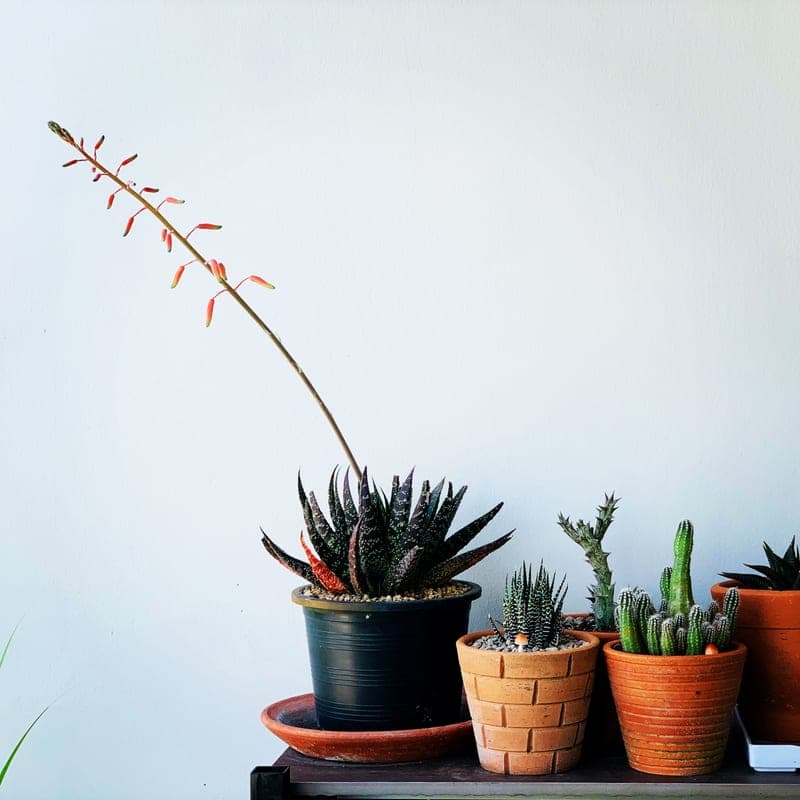
The most forgiving common houseplant there is, and the reason is arithmetic rather than folklore: its published watering cadence sits in the succulent band of once or twice a month, so the interval you have to hit is four times wider than a tropical's.
#ad We do not currently hold a live price for this, so we do not show one. How we make money.
Published specification
- Published watering cadence
- Succulent band, once or twice a month
- Light
- Tolerates low light, grows faster in bright indirect
- Main failure mode
- Overwatering and root rot, not drought
- Published watering cadence: Virginia Cooperative Extension SPES-804
- Light: Published horticultural guidance
- Main failure mode: Virginia Cooperative Extension SPES-804
Refill interval - computed, not tested
A 500 ml globe covers a 6-inch snake plant for 3 to 6 weeks
The succulent band is once or twice a month, which is 15 to 30 days per watering. 500 ml divided by 350 ml for a 6-inch pot is 1.4 waterings, so 21 to 42 days. The same globe on a tropical in the same pot is 5 to 10 days.
Assumes: 6-inch pot, indoors, succulent frequency band. Light, temperature, humidity, soil mix and season all change how fast a pot dries, so treat this as a planning range and not a guarantee.
What is good about it
- The wide published cadence is what makes it forgiving, because a week late matters far less than it does for a fern
- Genuinely tolerates low light, so it survives the corner where nothing else does
- Slow growing, so it does not outgrow its pot and change its own water needs
What is not
- The same tolerance means it will sit in wet soil without complaining until the roots are already gone
- Slow growth means slow recovery from any damage
Skip this one if
Skip it if you are the kind of plant killer who overwaters rather than forgets. This plant's one weakness is exactly your habit, and a pothos would be more honest with you about being wet.
How it scored
- Forgiveness of neglect
- 10.0
- Low-light tolerance
- 9.5
- Overwatering tolerance
- 5.0
- Availability and price
- 9.5
- Overall
- 9.2 / 10
Our editorial score, from published specifications and computed intervals. Not a test result. Specification source: Virginia Cooperative Extension, watering frequency bands.
Pothos (Epipremnum aureum)
Learning to read a plant, rather than guessing at it
Not the most drought-tolerant plant here, but the most honest one: it wilts visibly and dramatically when it is thirsty and perks back up within hours of a drink. For a serial plant killer, a plant that tells you what is wrong is worth more than one that suffers quietly.
#ad We do not currently hold a live price for this, so we do not show one. How we make money.
Published specification
- Published watering cadence
- Tropical band, once or twice a week
- Light
- Low to bright indirect
- Thirst signal
- Pronounced, reversible wilt
- Published watering cadence: Virginia Cooperative Extension SPES-804
- Light: Published horticultural guidance
- Thirst signal: Published horticultural guidance
Refill interval - computed, not tested
A 750 ml bottle spike covers a 6-inch pothos for 8 to 15 days
The tropical band is once or twice a week, which is 3.5 to 7 days per watering. 750 ml divided by 350 ml for a 6-inch pot is 2.1 waterings, so 8 to 15 days.
Assumes: 6-inch pot, indoors, tropical frequency band. Light, temperature, humidity, soil mix and season all change how fast a pot dries, so treat this as a planning range and not a guarantee.
What is good about it
- Wilts obviously before it dies, which is the feature that actually teaches you the habit
- Recovers from a full wilt within hours, so a mistake is not fatal
- Roots in a glass of water, so one plant becomes several for free
What is not
- The tropical band means a genuinely shorter safe interval than the snake plant or ZZ
- Trails, so it needs cutting back or somewhere to hang
- Toxic to cats and dogs if chewed
Skip this one if
Skip it if you travel for more than about ten days at a time without cover. Its cadence band is four times tighter than a succulent's, and no amount of goodwill changes that.
How it scored
- Forgiveness of neglect
- 7.5
- Low-light tolerance
- 9.0
- Overwatering tolerance
- 7.0
- Availability and price
- 10.0
- Overall
- 8.6 / 10
Our editorial score, from published specifications and computed intervals. Not a test result. Specification source: Virginia Cooperative Extension, watering frequency bands.
Questions people actually ask
- Which plants like watering globes?
Plants with a wide published watering cadence get the longest interval: succulents, snake plants, ZZ plants, jade and hoya are all in the once-or-twice-a-month band, so a 500 ml globe covers them for three to six weeks. Tropical foliage plants get five to ten days from the same globe.
- Are watering globes good for monstera and pothos?
They work, for a long weekend rather than a vacation. Both sit in the tropical band of once or twice a week, so a 500 ml globe on a 6-inch pot computes to five to ten days. Larger pots need a spike with a bottle instead.
- Can I use a watering globe with an orchid?
No. Orchids are grown in coarse bark rather than soil, so there is nothing for a globe to wet and the water runs through. They need a thorough soak followed by a genuine dry period, which is exactly what a globe prevents.
- Are watering globes good for succulents?
For an absence, yes - the once-or-twice-a-month cadence means a 500 ml globe computes to three to six weeks. Do not leave one in permanently, because continuous moisture is how succulents rot.
Sources