Single-product review
Aqua Globes Review
The product that taught a whole category to promise two weeks. We could not find a published capacity anywhere, so we worked from the one measured fill we could find.
By Scooter M. - Enthusiast. Reads the manuals, compiles the specs, does the math. | Published
Disclosure
We earn a commission if you buy through our links. It does not change what we recommend or what you pay. Full disclosure.
The short answer
The number that is missing
Start with what is not on the box. We checked listings across the globe category and reservoir capacity is essentially never published. Not in millilitres, not in ounces, not anywhere. For a product whose entire proposition is how long it lasts, that is a remarkable omission, and it is the single fact that should shape how you read every duration claim attached to one.
Without a capacity you cannot check the claim before buying and you cannot check it afterward without a measuring jug. The category has been sold on a promise that is, by construction, unfalsifiable. That is why this review scores it the way it does, and why the honesty column is doing so much work.
The one number we could find, and the arithmetic on it
The Indoor Nursery, writing up first-hand use of small watering globes, reported a fill of about half a cup - roughly 118 ml. That is not a manufacturer figure and we would not present it as one, but it is a real measurement by somebody who actually filled one, and it is the best input available.
Put it through the same arithmetic we use everywhere. A 6-inch pot takes about 350 ml per thorough watering, so 118 ml is about a third of one watering. At the published tropical cadence of once or twice a week, that is 1.2 to 2.4 days. On a 4-inch pot needing about 100 ml, the same globe is 1.2 waterings, which is roughly four to eight days.
| Pot and plant | Water per watering | Published cadence | Computed cover |
|---|---|---|---|
| 4-inch tropical | About 100 ml | Once or twice a week | 4 to 8 days |
| 6-inch tropical | About 350 ml | Once or twice a week | 1 to 2 days |
| 8-inch tropical | About 800 ml | Once or twice a week | Well under a day |
| 6-inch succulent | About 350 ml | Once or twice a month | 5 to 10 days, but wrong plant |
Read the second row and then read the marketing again. The volume is not a matter of opinion or of technique. There is no way to get two weeks out of a third of a watering, and no globe design changes that.
The failure mode people actually hit
The other thing the published first-hand account records is globes emptying far faster than expected - in hours rather than days. The mechanism is not mysterious. A globe releases water when air can get back in through the stem, and if the stem is pushed in at an angle, or into a coarse chunky mix with large pores, the air path opens up and the whole reservoir drains into the pot at once.
So the two complaints about this category - “it did not last” and “it dumped everything and waterlogged my plant” - have the same cause and the same fix. Getting the insertion right is most of what separates a globe that behaves from one that does not.
What it is genuinely good at
Small pots. Four inches and under, the arithmetic works and a globe covers most of a week. This is the honest version of the product.
Succulents, for a specific absence. The published cadence for succulents is once or twice a month, so the same small globe stretches considerably further. Do not leave one in permanently, though - continuous moisture is exactly what a drought-adapted plant does not want.
Looking good. This is not nothing. A blown-glass bulb in a pot is a pleasant object, and there is no mechanism to fail, no battery, nothing to program. Bought as decoration that also helps a little, it is a fine purchase.
The honest case against it
No published capacity. Everything above follows from this.
The volume is simply not there on a 6-inch pot. Whatever the packaging says.
Glass in soil. Near a floor, around pets or small children, a thin glass stem in a pot is a real consideration. The plastic versions solve that and nothing else - they hold the same small volume.
Unpredictable drain-down. The angle-and-mix problem means the same globe in the same pot can behave differently after a repot.
What we would buy instead
If you want the globe look with defensible arithmetic, the large hand-blown globes in the 200 to 500 ml bracket are a genuinely different product. At 500 ml on a 6-inch tropical the computed cover is five to ten days, which is close to what the category has been promising all along. Buy by stated capacity; if a listing does not give one, it is a lottery ticket.
If you want the trip actually covered, a terracotta wine-bottle stake is our top-ranked device in this section for a reason. A 750 ml bottle on a 6-inch pot computes to 8 to 15 days, and Plant Nanny’s own claim of up to 10 days sits inside that range rather than above it - which in this category is genuinely rare. The head-to-head between globes and spikes lays out the whole comparison.
The verdict
Aqua Globes are the most over-promised product in a category built on over-promising, and the honest score reflects that rather than the object itself. As a decorative top-up for a small pot they are perfectly good. As the answer to “how do I water my plants for two weeks”, the numbers say no, and our quantified answer to that question goes through the whole category the same way.
The product reviewed
The product, and what to buy instead
Chosen from the same registry as our roundups, on published specifications and the computed refill interval.
Aqua Globes Glass Watering Bulbs
A small pot on a shelf, topped up as part of a normal routine
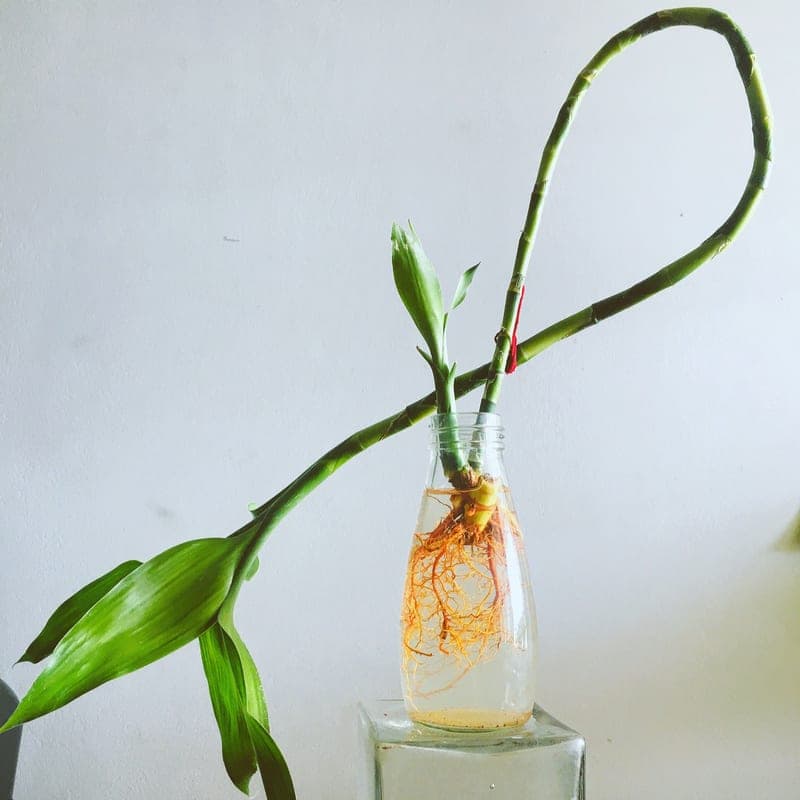
The original as-seen-on-TV watering globe, and the product that set the category's expectation that a glass bulb covers a two-week vacation. Our arithmetic says a globe this size covers a day or two on a medium houseplant, and the one publisher we found who actually used a set reported theirs emptied overnight.
#ad We do not currently hold a live price for this, so we do not show one. How we make money.
Published specification
- Reservoir capacity
- Not published by the manufacturer
- Representative fill
- About 118 ml (half a cup) for a small globe
- Material
- Blown glass
- Fill method
- Invert and fill through the stem
- Reservoir capacity: Checked listings across the globe category, capacity is essentially never published
- Representative fill: The Indoor Nursery, measured fill while using a small globe
- Material: Published product description
- Fill method: Published product description
Refill interval - computed, not tested
About 1 to 2 days on a 6-inch tropical houseplant
118 ml divided by 350 ml per thorough watering of a 6-inch pot is 0.3 of a watering. At once or twice a week, that is 1.2 to 2.4 days. On a 4-inch pot needing 100 ml, the same globe gives 1.2 waterings, or about 4 to 8 days.
Assumes: Small globe, representative 118 ml fill, tropical houseplant indoors. Light, temperature, humidity, soil mix and season all change how fast a pot dries, so treat this as a planning range and not a guarantee.
What is good about it
- Cheap, and pleasant to look at in a pot
- For a genuinely small pot, 4 inches or under, the arithmetic works out to most of a week
- No mechanism to fail, no batteries, nothing to program
What is not
- No published capacity, so the buyer has no way to check the vacation claim before purchase
- On a 6-inch pot the volume simply is not there, whatever the marketing says
- Glass in soil, near a floor, around pets and children
- Reports of globes emptying in hours when pushed in at an angle, because the air path opens up
Skip this one if
Skip it if you are leaving for more than a long weekend, or if your pots are 6 inches or bigger. This is the most over-promised product in the category and the volume is not a matter of opinion.
How it scored
- Published capacity
- 1.0
- Computed interval
- 2.5
- Build and materials
- 6.0
- Value for money
- 7.0
- Honesty of claims
- 2.0
- Overall
- 4.8 / 10
Our editorial score, from published specifications and computed intervals. Not a test result. Specification source: The Indoor Nursery, first-hand account of using watering globes.
Large Hand-Blown Glass Watering Globes
A 6-inch houseplant over a long weekend, where a small globe fails
The large end of the globe category, in the 200 to 500 ml bracket rather than the 80 to 120 ml bracket most globes actually occupy. At 500 ml the arithmetic finally supports something close to the category's promise, which is the whole reason size is the only spec that matters here.
#ad We do not currently hold a live price for this, so we do not show one. How we make money.
Published specification
- Reservoir capacity
- Typically listed 200 to 500 ml for large globes, though individual capacity is usually not published
- Material
- Hand-blown glass
- Fill method
- Invert and fill through the stem
- Reservoir capacity: Survey of retail listings across the globe category
- Material: Published product descriptions
- Fill method: Published product descriptions
Refill interval - computed, not tested
About 5 to 10 days at 500 ml on a 6-inch tropical
500 ml divided by 350 ml per thorough watering of a 6-inch pot is 1.4 waterings. At once or twice a week, that is 5 to 10 days. On a succulent at once or twice a month, the same globe stretches to 21 to 42 days.
Assumes: 500 ml globe, tropical houseplant indoors unless stated otherwise. Light, temperature, humidity, soil mix and season all change how fast a pot dries, so treat this as a planning range and not a guarantee.
What is good about it
- The only globes where the arithmetic supports anything like the advertised interval
- Attractive, and the large sizes are less prone to being knocked over than thin-stemmed small ones
- On succulents, where the published cadence is once or twice a month, even a mid-sized globe covers weeks
What is not
- Capacity is still almost never printed on the listing, so you are buying by eye
- A 500 ml sphere is large in a 6-inch pot and takes up visible root-zone space
- Same fundamental problem as all globes: flow depends on soil contact, not on a valve
Skip this one if
Skip it if the listing does not state a capacity in ml and does not show a size reference. In this category the number is the product, and a globe sold without one is a lottery ticket.
How it scored
- Published capacity
- 3.5
- Computed interval
- 7.5
- Build and materials
- 7.0
- Value for money
- 7.5
- Honesty of claims
- 5.0
- Overall
- 6.6 / 10
Our editorial score, from published specifications and computed intervals. Not a test result. Specification source: Garden Gate, watering bulb category overview.
Plant Nanny Terracotta Wine Bottle Stakes
A one-to-two week trip, on medium indoor pots
Our top pick for one honest reason: it is one of the very few products in the watering-device category whose manufacturer's duration claim survives our arithmetic. A 750 ml bottle on a 6-inch pot computes to 8 to 15 days, and Plant Nanny claims up to 10.
#ad We do not currently hold a live price for this, so we do not show one. How we make money.
Published specification
- Reservoir
- Any 750 ml wine bottle
- Manufacturer duration claim
- Up to 10 days for a medium to large plant
- Material
- Unglazed terracotta
- Watering method
- Porous terracotta releases water as the surrounding soil dries
- Reservoir: Plant Nanny published description
- Manufacturer duration claim: Plant Nanny published description
- Material: Plant Nanny published description
- Watering method: Plant Nanny published description
Refill interval - computed, not tested
About 8 to 15 days on a 6-inch pot, so the claim holds
750 ml divided by 350 ml per thorough watering of a 6-inch pot is 2.1 waterings. At once or twice a week, that is 8 to 15 days. Plant Nanny's own claim of up to 10 days sits inside that range rather than above it.
Assumes: 6-inch tropical root ball, indoors, 750 ml bottle. Light, temperature, humidity, soil mix and season all change how fast a pot dries, so treat this as a planning range and not a guarantee.
What is good about it
- The manufacturer's duration claim is conservative against our arithmetic, which is genuinely rare here
- The reservoir is a wine bottle, so capacity is a known 750 ml rather than a mystery
- Terracotta releases water in response to soil dryness, so it self-throttles in a way a glass globe does not
- Swap to a 2 liter soda bottle with the right adapter and the computed interval goes to 20 to 42 days
What is not
- A wine bottle standing in a plant pot is a look, and not everyone wants it
- Terracotta can clog with mineral deposits over time and needs an occasional soak
- On an 8-inch or larger pot the same 750 ml drops to 3 to 7 days
Skip this one if
Skip it if your plants are in large floor pots. A 750 ml bottle on a 10-inch pot is under two days of water, and no amount of terracotta changes the volume.
How it scored
- Published capacity
- 9.5
- Computed interval
- 9.0
- Honesty of claims
- 10.0
- Value for money
- 9.0
- Looks
- 6.0
- Overall
- 9.1 / 10
Our editorial score, from published specifications and computed intervals. Not a test result. Specification source: Plant Nanny wine bottle stake retail listing.
Questions people actually ask
- How long do Aqua Globes actually last?
On a 6-inch tropical houseplant, our arithmetic gives one to two days from a representative 118 ml small-globe fill. On a 4-inch pot it is more like four to eight days. No manufacturer in this category publishes a capacity, so any duration claim you see - including ours - is arithmetic on top of somebody else’s measurement rather than a published specification.
- Do watering globes really work?
They deliver water, and for a genuinely small pot they cover most of a week. What they do not do is cover a two-week absence on a normal-sized houseplant, because the volume is not there. Judge any globe by its stated capacity in millilitres, and treat a listing with no capacity as unverifiable.
- Why did my watering globe empty overnight?
Because air got back in too easily. A globe only releases water as air enters through the stem, and inserting it at an angle - or into a coarse, chunky mix with large pores - opens that path wide. Push it in straight, into finer material, and to a reasonable depth.
- Are watering globes good for succulents?
For a specific absence, yes: the published succulent cadence is once or twice a month, so the same globe stretches much further. As a permanent fixture, no. Constant moisture around the roots of a drought-adapted plant is the standard root-rot condition.
- Glass or plastic watering globes?
Plastic if there are pets or small children, because glass in potting mix near a floor is a genuine hazard. Understand what you are buying though: plastic globes sit in the same small capacity bracket, so the advantage is safety rather than duration.
Sources
Sources
- The Indoor Nursery, a first-hand account of using watering globes
- Criscione and Holliday-Goulart, Properly Watering Container Houseplants, Virginia Cooperative Extension SPES-804 (2026)
- Garden Gate, The Best Watering Bulbs
- Homes and Gardens, What are plant watering globes and do I need them
- Plant Nanny terracotta wine bottle stake published description