Roundup
Best Orchid Pots
Clear, slotted and full of holes beats beautiful here, because the thing you are buying is airflow. And this is the second plant group we tell you to keep out of a reservoir pot.
By Scooter M. - Enthusiast. Reads the manuals, compiles the specs, does the math. | Published
Disclosure
We earn a commission if you buy through our links. It does not change what we recommend or what you pay. Full disclosure.
The short answer
An orchid is not a houseplant in a smaller pot
Most orchids sold as houseplants are epiphytes. In the wild they grow attached to tree bark, with their roots exposed to air, rain and drying wind. Clemson Extension describes those roots as thick and fleshy, used to attach to trees and absorb water and nutrients, and says epiphytes require very different growing media than houseplants - media with extremely good aeration and drainage.
That single fact explains every unusual thing about orchid growing. The pot is full of holes because roots need air. The medium is chunks of bark because bark drains in seconds. And the most common way to kill one, in Clemson’s words, is to let it sit in a waterlogged pot.
Why this site tells you not to use a reservoir
We rank self-watering planters for a living, and orchids are the second plant group - after succulents - where we tell you the whole mechanism is wrong.
A sub-irrigated pot works by capillary rise: water climbs from a reservoir through a fine-pored medium. That is the mechanism explained in full, and it needs continuous small pores to work. A bark mix is the opposite by design - large chunks with large air gaps between them, which is exactly why it suits orchid roots. Water does not climb through it. It runs through it.
So a reservoir under bark does one of two things: nothing at all, or - if the bark sits in the water - it keeps the bottom layer permanently saturated, which is the waterlogged pot Clemson warns about. Neither is what you paid for. Our list of plants that suit reservoir pots has said orchids belong outside it since launch, and this page is where that recommendation turns into what to buy instead.
How we ranked them
We have not grown these side by side. What follows is each maker’s published listing, judged against Clemson Extension’s published guidance for orchid containers and media.
Aeration and drainage first. Slots and side holes, not just a hole in the base. Clemson goes as far as advising that clay containers have their drainage hole enlarged or extra holes added near the bottom - that is how much drainage this plant group wants.
Can you see the roots? Root color is the most reliable watering signal an orchid grower has: silvery-green when dry, bright green when wet. A clear pot turns that into a daily glance. An opaque pot removes it.
Does it come in the size you need? Orchids resent overpotting, and a plant that needs stepping up one size does not need a pot three sizes larger.
Then build quality and price, in that order.
| Product | Type | Published size | Side venting | See the roots |
|---|---|---|---|---|
| Better-Gro Special Orchid Mix | Bark mix | 8 dry qt | Not applicable | Not applicable |
| rePotme slotted | Clear plastic pot | 5 in across, 4 in high | Slots and holes | Yes |
| Tialero 12-pack | Clear plastic pots | 4-3/8, 5-1/2 and 6-3/8 in tops | Slots, sides and base | Yes |
| T4U 7.5 in | Clear plastic pots | 7.44 in across, 6.5 in high | Holes | Yes |
| EFISPSS ceramic | Glazed ceramic | 5 in and 6 in | Leaf cutouts | No |
How to water one, since the pot only does half the job
Clemson’s guidance for actively growing orchids is to water once per week and let them dry slightly before the next watering, applying enough water that some drains from the bottom of the pot each time. Plants in clay pots, small pots or open bark mixes may need it more often.
Two details in that sentence matter more than they look. “Enough that some drains” means a proper soak, not a splash - which is why a pot you can lift and carry to a sink beats a decorative one you cannot. And “dry slightly” is the part a reservoir makes impossible.
Clemson adds one more instruction worth building into a routine: each month, use plain water to rinse accumulated fertilizer salts out of the pot. Bark-grown orchids are fed often, and a monthly flush is how the salts leave. A slotted pot makes that easy; a sealed decorative pot with no drainage does not.
Ice cubes, and other things we will not recommend
The ice cube method gets recommended constantly for phalaenopsis, and we are not going to endorse or condemn it here, because Clemson’s published guidance does not address it and we do not publish claims we cannot attribute. What the extension guidance does say is to apply enough water that some drains from the bottom of the pot - and three ice cubes do not do that.
The same standard applies to the self-watering orchid pots that are sold with an inner reservoir chamber. They exist, they are purchasable, and we are not featuring one, because the mechanism argument above is not a close call.
The honest cons on every pick
Better-Gro Special Orchid Mix. Bark breaks down, hence the 12 to 18 month repotting cycle. No particle grade published. Bark-grown orchids need a higher-nitrogen feed, which is a separate purchase.
rePotme slotted pots. Three pots at a price where others sell twelve, one size only, and clear plastic grows algae where light meets damp bark.
Tialero 12-pack. More pots than most people need, thin enough that a big plant can tip, and no UV rating published for a pot destined for a bright windowsill.
T4U 7.5 in. Most orchids never need a pot this large, and overpotting keeps bark wet for too long. The included saucers invite standing water.
EFISPSS ceramic. Opaque, so the best beginner signal is gone, and fired ceramic cannot have its drainage enlarged the way Clemson suggests for clay.
What we would buy
A bag of bark mix and a three-pack of slotted clear pots. Repot into fresh bark every 12 to 18 months, water weekly with a proper soak until it runs out of the bottom, and flush with plain water monthly.
If the clear pot is too ugly for the room, do what the Tialero listing suggests and drop it inside a decorative cachepot - lift it out to water, let it drain, put it back. That gets you the airflow, the root view and the flush, and the living room still looks like a living room.
Ranked picks
Quick picks
Ranked on published specifications and the computed refill interval, not on looks. Tap any row for the full write-up, including who should skip it.
| # | Product | Best for | Score | Price |
|---|---|---|---|---|
| 1 | 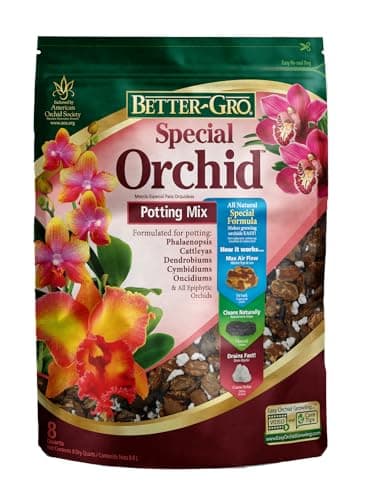 Better-Gro Special Orchid Mix, 8 qtRepotting phalaenopsis, cattleya, dendrobium and oncidium Better-Gro Special Orchid Mix, 8 qtRepotting phalaenopsis, cattleya, dendrobium and oncidium | Buy this first, whatever pot you use | 9.2 | $7.37 - View on Amazon |
| 2 | 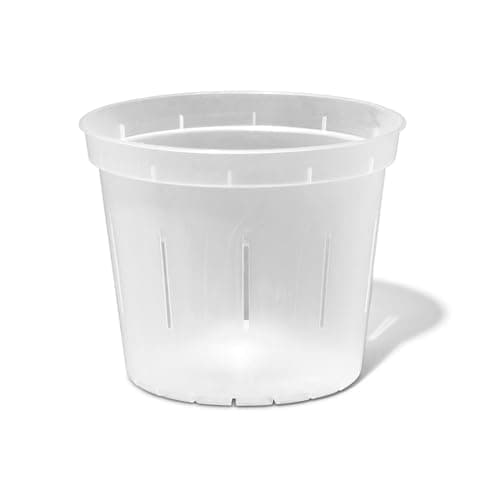 rePotme 5-Inch Slotted Orchid Pots, 3 PackA phalaenopsis being repotted into something that actually drains rePotme 5-Inch Slotted Orchid Pots, 3 PackA phalaenopsis being repotted into something that actually drains | Best pot overall | 9.0 | $17.81 - View on Amazon |
| 3 | 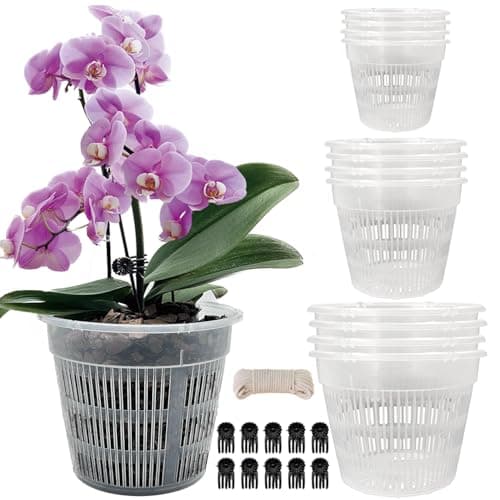 Tialero Clear Slotted Orchid Pots, 12 Pack in 3 SizesA collection where plants are always being moved up a size Tialero Clear Slotted Orchid Pots, 12 Pack in 3 SizesA collection where plants are always being moved up a size | Best value, three sizes | 8.7 | $9.99 - View on Amazon |
| 4 | 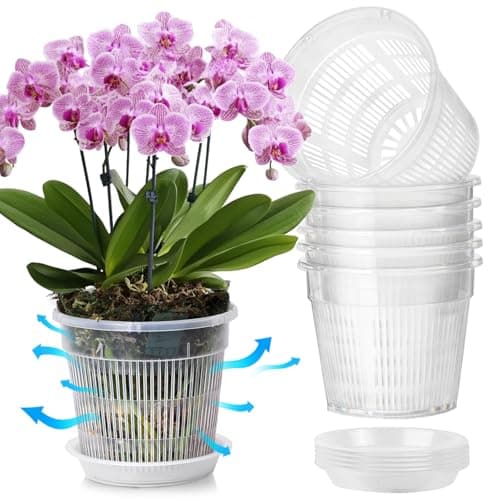 T4U Clear Orchid Pots 7.5 in, 6 PackMature plants that have outgrown a standard 5-inch pot T4U Clear Orchid Pots 7.5 in, 6 PackMature plants that have outgrown a standard 5-inch pot | Best for a mature plant | 8.0 | $19.99 - View on Amazon |
| 5 | 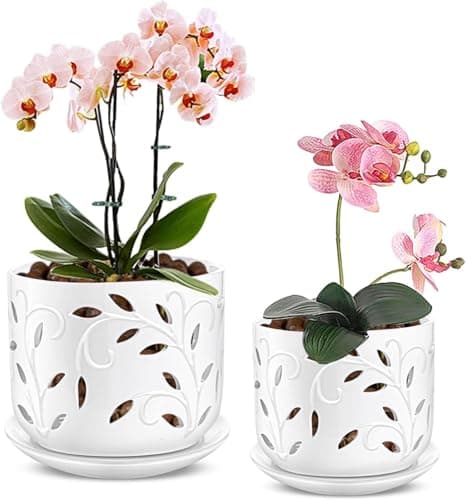 EFISPSS Ceramic Orchid Pots with Cutouts, 5 and 6 inAn orchid in a living room where a plastic pot will not do EFISPSS Ceramic Orchid Pots with Cutouts, 5 and 6 inAn orchid in a living room where a plastic pot will not do | Best looking, worst for learning | 7.2 | $23.53 - View on Amazon |
Scores are our editorial judgment from published specifications. They are not test results, and they are deliberately not marked up as ratings in this page’s structured data.
Pick #1 - Buy this first, whatever pot you use
Better-Gro Special Orchid Mix, 8 qt
Repotting phalaenopsis, cattleya, dendrobium and oncidium
The bark mix that names every component - western fir bark, hardwood charcoal, sponge rock and coarse perlite - and publishes a repotting interval of 12 to 18 months. Clemson Extension's blunt line is that one of the best ways to kill an epiphytic orchid is to plant it in soil, and this is what you use instead.
#ad Price as of September 21, 2026, from Amazon. Prices change. How we make money.
Published specification
- Components
- Western fir bark, hardwood charcoal, sponge rock and coarse perlite
- Volume
- 8 dry quarts (8.8 L), resealable bag
- Suitable for
- Epiphytic orchids including Cattleya, Phalaenopsis, Dendrobium, Paphiopedilum and Oncidium
- Repotting interval
- Every 12 to 18 months, per the maker
- Endorsement
- Published as endorsed by the American Orchid Society
- Components: Better-Gro published description
- Volume: Better-Gro published listing specification
- Suitable for: Better-Gro published description
- Repotting interval: Better-Gro published description
- Endorsement: Better-Gro published description
What is good about it
- Every component named, which makes it checkable against what orchids actually need
- Charcoal in the blend, which the maker publishes as filtering impurities
- Resealable bag - you use a fraction of it per repot
- Cheapest item on this page and the one that matters most
What is not
- Bark breaks down, which is why the 12 to 18 month repotting interval exists
- Open bark dries fast, so it needs more frequent watering than a soil mix
- No published particle size grade, and orchid growers care about fine versus medium bark
- Bark-grown orchids need a higher-nitrogen fertilizer, which is a separate purchase
Skip this one if
Skip it only if you grow orchids mounted on bark slabs or in semi-hydroponic media. For anything in a pot, a bark mix is the default and soil is the mistake.
How it scored
- Aeration and drainage
- 10.0
- See the roots
- 5.0
- Size range
- 8.0
- Build quality
- 9.0
- Value for money
- 10.0
- Overall
- 9.2 / 10
Our editorial score, from published specifications and computed intervals. Not a test result. Specification source: Better-Gro Special Orchid Mix 8 qt retail listing.
Pick #2 - Best pot overall
rePotme 5-Inch Slotted Orchid Pots, 3 Pack
A phalaenopsis being repotted into something that actually drains
Clear, slotted and made by a specialist orchid supplier rather than a general pot brand. The slots do the two things Clemson Extension asks of an orchid container - aeration and drainage - and the clear wall lets you watch the roots, which is how experienced growers decide when to water.
#ad Price as of September 21, 2026, from Amazon. Prices change. How we make money.
Published specification
- Design
- Slotted sides with holes, crystal clear
- Size
- 5 in across, 4 in high
- Pack
- 3 pots
- Material
- UV-protected, plant-safe plastic, published as suitable outdoors
- Media compatibility
- Published as working with any potting mix or fertilizer
- Design: rePotme published listing specification
- Size: rePotme published listing dimensions
- Pack: rePotme published listing specification
- Material: rePotme published description
- Media compatibility: rePotme published description
What is good about it
- Slots on the sides, not just a hole in the base - the airflow orchid roots need
- Clear walls let you see root color and whether the bark is still wet
- UV-protected plastic, so a pot on a windowsill does not go brittle in a year
- From a supplier that only does orchid growing, which shows in the shape
What is not
- Three pots for the price of a twelve-pack elsewhere
- One size only - a collection at different stages needs other pots too
- Clear plastic grows algae on the inside where light hits damp bark
- No published wall thickness or weight, so stability with a tall spike is unknown
Skip this one if
Skip it if you have one orchid and no plans for more. A single pot from a multipack costs a fraction of this and does the same job less prettily.
How it scored
- Aeration and drainage
- 10.0
- See the roots
- 10.0
- Size range
- 5.0
- Build quality
- 9.0
- Value for money
- 6.5
- Overall
- 9.0 / 10
Our editorial score, from published specifications and computed intervals. Not a test result. Specification source: rePotme 5-inch slotted orchid pot retail listing.
Pick #3 - Best value, three sizes
Tialero Clear Slotted Orchid Pots, 12 Pack in 3 Sizes
A collection where plants are always being moved up a size
Twelve slotted clear pots across three sizes, with the dimensions of each published to the eighth of an inch - top diameter, base diameter and height. For a growing collection that needs to step plants up a size at a time, this is the cheapest sensible way to own the whole ladder.
#ad Price as of September 21, 2026, from Amazon. Prices change. How we make money.
Published specification
- Sizes
- Small 4 in tall x 4-3/8 in top; medium 4-3/4 x 5-1/2 in; large 5-1/2 x 6-3/8 in
- Pack
- 12 pots - 4 of each size - plus 10 clips and 30 ft of cotton rope
- Ventilation
- Drainage holes and slots on the sides and bottom, sized to retain the medium
- Material
- PP plastic, published as thick and reusable
- Intended use
- Published as usable as a liner inside a decorative cachepot
- Sizes: Tialero published listing specification
- Pack: Tialero published listing specification
- Ventilation: Tialero published description
- Material: Tialero published description
- Intended use: Tialero published description
What is good about it
- Publishes top and base diameters as well as height, which almost no pot listing does
- Three sizes covers repotting a plant through several years
- Slots sized so bark does not fall out, which is a real failure of cheap slotted pots
- Clips and rope included for mounting or staking a flower spike
What is not
- Twelve pots is more than most households need at once
- Thin enough that a big plant in a small pot can tip
- Clear plastic and damp bark means algae on the inside eventually
- No UV rating published, so sun-facing windows may make them brittle over time
Skip this one if
Skip it if you want one beautiful pot on a shelf. This is growing equipment, and it looks like it - the intended use is as a liner inside something prettier.
How it scored
- Aeration and drainage
- 9.5
- See the roots
- 10.0
- Size range
- 10.0
- Build quality
- 7.0
- Value for money
- 10.0
- Overall
- 8.7 / 10
Our editorial score, from published specifications and computed intervals. Not a test result. Specification source: Tialero 12-pack slotted orchid pot retail listing.
Pick #4 - Best for a mature plant
T4U Clear Orchid Pots 7.5 in, 6 Pack
Mature plants that have outgrown a standard 5-inch pot
The large size most orchid ranges skip. A mature cattleya or a multi-spike phalaenopsis outgrows a 5-inch pot, and this is a six-pack of 7.5-inch slotted clear pots with saucers included for the overflow.
#ad Price as of September 21, 2026, from Amazon. Prices change. How we make money.
Published specification
- Size
- 7.44 in across, 6.5 in high
- Pack
- 6 pots with matching saucers
- Design
- Clear with holes for airflow and drainage
- Material
- PP plastic, published for indoor or outdoor use
- Size: T4U published listing dimensions
- Pack: T4U published listing specification
- Design: T4U published description
- Material: T4U published description
What is good about it
- A genuinely large slotted pot, which is hard to find
- Saucers included, so a deep watering does not end up on the windowsill
- Clear walls for root inspection at a size where roots are worth inspecting
- Six pots suits anyone dividing a big plant
What is not
- Most orchids never need a pot this big - overpotting keeps the medium wet too long
- Six large pots take up serious storage space
- No UV rating published
- Saucers invite leaving standing water, which is the one thing Clemson warns against
Skip this one if
Skip it for a supermarket phalaenopsis. Orchids resent being overpotted, and a plant moved into a pot this size before it needs one will sit in wet bark for weeks.
How it scored
- Aeration and drainage
- 9.0
- See the roots
- 10.0
- Size range
- 6.0
- Build quality
- 8.0
- Value for money
- 7.5
- Overall
- 8.0 / 10
Our editorial score, from published specifications and computed intervals. Not a test result. Specification source: T4U 7.5-inch clear orchid pot retail listing.
Pick #5 - Best looking, worst for learning
EFISPSS Ceramic Orchid Pots with Cutouts, 5 and 6 in
An orchid in a living room where a plastic pot will not do
The decorative answer: glazed white ceramic with leaf-shaped cutouts in the wall, drainage holes and a tray, in two sizes. It solves the appearance problem that clear plastic creates, and it takes away the ability to see the roots - which is the main tool an orchid grower has.
#ad Price as of September 21, 2026, from Amazon. Prices change. How we make money.
Published specification
- Design
- Glazed ceramic with leaf cutouts in the wall for airflow, plus drainage holes
- Sizes
- One 5 in and one 6 in pot
- Included
- Tray
- Material
- Ceramic, published as breathable and stable
- Root visibility
- None - opaque glaze
- Design: EFISPSS published description
- Sizes: EFISPSS published listing specification
- Included: EFISPSS published listing specification
- Material: EFISPSS published description
- Root visibility: Our reading of the published design
What is good about it
- Cutouts in the wall give real airflow rather than a single hole in the base
- Two sizes in the box, so a plant can be stepped up without rebuying
- Heavy enough that a tall flower spike will not tip it over
- Looks like furniture rather than growing equipment
What is not
- Opaque, so you cannot see root color or how wet the bark is
- Ceramic and glaze hold water at the surface unlike an open plastic slot
- Most expensive pot here, for two pots
- Clemson advises enlarging drainage holes on clay pots, which you cannot easily do to fired ceramic
Skip this one if
Skip it if you are still learning to water orchids. Root color through a clear pot is the most reliable signal a beginner has, and this pot removes it in exchange for looking better.
How it scored
- Aeration and drainage
- 7.0
- See the roots
- 1.0
- Size range
- 7.0
- Build quality
- 8.5
- Value for money
- 5.5
- Overall
- 7.2 / 10
Our editorial score, from published specifications and computed intervals. Not a test result. Specification source: EFISPSS ceramic orchid pot retail listing.
Questions people actually ask
- Can you use a self-watering pot for orchids?
We would not. Sub-irrigation relies on capillary rise through a fine-pored medium, and orchid bark is deliberately chunky and open - water runs through it rather than climbing it. If the bark does sit in reservoir water, the bottom layer stays saturated, which is the waterlogged pot Clemson Extension names as one of the fastest ways to kill an orchid.
- Why do orchid pots have holes in the sides?
Because most orchids are epiphytes whose roots grow in open air on tree bark, not in soil. Clemson Extension describes their requirement as a growing medium with extremely good aeration and drainage, and slotted pots extend that to the container itself. The side holes also let the medium dry evenly instead of staying wet at the edges.
- Do orchids need clear pots?
They do not need them, but clear pots make orchids much easier to get right. Root color tells you when to water - silvery-green when dry, bright green when wet - and you can see whether the bark is still damp at the bottom. Phalaenopsis roots also photosynthesize. If you want a decorative pot, use a clear slotted pot as a liner inside it.
- What is the best potting mix for orchids?
A bark-based mix, never houseplant soil. Better-Gro publishes its components - western fir bark, hardwood charcoal, sponge rock and coarse perlite - which is the open structure epiphyte roots need. Clemson Extension is blunt on the alternative: one of the best ways to kill an epiphytic orchid is to plant it in soil.
- How often should you repot an orchid?
Every 12 to 18 months is the interval Better-Gro publishes for its mix, and the reason is the medium rather than the plant: bark decomposes, packs down and starts holding water like soil. That is also when to check the roots and step the plant up a pot size only if it genuinely needs it.
Sources
Sources
- Orchids, Clemson Cooperative Extension Home & Garden Information Center
- Better-Gro Special Orchid Mix published specification, via retail listing
- rePotme slotted orchid pot published specification, via retail listing
- Tialero 12-pack slotted orchid pot published specification, via retail listing
- T4U 7.5-inch clear orchid pot published specification, via retail listing
- EFISPSS ceramic orchid pot published specification, via retail listing
- Daughtry, Watering but Not Overwatering Houseplants, NC State Extension (2022)