Roundup
Best Pots for Succulents
This is a self-watering planter site telling you not to put a succulent in one. Here is what to buy instead, and the reasoning is the same reasoning we use everywhere else.
By Scooter M. - Enthusiast. Reads the manuals, compiles the specs, does the math. | Published
Disclosure
We earn a commission if you buy through our links. It does not change what we recommend or what you pay. Full disclosure.
The short answer
Why a reservoir is the wrong tool for a succulent
A self-watering planter is designed to hold a steady supply of water against the root zone. For a fern or a peace lily that is the entire point. For a plant that evolved to store its own water and then wait, it removes the drying half of the cycle those roots depend on.
The numbers make the mismatch obvious. Virginia Cooperative Extension’s published cadence for succulents and cacti is once or twice a month; for tropical foliage it is once or twice a week. A reservoir sized to deliver on the tropical schedule is delivering several times more often than a succulent wants, and constant moisture around roots is the wet, poorly drained condition that NC State Extension names for root rot organisms.
We have said this on the list of plants that suit reservoir pots and it is worth repeating here, where people arrive holding a succulent and a shopping list.
How we ranked these
We have not grown a trial. No timed drawdowns, no side-by-side pots. What follows is each maker’s published listing, judged on the four things that decide whether a succulent lives.
Does the pot help the mix dry? First. Unglazed clay is porous, and NC State Extension’s container chapter puts the effect plainly: porous containers lose moisture more quickly and need watering more often than nonporous ones. For most plants that is a drawback. Here it is the feature.
Is there a drainage hole? Non-negotiable, and it disqualifies a large part of the decorative pot market.
Is it the right depth? Rosette succulents are shallow-rooted. A deep pot holds a column of wet mix under roots that never reach it, and that column is what stays wet for a fortnight.
Does the mix drain, and does the maker say what is in it? The same published-specification test we apply to every product on this site.
| Product | Type | Published size | Drainage hole | Published chemistry |
|---|---|---|---|---|
| NiSevenLiving shallow | Unglazed terracotta pot | 4.8 in wide, 2.17 in deep | Yes, plus mesh pads | Not applicable |
| Bonsai Jack Gritty Mix | Inorganic-dominant mix | 1 gallon | Not applicable | pH 5.5, three components named |
| Yishang 12-pack | Unglazed terracotta pot | 3.1 x 3.1 x 3 in | Yes | Not applicable |
| Cz Garden pumice | Amendment | 2 L, 1/32 to 1/8 in particles | Not applicable | Inert, pH-neutral, OMRI |
| JUXYES 10 in dish | Unglazed terracotta bowl | 10 in wide, 4.8 in deep | Yes | Not applicable |
Terracotta is not decoration here, it is drainage
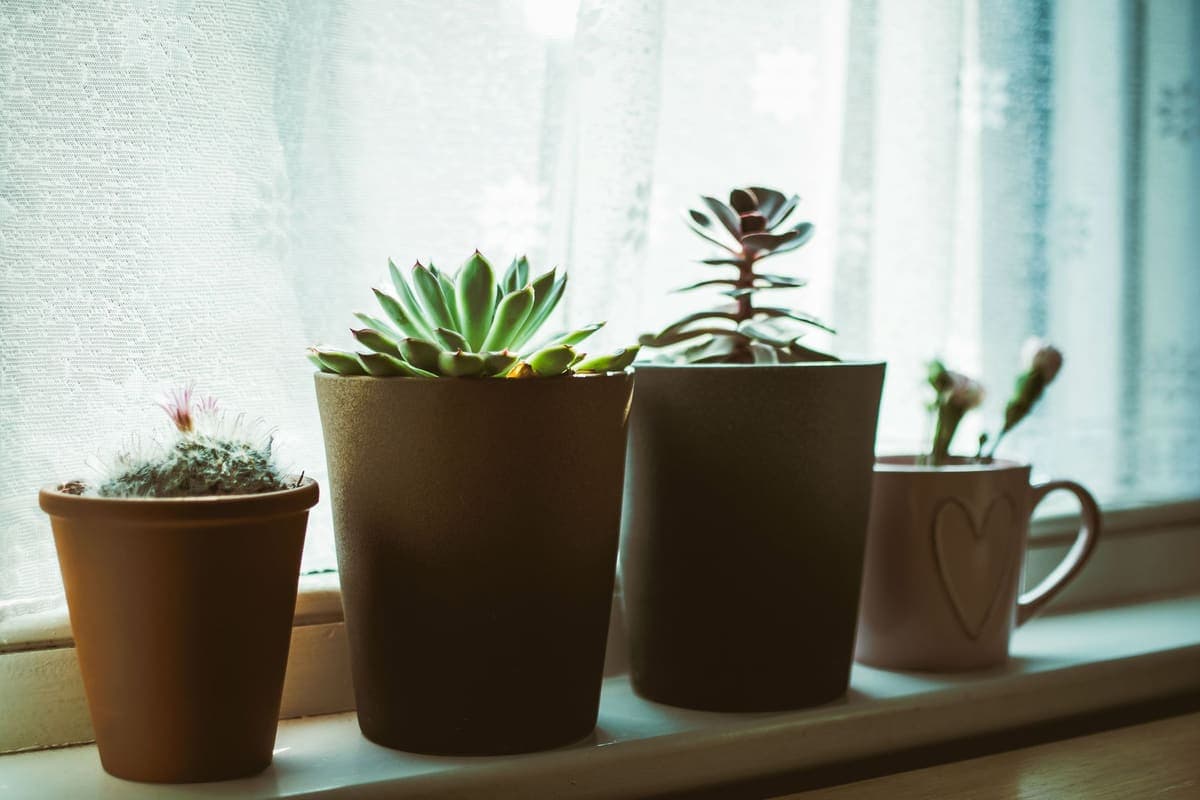
Unglazed clay lets water move through the pot wall and evaporate. That is why a succulent in terracotta on a windowsill dries out in days while the same plant in a glazed ceramic pot can stay damp for a fortnight.
It cuts both ways, and the honest version is worth stating: in a hot, dry summer outdoors, a shallow terracotta pot can dry out within a day. That is a real risk for anyone who travels, and the answer is not a reservoir - it is a slightly larger pot, or moving the plants out of full afternoon sun while you are away. How long plants can go without water covers the succulent case specifically, and it is more generous than most people expect.
The white crust that appears on the outside of old terracotta is salts moving out of the mix through the wall. It is cosmetic, it scrubs off, and it is evidence the pot is doing its job.
Depth matters more than width
Most rosette succulents - echeveria, haworthia, sempervivum - have shallow root systems. Put one in a 6-inch-deep pot and the bottom three inches of mix are permanently out of reach of the roots, staying wet long after the surface has dried. That wet layer is where rot starts.
A published depth figure is therefore the specification to shop on, and it is surprisingly rare. Two of the pots here publish one. A shallow dish or bulb pan shape - wider than it is deep - is what the plant group wants.
The mix does half the work
A gritty, fast-draining mix in a plastic pot will keep a succulent alive. A peat-heavy mix in beautiful terracotta will still rot one, slowly. If you only change one thing, change the soil.
Bonsai Jack’s blend is inorganic-dominant, with its three components named and a published pH of 5.5. That is a level of disclosure this category almost never offers - the mainstream supermarket alternative, Miracle-Gro’s cactus and succulent mix, publishes its components as forest products, sphagnum peat moss, sand and perlite, which tells you honestly that it is a peat-based mix with grit added rather than a gritty mix.
That mainstream mix is not wrong, and it is considerably cheaper. It holds more water for longer, which suits an underwaterer and punishes an overwaterer. If you are buying it, a couple of handfuls of pumice per pot moves it a long way toward the gritty end.
So what if you already own a self-watering pot?
Use it for something else. A pothos, a peace lily, a fern or herbs will all do well in it - the plants that genuinely suit a reservoir are listed here.
If you are determined to use one for succulents, the least bad version is to leave the reservoir empty and treat the pot as a normal planter, watering from the top and letting it drain. At that point you own a heavy pot with an unused tank in the bottom, which is a decision rather than a system.
The honest middle ground for someone who forgets to water is a moisture meter suited to succulents, which tells you the mix is dry at depth rather than guessing from the surface.
The honest cons on every pick
NiSevenLiving shallow pots. Terracotta chips. Shallow pots dry fast in summer heat. Salt crust builds on the outside. No published clay thickness.
Bonsai Jack Gritty Mix. Expensive per quart, almost no nutrition, and it dries so fast that an underwaterer will struggle with it.
Yishang 12-pack. Three inches is propagation size, not forever size, and a pot that small can dry out in two days indoors.
Cz Garden pumice. A small bag of an amendment you buy on top of soil, and its published particle size is wrong for pots much bigger than 4 inches.
JUXYES 10-inch dish. One pot for the price of several, heavy once filled, one drainage hole for a lot of surface, and everything planted in it gets watered on the same schedule.
What we would buy
A set of shallow terracotta pots, a bag of gritty mix, and nothing else. Water thoroughly, let it run out of the hole, empty the saucer, and then leave the plant alone until the mix is dry all the way down - which, on the published extension cadence, is a fortnight or more.
If a reservoir is what you actually need because you travel constantly, buy a different plant rather than a different pot. The plants that genuinely tolerate neglect are a better answer than fighting a succulent’s biology with a tank of water.
Ranked picks
Quick picks
Ranked on published specifications and the computed refill interval, not on looks. Tap any row for the full write-up, including who should skip it.
| # | Product | Best for | Score | Price |
|---|---|---|---|---|
| 1 | 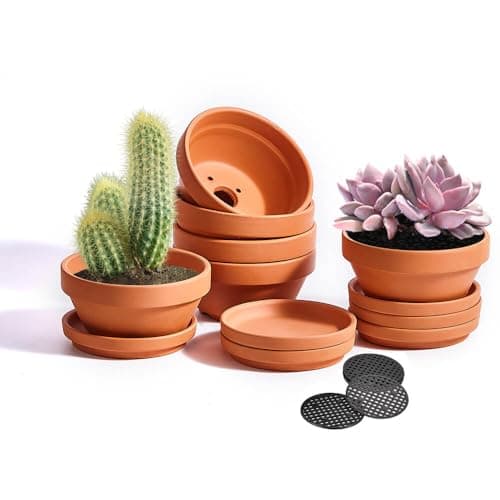 NiSevenLiving 5-Inch Shallow Terracotta Pots, 6 PackEcheveria, haworthia and the other shallow-rooted rosettes NiSevenLiving 5-Inch Shallow Terracotta Pots, 6 PackEcheveria, haworthia and the other shallow-rooted rosettes | Best overall, shallow and unglazed | 9.0 | $25.99 - View on Amazon |
| 2 | 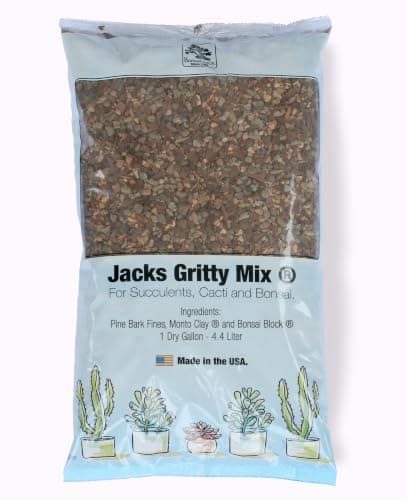 Bonsai Jack Gritty Mix, 1 GallonRot-prone succulents, and anyone who waters a little too often Bonsai Jack Gritty Mix, 1 GallonRot-prone succulents, and anyone who waters a little too often | Best mix, publishes its pH | 8.8 | $20.99 - View on Amazon |
| 3 | 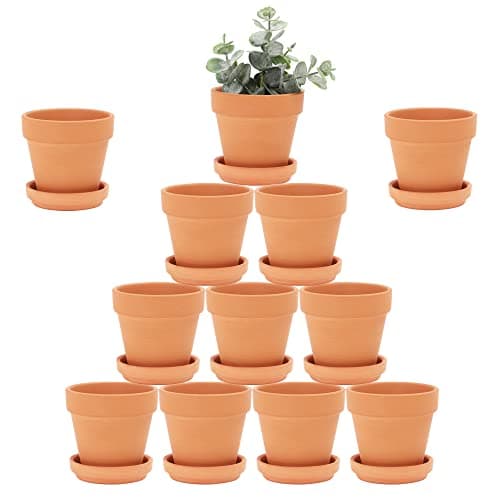 Yishang 3-Inch Terracotta Pots with Saucers, 12 PackPropagating offsets, leaf cuttings and a collection that keeps multiplying Yishang 3-Inch Terracotta Pots with Saucers, 12 PackPropagating offsets, leaf cuttings and a collection that keeps multiplying | Best value for propagation | 8.5 | $13.99 - View on Amazon |
| 4 | 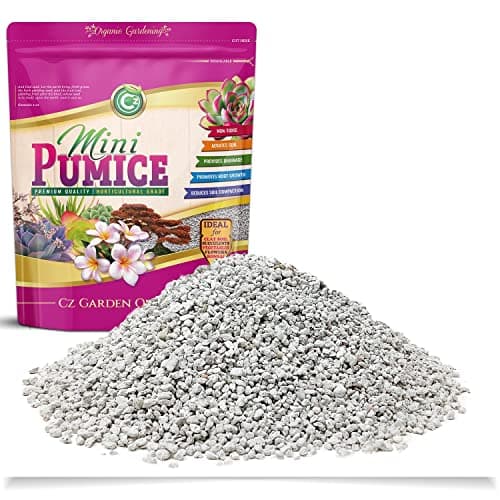 Cz Garden Horticultural Pumice, 2 LMaking a supermarket cactus mix drain like a proper one Cz Garden Horticultural Pumice, 2 LMaking a supermarket cactus mix drain like a proper one | Best fix for a soggy mix | 8.4 | $15.99 - View on Amazon |
| 5 | 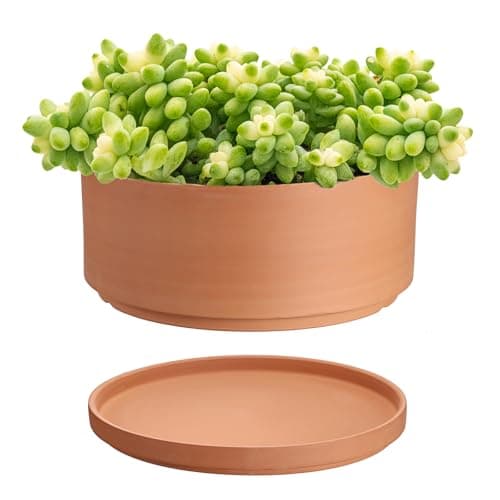 JUXYES 10-Inch Shallow Terracotta Pot with SaucerA mixed succulent arrangement in one dish JUXYES 10-Inch Shallow Terracotta Pot with SaucerA mixed succulent arrangement in one dish | Best for one arrangement | 8.2 | $31.99 - View on Amazon |
Scores are our editorial judgment from published specifications. They are not test results, and they are deliberately not marked up as ratings in this page’s structured data.
Pick #1 - Best overall, shallow and unglazed
NiSevenLiving 5-Inch Shallow Terracotta Pots, 6 Pack
Echeveria, haworthia and the other shallow-rooted rosettes
Unglazed clay, a drainage hole, a saucer and - the part that matters for succulents - a published height of just over two inches. A shallow pot holds less water for a root system that never wanted much, and terracotta pulls the rest out through its walls.
#ad Price as of September 21, 2026, from Amazon. Prices change. How we make money.
Published specification
- Material
- Unglazed clay, fired at high temperature; breathable walls
- Dimensions
- 4.8 in across, 2.17 in high
- Drainage
- Drainage hole in every pot, with mesh pads included
- Pack
- 6 pots with 6 matching saucers
- Maker's claim
- Promotes quick soil drying by drawing excess water out through the walls
- Material: NiSevenLiving published description
- Dimensions: NiSevenLiving published listing dimensions
- Drainage: NiSevenLiving published listing specification
- Pack: NiSevenLiving published listing specification
- Maker's claim: NiSevenLiving published description
What is good about it
- Genuinely shallow at a published 2.17 in, which suits rosette succulents far better than a deep pot
- Unglazed terracotta, so water leaves through the sides as well as the hole
- Mesh pads included, which stop gritty mix washing straight out of the drainage hole
- Six pots and six saucers is a whole windowsill in one purchase
What is not
- Terracotta chips, and a set of six will eventually become a set of five
- Shallow pots dry quickly in summer, so this is not a set-and-forget arrangement
- Unglazed clay grows white salt crust on the outside over time
- No published wall thickness or clay body, so durability is a guess
Skip this one if
Skip it if your succulents live outdoors in a hot, dry summer. A shallow terracotta pot in full sun can dry out inside a day, which is a different failure from the one most people are trying to fix.
How it scored
- Dries between waterings
- 10.0
- Drainage
- 10.0
- Right depth for succulents
- 9.5
- Durability
- 6.5
- Value for money
- 8.0
- Overall
- 9.0 / 10
Our editorial score, from published specifications and computed intervals. Not a test result. Specification source: NiSevenLiving 5-inch shallow terracotta pot retail listing.
Pick #2 - Best mix, publishes its pH
Bonsai Jack Gritty Mix, 1 Gallon
Rot-prone succulents, and anyone who waters a little too often
The only succulent mix we found that publishes a pH figure - 5.5 - and names all three of its components: Bonsai Block, Monto Clay and pine fines. No peat, no compost, nothing that holds a slug of water around a root that wants to dry out within a day or two.
#ad Price as of September 21, 2026, from Amazon. Prices change. How we make money.
Published specification
- Published pH
- Optimized for pH 5.5
- Components
- Bonsai Block, Monto Clay and pine coir (pine fines)
- Volume
- 1 gallon, ready to use
- Optimized for
- Water absorption, evaporation, bulk density and particle size, per the maker
- Organic matter
- No peat or compost in the published component list
- Published pH: Bonsai Jack published description
- Components: Bonsai Jack published description
- Volume: Bonsai Jack published listing specification
- Optimized for: Bonsai Jack published description
- Organic matter: Our reading of the published components
What is good about it
- Publishes a pH figure, which almost no bagged mix does
- All three components named, so you know what the plant is sitting in
- Inorganic-dominant blend drains fast and does not slump into mud over a season
- The same mix works for bonsai and for cacti, so a bag is never wasted
What is not
- Expensive per quart next to a supermarket cactus mix
- Almost no nutrition - you are feeding these plants yourself
- Gritty mixes dry very fast, so an underwaterer can starve a plant of water entirely
- Heavy compared with a peat-based mix, which matters in a big pot
Skip this one if
Skip it if you underwater rather than overwater. A gritty, fast-draining mix punishes forgetfulness, and a peat-based cactus mix is more forgiving of a plant you water once a month and then ignore.
How it scored
- Dries between waterings
- 10.0
- Drainage
- 10.0
- Right depth for succulents
- 8.0
- Durability
- 9.0
- Value for money
- 6.0
- Overall
- 8.8 / 10
Our editorial score, from published specifications and computed intervals. Not a test result. Specification source: Bonsai Jack Gritty Mix 1 gallon retail listing.
Pick #3 - Best value for propagation
Yishang 3-Inch Terracotta Pots with Saucers, 12 Pack
Propagating offsets, leaf cuttings and a collection that keeps multiplying
Twelve small unglazed pots and twelve saucers for the price of one designer planter. At 3 inches they are propagation and cutting pots rather than forever homes, and for the constant churn of offsets and leaf pullings that succulent growing produces, that is exactly right.
#ad Price as of September 21, 2026, from Amazon. Prices change. How we make money.
Published specification
- Material
- Clay fired at 1796 degrees F, published as crack resistant
- Pot dimensions
- 3.1 x 3.1 x 3 in
- Saucer dimensions
- 3 x 3 x 0.7 in
- Drainage
- Drain hole in every pot
- Pack
- 12 pots and 12 saucers
- Material: Yishang published description
- Pot dimensions: Yishang published listing specification
- Saucer dimensions: Yishang published listing specification
- Drainage: Yishang published description
- Pack: Yishang published listing specification
What is good about it
- The cheapest way to put a collection into terracotta, by a wide margin
- Publishes its firing temperature, which is more than most clay pots disclose
- Small volume means fast drying, which is what a rooting cutting wants
- Saucers included, so a windowsill stays clean
What is not
- Three inches is small - most succulents outgrow these within a year or two
- A 3 in pot in a warm room can dry out in two or three days
- Thin clay at this size chips easily in handling
- Twelve saucers of standing water is twelve chances to forget to empty one
Skip this one if
Skip it if you want a display pot for a mature plant. These are working pots for propagation, and a full-grown echeveria will look cramped and dry out too fast in one.
How it scored
- Dries between waterings
- 10.0
- Drainage
- 9.5
- Right depth for succulents
- 7.5
- Durability
- 6.0
- Value for money
- 10.0
- Overall
- 8.5 / 10
Our editorial score, from published specifications and computed intervals. Not a test result. Specification source: Yishang 12-pack terracotta pot retail listing.
Pick #4 - Best fix for a soggy mix
Cz Garden Horticultural Pumice, 2 L
Making a supermarket cactus mix drain like a proper one
Pumice is the amendment that turns an ordinary cactus mix into a gritty one, and this is the only bag we found that publishes both an OMRI listing and a particle size - 1/32 to 1/8 inch, which is the right grade for pots under four inches.
#ad Price as of September 21, 2026, from Amazon. Prices change. How we make money.
Published specification
- Particle size
- Average 1/32 in to 1/8 in
- pH
- Published as inert and pH-neutral
- Certification
- OMRI listed for certified organic production
- Volume
- 2 liter resealable pouch
- Recommended use
- Small pots and containers under 4 in, bonsai, succulents, orchids, cuttings
- Particle size: Cz Garden published listing specification
- pH: Cz Garden published description
- Certification: Cz Garden published description
- Volume: Cz Garden published listing specification
- Recommended use: Cz Garden published description
What is good about it
- Publishes a particle size range, which decides whether an amendment suits small pots
- pH-neutral and inert, so it changes drainage without changing chemistry
- OMRI listed, published rather than implied
- Does not float away the way perlite does when you water from above
What is not
- Two liters is a small bag - repotting a collection needs several
- An amendment, not a mix, so it is an extra purchase on top of soil
- The fine grade published here is wrong for pots much larger than 4 inches
- Heavier than perlite, which is a drawback in a large pot on a shelf
Skip this one if
Skip it if you have already bought a proper gritty mix. Pumice is how you fix an over-retentive bag of cactus soil, not something a well-built mix needs more of.
How it scored
- Dries between waterings
- 9.5
- Drainage
- 10.0
- Right depth for succulents
- 7.0
- Durability
- 9.5
- Value for money
- 6.5
- Overall
- 8.4 / 10
Our editorial score, from published specifications and computed intervals. Not a test result. Specification source: Cz Garden horticultural pumice retail listing.
Pick #5 - Best for one arrangement
JUXYES 10-Inch Shallow Terracotta Pot with Saucer
A mixed succulent arrangement in one dish
One wide, shallow, unglazed bowl for a planted arrangement rather than a single specimen - 10 inches across and a published 4.8 inches deep. The weight is the underrated feature: a heavy base is what stops a top-heavy arrangement going over outdoors.
#ad Price as of September 21, 2026, from Amazon. Prices change. How we make money.
Published specification
- Dimensions
- 10 x 10 in, 4.8 in deep (25.4 x 25.4 x 12.2 cm)
- Material
- Breathable unglazed terracotta
- Drainage
- Built-in drainage hole, with matching saucer
- Stability
- Published as heavy enough to resist wind outdoors
- Dimensions: JUXYES published listing specification
- Material: JUXYES published description
- Drainage: JUXYES published description
- Stability: JUXYES published description
What is good about it
- Wide and shallow is the correct shape for a multi-plant succulent dish
- Heavy base resists being blown over, which plastic pots cannot manage
- Unglazed clay, so the whole surface helps the mix dry
- Saucer included for indoor use
What is not
- One pot for the price of six smaller ones
- At 10 inches wide and filled with gritty mix it is genuinely heavy to move
- A single drainage hole for that much surface area is a modest amount of drainage
- Arrangements in one dish mean every plant gets the same watering, suited or not
Skip this one if
Skip it if you are mixing species with different needs. A dish garden waters as one unit, and pairing a thirsty aeonium with a lithops in the same mix ends badly for one of them.
How it scored
- Dries between waterings
- 8.5
- Drainage
- 7.5
- Right depth for succulents
- 9.0
- Durability
- 7.0
- Value for money
- 6.5
- Overall
- 8.2 / 10
Our editorial score, from published specifications and computed intervals. Not a test result. Specification source: JUXYES 10-inch shallow terracotta pot retail listing.
Questions people actually ask
- Can you use self-watering pots for succulents?
We would not. A reservoir keeps mix moist continuously, and Virginia Cooperative Extension’s published cadence for succulents and cacti is once or twice a month - they need the mix to dry completely between waterings. Constant moisture around those roots is the condition root rot organisms need. Use unglazed terracotta and a gritty mix instead.
- Are terracotta pots best for succulents?
For most people, yes. Unglazed clay is porous, so moisture leaves through the walls as well as the drainage hole - NC State Extension notes porous containers lose moisture more quickly and need watering more often, which is exactly the behavior a succulent wants. The exception is a hot patio in summer, where a shallow terracotta pot can dry out within a day.
- Do succulents need a drainage hole?
Yes. Without one there is nowhere for excess water to go and no way to flush salts out of the mix, and the bottom of the pot stays saturated after every watering. A decorative pot with no hole can still be used as a cover pot with the plant in a plain nursery pot inside it, lifted out to water.
- What soil is best for succulents?
A gritty, fast-draining mix dominated by inorganic material rather than peat. Bonsai Jack publishes a pH of 5.5 and names its three components, which is unusual disclosure for this category. A cheaper peat-based cactus mix works too, especially if you tend to underwater - add a couple of handfuls of pumice per pot to open it up.
- How deep should a succulent pot be?
Shallow. Rosette succulents root in the top couple of inches, so a deep pot leaves a column of wet mix below the root zone that stays damp for far too long. Look for a published depth figure around two to three inches for small plants, or a wide, shallow dish shape for an arrangement.
Sources
Sources
- NiSevenLiving shallow terracotta pot published specification, via retail listing
- Yishang 12-pack terracotta pot published specification, via retail listing
- JUXYES 10-inch shallow terracotta pot published specification, via retail listing
- Bonsai Jack Gritty Mix published specification, via retail listing
- Cz Garden horticultural pumice published specification, via retail listing
- Plants Grown in Containers, NC State Extension Gardener Handbook chapter 18
- Criscione and Holliday-Goulart, Properly Watering Container Houseplants, Virginia Cooperative Extension SPES-804 (2026)
- Daughtry, Watering but Not Overwatering Houseplants, NC State Extension (2022)