Guide
Best Plants for Self-Watering Pots
One published number sorts this out: how often the plant is supposed to be watered. Everything after that is decoration.
By Scooter M. - Enthusiast. Reads the manuals, compiles the specs, does the math. | Published
Disclosure
We earn a commission if you buy through our links. It does not change what we recommend or what you pay. Full disclosure.
The short answer
The rule the whole page rests on
Virginia Cooperative Extension publishes two watering frequency bands for container houseplants: tropical plants sometimes need water once or twice a week, and succulents and cacti once or twice a month. The gap between those is a factor of about four, and it decides everything about reservoir compatibility.
A self-watering pot is, physically, a device that holds the root zone at a fairly constant moisture level. If a plant’s published cadence is short, that constant level is close to what it wanted anyway and the pot is an improvement. If the published cadence is long, the plant’s entire adaptation is to survive a dry gap, and a device engineered to prevent dry gaps is working against it.
That is the whole compatibility test. It is not about whether a plant is thirsty or easy. It is about which published band it sits in.
The plants that suit a reservoir pot
| Plant | Published cadence | Fit | What to watch |
|---|---|---|---|
| Ferns, calathea, maranta | Tropical band, dislikes drying out | Best fit on the page | Very little - these are the plants a reservoir helps most |
| Peace lily | Tropical band | Excellent | It wilts theatrically, so you may over-correct out of habit |
| Pothos, philodendron, monstera | Tropical band | Excellent | Fast growers outgrow the pot size the reservoir was sized for |
| Spider plant | Tropical band, tuberous roots | Good | The tubers rot if the mix never dries at all |
| Herbs: basil, mint, parsley | Tropical band, high demand | Good | Reservoir empties fast, so this is a labor saver, not a trip fix |
| Tomatoes and leafy vegetables | Very high demand in summer | Good, in a large sub-irrigated planter | Still wants topping up daily in hot weather |
Note the top row. The plants that benefit most from a reservoir are not the drought-tolerant ones, they are the fussy ones. A fern’s problem is not the total amount of water it gets, it is the swing between saturated and bone dry that top-watering produces. A reservoir flattens that swing. For a calathea that browns at the edges every time it dries too far, that is worth more than any convenience gain.
The plants that do not, including two we usually recommend
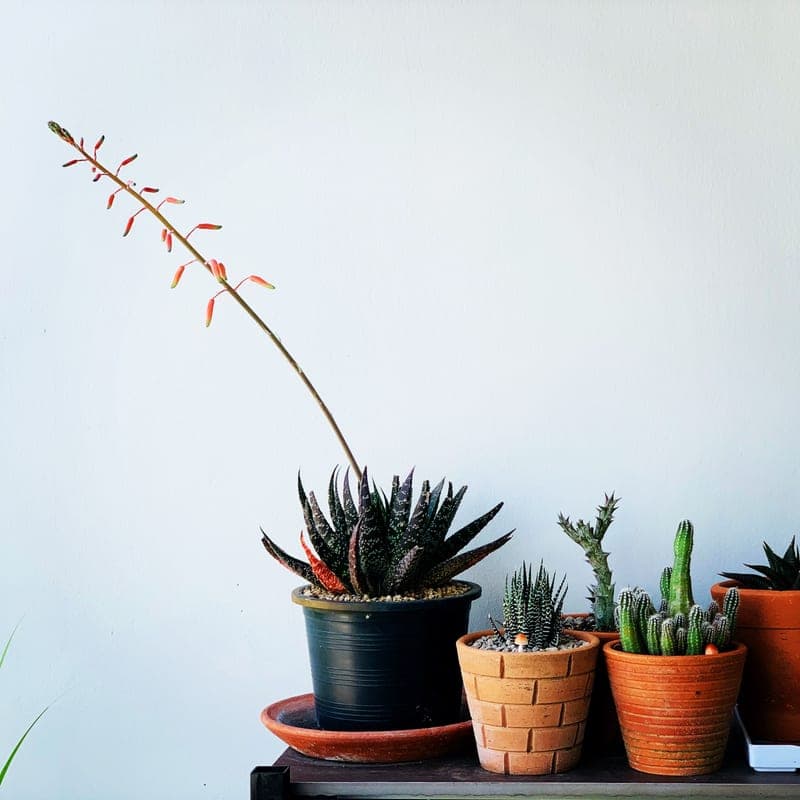
This is where we have to argue with our own advice. When somebody tells us they kill every plant they own, the first two names out of our mouths are the snake plant and the ZZ plant, and our hard-to-kill roundup ranks them at the top. Both are published in the succulent band, once or twice a month. That wide band is exactly what makes them forgiving of a forgetful owner.
It is also exactly what makes them a bad match for a self-watering pot. The ZZ plant stores water in underground rhizomes; the snake plant is a succulent with the same rot vulnerability as any other. Put either over a permanently charged reservoir and you have removed the dry period the plant is built around. NC State Extension names what fills that vacancy: root rots caused by Pythium, Phytophthora, Rhizoctonia and Fusarium, organisms that thrive in wet, poorly drained soil.
| Plant | Published cadence | Why a reservoir hurts |
|---|---|---|
| Snake plant, ZZ plant | Succulent band, once or twice a month | Their tolerance depends on a dry period the reservoir removes |
| Succulents and cacti | Once or twice a month | Constant moisture at the base is the classic rot condition |
| Hoya and other waxy-leaved plants | Closer to the succulent band | Water-storing leaves mean they are already carrying a reservoir |
| Orchids in bark | Soak and dry cycle in a bark medium | No continuous pore structure for water to rise through |
| Seedlings and fresh cuttings | Controlled surface moisture, tiny volume | A reservoir delivers to a zone, not to a seed tray |
If you want one pot and one plant, buy a pothos
Not because it is the toughest thing on the site, because it is not. The snake plant beats it on raw neglect tolerance. Buy it because it is the most honest. A pothos wilts visibly and dramatically when it is thirsty and recovers within hours of a drink. In a self-watering pot, where your feedback loop is otherwise a float gauge and a hope, a plant that tells you out loud when something has gone wrong is a real feature.
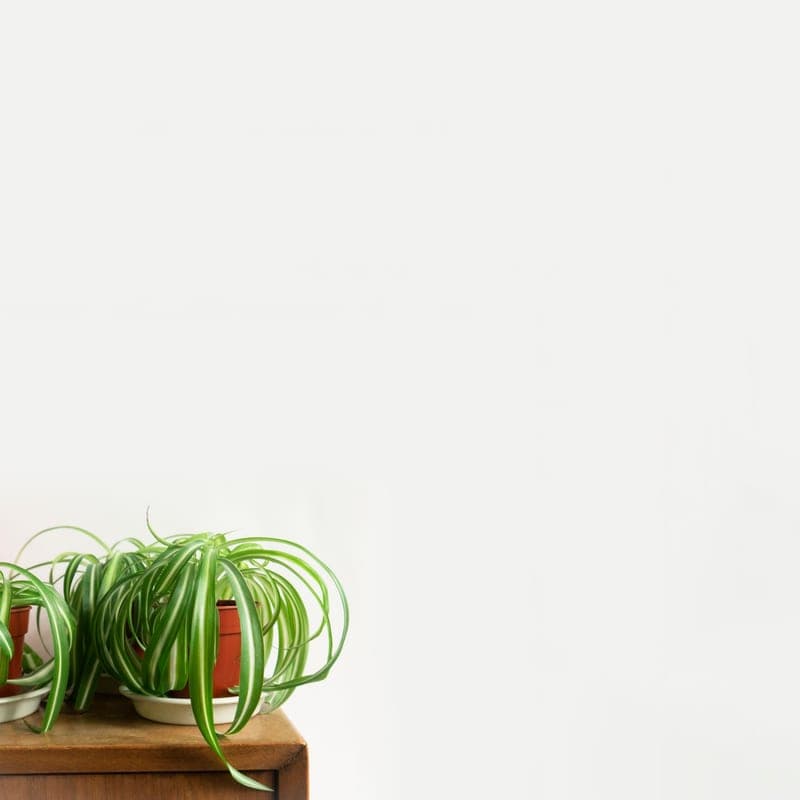
A spider plant is the pick if there are cats or dogs in the house, since it is published as non-toxic to both. It carries one warning worth repeating: the one published first-hand failure account we have found in this whole category involved a spider plant left with a small watering globe and ending up waterlogged. Tuberous roots buffer drought well and tolerate saturation badly.
Pot size changes the answer more than plant choice does
A reservoir’s duration is its capacity divided by what one thorough watering of that pot takes, and that second figure scales with pot volume rather than with how tough the plant is. A 6-inch pot takes roughly 350 ml per watering; an 8-inch pot takes about 800 ml. The same reservoir under a bigger plant is a much shorter interval, which is the most counterintuitive fact in this category and the reason the smaller Lechuza outlasts the bigger one.
It follows that a tropical plant in a small pot can be a better reservoir candidate than a succulent in a large one, even though the succulent has the wider cadence band. Check both numbers before you decide.
Setting one up so the first month does not kill the plant
Capillary rise needs a continuous moist path from the reservoir to the root zone. A brand-new planter filled with dry mix does not have one, because the pores are full of air rather than water, so a full reservoir can sit there indefinitely while the plant wilts above it. Prime it from the top once, thoroughly, and then let the reservoir take over. The mechanism, including the air gap explains why that is a one-time step rather than a habit.
After that, stop pouring. Top-watering a reservoir planter as well as filling it is the most common way people create the waterlogged condition they bought the pot to avoid. We go through all three usage errors here. And if you are not sure whether the mix above the reservoir is actually drying between fills, that is a question a moisture meter answers in five seconds.
The short version
Match the pot to the published band. Tropical foliage, ferns and herbs belong in a reservoir pot and will visibly do better in one. Succulents, snake plants, ZZ plants and hoyas do not, however forgiving they are in an ordinary pot. And whatever you plant, size the reservoir against the pot rather than against the promise on the box.
What we would buy for this
The gear that fits this problem
Chosen from the same registry as our roundups, on published specifications and the computed refill interval.
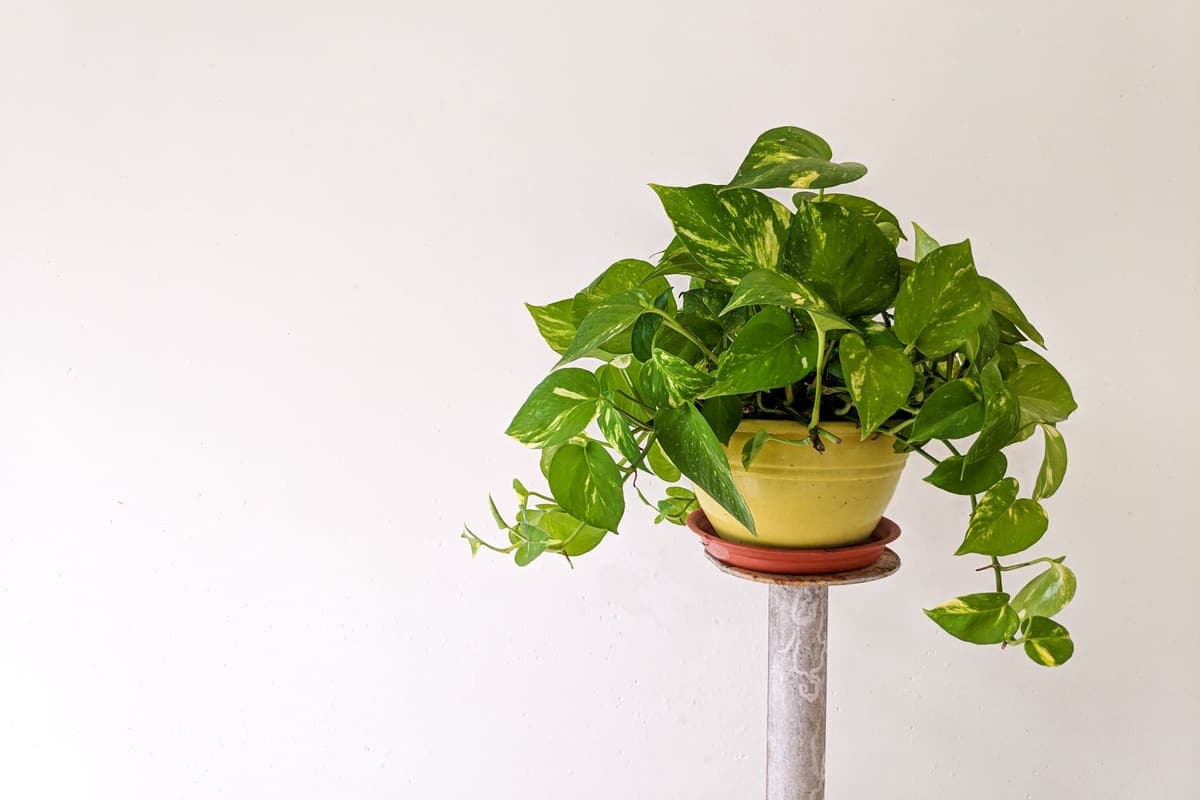
Pothos (Epipremnum aureum)
Learning to read a plant, rather than guessing at it
Not the most drought-tolerant plant here, but the most honest one: it wilts visibly and dramatically when it is thirsty and perks back up within hours of a drink. For a serial plant killer, a plant that tells you what is wrong is worth more than one that suffers quietly.
#ad We do not currently hold a live price for this, so we do not show one. How we make money.
Published specification
- Published watering cadence
- Tropical band, once or twice a week
- Light
- Low to bright indirect
- Thirst signal
- Pronounced, reversible wilt
- Published watering cadence: Virginia Cooperative Extension SPES-804
- Light: Published horticultural guidance
- Thirst signal: Published horticultural guidance
Refill interval - computed, not tested
A 750 ml bottle spike covers a 6-inch pothos for 8 to 15 days
The tropical band is once or twice a week, which is 3.5 to 7 days per watering. 750 ml divided by 350 ml for a 6-inch pot is 2.1 waterings, so 8 to 15 days.
Assumes: 6-inch pot, indoors, tropical frequency band. Light, temperature, humidity, soil mix and season all change how fast a pot dries, so treat this as a planning range and not a guarantee.
What is good about it
- Wilts obviously before it dies, which is the feature that actually teaches you the habit
- Recovers from a full wilt within hours, so a mistake is not fatal
- Roots in a glass of water, so one plant becomes several for free
What is not
- The tropical band means a genuinely shorter safe interval than the snake plant or ZZ
- Trails, so it needs cutting back or somewhere to hang
- Toxic to cats and dogs if chewed
Skip this one if
Skip it if you travel for more than about ten days at a time without cover. Its cadence band is four times tighter than a succulent's, and no amount of goodwill changes that.
How it scored
- Forgiveness of neglect
- 7.5
- Low-light tolerance
- 9.0
- Overwatering tolerance
- 7.0
- Availability and price
- 10.0
- Overall
- 8.6 / 10
Our editorial score, from published specifications and computed intervals. Not a test result. Specification source: Virginia Cooperative Extension, watering frequency bands.
Spider Plant (Chlorophytum comosum)
Households with pets, and hanging pots
Tuberous roots give it a real internal water buffer, and it is the one plant here that is genuinely non-toxic to cats and dogs. It is also the plant the one published globe account we found managed to waterlog, which is a useful warning.
#ad We do not currently hold a live price for this, so we do not show one. How we make money.
Published specification
- Published watering cadence
- Tropical band, once or twice a week, with a tuberous drought buffer
- Light
- Bright indirect, and it scorches in direct sun
- Pet safety
- Non-toxic to cats and dogs
- Published watering cadence: Virginia Cooperative Extension SPES-804
- Light: Published horticultural guidance
- Pet safety: Published horticultural guidance
What is good about it
- Tuberous roots store water, so it survives being forgotten better than its cadence band suggests
- Non-toxic to pets, which rules out most of this list for some households
- Produces plantlets, so one plant fills a shelf for free
What is not
- Brown leaf tips at the first sign of stress, which looks worse than it is
- The same tubers that buffer drought rot readily if it is kept wet
- Wants brighter light than the true low-light survivors
Skip this one if
Skip it if the plan is to leave a small watering globe in it and go away. That specific combination is the one published failure account we found in this whole category, and the plant ended up waterlogged.
How it scored
- Forgiveness of neglect
- 8.0
- Low-light tolerance
- 6.5
- Overwatering tolerance
- 5.5
- Availability and price
- 10.0
- Overall
- 8.4 / 10
Our editorial score, from published specifications and computed intervals. Not a test result. Specification source: The Indoor Nursery, first-hand account of a waterlogged spider plant.
Lechuza Classico Color 21
A desk or shelf plant you want to stop thinking about
The only planter in this roundup whose maker publishes the reservoir capacity in liters, which is the single number that decides how long you can leave it. Five liters against a 6-inch tropical root ball is the longest computed interval on this page by a wide margin.
#ad We do not currently hold a live price for this, so we do not show one. How we make money.
Published specification
- Reservoir capacity
- 5 liters
- External dimensions
- 9 x 9 x 8 in (21 x 21 x 20 cm)
- Water level indicator
- Yes, float gauge
- Drainage plug
- Yes, for outdoor use
- Material
- Frost and UV resistant polypropylene
- Reservoir capacity: Lechuza published specification, via retail listing
- External dimensions: Lechuza published specification, via retail listing
- Water level indicator: Lechuza published specification
- Drainage plug: Lechuza published specification
- Material: Lechuza published specification
Refill interval - computed, not tested
Roughly 7 to 14 weeks between refills
5,000 ml reservoir divided by 350 ml per thorough watering of a 6-inch pot is 14.3 waterings. At the published cadence for a tropical houseplant of once or twice a week, that is 49 to 98 days.
Assumes: 6-inch tropical root ball, indoors, average room conditions. Light, temperature, humidity, soil mix and season all change how fast a pot dries, so treat this as a planning range and not a guarantee.
What is good about it
- Publishes the reservoir capacity, which almost nothing else in this category does
- The float gauge means you never have to guess whether it needs topping up
- The drainage plug lets the same planter work outdoors without drowning the plant in a wet week
- Sub-irrigation from a granulate layer rather than a wick, so there is no wick to rot or clog
What is not
- Expensive for a 9-inch pot, and the price is most of the argument against it
- The system is built around Lechuza's own mineral granulate, so you are buying into a way of potting, not just a pot
- A 5-liter reservoir under an 8-inch or larger plant is a much shorter interval than the headline suggests
Skip this one if
Skip it if you want one pot to cover a large floor plant. The reservoir is sized for a small-to-medium root ball, and the interval collapses as the plant gets bigger. Skip it too if you like repotting into ordinary potting mix, because the granulate layer is part of the design.
How it scored
- Published capacity
- 10.0
- Computed interval
- 9.5
- Build and materials
- 9.0
- Value for money
- 6.5
- Ease of setup
- 8.5
- Overall
- 8.8 / 10
Our editorial score, from published specifications and computed intervals. Not a test result. Specification source: Lechuza Classico Color 21 retail listing.
Questions people actually ask
- What plants are best for self-watering pots?
Plants published in the tropical watering band, once or twice a week, because they want an evenly moist root zone. Pothos, philodendron, monstera, peace lily, spider plant, ferns, calathea and most culinary herbs all suit one, and the moisture-sensitive ones like ferns and calathea benefit most.
- Can you put succulents in a self-watering pot?
We would not. Succulents and cacti are published at once or twice a month, and their tolerance depends on the mix drying out between waterings. A permanently charged reservoir removes that dry period, which is the condition root-rot organisms need. If you must, keep the reservoir empty except for deliberate occasional fills.
- Are snake plants and ZZ plants good in self-watering pots?
They are excellent plants and a poor match for this pot. Both sit in the succulent band, so the wide safe interval that makes them forgiving is precisely what a reservoir cancels out. Use them in an ordinary pot with drainage and enjoy how little they ask of you.
- Do self-watering pots work for herbs and vegetables?
Yes, and it is one of the strongest use cases, because herbs and fruiting vegetables have high, steady demand. Expect to refill often rather than rarely. In hot weather an outdoor sub-irrigated planter still wants topping up daily, so treat it as a labor saver rather than a vacation solution.
- Why is my plant wilting in a new self-watering pot?
Most likely the capillary path was never primed. Dry mix has air in its pores rather than water, so the column cannot form and the reservoir sits full while the plant goes thirsty. Water thoroughly from the top once to establish the path, then let the reservoir do the work.
Sources
Sources
- Criscione and Holliday-Goulart, Properly Watering Container Houseplants, Virginia Cooperative Extension SPES-804 (2026)
- Daughtry, Watering but Not Overwatering Houseplants, NC State Extension (2022)
- Plants Grown in Containers, NC State Extension Gardener Handbook chapter 18
- Royal Horticultural Society, Watering plants wisely