Guide
Self-Watering Pots and Root Rot
The objection deserves a straight answer rather than a dismissal. Here is the actual mechanism, and the three usage errors that cause it.
By Scooter M. - Enthusiast. Reads the manuals, compiles the specs, does the math. | Published
The short answer
What root rot actually is
It is not a condition a plant develops from being unhappy. NC State Extension is specific: root rots are caused by several fungal and fungus-like organisms such as Pythium, Phytophthora, Rhizoctonia and Fusarium. These organisms are commonly present in potting mix already. What changes is whether the conditions favor them, and the condition they need is wet and poorly drained.
It is also why a saucer left full under an ordinary pot creates the same conditions as a badly used reservoir, without anyone intending it.
That framing matters here, because it means the question is not whether a self-watering pot holds water - obviously it does - but whether the root zone is waterlogged and oxygen-starved. Those are different things. A well-designed sub-irrigated planter keeps a physical clearance between the water surface and the root zone, and the mix above it stays moist and aerated rather than saturated.
The three ways people create the conditions anyway
Top-watering as well as filling the reservoir. This is by far the most common. It saturates the mix from above, the air gap closes, and the roots end up in exactly the condition the pathogens want. If you buy one of these pots, the habit you have to break is the pouring one.
Overfilling past the designed level. Reservoirs have a fill line or a tube top for a reason. Filling beyond it floods the clearance. A planter with an overflow protects you from this; one without does not.
Using a dense or soil-based mix. A heavy mix holds water in place instead of moving it, so the lower portion of the root zone stays saturated regardless of the air gap. This is also the mix that fails to wick, so you get the worst of both - a wet bottom and a dry top.
Outdoors, the weather does it for you
A reservoir planter left out in a wet week fills from above and the air gap disappears without anybody doing anything wrong. This is the single reason a drainage plug, an overflow or a mulch cover is not optional outdoors, and it is worth checking before you buy - we go through which planters have which.
How to spot it early
The confusing part is that the first symptom is usually wilting, which looks like thirst. NC State Extension notes exactly this trap: people misinterpret wilting lower leaves as insufficient water and add more, and the article is blunt that you should inspect the root system and the moisture level before adding more water.
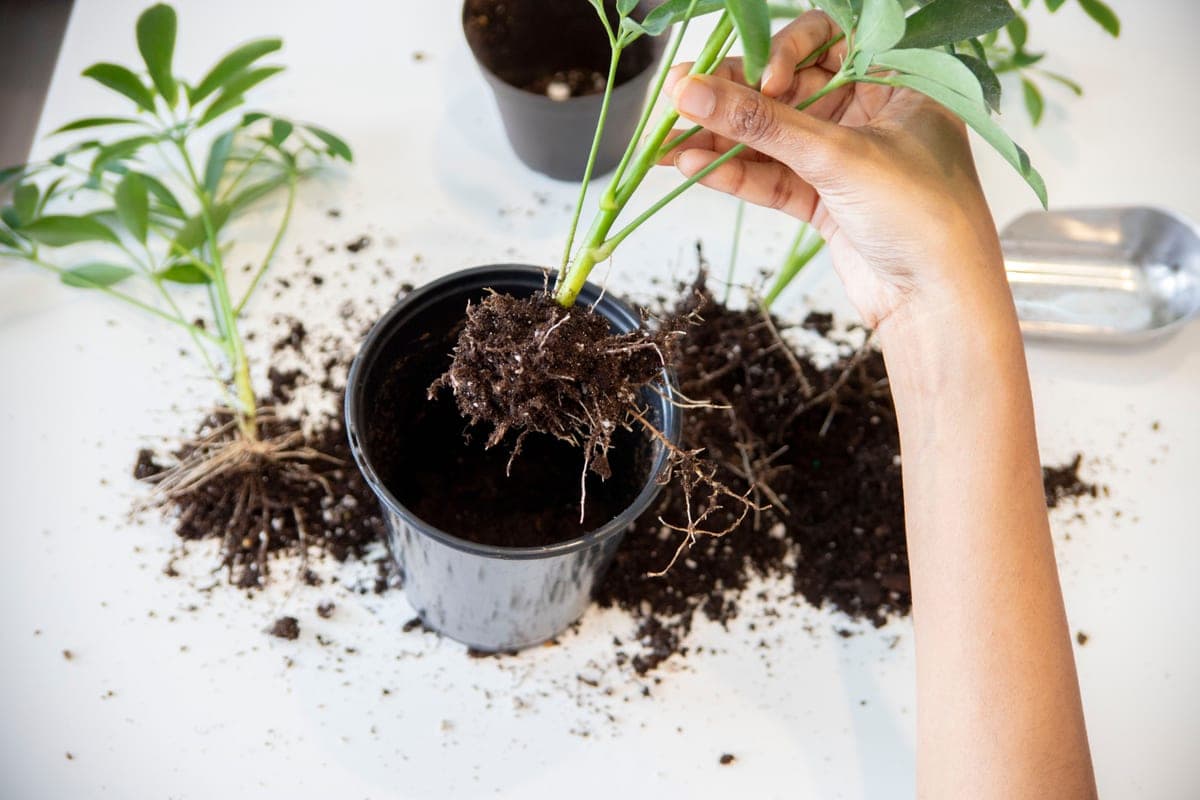
The check is quick. Healthy roots are firm, white and carry lots of thin feeder roots. Rotted roots are mushy and brown or reddish, and the mix often smells. Virginia Cooperative Extension lists the above-soil signals for overwatering as wilting, yellowing foliage, mushy leaves and stems, leaf drop, stunted growth, rotten-smelling soil and fungus gnats. Fungus gnats in particular are a good early tell - they breed in persistently wet mix.
If you are there now, do not read further here. The rescue steps are on the rescue page and they are more useful to you than this argument.
The verdict
The objection is a fair one and the answer is conditional. Used as designed, with an appropriate mix, filled only at the reservoir, a self-watering planter is not a rot risk and arguably reduces one by eliminating the saturate-and-dry swing. Used the way most people instinctively use a pot - watering it from the top when it looks dry - it creates precisely the conditions the pathogens need.
Which means the honest recommendation is: if you cannot see yourself breaking the top-watering habit, buy a moisture meter and a plain pot instead. It is cheaper, it suits your existing habit, and it will kill fewer plants.
The other half of the answer is the plant itself. Drought-adapted species - snake plants, ZZ plants, succulents and hoyas - carry the risk into a reservoir pot however carefully you use it, because their published cadence assumes a dry period the pot is designed to remove.
Questions people actually ask
- Do self-watering pots cause root rot?
Not when used as designed. The air gap between the reservoir and the root zone keeps roots out of standing water. Rot follows from top-watering as well as filling the reservoir, overfilling past the designed level, or using a mix too dense to drain.
- What causes root rot in houseplants?
Fungal and fungus-like organisms including Pythium, Phytophthora, Rhizoctonia and Fusarium, which thrive in wet, poorly drained soil and attack weakened plants. They are commonly present already - what changes is the conditions.
- How do I know if my plant has root rot?
Lift it out and look. Healthy roots are firm, white and full of thin feeder roots. Rotted roots are mushy and brown or reddish, and the mix often smells. Above the soil, look for yellowing, mushy stems and fungus gnats alongside the wilting.
- Can a plant recover from root rot?
Often, if you catch it before the whole system is gone. The steps are to stop watering, unpot, trim the rotted roots back to firm white tissue, and repot into fresh mix in a clean pot. The full procedure is here.
- Should I put gravel in the bottom for drainage?
No. A coarse layer under a fine mix creates a perched water table at the interface and makes the saturated zone worse, not better. In a self-watering planter it also disrupts the capillary path the system depends on.
Sources