Roundup
Best Soil pH Testers and 3-in-1 Soil Meters
A pH number you cannot calibrate is a color, not a measurement. Which is why the chemistry beats the probes here - and why the one probe that publishes its calibration is worth the money.
By Scooter M. - Enthusiast. Reads the manuals, compiles the specs, does the math. | Published
Disclosure
We earn a commission if you buy through our links. It does not change what we recommend or what you pay. Full disclosure.
The short answer
Why this hub is suspicious of pH probes
This site has already worked through what a cheap soil probe does and does not do. A two-prong moisture meter reads electrical conductivity between its tips, and not one meter in the category publishes an accuracy figure or a calibration method. That is tolerable for moisture, where you want wetter-or-drier rather than a number, and you can sanity-check it with a finger.
pH is different in one important way: you cannot check it by hand. There is no finger test for acidity. So a pH scale that publishes no calibration is asking for a kind of trust the moisture scale never needed - and the same probe, sold as 3-in-1, is usually offering all three readings from a pair of dissimilar metal prongs and a galvanic reaction.
That is the whole reason chemistry comes first on this page. A capsule or a strip contains an indicator that changes color at known pH values. It is a measurement with a mechanism you can describe. A needle with no calibration is an opinion.
How we ranked them
We have not tested these against a reference buffer. There is no lab here. What follows is each maker’s published listing, judged on the questions this hub always asks.
Does it publish a method or a calibration? First, and it decides the ranking. A three-point calibration at pH 4.01, 7.0 and 10.01 is a checkable claim. “High accuracy” is not.
Does it measure or infer? Reagent chemistry measures. A conductivity probe infers, and responds to dissolved salts as well as to acidity - the same objection we raise on the accuracy page.
How many tests, and at what cost each? A kit with five pH capsules and a kit with a hundred strips are different products for different jobs.
Does it tell you what to do with the number? A pH reading on its own is trivia. A 450-plant preference list or a lime-and-sulfur estimator turns it into an action.
| Tester | Method | Published range | Calibration published | Tests |
|---|---|---|---|---|
| Luster Leaf Rapitest kit | Capsule reagent + comparator | Not published | Not applicable | 5 pH (20 total) |
| Garden Tutor strips | Three-pad test strip | pH 3.5 to 9 | Not applicable | 100 |
| Tadeto digital tester | Glass electrode probe | Not published | Yes - 3-point, buffers included | Unlimited |
| Luster Leaf 4-Way digital | Electronic probe | Not published | No | Unlimited |
| SONKIR MS02 | Battery-free conductivity probe | Not published | No | Unlimited |
What a soil pH number is actually for
pH decides whether the nutrients already in your soil are available to roots. That is why Clemson Extension’s soil-testing guidance pairs the pH figure with a lime or fertilizer recommendation rather than reporting it alone - and why it warns that adding lime or phosphorus indiscriminately can create nutrient imbalances that reduce plant health.
Read that warning carefully, because it sets the standard a home test has to meet. If the number is going to make you spread lime over a lawn or dig sulfur into a bed, it needs to be right. If it is going to tell you that your blueberries are in soil that is far too alkaline, an indication is enough.
For anything in the first category, the honest recommendation is not on this page: it is your county extension office’s soil lab, which returns a pH figure and an amendment rate for the crop you named. Clemson sells a prepaid mailer for exactly that. Home kits are for the second category - orientation, comparison between beds, and checking whether last year’s amendment moved anything.
Houseplants, where pH matters less than you think
Most people arriving at a 3-in-1 meter are holding a houseplant, not a lawn. For that buyer the honest answer is that pH is rarely the problem. A bagged potting mix is manufactured close to neutral, gets replaced every year or two, and does not drift the way a garden bed does.
The reading that actually changes how a houseplant does is moisture, and that is a different tool - the indoor moisture meters are ranked here, with how to use one properly alongside. If a houseplant is struggling, work through watering first; overwatered versus underwatered explains the symptoms that look like a nutrient problem and are not.
The one thing a 3-in-1 dial is good at
Not pH. Not, honestly, light either - a photographic light meter or a phone app does that better. Moisture is the function these probes do adequately, and it is the reason we still rank cheap probes positively elsewhere on this site.
SONKIR’s own listing contains the most useful sentence on the whole product page: if the soil is too dry, the indicator will not move. That is the device telling you it needs conductive moisture to read anything at all - which is fine for a moisture scale and fatal for a pH scale, since dry soil has a pH just as much as wet soil does.
Chemistry, strips or a probe?
Capsules if you want the fullest picture once or twice a season. You get nitrogen, phosphorus and potash alongside pH, and the comparator is easy to read in daylight. The limit is quantity: five pH tests per kit.
Strips if you want to test a lot - several beds, or the same bed before and after amending. A hundred tests and a published 3.5 to 9 range makes repeat testing cheap, which is how you actually learn something about a garden.
A calibrated probe if you are growing hydroponically, brewing nutrient solution, or otherwise need a number you can repeat on demand. That is a real use case, and the Tadeto is the only device here equipped for it - at the cost of buffer solutions, wet electrode storage and eventual electrode replacement.
The honest cons on every pick
Luster Leaf Rapitest kit. Consumable - five pH tests then buy another. Color matching by eye. No published accuracy figure behind the word accurately in its own title.
Garden Tutor strips. pH only, no nutrients. No tolerance published behind “professional-grade”. The web-based reader is a lot of ceremony for matching a color.
Tadeto digital tester. The most expensive thing here, it needs buffer calibration and potassium chloride storage, and it still publishes no accuracy tolerance - only a procedure.
Luster Leaf 4-Way. No calibration and no accuracy for any of its four readings. An uncalibrated pH probe drifts silently. Electronics living in wet soil.
SONKIR MS02. The pH dial is the weakest function on a tool whose moisture function is fine. It will not read at all in dry soil, and it reads salts as well as acidity.
What we would buy
The capsule kit for a garden, the strips if you are testing more than a couple of spots, and the lab test before you spend money on amendments. For a houseplant, skip pH altogether and buy a decent cheap moisture meter instead - it will change how your plants do, which a pH reading on fresh potting mix almost never will.
Ranked picks
Quick picks
Ranked on published specifications and the computed refill interval, not on looks. Tap any row for the full write-up, including who should skip it.
| # | Product | Best for | Score | Price |
|---|---|---|---|---|
| 1 | 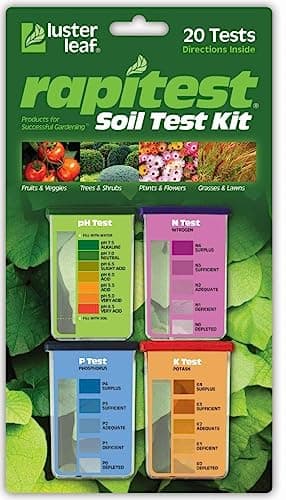 Luster Leaf Rapitest Soil Test Kit, 20 TestsA gardener who wants a real pH reading and the N-P-K picture alongside it Luster Leaf Rapitest Soil Test Kit, 20 TestsA gardener who wants a real pH reading and the N-P-K picture alongside it | Best overall, real chemistry | 8.7 | $15.99 - View on Amazon |
| 2 | 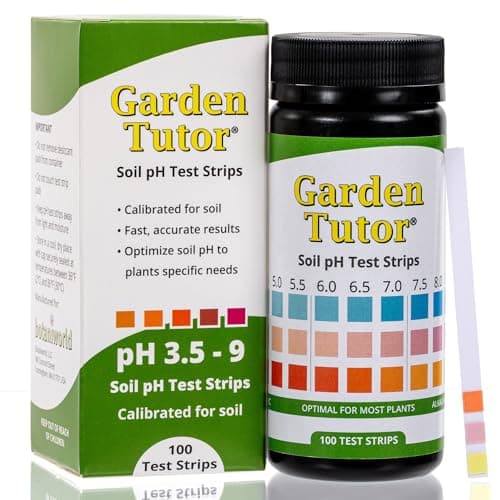 Garden Tutor Soil pH Test Strips, 100 StripsTesting several beds, or the same bed repeatedly through a season Garden Tutor Soil pH Test Strips, 100 StripsTesting several beds, or the same bed repeatedly through a season | Best value, 100 tests | 8.4 | $12.98 - View on Amazon |
| 3 | 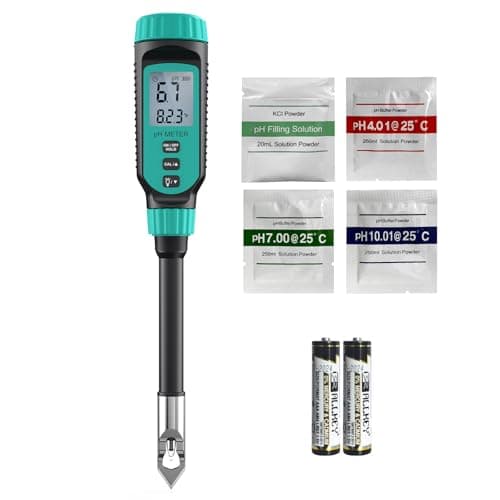 Tadeto Digital Soil pH Tester with Calibration PowderSomeone who needs a repeatable number rather than an indication Tadeto Digital Soil pH Tester with Calibration PowderSomeone who needs a repeatable number rather than an indication | The only published calibration | 8.1 | $47.99 - View on Amazon |
| 4 | 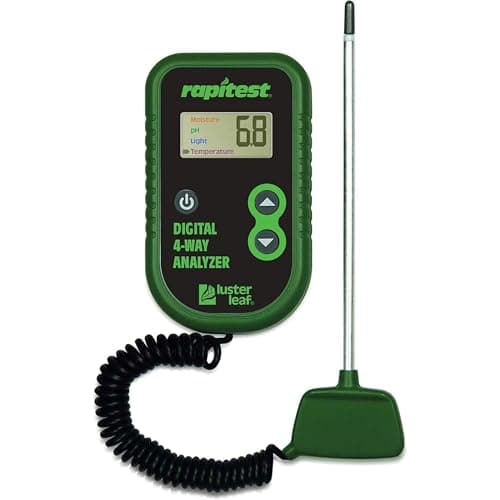 Luster Leaf Rapitest 4-Way Digital Soil AnalyzerOne instrument for the four readings, from a brand with a track record Luster Leaf Rapitest 4-Way Digital Soil AnalyzerOne instrument for the four readings, from a brand with a track record | Best multi-reading probe | 7.2 | $25.79 - View on Amazon |
| 5 | 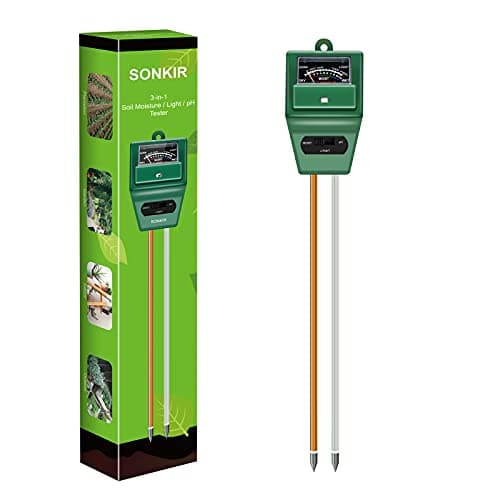 SONKIR MS02 3-in-1 Soil Moisture, Light and pH TesterA moisture reading first, with the pH dial treated as decoration SONKIR MS02 3-in-1 Soil Moisture, Light and pH TesterA moisture reading first, with the pH dial treated as decoration | Skip the pH dial | 6.1 | $9.99 - View on Amazon |
Scores are our editorial judgment from published specifications. They are not test results, and they are deliberately not marked up as ratings in this page’s structured data.
Pick #1 - Best overall, real chemistry
Luster Leaf Rapitest Soil Test Kit, 20 Tests
A gardener who wants a real pH reading and the N-P-K picture alongside it
A chemical test rather than a probe: you mix soil with water, drop in a capsule and read the color against a comparator. It is the only approach on this page that measures something rather than inferring it, and the published 450-plant pH preference list turns the number into an actual decision.
#ad Price as of September 21, 2026, from Amazon. Prices change. How we make money.
Published specification
- Method
- Capsule reagent and color comparator, mixed with a soil and water sample
- Tests included
- 20 total - 5 each of pH, nitrogen, phosphorus and potash
- Reference material
- Soil pH preference list for over 450 plants included
- Accuracy figure
- Not published
- Calibration
- Not applicable - single-use reagents, no instrument to calibrate
- Method: Luster Leaf published description
- Tests included: Luster Leaf published listing specification
- Reference material: Luster Leaf published description
- Accuracy figure: Checked on the Luster Leaf listing
- Calibration: Our reading of the published method
What is good about it
- Chemistry, not a conductivity guess - the color change is a real reaction
- Covers nitrogen, phosphorus and potash as well as pH
- The 450-plant preference list tells you whether your number is a problem
- Nothing to calibrate, no batteries, nothing to drift
What is not
- Consumable: 5 pH tests and then you buy another kit
- Color matching by eye is subjective in poor light
- Requires mixing soil and water and waiting, rather than pushing a probe in
- No accuracy figure is published, so 'accurately measures' in the title is the maker's word
Skip this one if
Skip it if you are about to spend real money on lime or sulfur for a lawn. At that point the lab test your county extension office offers costs little more and comes with an amendment recommendation, which is the part that actually saves money.
How it scored
- Publishes its method
- 9.0
- Measures rather than infers
- 9.5
- Cost per test
- 6.5
- Tells you what to do next
- 9.5
- Ease of use
- 7.0
- Overall
- 8.7 / 10
Our editorial score, from published specifications and computed intervals. Not a test result. Specification source: Luster Leaf Rapitest soil test kit retail listing.
Pick #2 - Best value, 100 tests
Garden Tutor Soil pH Test Strips, 100 Strips
Testing several beds, or the same bed repeatedly through a season
Strips that publish the one figure most of this category leaves out: a stated measuring range of pH 3.5 to 9, on a three-pad design, read in about 60 seconds. A hundred tests for less than the price of a capsule kit makes it the one to buy if you want to test repeatedly rather than once.
#ad Price as of September 21, 2026, from Amazon. Prices change. How we make money.
Published specification
- Method
- Three-pad test strip dipped in a soil and water slurry
- Published range
- pH 3.5 to 9
- Tests included
- 100 strips
- Read time
- About 60 seconds
- Reading aid
- Web-based photo reader, plus a lime and sulfur application estimator
- Accuracy figure
- Not published - the listing says professional-grade without a tolerance
- Method: Garden Tutor published description
- Published range: Garden Tutor published listing specification
- Tests included: Garden Tutor published listing specification
- Read time: Garden Tutor published description
- Reading aid: Garden Tutor published description
- Accuracy figure: Checked on the Garden Tutor listing
What is good about it
- Publishes a measuring range, which almost nothing else here does
- A hundred tests means you can check several spots and repeat after amending
- Cheapest cost per pH test on this page by a wide margin
- The lime and sulfur estimator turns the reading into an action
What is not
- No accuracy or tolerance figure behind the phrase professional-grade
- pH only - no nitrogen, phosphorus or potash
- Strips need a soil slurry and a steady hand, same as any wet chemistry
- The AI reader is a web upload, which is a lot of ceremony for a color chart
Skip this one if
Skip it if you want one test and a broader picture of your soil. The capsule kit costs a little more and adds the three nutrient tests that tell you why the pH matters.
How it scored
- Publishes its method
- 9.5
- Measures rather than infers
- 9.0
- Cost per test
- 10.0
- Tells you what to do next
- 8.5
- Ease of use
- 7.0
- Overall
- 8.4 / 10
Our editorial score, from published specifications and computed intervals. Not a test result. Specification source: Garden Tutor 100-strip soil pH test kit retail listing.
Pick #3 - The only published calibration
Tadeto Digital Soil pH Tester with Calibration Powder
Someone who needs a repeatable number rather than an indication
The only probe-style pH meter we found that publishes a calibration procedure: three-point calibration at pH 4.01, 7.0 and 10.01, with buffer powder in the box. Across this entire site that is a first - every other meter we have checked publishes no calibration method at all.
#ad Price as of September 21, 2026, from Amazon. Prices change. How we make money.
Published specification
- Calibration
- Three-point, in pH 4.01, 7.0 and 10.01 buffer solutions; calibration powder included
- Display
- Backlit LCD with real-time temperature, data hold, and a red alert below pH 3.5 or above 12
- Media
- Published for soil, water, solution and food
- Probe protection
- Conical zinc alloy protective cap over the electrode
- Electrode care
- Maker specifies storing the electrode wet with potassium chloride solution
- Stated accuracy
- Not published as a figure
- Calibration: Tadeto published description
- Display: Tadeto published description
- Media: Tadeto published description
- Probe protection: Tadeto published description
- Electrode care: Tadeto published description
- Stated accuracy: Checked on the Tadeto listing
What is good about it
- Publishes a real three-point calibration routine and supplies the buffer powder
- Temperature readout alongside pH, which matters because pH readings move with temperature
- Replaceable-style electrode care instructions published rather than hidden
- Works in solution as well as soil, so it suits hydroponic growers too
What is not
- The most expensive item on this page, several times the price of the chemistry kits
- A glass pH electrode needs wet storage and eventually dies - this is maintenance, not a gadget
- Still publishes no accuracy tolerance, only a calibration method
- Reading soil directly with a pH probe is inherently less repeatable than reading a slurry
Skip this one if
Skip it if you test twice a year. Calibration buffers, potassium chloride storage and electrode replacement are a hobby in themselves, and a capsule kit gives a gardener the same decision for a fraction of the effort.
How it scored
- Publishes its method
- 10.0
- Measures rather than infers
- 8.5
- Cost per test
- 7.5
- Tells you what to do next
- 5.5
- Ease of use
- 5.5
- Overall
- 8.1 / 10
Our editorial score, from published specifications and computed intervals. Not a test result. Specification source: Tadeto digital soil pH tester retail listing.
Pick #4 - Best multi-reading probe
Luster Leaf Rapitest 4-Way Digital Soil Analyzer
One instrument for the four readings, from a brand with a track record
A digital four-in-one from the brand that has sold home soil tests for decades: pH, moisture, light and temperature on a corded probe. It publishes what it measures and, like every other probe on this page bar one, nothing about how accurately it measures any of it.
#ad Price as of September 21, 2026, from Amazon. Prices change. How we make money.
Published specification
- Measures
- Soil pH, moisture, light and temperature
- Readout
- Digital display on a corded probe
- Reference material
- Full pH plant list for over 450 plants included
- Calibration
- Not published
- Accuracy figure
- Not published
- Measures: Luster Leaf published listing specification
- Readout: Luster Leaf published description
- Reference material: Luster Leaf published description
- Calibration: Checked on the Luster Leaf listing
- Accuracy figure: Checked on the Luster Leaf listing
What is good about it
- Four readings from one tool, including temperature, which few probes offer
- The corded probe lets you read the display while the tip is in the pot
- Comes with the same 450-plant pH reference as the capsule kit
- A long-established soil-testing brand rather than an anonymous one
What is not
- No calibration method and no accuracy figure published for any of its four readings
- A pH probe you cannot calibrate will drift, and you will not know when
- Batteries and electronics in a tool that lives in wet soil
- More expensive than the chemistry kits that measure pH more defensibly
Skip this one if
Skip it if pH is the reading you care about. Buy it for moisture, light and temperature, and take its pH number as an indication to be confirmed with chemistry or a lab.
How it scored
- Publishes its method
- 4.0
- Measures rather than infers
- 5.5
- Cost per test
- 9.0
- Tells you what to do next
- 8.0
- Ease of use
- 9.0
- Overall
- 7.2 / 10
Our editorial score, from published specifications and computed intervals. Not a test result. Specification source: Luster Leaf Rapitest 4-way digital soil analyzer retail listing.
Pick #5 - Skip the pH dial
SONKIR MS02 3-in-1 Soil Moisture, Light and pH Tester
A moisture reading first, with the pH dial treated as decoration
The cheap battery-free probe that turns up in every search for a soil pH meter. As a moisture probe it is the same conductivity device we rank elsewhere on this site and it is fine. As a pH meter it publishes no calibration, no accuracy and no method - and its own listing warns the needle will not move in dry soil.
#ad Price as of September 21, 2026, from Amazon. Prices change. How we make money.
Published specification
- Measures
- Soil moisture, soil pH and sunlight level via a function switch
- Power
- No battery required
- Maker's limitation
- Cannot test the pH of any liquid; the indicator will not move if the soil is too dry
- Calibration
- Not published
- Accuracy figure
- Not published
- Measures: SONKIR published description
- Power: SONKIR published description
- Maker's limitation: SONKIR published description
- Calibration: Checked on the SONKIR listing
- Accuracy figure: Checked on the SONKIR listing
What is good about it
- Costs less than a bag of potting mix
- No batteries, nothing to charge, nothing to leak
- The moisture function is genuinely useful and is what most buyers actually need
- The listing is honest about the dry-soil limitation, which many are not
What is not
- No calibration and no accuracy figure for the pH scale - the number is an indication at best
- Two probes reading pH by conductivity respond to dissolved salts as well as acidity
- The needle sits still in dry soil, which is exactly when a gardener wants a reading
- Three functions on one dial invites trusting the weakest of them
Skip this one if
Skip the pH scale entirely if you are deciding whether to lime a lawn or acidify a bed for blueberries. That decision needs chemistry or a lab, not an uncalibrated needle.
How it scored
- Publishes its method
- 2.5
- Measures rather than infers
- 3.0
- Cost per test
- 10.0
- Tells you what to do next
- 4.0
- Ease of use
- 9.5
- Overall
- 6.1 / 10
Our editorial score, from published specifications and computed intervals. Not a test result. Specification source: SONKIR MS02 3-in-1 soil tester retail listing.
Questions people actually ask
- Are cheap 3-in-1 soil pH meters accurate?
None of the ones we checked publishes an accuracy figure or a calibration method, so there is no way to answer that from the listing - which is itself the answer. They read conductivity between two prongs, which responds to dissolved salts as well as acidity, and SONKIR’s own listing notes the needle will not move in dry soil. Treat the pH scale as an indication and use chemistry or a lab for a decision.
- What is the most accurate way to test soil pH at home?
A reagent-based kit - capsules or strips - because the color change is a chemical reaction at known pH values rather than an inference from conductivity. A glass electrode meter calibrated in pH 4.01, 7.0 and 10.01 buffers is more precise again, but only if you actually calibrate it and store the electrode wet. For anything you will spend money amending, your county extension soil lab beats all of them.
- Do houseplants need a soil pH meter?
Rarely. Bagged potting mix is manufactured close to neutral and gets replaced every year or two, so it does not drift the way garden soil does. Watering is what decides how a houseplant does. If something looks wrong, check moisture at depth first - the symptoms of over and underwatering are far more common than a pH problem in a pot.
- How often should you test garden soil pH?
Once a season is plenty for an established bed, and again a few months after you have added lime or sulfur to see whether it moved. That is the argument for a hundred-strip kit over a five-test kit: the useful information is the before and after, not a single reading in isolation.
- Can you use a soil pH meter in water or nutrient solution?
Only if the maker says so. SONKIR states plainly that its tester cannot be used to test the pH of any liquid. The Tadeto is published for soil, water, solution and food, and it is the one to use for hydroponic nutrient solution - after calibrating it in buffers.
Sources
Sources
- Soil Testing, Clemson Cooperative Extension HGIC 1652 (revised 2016)
- Luster Leaf Rapitest soil test kit published specification, via retail listing
- Garden Tutor soil pH test strip published specification, via retail listing
- Tadeto digital soil pH tester published calibration procedure, via retail listing
- Luster Leaf Rapitest 4-way digital soil analyzer published specification, via retail listing
- SONKIR MS02 3-in-1 soil tester published description, via retail listing
- Criscione and Holliday-Goulart, Properly Watering Container Houseplants, Virginia Cooperative Extension SPES-804 (2026)