Roundup
How to Get Rid of Fungus Gnats in Houseplants
The flies you can see are the part that does not matter. Everything that works targets the larvae in the top inch of soil - and the first fix costs nothing.
By Scooter M. - Enthusiast. Reads the manuals, compiles the specs, does the math. | Published

Disclosure
We earn a commission if you buy through our links. It does not change what we recommend or what you pay. Full disclosure.
The short answer
The flies are not the problem
A fungus gnat spends most of its life as a larva in the top layer of your potting mix, eating fungi and organic matter - and, as UC IPM notes, chewing roots on the way. The adults you swat at are the short-lived, mobile end of that cycle. Kill them all this afternoon and the next batch emerges from the soil this week.
That is why UC IPM is explicit that the most effective methods target the immature stages in the soil rather than the adults. It is also why the fix people reach for first - a fly spray - does the least. UC IPM says insecticides are rarely warranted for fungus gnats in and around homes at all.
The other number worth knowing: a generation, female to female, takes about 17 days depending on temperature, and generations overlap. That is why a single treatment looks like it failed. You are not watching one population die; you are watching the next one hatch.
Why your plants got them, and what that says about your watering
Both UC IPM and University of Maryland Extension put the cause in one word: moisture. UMD is blunt about the mechanism - overwatering indoor plants feeds the fungi that the larvae eat. Gnats are not a hygiene failure or bad luck. They are a symptom of soil that stays wet near the surface.
On this site that has a specific consequence, and it would be dishonest to skip it: a reservoir pot keeps the mix evenly moist on purpose, and a wick or a capillary mat keeps the surface damp by design. Those are exactly the conditions UMD describes. We have already written about what permanently wet mix does to roots, and gnats are the visible version of the same mistake.
The fix is not to abandon the pot. It is to let the reservoir run down and the surface dry before refilling - and if you want the surface dry while the root zone stays moist, bottom watering does precisely that, which is why it is the watering method least likely to give you gnats in the first place.
How we ranked the controls
We have not run a trial. There is no gnat colony here and no treated-versus-untreated shelf. What follows is each product’s published listing, judged against the published guidance of UC IPM and University of Maryland Extension.
Does it target the larvae? First, and it decides most of the ranking. Anything that only kills adults is a monitoring tool, however satisfying it looks.
Is it a control the extension services actually name? UC IPM names three: Bti, Steinernema nematodes and Hypoaspis predatory mites. All three are on this page. Everything else on the market is asking for trust the extension literature has not given it.
Does the maker publish a dose and a schedule? A product that tells you how much to use, how often and for how long can be followed correctly. One that says “apply as needed” cannot.
How much handling does it need? Granules you sprinkle are a different commitment from live organisms shipped on ice.
| Control | Targets | Named by UC IPM | Published schedule |
|---|---|---|---|
| Bti granules (Mosquito Bits) | Larvae in the soil | Yes, by brand | About every 5 days |
| Yellow sticky traps | Adults in flight | Yes, as monitoring | Replace when full |
| Steinernema feltiae nematodes | Larvae in the soil | Yes | Not published by maker |
| Bti drench (FGX) | Larvae in the soil | Bti yes, brand no | Every 5 to 7 days, 2 to 3 weeks |
| Hypoaspis predatory mites | Larvae in the soil | Yes | Not published by maker |
The free fix, which beats everything you can buy
UC IPM’s water and soil management advice is one sentence: because fungus gnats thrive in moist conditions, avoid overwatering and provide good drainage, and allow the surface of container soil to dry between waterings. UMD adds the outcome - when the soil dries, the larvae die.
In practice that means letting the top inch go properly dry, not briefly crusty, before the next drink. If you are not sure what an inch down feels like, a moisture meter reads that depth for you, and our page on how often to water works through the cadence by plant type.
Two habits help alongside it. Empty standing water from saucers and cache pots, because a permanently wet saucer is a breeding site the pot does not need. And take dead leaves off the soil surface - UC IPM lists decaying organic matter as the other half of what larvae feed on.
Bti, and why it is first
Bacillus thuringiensis subspecies israelensis is a naturally occurring soil bacterium. UC IPM describes it as the biological insecticide for this pest and notes that several Bti products - it names Mosquito Bits and Gnatrol - are readily available to home gardeners. UMD describes Bti as the active ingredient in soil drench products labeled for indoor plants to control fungus gnat larvae.
The practical detail that matters, and that the packaging tends to bury: UC IPM says Bti does not reproduce or persist indoors, so infestations in potting media may need repeated applications at about five-day intervals. One sprinkle is not a course of treatment. Plan on three or four over a fortnight, which conveniently matches the 17-day generation time.
Granules and drenches carry the same active ingredient and differ in how you apply it. Granules go on dry and release as you water; a drench soaks in immediately. The drench has one honest drawback nobody mentions: saturating the top 1 to 2 inches is the exact opposite of letting the surface dry, so for a few weeks the two halves of the plan work against each other.
The living controls, and when they are worth it
Steinernema feltiae nematodes and Hypoaspis predatory mites are the other two organisms UC IPM lists. Both hunt larvae in the soil, both arrive alive, and both ask more of you than a bag of granules.
Nematodes are the better documented of the two: BioLogic publishes a 5 million count and a 200 square foot coverage figure, which is enough to work out what a collection needs. Mites are the more permanent, because they stay in the pot and keep hunting - but the listing we checked publishes a live count and a delivery guarantee and nothing else. No coverage area, no application rate, no shelf life. That is a lot to take on faith for a live product, and it is why the mites rank last here despite being a genuinely good idea.
What about the other things people try
Sand or grit on the surface. A physical barrier layer is a popular suggestion and we are not featuring one, because neither UC IPM nor UMD lists it among the tactics they recommend. It is not obviously harmful; it is just not evidenced, and this site does not rank products on plausibility.
Hydrogen peroxide drenches. Widely repeated online, not part of the extension guidance we follow, and easy to get wrong on roots. Same answer.
Repotting into fresh mix. Reasonable, and it does remove the breeding medium - but UC IPM notes that infested potting media is a common source in the first place. If you repot, you are swapping one bag’s worth of risk for another, so treat and dry the new pot the same way.
Fly sprays. They kill the adults you can see, which is the stage UC IPM says not to bother with, and UC IPM states insecticides are rarely warranted for fungus gnats around the home.
The honest cons on every pick
Mosquito Bits. Needs reapplying about every five days. Does nothing to adults. The label leads with mosquitoes, so the gnat instructions are a sub-section.
Cleanuper sticky traps. Adults only. Unpleasant to look at once full. The glue finds fingers and hair. Individual card dimensions are not published.
Scanmask nematodes. Live, iced, short-lived and the most expensive way to treat two pots. No published shelf life or storage temperature.
Microbe Life FGX. Several times the granule price for the same active ingredient, and its own instruction to saturate the top 1 to 2 inches works against the drying you are trying to do.
Hypoaspis mites. No published coverage, rate or shelf life - a live product sold on a title and a photograph.
What we would do
Put a sticky trap in each affected pot so you can see the trend. Let the top inch dry properly. Sprinkle Bti granules and repeat every five days for a fortnight. That combination costs about the price of one mid-sized houseplant and matches what the extension services recommend, in order.
If adults are still emerging after three weeks of that, escalate to nematodes. And if gnats keep returning every few months, stop treating the gnats and look at the watering - the pot is staying too wet, and the rest of the overwatering symptoms are usually there once you look for them.
Ranked picks
Quick picks
Ranked on published specifications and the computed refill interval, not on looks. Tap any row for the full write-up, including who should skip it.
| # | Product | Best for | Score | Price |
|---|---|---|---|---|
| 1 | 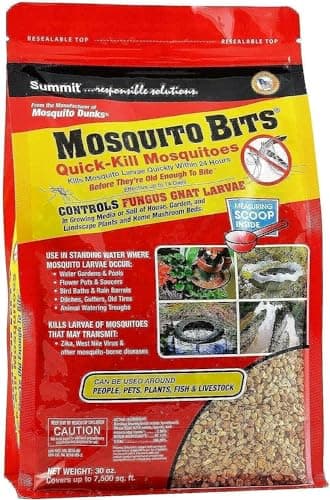 Summit Mosquito Bits, 30 ozKilling the larvae in the pot rather than swatting the adults Summit Mosquito Bits, 30 ozKilling the larvae in the pot rather than swatting the adults | Best overall, and the one UC IPM names | 9.1 | $14.52 - View on Amazon |
| 2 | 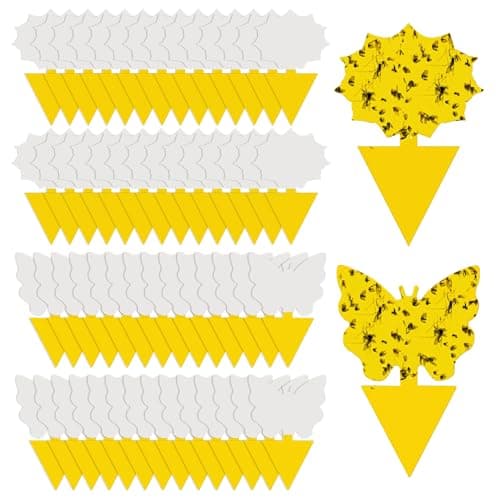 Cleanuper Yellow Sticky Gnat Traps, 58 PackMonitoring the adult population and catching the ones already flying Cleanuper Yellow Sticky Gnat Traps, 58 PackMonitoring the adult population and catching the ones already flying | Best monitor, cheapest thing here | 8.4 | $5.99 - View on Amazon |
| 3 | 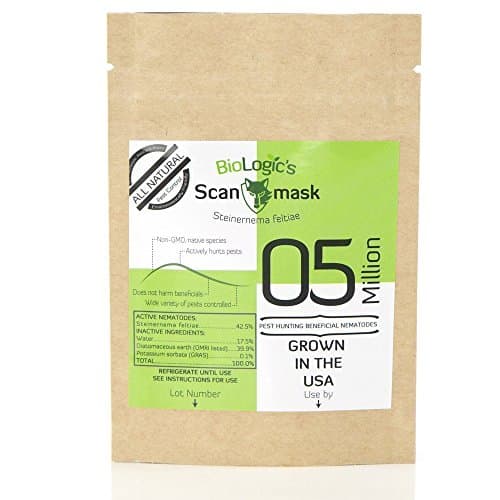 BioLogic Scanmask Steinernema feltiae Nematodes, 5 MillionA stubborn infestation that has survived a Bti course BioLogic Scanmask Steinernema feltiae Nematodes, 5 MillionA stubborn infestation that has survived a Bti course | Best escalation if Bti stalls | 7.9 | $34.99 - View on Amazon |
| 4 | 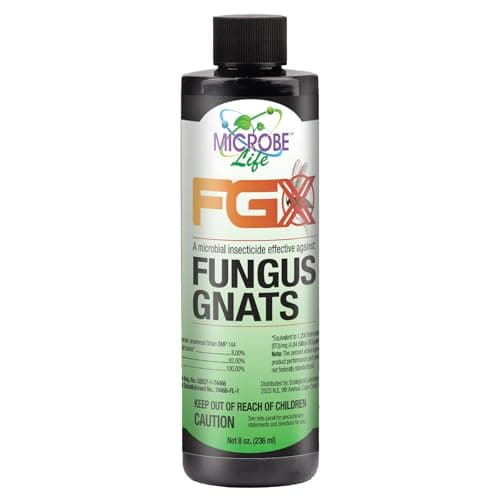 Microbe Life FGX Fungus Gnat Killer, 8 fl ozTreating many pots at once with a measured dose rather than a sprinkle Microbe Life FGX Fungus Gnat Killer, 8 fl ozTreating many pots at once with a measured dose rather than a sprinkle | Best published dose rate | 7.8 | $37.01 - View on Amazon |
| 5 | 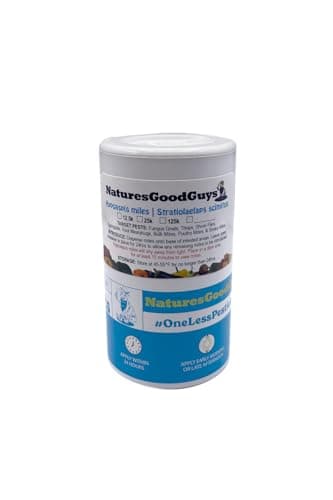 NaturesGoodGuys Hypoaspis miles Predatory Mites, 12,500A large plant collection with a chronic, recurring gnat problem NaturesGoodGuys Hypoaspis miles Predatory Mites, 12,500A large plant collection with a chronic, recurring gnat problem | Skip unless it keeps coming back | 6.8 | $21.15 - View on Amazon |
Scores are our editorial judgment from published specifications. They are not test results, and they are deliberately not marked up as ratings in this page’s structured data.
Pick #1 - Best overall, and the one UC IPM names
Summit Mosquito Bits, 30 oz
Killing the larvae in the pot rather than swatting the adults
Corn cob granules coated in Bti, the soil bacterium UC IPM names as the biological control for fungus gnat larvae - and Mosquito Bits is one of the two products UC IPM names by brand as readily available to home gardeners. It is cheap, it is labeled for fungus gnats in pots, and it targets the stage that actually matters.
#ad Price as of September 21, 2026, from Amazon. Prices change. How we make money.
Published specification
- Active ingredient
- Bti (Bacillus thuringiensis subspecies israelensis) on corn cob granules
- Labeled use
- Labeled to control fungus gnats in plant beds or pots
- How to apply
- Sprinkle on the soil surface, or mix into potting soil before planting
- Pack size
- 30 oz
- Reapplication interval
- About every 5 days while an infestation is being cleared
- Active ingredient: Summit published description
- Labeled use: Summit published description
- How to apply: Summit published description
- Pack size: Summit published listing specification
- Reapplication interval: UC IPM Pest Notes: Fungus Gnats
What is good about it
- Bti is the control UC IPM recommends, and this is one of two products it names by brand
- Labeled for fungus gnats in pots, not just for mosquitoes in standing water
- Targets larvae in the soil, which is where most of the gnat's life is spent
- Cheapest per treatment of anything here, and a 30 oz bag lasts a collection for seasons
What is not
- Bti does not reproduce or persist indoors, so it needs reapplying at about 5-day intervals
- Does nothing to the adults already flying around the room
- Granules on the surface look like grit until they break down
- The label is written for mosquito control first, so the gnat instructions are a sub-section of it
Skip this one if
Skip it if the soil is already dry and you have seen no adults for a fortnight - you have won, and the gnats are gone. Bti is a treatment for an active infestation, not a preventative to keep sprinkling forever.
How it scored
- Targets the larvae
- 10.0
- Evidence behind it
- 10.0
- Ease of use
- 9.0
- Speed
- 7.0
- Value for money
- 9.5
- Overall
- 9.1 / 10
Our editorial score, from published specifications and computed intervals. Not a test result. Specification source: Summit Mosquito Bits 30 oz retail listing.
Pick #2 - Best monitor, cheapest thing here
Cleanuper Yellow Sticky Gnat Traps, 58 Pack
Monitoring the adult population and catching the ones already flying
Yellow sticky traps are the monitoring tool both UC IPM and University of Maryland Extension recommend, and this is a lot of them for very little money. Treat them as the instrument that tells you whether the infestation is growing or shrinking, not as the cure.
#ad Price as of September 21, 2026, from Amazon. Prices change. How we make money.
Published specification
- What it targets
- Adult gnats, fruit flies, whiteflies, thrips and aphids in flight
- Pack size
- 58 traps, in two shapes
- Adhesive faces
- Both faces of each card are coated
- Mounting
- Pointed plastic stake into the soil, or the included wire for hanging baskets
- Card size
- 7 x 7 in packaging dimensions for the pack
- What it targets: Cleanuper published description
- Pack size: Cleanuper published listing specification
- Adhesive faces: Cleanuper published description
- Mounting: Cleanuper published description
- Card size: Cleanuper published listing dimensions
What is good about it
- Extension services recommend yellow sticky traps for exactly this job
- Enough traps to put one in every pot and still have spares
- Both faces are sticky, and the stake holds the card upright at soil level
- Cheapest item on this page by a distance
What is not
- Catches adults only - the larvae in the soil are untouched, so an infestation continues underneath
- Filled cards look exactly as unpleasant as they sound
- The adhesive gets on fingers and hair if you brush past one
- No published trap dimensions for the individual cards, only the pack
Skip this one if
Skip it if you want the problem solved rather than measured. Traps alone will not clear an infestation, because UC IPM's point is that most of a gnat's life happens in the soil where a sticky card cannot reach.
How it scored
- Targets the larvae
- 1.0
- Evidence behind it
- 9.0
- Ease of use
- 10.0
- Speed
- 8.0
- Value for money
- 10.0
- Overall
- 8.4 / 10
Our editorial score, from published specifications and computed intervals. Not a test result. Specification source: Cleanuper 58-pack yellow sticky trap retail listing.
Pick #3 - Best escalation if Bti stalls
BioLogic Scanmask Steinernema feltiae Nematodes, 5 Million
A stubborn infestation that has survived a Bti course
Steinernema feltiae is the second biological control UC IPM lists for fungus gnats, and it is a living organism rather than a bacterium: microscopic nematodes that hunt larvae in the soil. Worth it when Bti has not finished the job, and a genuine commitment in handling.
#ad Price as of September 21, 2026, from Amazon. Prices change. How we make money.
Published specification
- Organism
- Steinernema feltiae (Sf) beneficial nematodes
- Quantity
- 5 million nematodes
- Published coverage
- Treats 200 square feet - enough for all your indoor plants or a couple of raised beds
- How to apply
- Watering can, pump sprayer, hose-end sprayer or Nema-Jet sprayer
- Shipping
- Shipped in an insulated box with ice
- Organism: BioLogic published listing specification
- Quantity: BioLogic published listing specification
- Published coverage: BioLogic published description
- How to apply: BioLogic published description
- Shipping: BioLogic published description
What is good about it
- One of the three biological controls UC IPM names for fungus gnats
- Publishes a coverage figure, which makes it possible to work out what you need
- Hunts larvae actively through the soil rather than waiting to be eaten
- Safe around people, pets and other beneficial insects, per the maker
What is not
- They are alive: they arrive on ice, have a short shelf life and need using promptly
- The most expensive way to treat a couple of houseplants
- No published shelf life or storage temperature on the listing
- Nothing visible happens, so you are trusting the process for a fortnight
Skip this one if
Skip it for a first infestation in one pot. Start with granules and dry soil; nematodes are what you escalate to, not what you open with.
How it scored
- Targets the larvae
- 10.0
- Evidence behind it
- 9.5
- Ease of use
- 5.0
- Speed
- 6.5
- Value for money
- 6.0
- Overall
- 7.9 / 10
Our editorial score, from published specifications and computed intervals. Not a test result. Specification source: BioLogic Scanmask 5 million nematode retail listing.
Pick #4 - Best published dose rate
Microbe Life FGX Fungus Gnat Killer, 8 fl oz
Treating many pots at once with a measured dose rather than a sprinkle
The same active ingredient as Mosquito Bits in liquid form, and the only product here that publishes a full dose rate and schedule: 1.5 ml per gallon, saturating the top 1 to 2 inches, repeated every 5 to 7 days for 2 to 3 weeks. That published schedule is what earns it a place.
#ad Price as of September 21, 2026, from Amazon. Prices change. How we make money.
Published specification
- Active ingredient
- Bti (Bacillus thuringiensis israelensis)
- Published dose
- 1.5 ml (about 30 drops) per gallon of water
- Published schedule
- Saturate the top 1 to 2 in of soil; repeat every 5 to 7 days for 2 to 3 weeks
- Volume
- 8 fl oz concentrate
- Registration
- Published as EPA registered, made in USA
- Active ingredient: Microbe Life published description
- Published dose: Microbe Life published description
- Published schedule: Microbe Life published description
- Volume: Microbe Life published listing specification
- Registration: Microbe Life published description
What is good about it
- Publishes an actual dose rate and repeat schedule, which most of this category does not
- A drench reaches the whole root zone rather than sitting on the surface
- One 8 oz bottle makes a very large number of gallons at 1.5 ml each
- Same Bti active ingredient the extension services recommend
What is not
- Several times the price of the granules for the same active ingredient
- Needs measuring, mixing and a watering can - more work than sprinkling
- Drenching the top 1 to 2 inches is the opposite of letting the surface dry, so it fights the cultural fix while it works
- The 2 to 3 week schedule means committing to four or five applications
Skip this one if
Skip it if you have two or three pots. Granules do the same job for less money and less fuss, and the measured dose only pays off when you are treating a whole shelf at once.
How it scored
- Targets the larvae
- 10.0
- Evidence behind it
- 9.0
- Ease of use
- 6.0
- Speed
- 7.0
- Value for money
- 5.5
- Overall
- 7.8 / 10
Our editorial score, from published specifications and computed intervals. Not a test result. Specification source: Microbe Life FGX 8 oz retail listing.
Pick #5 - Skip unless it keeps coming back
NaturesGoodGuys Hypoaspis miles Predatory Mites, 12,500
A large plant collection with a chronic, recurring gnat problem
The third organism on UC IPM's list: soil-dwelling predatory mites that eat fungus gnat larvae and then persist in the pot. The concept is excellent for a large collection. The listing is the problem - it publishes a count and a live-delivery guarantee and essentially nothing else.
#ad Price as of September 21, 2026, from Amazon. Prices change. How we make money.
Published specification
- Organism
- Hypoaspis miles (Stratiolaelaps scimitus) predatory mites
- Quantity
- 12,500 live mites
- Delivery
- Guaranteed live delivery
- Coverage
- Not published
- Application rate
- Not published
- Organism: NaturesGoodGuys published listing title
- Quantity: NaturesGoodGuys published listing title
- Delivery: NaturesGoodGuys published listing title
- Coverage: Checked on the NaturesGoodGuys listing
- Application rate: Checked on the NaturesGoodGuys listing
What is good about it
- Named by UC IPM as one of the natural enemies that control fungus gnat larvae
- Persist in the potting media rather than needing reapplication every five days
- A live count is published, so you know what you are buying
- Hunt in the top layer of soil where the larvae feed
What is not
- No published coverage area or application rate, so you cannot tell how many pots 12,500 mites treat
- The listing carries no description at all beyond the title
- Live organisms, so timing, temperature and prompt use all matter
- Introducing mites to fix flies is a hard sell to anyone else in the house
Skip this one if
Skip it unless the infestation keeps coming back. For one flare-up, Bti granules and a drier surface are cheaper, faster and better documented.
How it scored
- Targets the larvae
- 9.5
- Evidence behind it
- 8.0
- Ease of use
- 5.0
- Speed
- 5.5
- Value for money
- 6.0
- Overall
- 6.8 / 10
Our editorial score, from published specifications and computed intervals. Not a test result. Specification source: NaturesGoodGuys 12,500 Hypoaspis miles retail listing.
Questions people actually ask
- How long does it take to get rid of fungus gnats?
Plan on two to three weeks of consistent treatment, because a fungus gnat generation takes about 17 days at room temperature and generations overlap. UC IPM notes Bti does not persist indoors, so repeat applications at roughly five-day intervals are what clears an established infestation. If adults are still emerging after three weeks, something is still wet.
- Do yellow sticky traps get rid of fungus gnats?
No, and they are still worth having. Sticky traps catch adults, and both UC IPM and University of Maryland Extension recommend them for monitoring. The larvae doing the actual damage are in the soil, untouched by a card above it. Use traps to tell whether the population is rising or falling while a soil treatment does the work.
- Does letting the soil dry out kill fungus gnats?
It kills the larvae, yes. UMD Extension states it plainly: if the gnats are breeding in potting soil, dry it out, and when the soil dries the larvae die. UC IPM’s advice is to allow the surface of container soil to dry between waterings. That is the one control that costs nothing and prevents a recurrence.
- Do self-watering pots cause fungus gnats?
They can make the problem more likely, because a reservoir is designed to keep the mix evenly moist and gnats breed in moist organic matter. The fix is not to bin the pot: let the reservoir empty and the top inch dry before refilling, and keep dead leaves off the surface. Bottom watering has the same benefit - it wets the root zone while leaving the surface drier.
- Are fungus gnats harmful to plants?
The adults are a nuisance rather than a threat. The larvae are the ones that matter: UC IPM notes they feed mainly on fungi and organic matter in the soil but also chew roots, which is a real problem for seedlings and cuttings with very little root system to lose. On an established houseplant, the gnats are usually telling you about your watering before they damage the plant.
Sources
Sources
- Pest Notes: Fungus Gnats, UC Statewide IPM Program (UC IPM)
- Fungus gnats on indoor plants, University of Maryland Extension (2026)
- Summit Mosquito Bits published description, via retail listing
- Microbe Life FGX published dose and schedule, via retail listing
- BioLogic Scanmask Steinernema feltiae published specification, via retail listing
- NaturesGoodGuys Hypoaspis miles predatory mites retail listing
- Daughtry, Watering but Not Overwatering Houseplants, NC State Extension (2022)