Roundup
Best Plant Misters and Humidity Trays
Two of the most recommended humidity fixes in houseplant care do not raise humidity. Here is what the extension evidence says, what each product is honestly good for, and what to buy first.
By Scooter M. - Enthusiast. Reads the manuals, compiles the specs, does the math. | Published
Disclosure
We earn a commission if you buy through our links. It does not change what we recommend or what you pay. Full disclosure.
The short answer
What the extension guidance actually says
Penn State Extension addresses both of the standard recommendations directly, and neither survives.
On misting: after a plant is misted, the rise in humidity lasts only until the water evaporates - a matter of minutes - so even daily misting does nothing to raise the humidity levels around a plant.
On pebble trays: the theory is that evaporation from the water below the plant raises humidity around it. That would work if the hydrated air rose straight up and stayed there, but in practice it diffuses into the entire room, making almost no overall impact on relative humidity.
What does help: grouping plants together, which most sources still consider beneficial, and running a humidifier. Penn State notes that even a whole-house humidifier will not reach ideal levels for houseplants but will help, and that portable units are the smaller-scale option.
So measure first
Most people arrive at this question from a symptom - crispy leaf edges, a struggling calathea - and buy a mister. The cheaper and more useful first move is to find out what the humidity in that room actually is.
Both hygrometers here publish an accuracy figure, which is worth noting on a site that spends most of its time complaining that soil moisture meters publish none. Plus or minus 2 to 3% relative humidity is a real specification you can hold a maker to.
If the room sits inside 30 to 60% RH, the humidity is not your problem and the money is better spent elsewhere. Brown leaf tips have several causes, and watering is the far more common one. Salt build-up from fertilizer does it too, which is why extension guidance says to flush pots periodically.
| Product | What it does | Raises room humidity? | Published figure |
|---|---|---|---|
| Govee H5075 hygrometer | Measures and logs RH | No - it measures | Plus or minus 3% RH |
| Levoit Classic 160 | Adds moisture to the room | Yes | 2.5 L tank, 25 h, 25 dB |
| TempPro TP50 | Measures RH | No - it measures | Plus or minus 2 to 3% RH |
| Plant mister | Wets foliage briefly | No, per extension guidance | 160 ml capacity |
| Pebble humidity tray | Catches runoff, raises pot above it | Almost no overall impact | 9 x 6 x 1 in |
What a mister is genuinely for
This page is not an argument against owning one. Misting has real uses - they are just not the use printed on the bottle.
Air plants. Penn State names misting as an accepted method for watering Tillandsia, which have no soil to water. That alone justifies a mister for anyone growing them.
Propagation and cuttings. Damping cuttings and unrooted material keeps them from desiccating before roots form, and a fine mist does it without waterlogging the medium.
Cleaning leaves. Dust on foliage reduces the light a plant can use. A mist and a soft cloth is the gentlest way to deal with it.
What to avoid: misting fuzzy-leaved plants. Water sitting on the leaves of an African violet causes the leaf spotting that the violet pot page is built around avoiding, which is why those plants are watered from below.
The pebble tray is still worth owning
Not for humidity. For the same reason a ridged saucer is worth owning: a layer of rock holds the pot base above whatever drains out of it, so the drainage hole is not sitting underwater.
That is a genuine benefit, and it is the one we would buy one for. Our saucer page covers the same mechanism in more detail, including which saucers publish ridges rather than needing a bag of rocks to achieve the same thing.
The one thing a pebble tray must not become is a permanent reservoir. Standing water in a tray is standing water: it needs emptying, and left long enough outdoors it is a mosquito site, which UC IPM lists flowerpot saucers among.
Which plants actually want high humidity
Worth separating the plants that genuinely suffer in dry air from the ones sold alongside them. Calathea, maranta, ferns, fittonia, alocasia and most aroids with thin leaves come from humid understory conditions and show dry air first, usually as crisping leaf margins.
The plants that do not care are the ones this site recommends most often for neglect: snake plants, ZZ plants, pothos, hoya and anything succulent. They evolved in dry air or carry their own water, and running a humidifier for their benefit achieves nothing. Our hard-to-kill list is largely a list of plants that ignore the problem this page is about.
That distinction decides whether any of this is worth money. A room of pothos and snake plants does not need a hygrometer. A collection built around calathea in a house with forced-air heating is the case where measuring, grouping and a humidifier all earn their place.
Brown leaf tips are not always humidity
The symptom that sends people to this page has several causes, and dry air is only one. Working through the others first is cheaper than any product here.
Underwatering, or watering too lightly. The most common cause by some distance. A pot that is never watered until it drains develops dry pockets, and the leaf margins go first. The ten-second test separates this from the opposite problem.
Salt build-up. Fertilizer and tap-water minerals concentrate in the mix when a pot is never flushed. Clemson Extension’s instruction to water until it runs out of the bottom exists partly to wash those salts through, and a pot standing in a full saucer never does.
Softened water. Clemson is explicit that softened water should not be used on plants, because it adds sodium and chloride to the mix.
Then humidity. If the watering is right, the pot drains, and the hygrometer says the room sits below 30% through the heating season, dry air is a fair conclusion - and at that point a humidifier is the answer rather than a mister.
If the room really is dry
Run a humidifier, group the plants together, and keep them away from heating vents - the three measures that appear in the extension guidance rather than in folklore.
Grouping works because plants transpire; several together create a slightly more humid pocket than one alone, and unlike a pebble tray the moisture source is continuous. It costs nothing, which is the best feature of any recommendation on this page.
One honest caveat about humidifiers: raising a room to 50% RH in winter puts moisture on cold window glass and, in badly insulated houses, inside wall cavities. The ASHRAE range tops out at 60% for good reasons that have nothing to do with plants. A hygrometer keeps you inside it.
Terrariums and cloches, for the plants that really need it
For a handful of genuinely humidity-dependent plants - fittonia, small calathea, rooting cuttings - an enclosed case does what no room-scale measure can, because it traps transpired moisture instead of diffusing it. That is the same principle as the humidity dome on a seed starting tray, and the same caution applies: enclosed and permanently wet invites mold, so vent it.
What about humidifiers sold specifically for plants
The small USB units marketed as plant humidifiers are the same ultrasonic technology as any other cool-mist humidifier, in a tank measured in hundreds of milliliters rather than liters. A 200 ml tank run overnight is a few hours of output into a room that exchanges its air continuously.
Penn State’s framing is useful here: even a whole-house humidifier will not raise humidity to ideal levels for houseplants, but it helps. A desktop unit is a smaller version of the same compromise, and the figure to compare is tank capacity against runtime - which the larger units publish and the novelty ones usually do not.
Grouping, and how to do it properly
Penn State lists grouping plants together as the step most sources still consider beneficial, and it is the only intervention here that costs nothing. The mechanism is transpiration: several plants releasing water vapor create a slightly more humid pocket than one plant alone.
Two practical caveats come with it. Crowded foliage with no air movement is how fungal leaf problems start, so group closely rather than touching. And a cluster of pots on one tray is a cluster sharing one puddle - the standing-water rule applies to every pot in the group.
The other free measure is placement. Moving plants away from a heating vent or a radiator does more for the air immediately around them than any amount of misting, because it removes the thing drying that air in the first place.
Running a humidifier without creating a second problem
If the hygrometer justifies one, two details decide whether it helps or causes trouble. Keep it a short distance from the plants rather than pointed at them - continuously wet foliage invites the leaf spotting that misting causes. And clean it on the maker’s schedule, because a cool-mist unit distributes whatever grows in its tank around the room.
Watch the upper bound too. ASHRAE’s recommended range tops out at 60% relative humidity, and pushing a room above that in winter puts condensation on cold glass and inside wall cavities. The hygrometer that told you the air was dry is the same instrument that tells you when to stop.
The honest cons on every pick
Govee H5075. Bluetooth only, needs an app and an account, and a coin cell that will die quietly. It measures the room, not the leaf surface.
Levoit Classic 160. No published output rate, so room coverage is guesswork. Cool-mist units need regular cleaning, and a tank is a chore.
TempPro TP50. No logging and no alerts, so you only see the room when you look at it. The comfort indicator is calibrated for people.
Smart Grower mister. Sold on a humidity claim the extension literature rejects. Small tank, and wet foliage is wrong for fuzzy-leaved plants.
Brussel’s humidity tray. The humidity premise does not hold, the published 8-inch size is really 9 by 6 inches, and the rocks need rinsing.
What we would buy
A hygrometer, and then nothing until it has told you something. If the reading sits below 30% through the heating season, a humidifier in that room. If it does not, the plant’s problem is somewhere else - and on this site that usually means how it is being watered.
Buy the mister because you own air plants or take cuttings, not because a leaf tip went brown.
Ranked picks
Quick picks
Ranked on published specifications and the computed refill interval, not on looks. Tap any row for the full write-up, including who should skip it.
| # | Product | Best for | Score | Price |
|---|---|---|---|---|
| 1 | 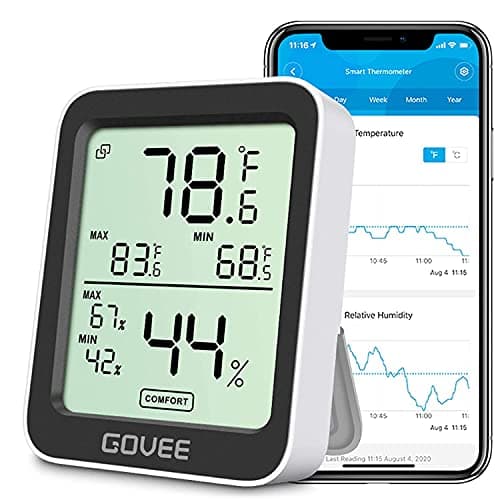 Govee H5075 Bluetooth Hygrometer ThermometerFinding out whether your air is dry before spending money on it Govee H5075 Bluetooth Hygrometer ThermometerFinding out whether your air is dry before spending money on it | Buy this first | 9.1 | $12.99 - View on Amazon |
| 2 | 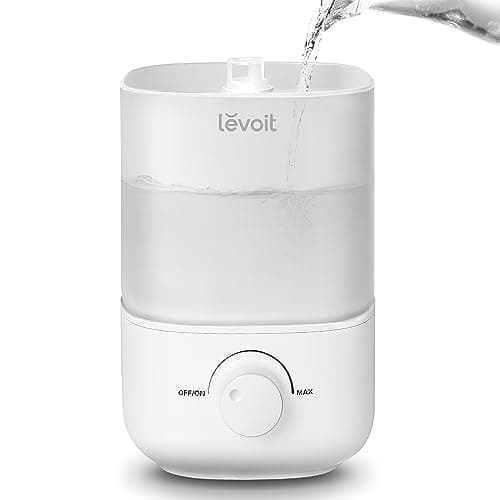 Levoit Classic 160 Top-Fill Humidifier, 2.5 LA room of tropical foliage through a dry heating season Levoit Classic 160 Top-Fill Humidifier, 2.5 LA room of tropical foliage through a dry heating season | The only thing that raises humidity | 8.8 | $29.79 - View on Amazon |
| 3 | 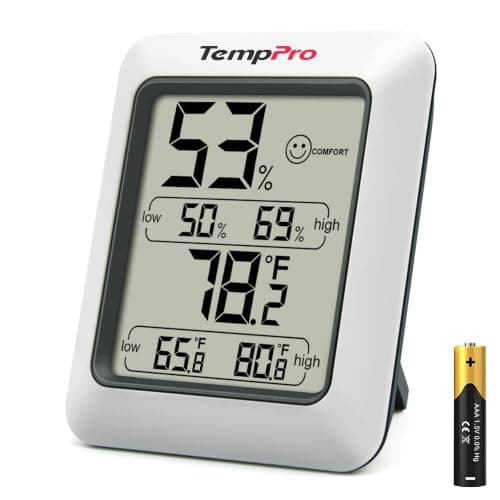 TempPro TP50 Digital HygrometerA single room reading, checked by eye TempPro TP50 Digital HygrometerA single room reading, checked by eye | Best simple hygrometer | 8.5 | $10.49 - View on Amazon |
| 4 | 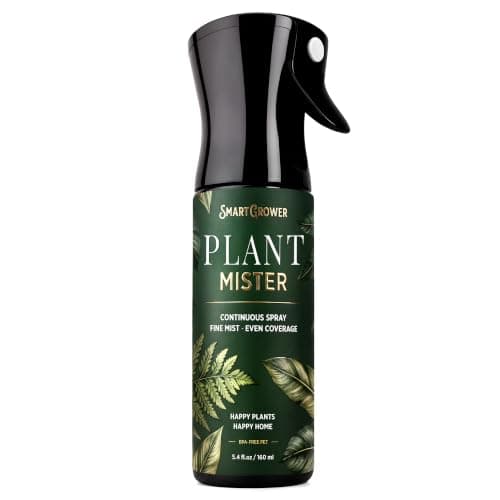 Smart Grower Continuous-Spray Plant Mister, 5.4 ozAir plants, propagation and cleaning leaves Smart Grower Continuous-Spray Plant Mister, 5.4 ozAir plants, propagation and cleaning leaves | Good mister, wrong job | 7.2 | $14.95 - View on Amazon |
| 5 | 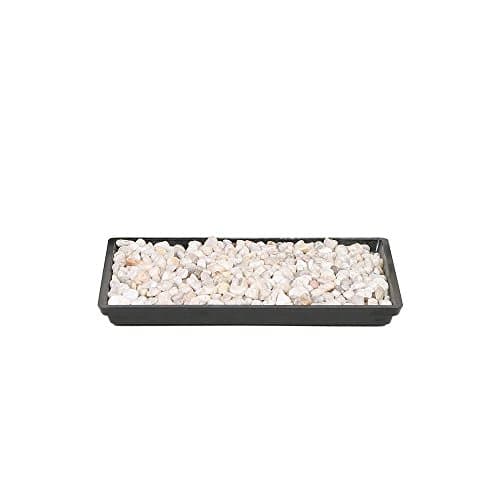 Brussel's 8 in Humidity Tray with Decorative RocksKeeping a bonsai or small pot out of its own drainage Brussel's 8 in Humidity Tray with Decorative RocksKeeping a bonsai or small pot out of its own drainage | A drip tray, not a humidity fix | 6.8 | $10.85 - View on Amazon |
Scores are our editorial judgment from published specifications. They are not test results, and they are deliberately not marked up as ratings in this page’s structured data.
Pick #1 - Buy this first
Govee H5075 Bluetooth Hygrometer Thermometer
Finding out whether your air is dry before spending money on it
Buy this before you buy anything else on this page. It publishes an accuracy figure - plus or minus 3% relative humidity, from a Swiss-made sensor - which is rarer than it should be, and it logs the reading so you can see whether your room is actually dry or whether you have been solving an imaginary problem.
#ad Price as of September 27, 2026, from Amazon. Prices change. How we make money.
Published specification
- Published accuracy
- Humidity plus or minus 3% RH; temperature plus or minus 0.54 degrees F
- Sensor
- Published as a Swiss-made sensor
- Refresh rate
- Up to 2 seconds
- Logging
- 20-day curve graphs in the app; 2 years of data exportable as CSV
- Alerts
- App alerts when readings leave a preset range
- Connectivity
- Bluetooth only, published as up to 164 ft
- Published accuracy: Govee published description
- Sensor: Govee published description
- Refresh rate: Govee published description
- Logging: Govee published description
- Alerts: Govee published description
- Connectivity: Govee published description
What is good about it
- Publishes a real accuracy tolerance, which most sensors in this price bracket never do
- Logging turns a spot reading into a picture of how the room behaves overnight
- Alerts mean you find out about a dry snap without checking daily
- Cheap enough to put one beside the plants that matter
What is not
- Bluetooth only, so readings sync when your phone is in range rather than continuously
- An app and an account for what is fundamentally a thermometer
- Coin-cell powered, so it will die silently at some point
- It measures the room, not the air immediately around a leaf
Skip this one if
Skip it if you already own a hygrometer you trust. The reading is the point, not the brand - a cheap accurate one beats an expensive one you never look at.
How it scored
- Publishes accuracy
- 10.0
- Actually changes humidity
- 1.0
- Evidence behind the claim
- 10.0
- Ease of use
- 8.5
- Value for money
- 9.5
- Overall
- 9.1 / 10
Our editorial score, from published specifications and computed intervals. Not a test result. Specification source: Govee H5075 hygrometer retail listing.
Pick #2 - The only thing that raises humidity
Levoit Classic 160 Top-Fill Humidifier, 2.5 L
A room of tropical foliage through a dry heating season
The only product on this page that changes the humidity of a room rather than the air for ninety seconds. Penn State Extension's guidance names a humidifier as the step that helps; this one publishes the three figures that matter - 2.5 liter tank, up to 25 hours on low, 25 decibels.
#ad Price as of September 27, 2026, from Amazon. Prices change. How we make money.
Published specification
- Tank capacity
- 2.5 liters
- Runtime
- Up to 25 hours on low
- Noise
- As low as 25 dB
- Filling
- Top-fill design; no inverting the tank
- Safety
- Auto shut-off when the tank is empty or removed
- Output rate
- Not published
- Tank capacity: Levoit published listing specification
- Runtime: Levoit published description
- Noise: Levoit published listing specification
- Filling: Levoit published description
- Safety: Levoit published description
- Output rate: Checked on the Levoit listing
What is good about it
- It is the intervention the extension guidance actually supports
- Publishes tank size, runtime and noise, so it can be compared with rivals
- Top fill, which is the difference between refilling it daily and not bothering
- Auto shut-off, because a humidifier run dry is a fire-adjacent nuisance
What is not
- No published output rate in ml per hour, so room coverage is guesswork
- Cool-mist humidifiers need regular cleaning or they aerosolize whatever grows inside
- Running one raises humidity for the room, including surfaces you did not want damp
- A tank to refill is a chore a pebble tray never asks of you
Skip this one if
Skip it if your hygrometer says the room sits comfortably within 30 to 60% relative humidity. That is the band ASHRAE recommends, and above it you are adding damp for no benefit.
How it scored
- Publishes accuracy
- 6.0
- Actually changes humidity
- 10.0
- Evidence behind the claim
- 9.5
- Ease of use
- 7.5
- Value for money
- 7.5
- Overall
- 8.8 / 10
Our editorial score, from published specifications and computed intervals. Not a test result. Specification source: Levoit Classic 160 humidifier retail listing.
Pick #3 - Best simple hygrometer
TempPro TP50 Digital Hygrometer
A single room reading, checked by eye
A plain dial-free hygrometer that publishes plus or minus 2 to 3% RH accuracy and updates every ten seconds, with no app, no account and no battery anxiety. If the Govee's logging is more than you need, this does the one job that matters.
#ad Price as of September 27, 2026, from Amazon. Prices change. How we make money.
Published specification
- Published accuracy
- Plus or minus 2 to 3% RH; plus or minus 1 degree F
- Refresh rate
- Every 10 seconds
- Records
- High and low temperature and humidity
- Display
- Dry / comfort / wet indicator alongside the numbers
- Mounting
- Tabletop stand and magnetic back; AAA battery included
- Published accuracy: TempPro published description
- Refresh rate: TempPro published description
- Records: TempPro published description
- Display: TempPro published description
- Mounting: TempPro published listing specification
What is good about it
- Publishes a tighter accuracy tolerance than the app-connected option
- No app, no pairing, no account - it just shows the number
- High and low records show the overnight swing without any logging
- Magnetic back, so it can live on a radiator or a shelf edge
What is not
- No logging, so you see the extremes but not the shape of the day
- No alerts, so a dry snap is only noticed if you look
- Small screen compared with dedicated room monitors
- Comfort indicator is tuned for people, not for tropical foliage
Skip this one if
Skip it if you want to know what happened while you were out. Without logging you are reading the room at the moment you happen to walk past it.
How it scored
- Publishes accuracy
- 10.0
- Actually changes humidity
- 1.0
- Evidence behind the claim
- 10.0
- Ease of use
- 9.5
- Value for money
- 9.5
- Overall
- 8.5 / 10
Our editorial score, from published specifications and computed intervals. Not a test result. Specification source: TempPro TP50 hygrometer retail listing.
Pick #4 - Good mister, wrong job
Smart Grower Continuous-Spray Plant Mister, 5.4 oz
Air plants, propagation and cleaning leaves
A well-made continuous-spray mister that is genuinely useful for the jobs misting is good at - watering air plants, rinsing dust off leaves, damping cuttings - and useless for the job its own listing sells it on. Penn State Extension is explicit that misting does nothing to raise the humidity around a plant.
#ad Price as of September 27, 2026, from Amazon. Prices change. How we make money.
Published specification
- Capacity
- 5.4 fl oz (160 ml)
- Spray type
- One-press continuous fine mist rather than a squeeze trigger
- Material
- Shatter-resistant BPA-free PET, refillable
- Maker's humidity claim
- Published as working like a mini plant humidifier to raise humidity
- Maker's water advice
- Use room-temperature filtered or distilled water to avoid mineral spots
- Capacity: Smart Grower published listing specification
- Spray type: Smart Grower published description
- Material: Smart Grower published description
- Maker's humidity claim: Smart Grower published description
- Maker's water advice: Smart Grower published description
What is good about it
- Continuous spray is far less tiring than a squeeze trigger for a shelf of plants
- The right tool for watering air plants, which extension guidance does endorse
- Fine mist rinses dust off foliage without soaking the mix
- The distilled-water tip is sound and rarely mentioned
What is not
- Its central published claim - raising humidity - is contradicted by extension guidance
- 160 ml is small; a big collection means refilling constantly
- Wet foliage left standing invites leaf spotting on fuzzy-leaved plants
- Misting African violets and similar is actively bad practice
Skip this one if
Skip it if you are buying it to fix dry air. It will not, and the money is better spent on a hygrometer first and a humidifier second.
How it scored
- Publishes accuracy
- 4.0
- Actually changes humidity
- 1.5
- Evidence behind the claim
- 3.0
- Ease of use
- 9.5
- Value for money
- 7.5
- Overall
- 7.2 / 10
Our editorial score, from published specifications and computed intervals. Not a test result. Specification source: Smart Grower plant mister retail listing.
Pick #5 - A drip tray, not a humidity fix
Brussel's 8 in Humidity Tray with Decorative Rocks
Keeping a bonsai or small pot out of its own drainage
A shallow tray and a bag of polished rock, sold on a humidity claim that Penn State Extension takes apart: evaporated moisture diffuses into the room rather than staying around the plant. As a drip tray that raises a bonsai above its own runoff, it is genuinely useful - which is the honest reason to buy it.
#ad Price as of September 27, 2026, from Amazon. Prices change. How we make money.
Published specification
- Size
- 8 in tray, published dimensions 9 x 6 x 1 in
- Included
- Decorative rocks
- Published method
- Place the pot on a layer of rock, water from above and let excess evaporate
- Material
- Plastic
- Humidity effect
- Not quantified by the maker
- Size: Brussel's published listing specification
- Included: Brussel's published listing specification
- Published method: Brussel's published description
- Material: Brussel's published description
- Humidity effect: Checked on the Brussel's listing
What is good about it
- The rock layer keeps the pot base above collected water, which is a real benefit
- Catches runoff on a shelf where a bonsai would otherwise mark the wood
- Rocks included, so it works out of the box
- Cheap, and it will outlast the plastic saucers it replaces
What is not
- The humidity premise does not survive contact with the extension literature
- Standing water in a tray is standing water - it needs emptying like any saucer
- Published as 8 inch but measured 9 x 6 in, so it is oval rather than round
- Rocks trap debris and need rinsing occasionally
Skip this one if
Skip it if you bought it to raise humidity. Buy it as a pebble-lined drip tray, which is what it is, and put the humidity money into a hygrometer.
How it scored
- Publishes accuracy
- 3.0
- Actually changes humidity
- 2.0
- Evidence behind the claim
- 2.5
- Ease of use
- 9.0
- Value for money
- 8.0
- Overall
- 6.8 / 10
Our editorial score, from published specifications and computed intervals. Not a test result. Specification source: Brussel's 8-inch humidity tray retail listing.
Questions people actually ask
- Does misting houseplants actually raise humidity?
No. Penn State Extension states that after misting, the rise in humidity lasts only until the water evaporates - a matter of minutes - so even daily misting does nothing to raise humidity levels around a plant. Misting is still the accepted way to water air plants, and it is useful for cuttings and for cleaning dust off foliage.
- Do pebble trays work for humidity?
Barely. The theory is that water evaporating below the plant raises the humidity around it, but Penn State Extension notes the moist air diffuses into the whole room rather than staying put, making almost no overall impact on relative humidity. A pebble tray is still useful as a drip tray that holds the pot above its own runoff.
- What humidity do houseplants need?
Start with the range for the room: ASHRAE recommends indoor relative humidity between 30 and 60%, and winter heating often pushes homes below 30%. Tropical foliage prefers the upper half of that band. Measure before acting - a hygrometer costs less than most of the products sold to fix a problem you may not have.
- What actually raises humidity for houseplants?
A humidifier, grouping plants together, and keeping them away from heating vents. Penn State notes that even a whole-house humidifier will not reach ideal levels for houseplants but will help, and that portable units are the smaller-scale option. Grouping costs nothing and works because the plants themselves transpire.
- Should I put my plants in the bathroom for humidity?
It depends on how often the shower runs, and Penn State suggests gauging the room with a hygrometer before committing to it. The drawback it raises is light: bathrooms often lack a suitable light source, so you may fix humidity and create a light problem instead.
Sources
Sources
- Humidity and Houseplants, Penn State Extension
- Govee H5075 hygrometer published specification, via retail listing
- Levoit Classic 160 humidifier published specification, via retail listing
- TempPro TP50 hygrometer published specification, via retail listing
- Smart Grower plant mister published specification, via retail listing
- Brussel's 8-inch humidity tray published specification, via retail listing
- Mosquitoes, UC Statewide IPM Program (UC IPM)