Roundup
Best Plant Saucers and Drip Trays
The cheapest thing under your houseplant is also the most common way to drown it. Ranked on the two features that decide that: does it lift the pot out of the water, and can you see the water at all.
By Scooter M. - Enthusiast. Reads the manuals, compiles the specs, does the math. | Published
Disclosure
We earn a commission if you buy through our links. It does not change what we recommend or what you pay. Full disclosure.
The short answer
A saucer is not a reservoir
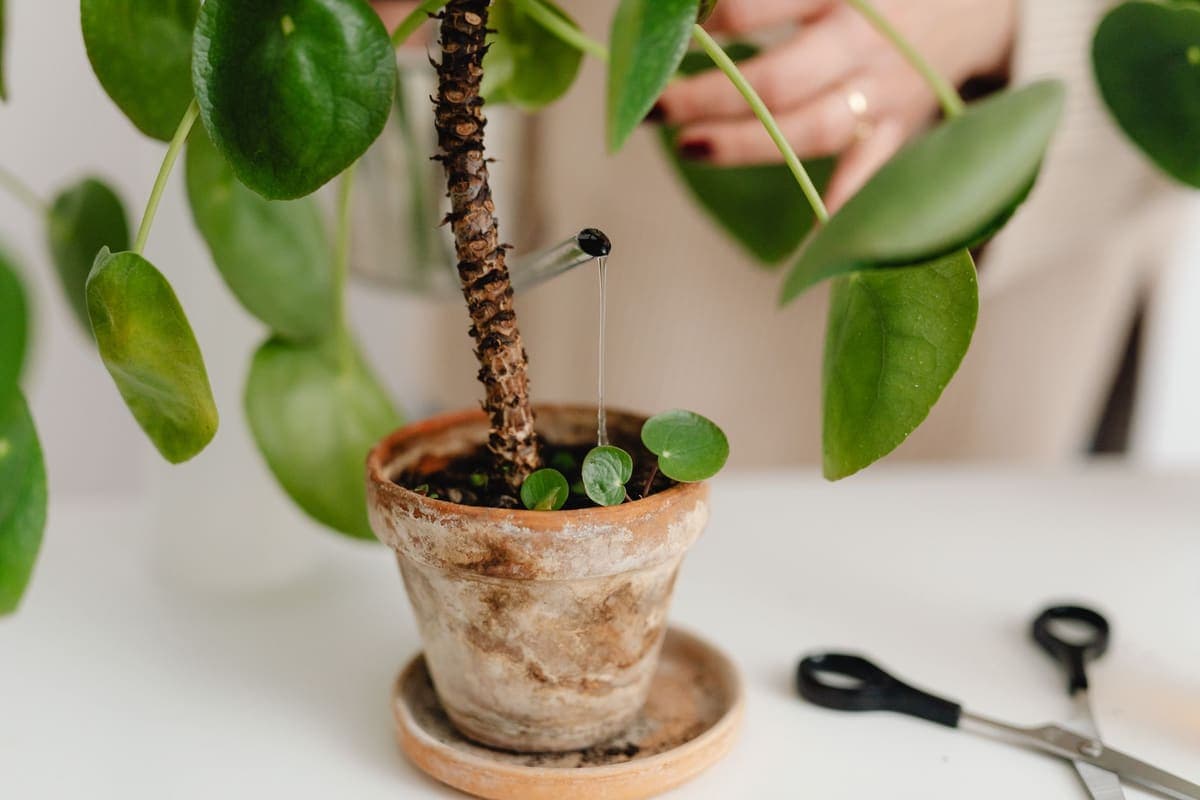
Clemson Extension’s watering instruction for indoor plants has two halves, and almost everyone does the first and skips the second: water until it runs out of the bottom of the pot, then do not let the pot sit in the water that runs out. Empty the saucer.
Skip that and you have built a small reservoir under a pot that was never designed for one. The mix wicks the water back up, the bottom of the root ball stays saturated, and you are in the wet, poorly drained condition NC State Extension names for root rot organisms. The full mechanism is here.
That is the whole reason this page exists, and the reason the ranking is what it is. A saucer that lifts the pot clear of the runoff removes the failure mode by design. A saucer you can see through removes the excuse for forgetting.
How we ranked them
We have not filled these and timed them. What follows is each maker’s published listing, judged on four things, in this order.
Does it lift the pot out of the water? Ridges, feet or a raised grid. One product here publishes this feature. It is the single most useful thing a saucer can do, and almost nobody mentions it.
Can you see the water? Clear plastic turns emptying the saucer from a chore you remember into a thing you notice. Opaque saucers hide standing water until you lift the pot.
Does it publish an inner diameter? This is the specification that decides fit, and it is almost never given. A saucer sold as 14 inches might have a 13.5-inch usable floor or a 12-inch one; the difference decides whether your pot sits in it or on its rim.
Then size range and price. Most people need several sizes, and multipacks are how you get them.
| Saucer | Sizes | Ridges | See-through | Published inner diameter |
|---|---|---|---|---|
| SupKing 9 pack | 6, 8, 10 in | Yes | Yes | Not published |
| TRUEDAYS 20 pack | 6, 8, 10, 12 in | Not published | Yes | Not published |
| Phoenix Vine 14 in | 14 in | Lifts planters, per maker | No | 13.5 in |
| Suwimut terracotta | 6 in outer | Not published | No | 5.3 in |
| Bleuhome 4 pack | 14 in | Not published | No | Not published |
Size it to the base of the pot, not the top
The commonest buying mistake in this category. Pots are sold by their top diameter and they taper - a 6-inch pot usually has a base of 4 to 4.5 inches. A saucer sold as 6 inches is measuring its own outside edge, and its usable inner floor is smaller again.
Two of the five here give you enough to work with. Suwimut publishes a 6-inch outer diameter with a 5.3-inch inner floor, and says it suits pots with a 5 to 6 inch base. Phoenix Vine publishes 14 inches outer, 13.5 inches inner, and states the limit plainly: planters with a base under 13.5 inches.
For the rest, the safe rule is to measure the base of your pot and add an inch. If the listing does not publish an inner diameter - and most do not - assume it is about half an inch smaller than the nominal size.
The ridge, and why it matters more than the price
A flat saucer holds the pot in a shallow puddle of whatever it drained. The drainage hole sits in that puddle, so the mix at the bottom of the pot stays wet and the hole itself cannot admit air.
SupKing’s listing describes ridges on the surface that elevate the pot slightly and let air flow into the pot. That is a genuine design answer to the problem, and it costs nothing extra. If you buy a flat saucer instead - three of the five here - the workaround is the same trick greenhouse growers use: three pot feet, a few pebbles, or a trivet inside the saucer to hold the base clear.
It is worth being precise about what this does and does not do. Lifting the pot stops the root ball sitting in water. It does not turn the saucer into a humidity system, and it does not excuse leaving water there for days - stagnant water in a saucer is also where fungus gnats breed.
Plastic, clay, or the one you already own
Clear plastic is the practical choice indoors. You can see the water, it does not pass damp to the furniture, and it costs almost nothing per pot. Its drawbacks are cosmetic: water marks, mineral rings and eventual yellowing in sun.
Terracotta looks correct under a clay pot and publishes better dimensions than most plastic, but unglazed clay is porous. It will pass moisture through to a wooden shelf given enough time, which is why cork pads exist. If the surface matters, put something waterproof underneath.
Heavy matte plastic is for floor plants, where a saucer has to carry real weight and be seen. Check for a published inner diameter before buying, because at 14 inches the difference between nominal and usable is where pots end up perched on the rim.
A cache pot - a decorative outer pot with no drainage - is not a saucer and is the riskiest of all of these, because the water collects out of sight under the nursery pot. If you use one, lift the inner pot out after watering and tip the cache pot out.
How many, and which sizes
Buy them in one go rather than one at a time. Saucers are the accessory people replace piecemeal for years, and the per-piece cost of a multipack is a fraction of a single saucer bought to match a pot.
The published pack contents tell you what the makers expect a collection to look like, and they are roughly right. SupKing splits nine saucers evenly across 6, 8 and 10 inches; TRUEDAYS gives five each of 6, 8, 10 and 12. Most indoor collections skew smaller than that - a lot of 4 and 6 inch pots, a few 8s, one or two large floor plants - so the practical shape of a first order is one multipack for the shelves and one large saucer per floor plant.
Two sizing notes worth keeping. Nothing here covers 4-inch pots properly: the smallest saucer in any of these packs is 6 inches, which is fine under a 4-inch pot but wastes space on a crowded shelf. And if your pots came with matched saucers, check whether those saucers are glazed on the inside before trusting them on furniture - the ceramic pot listings we went through are mostly silent on that point.
Outdoors, a full saucer is a mosquito nursery
This is the part almost no saucer listing mentions, and it is the reason to empty them even when no plant is at risk. UC IPM lists saucers under flower pots by name among the man-made containers where mosquito larvae develop, alongside abandoned tires and jars - anything that will hold still water.
Worse, the eggs do not need the water to be there continuously. UC IPM notes that eggs laid on the sides of saucers under plants will not hatch until flooding occurs, which can be months or even years later. A saucer that dries out between rain showers is still a viable site; it just waits.
For outdoor pots that is an argument for the shallowest saucer that will do the job, or for standing pots on feet with no saucer at all and letting the runoff go into gravel. Indoors it is much less of a concern - but a saucer left full on a balcony through summer is doing more than threatening your roots.
Protect the surface underneath
Three of the five saucers here are opaque and two of those are clay, so the first sign of a problem is usually a ring on the furniture rather than a sick plant.
Unglazed terracotta is porous by design - the same property that makes terracotta pots good for succulents makes terracotta saucers bad for wooden shelves. A clay saucer holding water will pass damp through to whatever it is standing on, slowly and invisibly.
The fixes are cheap: cork or felt pads under the saucer, a plastic saucer under the clay one, or simply keeping clay saucers for tiled and stone surfaces. What does not work is assuming a glaze on the pot means the saucer is sealed too - they are usually sold unglazed even when the pot is not.
When a deep saucer is the right answer
There is one case where you want depth rather than ridges: deliberate bottom watering. Phoenix Vine publishes its saucer as designed for it, and the technique has real advantages for hydrophobic mix and for keeping the surface dry.
The discipline is the same either way: extension guidance is to take the pot out once the mix is damp, and never leave a container standing in water for more than about an hour. A deep saucer used on purpose for twenty minutes is a tool. The same saucer left full for a week is the problem this page opened with.
The honest cons on every pick
SupKing. No published inner diameter, nothing bigger than 10 inches, clear plastic shows every mark, and the listing itself warns they can crack in transit.
TRUEDAYS. No ridges published, so the pot sits flat in the runoff. Thin enough to flex under a heavy pot, and no inner diameter given.
Phoenix Vine. Opaque, so you cannot see standing water. Deep enough to be a hazard if emptying is not a habit. One saucer for the price of nine.
Suwimut terracotta. Porous clay will mark a wooden surface. Flat, opaque and only 6 inches outer, so it suits small pots only.
Bleuhome. Publishes neither inner diameter nor height, and devotes half its listing to bird baths. Flat and opaque as well.
What we would buy
A pack of ridged clear saucers for everything on shelves, and one Phoenix Vine for each floor plant. Then the habit that makes all of them work: water thoroughly, wait twenty minutes, and tip out whatever collected.
If that last step is the one you know you will skip, the honest answer is not a better saucer - it is a planter with a real reservoir and an air gap, which is designed for standing water in a way a saucer never is.
Ranked picks
Quick picks
Ranked on published specifications and the computed refill interval, not on looks. Tap any row for the full write-up, including who should skip it.
| # | Product | Best for | Score | Price |
|---|---|---|---|---|
| 1 | 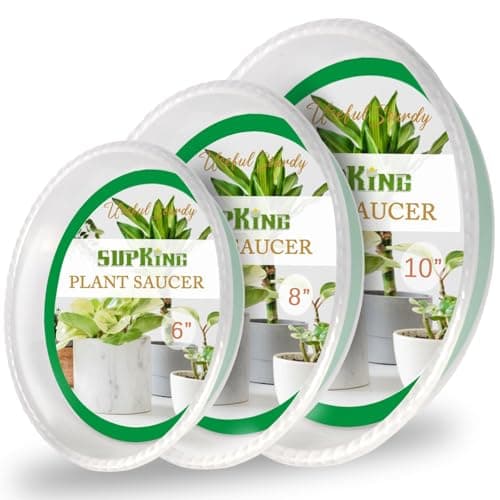 SupKing Clear Plant Saucers, 9 Pack (6, 8, 10 in)Almost everyone - the default saucer for indoor pots SupKing Clear Plant Saucers, 9 Pack (6, 8, 10 in)Almost everyone - the default saucer for indoor pots | Best overall, the only one with ridges | 9.2 | $9.99 - View on Amazon |
| 2 | 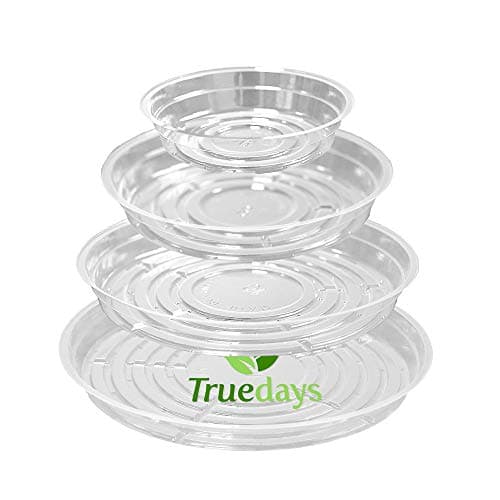 TRUEDAYS Clear Plant Saucers, 20 Pack (6, 8, 10, 12 in)Kitting out a whole collection at once, including larger pots TRUEDAYS Clear Plant Saucers, 20 Pack (6, 8, 10, 12 in)Kitting out a whole collection at once, including larger pots | Best value, four sizes | 8.5 | $15.19 - View on Amazon |
| 3 | 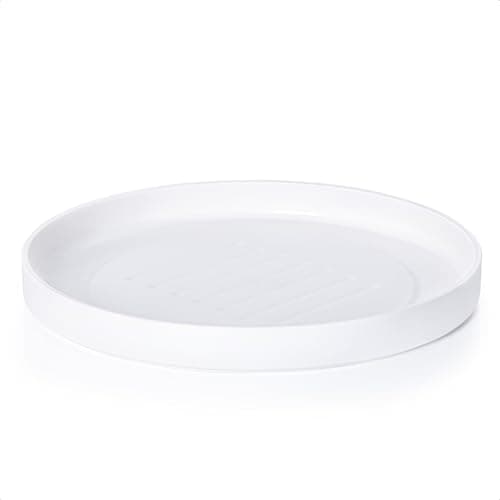 Phoenix Vine 14 in Heavy-Duty Plant SaucerA large floor plant, especially if you water it from below Phoenix Vine 14 in Heavy-Duty Plant SaucerA large floor plant, especially if you water it from below | Best for a large floor plant | 8.3 | $25.99 - View on Amazon |
| 4 | 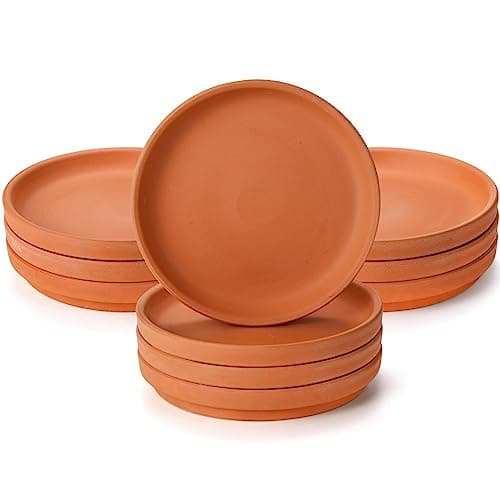 Suwimut Terracotta Plant Saucers, 6 in, 10 PackTerracotta pots on surfaces that will not be damaged by damp Suwimut Terracotta Plant Saucers, 6 in, 10 PackTerracotta pots on surfaces that will not be damaged by damp | Best looking under terracotta | 8.0 | $21.99 - View on Amazon |
| 5 | 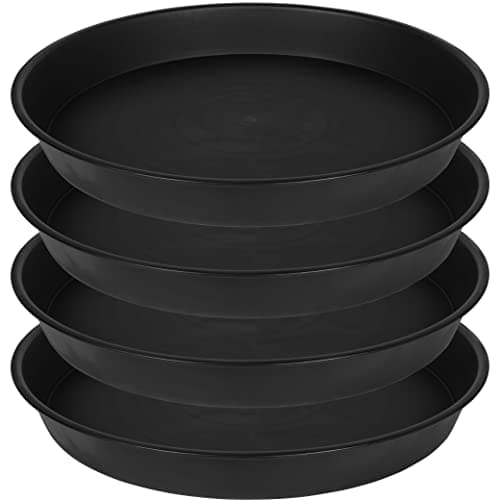 Bleuhome 14 in Plant Saucers, 4 PackSeveral large pots at once, where looks matter more than figures Bleuhome 14 in Plant Saucers, 4 PackSeveral large pots at once, where looks matter more than figures | Cheapest way to cover big pots | 7.0 | $29.99 - View on Amazon |
Scores are our editorial judgment from published specifications. They are not test results, and they are deliberately not marked up as ratings in this page’s structured data.
Pick #1 - Best overall, the only one with ridges
SupKing Clear Plant Saucers, 9 Pack (6, 8, 10 in)
Almost everyone - the default saucer for indoor pots
The only saucer here that publishes the feature that actually matters: ridges on the surface that lift the pot slightly out of whatever it has just drained. Clear plastic on top of that means you can see standing water without moving the plant, which is the difference between emptying a saucer and forgetting it exists.
#ad Price as of September 26, 2026, from Amazon. Prices change. How we make money.
Published specification
- Raised ridges
- Ridges on the surface elevate the pot slightly and allow air to the drainage hole
- Sizes
- 3 each of 6, 8 and 10 in - 9 saucers
- Material
- PP plastic, published as thicker than standard saucers
- Visibility
- Transparent, published as letting you see the remaining water
- Waterproofing
- Published as a waterproof design for catching excess water and debris
- Inner diameter
- Not published
- Raised ridges: SupKing published description
- Sizes: SupKing published listing specification
- Material: SupKing published description
- Visibility: SupKing published description
- Waterproofing: SupKing published description
- Inner diameter: Checked on the SupKing listing
What is good about it
- Ridges keep the pot base out of the water it just drained, which is the whole point of a saucer
- Clear, so a glance tells you whether it needs emptying
- Three sizes covers most of a mixed collection
- Cheapest per saucer of anything here
What is not
- No published inner diameter, so fit has to be judged from the nominal size
- Clear plastic shows every water mark and mineral ring
- Only goes up to 10 in, so a large floor plant needs something else
- The listing warns they can crack in transit, which is not reassuring about the plastic
Skip this one if
Skip it if your pots are bigger than 10 inches across the base. Nominal saucer sizes describe the saucer, not the pot, and a 12-inch pot will overhang these.
How it scored
- Lifts the pot clear
- 10.0
- See the water
- 10.0
- Published fit figures
- 4.0
- Size range
- 7.0
- Value for money
- 10.0
- Overall
- 9.2 / 10
Our editorial score, from published specifications and computed intervals. Not a test result. Specification source: SupKing 9-pack clear plant saucer retail listing.
Pick #2 - Best value, four sizes
TRUEDAYS Clear Plant Saucers, 20 Pack (6, 8, 10, 12 in)
Kitting out a whole collection at once, including larger pots
Twenty clear saucers across four sizes, including the 12-inch that most multipacks stop short of. There are no ridges, so the pot sits flat in whatever collects - but at this price you can put a saucer under everything you own and still have spares.
#ad Price as of September 26, 2026, from Amazon. Prices change. How we make money.
Published specification
- Sizes
- 5 each of 6, 8, 10 and 12 in - 20 saucers
- Material
- Clear plastic
- Published use
- Collects excess water drainage and soil spillage; stable base on carpet
- Raised ridges
- Not published
- Inner diameter
- Not published
- Sizes: TRUEDAYS published listing specification
- Material: TRUEDAYS published listing specification
- Published use: TRUEDAYS published description
- Raised ridges: Checked on the TRUEDAYS listing
- Inner diameter: Checked on the TRUEDAYS listing
What is good about it
- Four sizes up to 12 in, which covers most indoor pots
- Twenty pieces, so every pot in the house gets one
- Clear, so the water level is visible without lifting the plant
- Cheap enough to treat as consumable if one cracks
What is not
- No ridges published, so the pot sits flat in any water that collects
- No inner diameter published either, so fit is guesswork until they arrive
- Thin enough that a heavy pot flexes them
- Clear plastic yellows in direct sun over a season or two
Skip this one if
Skip it if you tend to leave water sitting. Without ridges, a flat saucer holds the pot base in the runoff, which is exactly the condition that starts root rot.
How it scored
- Lifts the pot clear
- 3.0
- See the water
- 10.0
- Published fit figures
- 4.0
- Size range
- 9.5
- Value for money
- 9.5
- Overall
- 8.5 / 10
Our editorial score, from published specifications and computed intervals. Not a test result. Specification source: TRUEDAYS 20-pack clear plant saucer retail listing.
Pick #3 - Best for a large floor plant
Phoenix Vine 14 in Heavy-Duty Plant Saucer
A large floor plant, especially if you water it from below
The only saucer we found that publishes the figure that decides whether it fits: a 14-inch outer diameter with a 13.5-inch inner diameter, and a stated limit of planters with a base under 13.5 inches. It is also deliberately deep, which is a feature if you bottom water and a liability if you forget to empty it.
#ad Price as of September 26, 2026, from Amazon. Prices change. How we make money.
Published specification
- Outer diameter
- 14 in
- Inner diameter
- 13.5 in - published as suiting planters with a base under 13.5 in
- Height
- 1.5 in (listing dimensions give 1.6 in)
- Design intent
- Deeper saucer published as suiting bottom watering, lifting planters to channel water away
- Material
- Heavy-duty lightweight plastic, published as weather resistant
- Outer diameter: Phoenix Vine published listing specification
- Inner diameter: Phoenix Vine published listing specification
- Height: Phoenix Vine published listing specification
- Design intent: Phoenix Vine published description
- Material: Phoenix Vine published description
What is good about it
- Publishes inner diameter and a maximum pot base, which no other saucer here does
- Deep enough to be used deliberately for bottom watering
- Rated for outdoor use, so it works for a patio pot too
- Matte black or white rather than the usual translucent plastic
What is not
- Opaque, so you cannot see standing water without lifting the pot or looking closely
- A deeper saucer holds more water, which is a hazard if emptying it is not a habit
- One saucer at a price where others sell nine or twenty
- 14 in is oversized for anything but a large floor plant
Skip this one if
Skip it for ordinary shelf plants. A deep, opaque saucer under a 6-inch pot is a reservoir you cannot see, and that is the opposite of what a saucer should be.
How it scored
- Lifts the pot clear
- 7.0
- See the water
- 2.0
- Published fit figures
- 10.0
- Size range
- 5.0
- Value for money
- 6.0
- Overall
- 8.3 / 10
Our editorial score, from published specifications and computed intervals. Not a test result. Specification source: Phoenix Vine 14-inch plant saucer retail listing.
Pick #4 - Best looking under terracotta
Suwimut Terracotta Plant Saucers, 6 in, 10 Pack
Terracotta pots on surfaces that will not be damaged by damp
Clay saucers that publish both diameters - 6 inches outside, 5.3 inches inside - and name the pot sizes they suit. They look far better than plastic under a terracotta pot, and unglazed clay has one specific drawback that the listing does not mention: it passes moisture to whatever it is standing on.
#ad Price as of September 26, 2026, from Amazon. Prices change. How we make money.
Published specification
- Outer diameter
- 6 in
- Inner diameter
- 5.3 in
- Height
- 1 in
- Published fit
- Suits pots with a 5, 5.5 or 6 in bottom diameter
- Material
- Clay fired at high temperature, published as crack resistant
- Pack
- 10 saucers
- Outer diameter: Suwimut published listing specification
- Inner diameter: Suwimut published listing specification
- Height: Suwimut published listing specification
- Published fit: Suwimut published description
- Material: Suwimut published description
- Pack: Suwimut published listing specification
What is good about it
- Publishes outer diameter, inner diameter, height and the pot sizes it fits
- Looks right under terracotta, which plastic never quite does
- Ten saucers, so a shelf of small pots is covered in one purchase
- Heavy enough that a pot does not slide around on it
What is not
- Unglazed clay is porous - it will pass damp to a wooden shelf or a finished floor
- No ridges, so the pot sits flat in the runoff
- Opaque, so standing water is invisible until you lift the pot
- One size only, and 6 in outer means it suits small pots only
Skip this one if
Skip it on furniture you care about. Put a cork pad or a plastic saucer underneath if the surface matters, because a clay saucer full of water will eventually mark a wooden top.
How it scored
- Lifts the pot clear
- 3.0
- See the water
- 2.0
- Published fit figures
- 10.0
- Size range
- 4.0
- Value for money
- 7.5
- Overall
- 8.0 / 10
Our editorial score, from published specifications and computed intervals. Not a test result. Specification source: Suwimut 10-pack terracotta saucer retail listing.
Pick #5 - Cheapest way to cover big pots
Bleuhome 14 in Plant Saucers, 4 Pack
Several large pots at once, where looks matter more than figures
Four 14-inch matte saucers in thick PP plastic, sold for pots of 12 to 14 inches. The odd thing about the listing is how much of it is about bird baths - two of its four bullet points - and how little of it is about the dimensions a buyer actually needs.
#ad Price as of September 26, 2026, from Amazon. Prices change. How we make money.
Published specification
- Size
- 14 in round, published as suiting 12, 13 and 14 in planters
- Material
- Heavy-duty PP plastic with a matte finish
- Pack
- 4 saucers
- Inner diameter
- Not published
- Height
- Not published
- Size: Bleuhome published listing specification
- Material: Bleuhome published description
- Pack: Bleuhome published listing specification
- Inner diameter: Checked on the Bleuhome listing
- Height: Checked on the Bleuhome listing
What is good about it
- Four large saucers is the cheapest way to cover several floor plants
- Matte finish looks better in a room than translucent plastic
- Published as weather resistant, so it works outdoors too
- Thick enough to carry a heavy pot without flexing
What is not
- Neither inner diameter nor height is published, so fit and capacity are unknown before it arrives
- Half the listing is devoted to using it as a bird bath, which tells you where the design effort went
- Opaque, so standing water is invisible
- No ridges, so the pot base sits in whatever collects
Skip this one if
Skip it if you need to know it fits. The Phoenix Vine publishes an inner diameter and a maximum pot base; this one publishes a nominal size and a lot about birds.
How it scored
- Lifts the pot clear
- 3.0
- See the water
- 2.0
- Published fit figures
- 3.0
- Size range
- 5.0
- Value for money
- 8.0
- Overall
- 7.0 / 10
Our editorial score, from published specifications and computed intervals. Not a test result. Specification source: Bleuhome 4-pack 14-inch plant saucer retail listing.
Questions people actually ask
- Should you leave water in a plant saucer?
No. Clemson Extension’s guidance is to water until it drains and then empty the saucer rather than let the pot stand in it. Water left underneath is wicked back into the mix, keeps the bottom of the root ball saturated, and creates the wet, poorly drained condition that root rot organisms need. Tip it out about twenty minutes after watering.
- What size saucer do I need for my pot?
Measure the base of the pot, not the top, and add about an inch. Pots taper, so a 6-inch pot often has a 4 to 4.5 inch base. Saucers are sold by their outer diameter and the usable inner floor is smaller - Phoenix Vine publishes 14 inches outer against 13.5 inches inner, and Suwimut 6 inches against 5.3. Most listings publish neither, so leave margin.
- Do plant saucers cause root rot?
The saucer does not; the water left in it does. A pot sitting in its own runoff has a saturated base and a drainage hole underwater, which is the condition that starts rot. Saucers with raised ridges hold the pot clear of the water, and pot feet or a few pebbles do the same job in a flat saucer.
- Are terracotta saucers better than plastic?
They look better under a clay pot and they often publish more dimensions, but unglazed clay is porous and can pass damp through to wooden furniture. Clear plastic is more practical indoors because you can see whether there is water to empty. If you want the look of clay on a surface you care about, put a waterproof pad underneath.
- Can you use a saucer for bottom watering?
Yes, if it is deep enough - Phoenix Vine publishes its saucer as designed for it. Fill the saucer, let the pot take up water until the surface of the mix is damp, then remove it and drain. Extension guidance gives about 60 minutes as the maximum a container should stand in water, so this is a deliberate twenty-minute job, not a permanent arrangement.
Sources
Sources
- Indoor Plants - Watering, Clemson Cooperative Extension Home & Garden Information Center
- Mosquitoes, UC Statewide IPM Program (UC IPM)
- SupKing 9-pack clear plant saucer published specification, via retail listing
- TRUEDAYS 20-pack clear plant saucer published specification, via retail listing
- Phoenix Vine 14-inch plant saucer published specification, via retail listing
- Suwimut terracotta plant saucer published specification, via retail listing
- Bleuhome 14-inch plant saucer published specification, via retail listing
- Daughtry, Watering but Not Overwatering Houseplants, NC State Extension (2022)