Roundup
Best Pet-Safe Houseplants That Are Hard to Kill
Almost every plant on a hard-to-kill list is toxic to cats and dogs. Here are the ones that are not, ranked honestly - including the one that is safe but not tough.
By Scooter M. - Enthusiast. Reads the manuals, compiles the specs, does the math. | Published
Disclosure
We earn a commission if you buy through our links. It does not change what we recommend or what you pay. Full disclosure.
The short answer
The problem with every other hard-to-kill list
Take the plants everybody recommends to somebody who kills plants. Snake plant, pothos, peace lily, ZZ. Check them against the ASPCA’s toxic and non-toxic plant list: the snake plant is toxic to dogs and cats, the pothos is toxic to dogs and cats, the peace lily is toxic to dogs and cats, and the ZZ is published as mildly toxic if eaten. Our own hard-to-kill roundup leads with two of them, and says so on each card.
A household with a cat that chews, or a dog that grazes, needs a different list. This is it. Every plant here is on the ASPCA non-toxic list for both cats and dogs, and every one carries its published watering band, because non-toxic and hard-to-kill are different properties and only one of them is a matter of record.
How we ranked them
ASPCA non-toxic first, and it is a hard gate. A plant is on this page only if the ASPCA lists it as non-toxic to both dogs and cats. Non-toxic is not the same as edible - a chewed leaf can still upset a stomach - and out of reach is still the right place for any plant. But it is the line between a vet visit and a chewed leaf.
Published watering band second. Virginia Cooperative Extension gives two bands: once or twice a week for tropical foliage, once or twice a month for succulents. The wider band is the more forgiving plant, and it is a published fact rather than a reputation.
Feedback third. Does the plant show you it is short before the damage is permanent? For an owner who is not sure yet which mistake they make, this matters as much as the band.
Light fourth. The pet-safe survivors split cleanly on this, and the room decides more than the owner does.
| Plant | Pets (ASPCA) | Published cadence | Tells you? | Dim room? |
|---|---|---|---|---|
| Spider plant | Non-toxic | Once or twice a week, with tuber buffer | Yes | Prefers brighter |
| Haworthia | Non-toxic | Once or twice a month | Barely | No - needs light |
| Parlor palm | Non-toxic | Once or twice a week | Brown tips | Yes |
| Boston fern | Non-toxic | Once or twice a week, dislikes drying | Drops fronds | Moderate |
| Snake plant (for contrast) | Toxic | Once or twice a month | No | Yes |
| Pothos (for contrast) | Toxic | Once or twice a week | Yes | Yes |
First: spider plant
The all-rounder. Non-toxic, communicative, and tougher than its tropical band suggests because the tuberous roots store water against a missed week. It produces plantlets on runners, which is both free plants and the thing cats bat at, so it usually ends up hung - which it likes.
The honest con: brown tips at the first stress, which alarms new owners more than it should; it wants brighter light than the true dim-room plants; and the same tubers that buffer drought rot if it is kept wet.
Second: haworthia
The pet-safe succulent, and the widest safe interval on this page. Aloe and jade, the succulents most people buy, are not on the non-toxic list; Haworthia species are. It sits in the once-or-twice-a-month band, so it is the plant here that survives being forgotten for a month, and it is small enough to live on a sill out of a dog’s reach.
The honest con: it needs real light and stretches pale without it; it rots readily if watered on a tropical schedule; and being slow, a chewed leaf stays chewed. Do not put it in a reservoir pot - it is on the wrong side of that list for the same reason every succulent is.
Third: parlor palm
The pet-safe plant for the room with no light. Non-toxic, tolerant of a north-facing corner where the haworthia would give up, and slow and tidy enough not to be knocked over. It is a genuinely handsome plant, which most of this list is not.
The honest con: it is a tropical-band plant with no water storage to speak of, so it is not a forget-it-for-a-month plant. Brown tips in dry winter air or from fluoridated tap water. Spider mites find it in a heated room. Pet-safe and shade-tolerant, not drought-tolerant.
Fourth: Boston fern, with a warning
It is on this page because it is on the non-toxic list, because it is one of the most-asked-about pet-safe plants, and because leaving it off would be less honest than including it with a label. The label is this: it is the least forgiving plant here. It drops fronds at the first dry spell and wants humidity most houses do not have in winter.
It is also the one plant on this list that a reservoir rescues rather than endangers. In a self-watering pot or a reservoir hanging basket the swing between wet and dry that kills it disappears, and it becomes a reasonable plant for a bathroom. Out of a cat’s reach, naturally, because the fronds are a toy.
Non-toxic is not the whole story
Two cautions the ASPCA list does not make for you. First, non-toxic means the plant itself will not poison the animal; it does not mean a stomach full of leaves is harmless, and any plant should be out of reach of an animal that eats them. Second, what is in the pot matters too - fertilizer in a reservoir, slug pellets on a balcony, a decorative mulch of cocoa shells - and none of that is covered by the plant’s listing.
If a pet has already eaten something, the ASPCA Animal Poison Control line is the number to call, and a plant tag with the botanical name is the thing to have in your hand when you do.
Where to put them, which matters as much as which to buy
Non-toxic is the floor, not the plan. The spider plant and the Boston fern both trail, and both are treated as toys by cats, so they belong hung or on a high shelf - which suits them, since a hanging basket with a reservoir is the best home a fern has. The haworthia is small enough for a sunny sill a dog cannot reach. The parlor palm is the one plant here that can live on the floor: heavy enough not to be knocked over, and boring enough that most animals lose interest after the first sniff. Put the wrong plant on the floor and the ASPCA listing only tells you the vet visit is unlikely, not that the plant survives the cat.
Watering the four, briefly
Three of them are in the tropical band and one is in the succulent band, which means one watering routine will kill something. Check rather than schedule - a finger for small pots, a probe for deep ones - and water each pot when its own mix has dried in the upper root zone. The haworthia will be dry long after the fern has wilted, and that is correct. The cadence reference covers what moves the interval.
The verdict
Spider plant for most pet households: safe, honest, and tougher than its band. Haworthia for the owner who forgets. Parlor palm for the dim room. Boston fern only with a reservoir and out of reach. And whichever you buy, read the botanical name on the tag against the ASPCA list yourself - common names are shared between safe and unsafe plants more often than you would think.
Ranked picks
Quick picks
Ranked on published specifications and the computed refill interval, not on looks. Tap any row for the full write-up, including who should skip it.
| # | Product | Best for | Score | Price |
|---|---|---|---|---|
| 1 | 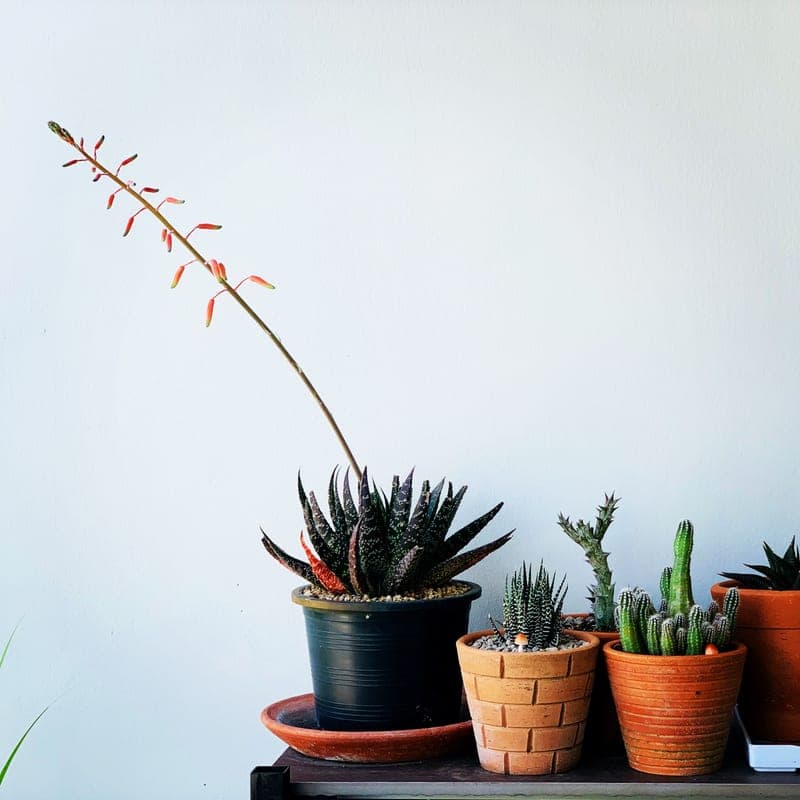 Spider Plant (Chlorophytum comosum)Households with pets, and hanging pots Spider Plant (Chlorophytum comosum)Households with pets, and hanging pots | Best overall pet-safe survivor | 8.4 | Check price on Amazon |
| 2 | Haworthia (zebra plant and relatives)A sunny sill in a house with pets, watered when you remember | Best if you forget plants for a month | 8.4 | Check price on Amazon |
| 3 | Parlor Palm (Chamaedorea elegans)A household with a cat and a north-facing room | Best for a dim room | 8.0 | Check price on Amazon |
| 4 | Boston Fern (Nephrolepis exaltata)A bathroom or a self-watering basket, in a house with pets | Safe, not tough - read the warning | 6.8 | Check price on Amazon |
Scores are our editorial judgment from published specifications. They are not test results, and they are deliberately not marked up as ratings in this page’s structured data.
Pick #1 - Best overall pet-safe survivor
Spider Plant (Chlorophytum comosum)
Households with pets, and hanging pots
Tuberous roots give it a real internal water buffer, and it is the one plant here that is genuinely non-toxic to cats and dogs. It is also the plant the one published globe account we found managed to waterlog, which is a useful warning.
#ad We do not currently hold a live price for this, so we do not show one. How we make money.
Published specification
- Published watering cadence
- Tropical band, once or twice a week, with a tuberous drought buffer
- Light
- Bright indirect, and it scorches in direct sun
- Pet safety
- Non-toxic to cats and dogs
- Published watering cadence: Virginia Cooperative Extension SPES-804
- Light: Published horticultural guidance
- Pet safety: Published horticultural guidance
What is good about it
- Tuberous roots store water, so it survives being forgotten better than its cadence band suggests
- Non-toxic to pets, which rules out most of this list for some households
- Produces plantlets, so one plant fills a shelf for free
What is not
- Brown leaf tips at the first sign of stress, which looks worse than it is
- The same tubers that buffer drought rot readily if it is kept wet
- Wants brighter light than the true low-light survivors
Skip this one if
Skip it if the plan is to leave a small watering globe in it and go away. That specific combination is the one published failure account we found in this whole category, and the plant ended up waterlogged.
How it scored
- Forgiveness of neglect
- 8.0
- Low-light tolerance
- 6.5
- Overwatering tolerance
- 5.5
- Availability and price
- 10.0
- Overall
- 8.4 / 10
Our editorial score, from published specifications and computed intervals. Not a test result. Specification source: The Indoor Nursery, first-hand account of a waterlogged spider plant.
Pick #2 - Best if you forget plants for a month
Haworthia (zebra plant and relatives)
A sunny sill in a house with pets, watered when you remember
The pet-safe succulent. Where aloe and jade are on the toxic list, the ASPCA lists Haworthia species as non-toxic to dogs and cats, and it sits in the once-or-twice-a-month band, so it is the plant on this list that forgives a missed month.
#ad We do not currently hold a live price for this, so we do not show one. How we make money.
Published specification
- Pet safety
- Non-toxic to dogs and cats
- Published watering cadence
- Succulent band, once or twice a month
- Light
- Bright indirect; tolerates some direct sun
- Main failure mode
- Overwatering and rot, not drought
- Pet safety: ASPCA Animal Poison Control, Toxic and Non-Toxic Plants
- Published watering cadence: Virginia Cooperative Extension SPES-804
- Light: Published horticultural guidance
- Main failure mode: Virginia Cooperative Extension SPES-804
Refill interval - computed, not tested
A 500 ml globe covers a 4-inch haworthia for 10 to 20 weeks - do not do this
The succulent band is 15 to 30 days per watering. 500 ml divided by 100 ml for a 4-inch pot is 5 waterings, so 75 to 150 days. The point of the arithmetic is that a succulent does not need a reservoir at all, and continuous moisture is how it dies.
Assumes: 4-inch pot, succulent frequency band. Light, temperature, humidity, soil mix and season all change how fast a pot dries, so treat this as a planning range and not a guarantee.
What is good about it
- Non-toxic where the look-alike succulents are not
- Widest safe interval of anything pet-safe on this site
- Small, so it lives on a sill out of a dog's reach
What is not
- Needs real light; it stretches and pales in a dim room
- Rots readily if kept wet, like every drought-adapted plant
- Slow, and a chewed leaf stays chewed
Skip this one if
Skip it if you are an overwaterer. Its one weakness is a wet pot, and a plant published at once or twice a month is the wrong plant for a heavy hand.
How it scored
- Forgiveness of neglect
- 9.5
- Low-light tolerance
- 5.0
- Pet safety
- 10.0
- Availability and price
- 9.0
- Overall
- 8.4 / 10
Our editorial score, from published specifications and computed intervals. Not a test result. Specification source: ASPCA Toxic and Non-Toxic Plants, Haworthia.
Pick #3 - Best for a dim room
Parlor Palm (Chamaedorea elegans)
A household with a cat and a north-facing room
The pet-safe plant for a dim room. The ASPCA lists it as non-toxic to dogs and cats, it tolerates low light better than most palms, and it sits in the tropical band, so it wants a normal weekly check rather than a monthly one.
#ad We do not currently hold a live price for this, so we do not show one. How we make money.
Published specification
- Pet safety
- Non-toxic to dogs and cats
- Published watering cadence
- Tropical band, once or twice a week
- Light
- Low to bright indirect
- Pet safety: ASPCA Animal Poison Control, Toxic and Non-Toxic Plants
- Published watering cadence: Virginia Cooperative Extension SPES-804
- Light: Published horticultural guidance
What is good about it
- On the ASPCA non-toxic list for both cats and dogs
- Genuinely tolerates a dim room, which most pet-safe plants do not
- Slow, tidy and unlikely to be knocked over by a cat
What is not
- Tropical band, so it is not a forget-it-for-a-month plant
- Brown tips at the first sign of dry air or fluoride in tap water
- Spider mites find it in a dry winter room
Skip this one if
Skip it if you travel for weeks at a time without cover. It is pet-safe and shade-tolerant, but it is not drought-tolerant, and it will tell you so.
How it scored
- Forgiveness of neglect
- 6.5
- Low-light tolerance
- 9.0
- Pet safety
- 10.0
- Availability and price
- 9.0
- Overall
- 8.0 / 10
Our editorial score, from published specifications and computed intervals. Not a test result. Specification source: ASPCA Toxic and Non-Toxic Plants, Parlor Palm.
Pick #4 - Safe, not tough - read the warning
Boston Fern (Nephrolepis exaltata)
A bathroom or a self-watering basket, in a house with pets
Pet-safe and lush, and included here with a warning rather than a recommendation: it is the least forgiving plant on this list. The ASPCA lists it as non-toxic, and it is exactly the plant a reservoir pot or a hanging basket with a tank was built for.
#ad We do not currently hold a live price for this, so we do not show one. How we make money.
Published specification
- Pet safety
- Non-toxic to dogs and cats
- Published watering cadence
- Tropical band, once or twice a week, and it dislikes drying out
- Light
- Bright indirect, no direct sun
- Pet safety: ASPCA Animal Poison Control, Toxic and Non-Toxic Plants
- Published watering cadence: Virginia Cooperative Extension SPES-804
- Light: Published horticultural guidance
What is good about it
- Non-toxic to cats and dogs, and big enough to look like something
- The plant that benefits most from a reservoir, because its problem is the swing, not the total
- Thrives in the humid room where succulents sulk
What is not
- Drops fronds at the first dry spell, which is the opposite of forgiving
- Needs humidity most houses do not have in winter
- Cats treat the trailing fronds as a toy, so it ends up hung out of reach
Skip this one if
Skip it if you forget plants. It is on this list because it is safe, not because it is tough, and it is the one plant here that a reservoir pot rescues rather than endangers.
How it scored
- Forgiveness of neglect
- 3.5
- Low-light tolerance
- 6.0
- Pet safety
- 10.0
- Availability and price
- 9.0
- Overall
- 6.8 / 10
Our editorial score, from published specifications and computed intervals. Not a test result. Specification source: ASPCA Toxic and Non-Toxic Plants, Boston Fern.
Questions people actually ask
- What is the best hard-to-kill houseplant that is safe for cats?
The spider plant. It is on the ASPCA non-toxic list for cats and dogs, its tuberous roots buffer a missed watering, and it shows you when it is short. For an owner who forgets plants for a month, a haworthia is the pet-safe succulent with the widest interval.
- Are snake plants safe for cats and dogs?
No. The ASPCA lists the snake plant as toxic to dogs and cats, with saponins as the toxic principle. Pothos and peace lily are also listed as toxic. Of the usual hard-to-kill picks, only the spider plant is on the non-toxic list.
- Are there pet-safe succulents?
Haworthia species are on the ASPCA non-toxic list for dogs and cats, which separates them from aloe and jade. They sit in the published succulent band, once or twice a month, need bright light, and rot if watered like a tropical.
- Does non-toxic mean my cat can eat the plant?
No. Non-toxic on the ASPCA list means the plant is not poisonous; a stomach full of any leaves can still cause vomiting or upset. Keep every plant out of reach of an animal that eats them, and remember that fertilizer in a reservoir or mulch on the surface is not covered by the plant’s listing.
- Is a Boston fern really hard to kill?
No, and we say so on the page. It is on the non-toxic list and it is one of the most-asked-about pet-safe plants, but it drops fronds at the first dry spell and wants humidity most homes lack in winter. It becomes a reasonable plant in a self-watering pot, which removes the wet-dry swing that kills it.
Sources
Sources
- ASPCA Animal Poison Control, Toxic and Non-Toxic Plants list
- Criscione and Holliday-Goulart, Properly Watering Container Houseplants, Virginia Cooperative Extension SPES-804 (2026)
- Daughtry, Watering but Not Overwatering Houseplants, NC State Extension (2022)
- Royal Horticultural Society, Watering plants wisely