Head to head
Snake Plant vs Spider Plant
Two of the most-recommended easy houseplants, and they are easy in opposite ways. One forgives neglect. The other forgives mistakes.
By Scooter M. - Enthusiast. Reads the manuals, compiles the specs, does the math. | Published
Disclosure
We earn a commission if you buy through our links. It does not change what we recommend or what you pay. Full disclosure.
The short answer
Why this is not the usual tie
Comparisons of two easy plants usually end in a shrug. This one does not, because the two plants are easy for different reasons. Virginia Cooperative Extension puts the snake plant in the succulent band, once or twice a month, and the spider plant in the tropical band, once or twice a week. That is a factor of four in how often each needs attention, and it flips which owner each one suits.
The snake plant is forgiving of neglect: a fortnight without water is inside its normal interval. The spider plant is forgiving of mistakes: it wants water more often, but it tells you when it is short and it recovers when you fix it. Those are not the same virtue, and most people have one failure mode, not both.
The head-to-head
| Snake plant | Spider plant | Winner | |
|---|---|---|---|
| Published watering cadence | Once or twice a month | Once or twice a week | Snake plant, for neglect |
| Tells you when it is thirsty | No - it suffers silently | Yes - tips brown, leaves droop | Spider plant |
| Overwatering tolerance | Low; rots without complaint | Low-moderate; tubers rot if kept wet | Spider plant, narrowly |
| Low-light tolerance | Tolerates a dim room | Prefers bright indirect; scorches in sun | Snake plant |
| Pets | Toxic to dogs and cats (saponins) | Non-toxic to dogs and cats | Spider plant |
| Built-in water storage | Succulent leaves | Tuberous roots | Tie |
| Propagation | Slow; leaf cuttings take months | Plantlets on runners, constantly | Spider plant |
| Looks in a year | Almost unchanged | Twice the size, with babies | Depends what you want |
The cadence band decides who should buy which
If you are the owner who forgets, the snake plant’s wide band is the whole argument. A missed week is nothing; a missed month is survivable. The spider plant in the same month will have browned at the tips and drooped, and while it recovers from that, it does not enjoy it.
If you are the owner who fusses - waters when the plant looks a bit sad, tops up on a schedule, keeps the saucer full - the snake plant is the wrong choice, and it is wrong in a way you will not see coming. NC State Extension names the trap: wilting or yellowing read as thirst when they are the first sign of too much water. The snake plant gives you no earlier warning than that. The spider plant objects sooner, more visibly, and recovers if you stop. Work out which owner you are first; it matters more than the plant.
Pets settle it for a lot of households
The ASPCA lists the snake plant as toxic to dogs and cats, naming saponins as the toxic principle. It lists the spider plant as non-toxic to both. If anything in the house chews leaves, that is the comparison, and the spider plant wins it outright. It is also, not coincidentally, the plant cats are most drawn to - the arching leaves and dangling plantlets are a toy - so it ends up hung or shelved, which suits it fine.
For a pet household that wants the snake plant’s neglect tolerance, the alternatives are on our pet-safe roundup: a haworthia gives you the succulent band without the toxicity, and a parlor palm gives you the dim-room tolerance.
How each one dies
The snake plant rots. Its succulent leaves store water, its published cadence assumes a dry period, and a pot kept wet removes that period. The base goes soft, the leaves fold, and by then the roots are gone. It almost never dies of drought.
The spider plant does one of two things. Kept too dry for too long it browns from the tips inward, which looks alarming and mostly is not. Kept wet, the tubers that buffer drought rot instead - and the one published first-hand failure account we found in the whole watering-device category was a spider plant left with a small watering globe, which ended up waterlogged. Read that as a warning about globes rather than about the plant, and the globe page explains why it happened.
In a self-watering pot
The spider plant is a reasonable candidate: tropical band, evenly moist root zone, exactly what a reservoir provides, with the caution that the tubers rot if the mix never dries at all - let the reservoir run down between fills. The snake plant is not a candidate. A permanently charged reservoir under a once-or-twice-a-month plant is the rot condition by design, and it is on the wrong side of our compatibility list for that reason.
Pot, growth and what each looks like in a year
The snake plant wants a heavy pot with a drainage hole, terracotta for choice, because it is top-heavy and because unglazed clay helps the mix dry between the long gaps its band calls for. It is happy root-bound and can go years without repotting. In a year it will look almost exactly as it does today, which is either the point or the problem.
The spider plant is the opposite. Its tuberous roots fill a pot fast enough to push the plant upward and crack a thin plastic one, so expect to repot every year or two, and expect plantlets on runners by the second summer. A hanging pot with a drainage hole suits it, both for the trailing runners and for keeping it above a cat. In a year it is twice the size and has produced the next generation, which is more than the snake plant will do in five.
Neither needs anything special in the pot. Both are among the cheapest and most available houseplants sold, and both are the plants people give away, which is the honest measure of how easy they are to keep alive.
The third option most people should consider
A pothos. It shares the spider plant’s honesty - a dramatic, reversible wilt - and adds the snake plant’s tolerance of a dim room. It is toxic to cats and dogs per the ASPCA, so it does not solve the pet problem, but for a beginner without pets it is the plant that teaches fastest, and our beginner roundup ranks it first on exactly that ground.
The verdict
Pets, overwatering, or a plant that responds: spider plant. Forgetting, a dark room, or a plant that never changes: snake plant. If you cannot tell which owner you are, buy the spider plant - its mistakes are visible and recoverable, and it will tell you within a month which kind of plant killer you were going to be.
What we would buy for this
The gear that fits this problem
Chosen from the same registry as our roundups, on published specifications and the computed refill interval.
Snake Plant (Dracaena trifasciata)
Someone who has killed everything else
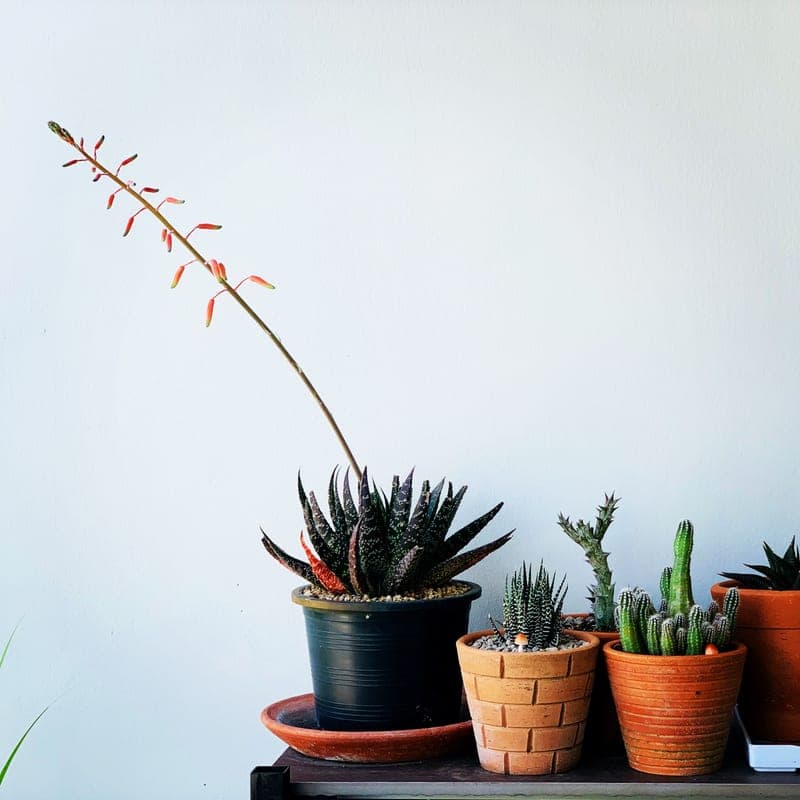
The most forgiving common houseplant there is, and the reason is arithmetic rather than folklore: its published watering cadence sits in the succulent band of once or twice a month, so the interval you have to hit is four times wider than a tropical's.
#ad We do not currently hold a live price for this, so we do not show one. How we make money.
Published specification
- Published watering cadence
- Succulent band, once or twice a month
- Light
- Tolerates low light, grows faster in bright indirect
- Main failure mode
- Overwatering and root rot, not drought
- Published watering cadence: Virginia Cooperative Extension SPES-804
- Light: Published horticultural guidance
- Main failure mode: Virginia Cooperative Extension SPES-804
Refill interval - computed, not tested
A 500 ml globe covers a 6-inch snake plant for 3 to 6 weeks
The succulent band is once or twice a month, which is 15 to 30 days per watering. 500 ml divided by 350 ml for a 6-inch pot is 1.4 waterings, so 21 to 42 days. The same globe on a tropical in the same pot is 5 to 10 days.
Assumes: 6-inch pot, indoors, succulent frequency band. Light, temperature, humidity, soil mix and season all change how fast a pot dries, so treat this as a planning range and not a guarantee.
What is good about it
- The wide published cadence is what makes it forgiving, because a week late matters far less than it does for a fern
- Genuinely tolerates low light, so it survives the corner where nothing else does
- Slow growing, so it does not outgrow its pot and change its own water needs
What is not
- The same tolerance means it will sit in wet soil without complaining until the roots are already gone
- Slow growth means slow recovery from any damage
Skip this one if
Skip it if you are the kind of plant killer who overwaters rather than forgets. This plant's one weakness is exactly your habit, and a pothos would be more honest with you about being wet.
How it scored
- Forgiveness of neglect
- 10.0
- Low-light tolerance
- 9.5
- Overwatering tolerance
- 5.0
- Availability and price
- 9.5
- Overall
- 9.2 / 10
Our editorial score, from published specifications and computed intervals. Not a test result. Specification source: Virginia Cooperative Extension, watering frequency bands.
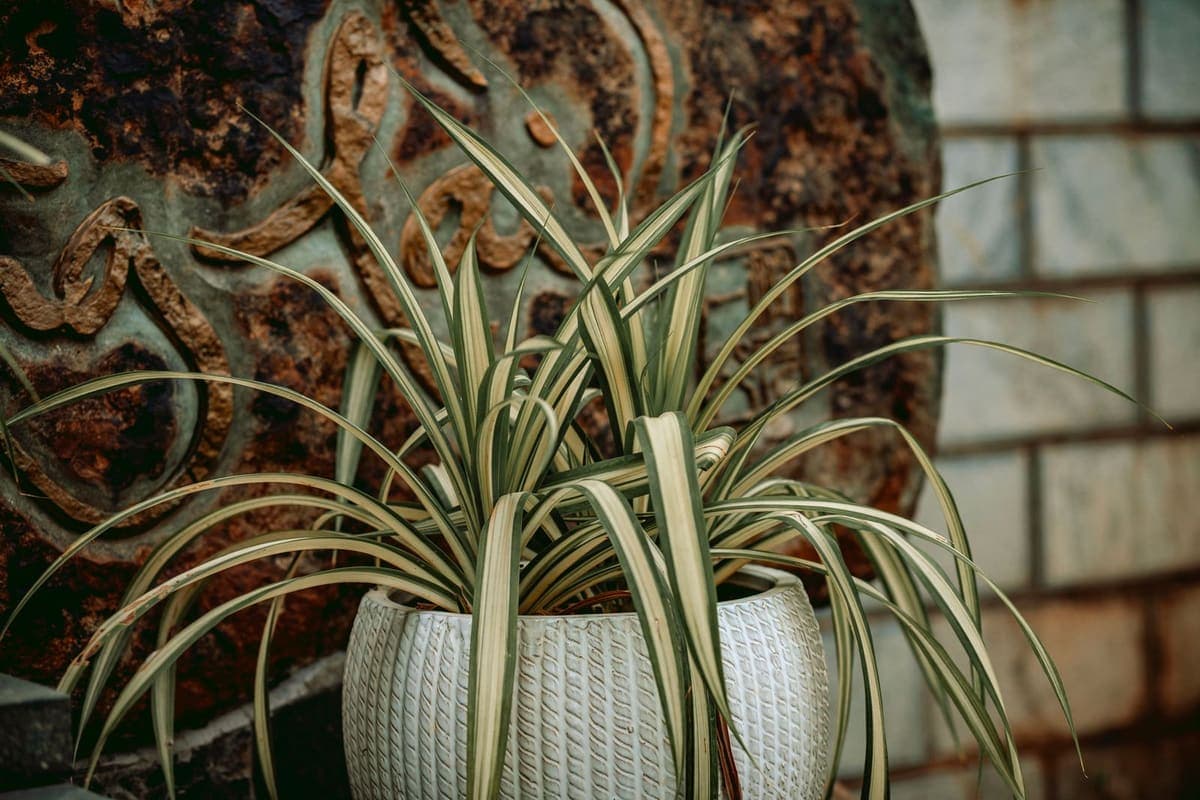
Spider Plant (Chlorophytum comosum)
Households with pets, and hanging pots
Tuberous roots give it a real internal water buffer, and it is the one plant here that is genuinely non-toxic to cats and dogs. It is also the plant the one published globe account we found managed to waterlog, which is a useful warning.
#ad We do not currently hold a live price for this, so we do not show one. How we make money.
Published specification
- Published watering cadence
- Tropical band, once or twice a week, with a tuberous drought buffer
- Light
- Bright indirect, and it scorches in direct sun
- Pet safety
- Non-toxic to cats and dogs
- Published watering cadence: Virginia Cooperative Extension SPES-804
- Light: Published horticultural guidance
- Pet safety: Published horticultural guidance
What is good about it
- Tuberous roots store water, so it survives being forgotten better than its cadence band suggests
- Non-toxic to pets, which rules out most of this list for some households
- Produces plantlets, so one plant fills a shelf for free
What is not
- Brown leaf tips at the first sign of stress, which looks worse than it is
- The same tubers that buffer drought rot readily if it is kept wet
- Wants brighter light than the true low-light survivors
Skip this one if
Skip it if the plan is to leave a small watering globe in it and go away. That specific combination is the one published failure account we found in this whole category, and the plant ended up waterlogged.
How it scored
- Forgiveness of neglect
- 8.0
- Low-light tolerance
- 6.5
- Overwatering tolerance
- 5.5
- Availability and price
- 10.0
- Overall
- 8.4 / 10
Our editorial score, from published specifications and computed intervals. Not a test result. Specification source: The Indoor Nursery, first-hand account of a waterlogged spider plant.
Pothos (Epipremnum aureum)
Learning to read a plant, rather than guessing at it
Not the most drought-tolerant plant here, but the most honest one: it wilts visibly and dramatically when it is thirsty and perks back up within hours of a drink. For a serial plant killer, a plant that tells you what is wrong is worth more than one that suffers quietly.
#ad We do not currently hold a live price for this, so we do not show one. How we make money.
Published specification
- Published watering cadence
- Tropical band, once or twice a week
- Light
- Low to bright indirect
- Thirst signal
- Pronounced, reversible wilt
- Published watering cadence: Virginia Cooperative Extension SPES-804
- Light: Published horticultural guidance
- Thirst signal: Published horticultural guidance
Refill interval - computed, not tested
A 750 ml bottle spike covers a 6-inch pothos for 8 to 15 days
The tropical band is once or twice a week, which is 3.5 to 7 days per watering. 750 ml divided by 350 ml for a 6-inch pot is 2.1 waterings, so 8 to 15 days.
Assumes: 6-inch pot, indoors, tropical frequency band. Light, temperature, humidity, soil mix and season all change how fast a pot dries, so treat this as a planning range and not a guarantee.
What is good about it
- Wilts obviously before it dies, which is the feature that actually teaches you the habit
- Recovers from a full wilt within hours, so a mistake is not fatal
- Roots in a glass of water, so one plant becomes several for free
What is not
- The tropical band means a genuinely shorter safe interval than the snake plant or ZZ
- Trails, so it needs cutting back or somewhere to hang
- Toxic to cats and dogs if chewed
Skip this one if
Skip it if you travel for more than about ten days at a time without cover. Its cadence band is four times tighter than a succulent's, and no amount of goodwill changes that.
How it scored
- Forgiveness of neglect
- 7.5
- Low-light tolerance
- 9.0
- Overwatering tolerance
- 7.0
- Availability and price
- 10.0
- Overall
- 8.6 / 10
Our editorial score, from published specifications and computed intervals. Not a test result. Specification source: Virginia Cooperative Extension, watering frequency bands.
Questions people actually ask
- Which is easier to care for, a snake plant or a spider plant?
They are easy in opposite ways. The snake plant needs water only once or twice a month and tolerates a dim room, so it forgives neglect. The spider plant needs water once or twice a week but shows you when it is short and recovers when you fix it, so it forgives mistakes. Choose on which of those you are likelier to make.
- Are snake plants and spider plants safe for cats?
The spider plant is on the ASPCA non-toxic list for both cats and dogs. The snake plant is listed as toxic to both, with saponins as the toxic principle. For a household with pets that chew, the spider plant is the clear choice.
- Which needs less light?
The snake plant. It tolerates a dim room and grows faster in bright indirect light. The spider plant wants bright indirect light and scorches in direct sun; in a dark corner it pales and stops producing plantlets.
- Can I put a snake plant or spider plant in a self-watering pot?
The spider plant, with care - it sits in the tropical band and suits an evenly moist root zone, but let the reservoir run down between fills so the tubers get air. The snake plant, no: its published cadence of once or twice a month depends on a dry period a reservoir removes.
- Why are my spider plant tips turning brown?
Stress at the margins - dry air, a missed watering, or fluoride and salts in tap water. It looks worse than it is and the plant is rarely in danger. Trim the tips, water thoroughly and let the top of the mix dry between waterings, and use rain or filtered water if the tap water is hard.
Sources
Sources
- Criscione and Holliday-Goulart, Properly Watering Container Houseplants, Virginia Cooperative Extension SPES-804 (2026)
- ASPCA Animal Poison Control, Toxic and Non-Toxic Plants list
- Daughtry, Watering but Not Overwatering Houseplants, NC State Extension (2022)
- Royal Horticultural Society, Watering plants wisely