Head to head
Snake Plant vs ZZ Plant
Two plants with the same published watering cadence and the same fatal weakness. The tiebreakers are light, pets, and what you want the plant to do.
By Scooter M. - Enthusiast. Reads the manuals, compiles the specs, does the math. | Published
Disclosure
We earn a commission if you buy through our links. It does not change what we recommend or what you pay. Full disclosure.
The short answer
Why the usual comparison is a tie
Almost everything written about these two plants ranks them on toughness, and on toughness they are genuinely hard to separate. Virginia Cooperative Extension puts both in the same published band - succulents and cacti, once or twice a month - against once or twice a week for tropical houseplants. That is the number that decides forgiveness, and they share it.
A wide band means a missed week barely registers. For a fern, being a week late is the difference between a healthy plant and a crisp one. For either of these, a week is inside the normal interval. That is the whole reason they are the standard recommendation for somebody who has killed everything else.
So the honest comparison has to be about the things that are actually different, and there are four.
The head-to-head
| Snake plant | ZZ plant | Winner | |
|---|---|---|---|
| Published watering cadence | Succulent band, once or twice a month | Succulent band, once or twice a month | Tie |
| Low-light tolerance | Tolerates low light, faster in bright indirect | Very low to bright indirect | ZZ plant |
| Built-in water storage | Succulent leaves | Rhizomes storing water below soil level | ZZ plant |
| Recovery from damage | Slow - slow growth means slow repair | Slow, and it looks damaged for months | Snake plant, narrowly |
| Pets | Not a pet-safe choice | Mildly toxic if eaten | Neither - see below |
| Main failure mode | Overwatering and root rot, not drought | Rot, same as any drought-adapted plant | Tie |
Light is the real tiebreaker
This is the difference that decides most purchases. A snake plant tolerates low light and grows noticeably faster in bright indirect light. A ZZ plant handles genuinely dim rooms better than almost anything else sold as a houseplant.
The practical test is not how bright a room feels. It is whether you could comfortably read a book there in the middle of the day without turning a lamp on. If the answer is no, that is ZZ territory. If the answer is yes, either works and the snake plant will look better for it.
There is a second-order effect worth knowing. Light drives water use. The same plant in a dim corner dries far more slowly than in a bright window, which means the published once-or-twice-a-month band shifts toward the slow end - and the overwatering risk goes up. A dark corner is not just a light problem, it is a watering problem in disguise. Our watering cadence reference goes through the other factors that move the interval.
The rhizome advantage, and why it is also the trap
The ZZ plant stores water in thick underground rhizomes. That is a genuine built-in reservoir - the plant arrives with the buffer you would otherwise be shopping for on this site. It is the main reason a ZZ survives the month you forgot it existed.
It is also the reason the failure is invisible. Water stored below soil level means the plant shows no distress at all while conditions above it are going wrong. A snake plant kept wet will eventually go soft at the base where you can see it. A ZZ will look completely normal until the rhizomes have gone, at which point there is not much to save.
NC State Extension names the organisms responsible - Pythium, Phytophthora, Rhizoctonia and Fusarium - and the condition they need is wet, poorly drained soil. Both of these plants are engineered by evolution to avoid that condition and have no defense against it when it is imposed on them. The early signals to watch for are worth knowing for either plant.
What both of them are wrong for
A self-watering pot. This is the mistake we see most often, and it is an understandable one: you buy the toughest plant and the most automatic pot and expect the effects to add up. They cancel out instead. A reservoir pot holds the root zone at a constant moisture level, which is precisely the condition a once-or-twice-a-month plant is not built for. The full compatibility list is here and both of these are on the wrong side of it.
A capillary mat. Same reasoning. Continuous moisture at the base of the pot is the classic rot condition for a drought-adapted plant.
A household with pets that chew. The ZZ is mildly toxic if eaten, and the snake plant is not a pet-safe choice either. If that matters, the spider plant is published as non-toxic to cats and dogs and has tuberous roots that give it a real drought buffer of its own - not as wide a band as these two, but a genuinely forgiving plant in a house where things get nibbled.
The third option nobody mentions
If the spot is dark and dries out - a hallway with no window and a radiator, say - the cast iron plant handles that combination better than either of these. It tolerates deep shade to bright indirect light and extended dry spells, and it has no dramatic failure mode: it does not collapse, drop its leaves or rot easily. The trade is that it is harder to find, costs more, and grows so slowly it appears static.
It is the plant people inherit. If what you want is something that will simply still be there in ten years, it is the strongest answer on this page - and it is why it sits alongside these two in our hard-to-kill roundup.
How to keep either one alive
The whole job is three things.
A pot with a drainage hole. Not a decorative cachepot with no outlet, and not a saucer left standing full. Virginia Cooperative Extension is explicit that a container should be drained until water stops dripping and should not be left standing in water.
Water thoroughly, then wait properly. Little-and-often keeps the surface damp without ever flushing the pot, which is the worst pattern for these two. Wet the mix all the way through, drain it, then leave it alone until it is dry throughout.
Check rather than schedule. A finger one to three inches into the mix is what extension guidance recommends, and for a small pot that is genuinely enough. For a deep pot, a meter and the discipline to act on a dry reading does the same job in five seconds.
The verdict
Dark room, ZZ plant. Some light and you want the plant to look like something, snake plant. Dark and dry and you want to stop thinking about it forever, cast iron plant. Whichever you choose, the plant is not the variable that decides whether it lives - the drainage hole and your restraint are.
What we would buy for this
The gear that fits this problem
Chosen from the same registry as our roundups, on published specifications and the computed refill interval.
Snake Plant (Dracaena trifasciata)
Someone who has killed everything else
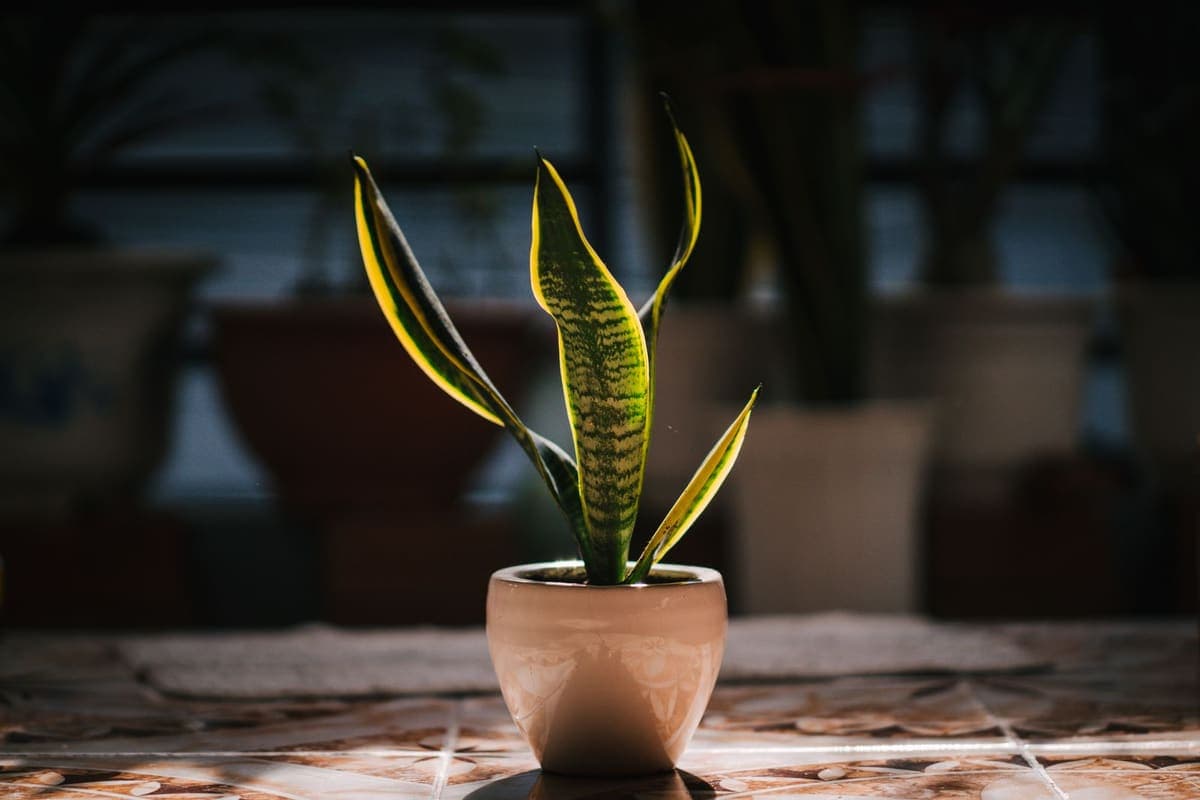
The most forgiving common houseplant there is, and the reason is arithmetic rather than folklore: its published watering cadence sits in the succulent band of once or twice a month, so the interval you have to hit is four times wider than a tropical's.
#ad We do not currently hold a live price for this, so we do not show one. How we make money.
Published specification
- Published watering cadence
- Succulent band, once or twice a month
- Light
- Tolerates low light, grows faster in bright indirect
- Main failure mode
- Overwatering and root rot, not drought
- Published watering cadence: Virginia Cooperative Extension SPES-804
- Light: Published horticultural guidance
- Main failure mode: Virginia Cooperative Extension SPES-804
Refill interval - computed, not tested
A 500 ml globe covers a 6-inch snake plant for 3 to 6 weeks
The succulent band is once or twice a month, which is 15 to 30 days per watering. 500 ml divided by 350 ml for a 6-inch pot is 1.4 waterings, so 21 to 42 days. The same globe on a tropical in the same pot is 5 to 10 days.
Assumes: 6-inch pot, indoors, succulent frequency band. Light, temperature, humidity, soil mix and season all change how fast a pot dries, so treat this as a planning range and not a guarantee.
What is good about it
- The wide published cadence is what makes it forgiving, because a week late matters far less than it does for a fern
- Genuinely tolerates low light, so it survives the corner where nothing else does
- Slow growing, so it does not outgrow its pot and change its own water needs
What is not
- The same tolerance means it will sit in wet soil without complaining until the roots are already gone
- Slow growth means slow recovery from any damage
Skip this one if
Skip it if you are the kind of plant killer who overwaters rather than forgets. This plant's one weakness is exactly your habit, and a pothos would be more honest with you about being wet.
How it scored
- Forgiveness of neglect
- 10.0
- Low-light tolerance
- 9.5
- Overwatering tolerance
- 5.0
- Availability and price
- 9.5
- Overall
- 9.2 / 10
Our editorial score, from published specifications and computed intervals. Not a test result. Specification source: Virginia Cooperative Extension, watering frequency bands.
ZZ Plant (Zamioculcas zamiifolia)
A dark office or a hallway with no natural light
Stores water in thick underground rhizomes, which is why it survives the month you forget it exists. Same wide watering band as a snake plant, with a glossier look and a slightly higher tolerance for gloom.
#ad We do not currently hold a live price for this, so we do not show one. How we make money.
Published specification
- Published watering cadence
- Succulent band, once or twice a month
- Light
- Very low to bright indirect
- Water storage
- Rhizomes store water below soil level
- Published watering cadence: Virginia Cooperative Extension SPES-804
- Light: Published horticultural guidance
- Water storage: Published horticultural guidance
What is good about it
- The rhizomes are a built-in reservoir, so it has its own buffer before you even add one
- Handles genuinely dim rooms better than almost anything else sold as a houseplant
- Glossy foliage that does not look like a survival plant
What is not
- Slow, so a damaged plant stays damaged-looking for months
- Same rot risk as any drought-adapted plant kept wet
- Mildly toxic if eaten, which matters with pets
Skip this one if
Skip it if you want visible growth. It is a plant that rewards being left alone by doing almost nothing, which is either the point or the problem depending on what you wanted.
How it scored
- Forgiveness of neglect
- 10.0
- Low-light tolerance
- 10.0
- Overwatering tolerance
- 4.5
- Availability and price
- 8.5
- Overall
- 9.0 / 10
Our editorial score, from published specifications and computed intervals. Not a test result. Specification source: Virginia Cooperative Extension, watering frequency bands.
Cast Iron Plant (Aspidistra elatior)
A genuinely dark corner that has already killed two plants
Named for exactly the reason you are reading this page. It is slow, dark green and almost impossible to offend, and it is the one plant here that tolerates both drought and the deep shade where most survivors give up.
#ad We do not currently hold a live price for this, so we do not show one. How we make money.
Published specification
- Published watering cadence
- Water when the top of the mix is dry, and it tolerates extended dry spells
- Light
- Deep shade to bright indirect
- Growth rate
- Very slow
- Published watering cadence: Published horticultural guidance
- Light: Published horticultural guidance
- Growth rate: Published horticultural guidance
What is good about it
- Tolerates the combination that kills most survivors, which is dark and dry at the same time
- No dramatic failure mode, so it does not collapse, drop leaves or rot easily
- Long-lived, and these are plants people inherit
What is not
- Slow to the point of appearing static
- Harder to find and more expensive than a pothos or a snake plant
- Visually plain, which is either restful or dull
Skip this one if
Skip it if you want the plant to do something. Growth you can see is not on the menu, and if that is what you are after you will end up over-attending to it, which is how these get killed.
How it scored
- Forgiveness of neglect
- 9.5
- Low-light tolerance
- 10.0
- Overwatering tolerance
- 7.5
- Availability and price
- 6.0
- Overall
- 8.8 / 10
Our editorial score, from published specifications and computed intervals. Not a test result. Specification source: Virginia Cooperative Extension, watering guidance.
Questions people actually ask
- Which is harder to kill, a snake plant or a ZZ plant?
On watering tolerance they are effectively equal - both are published in the succulent band of once or twice a month, which is what makes them forgiving. The ZZ plant edges it in a genuinely dark room, both because it tolerates low light better and because its rhizomes store water below soil level.
- How often should I water a snake plant or a ZZ plant?
Both sit in the published succulent band, once or twice a month, which is about a quarter as often as a tropical houseplant. Check rather than schedule: water thoroughly when the mix is dry throughout, drain it fully, and wait. In a dim or cool room the interval stretches further still.
- Can I put a snake plant or ZZ plant in a self-watering pot?
We would not. A reservoir pot holds the root zone at a constant moisture level, and the entire tolerance of both plants depends on a dry period between waterings. It is the one combination that turns two good decisions into one bad outcome.
- Are snake plants and ZZ plants safe for cats and dogs?
The ZZ plant is mildly toxic if eaten, and the snake plant is not a pet-safe choice either. If pets chew your plants, the spider plant is published as non-toxic to cats and dogs and has a real drought buffer of its own in its tuberous roots.
- My ZZ plant looks fine but the stems are falling over. What happened?
Most likely rot at the rhizome. Because a ZZ stores its water below soil level, it can look completely normal while conditions underground go wrong, and the first visible sign is often stems loosening or yellowing at the base. Lift it out and inspect: healthy rhizomes are firm, rotted ones are soft and discolored.
Sources