Roundup
Is Tap Water Bad for Houseplants?
Extension services disagree about chlorine, agree completely about softened water, and all point at the same real culprit: the minerals that stay behind when the water evaporates.
By Scooter M. - Enthusiast. Reads the manuals, compiles the specs, does the math. | Published
Disclosure
We earn a commission if you buy through our links. It does not change what we recommend or what you pay. Full disclosure.
The short answer
What extension services actually say
This question attracts more folklore than almost anything in houseplant care, so start with the published guidance - and notice where it disagrees, because that is informative in itself.
| Question | Published position | Who says it |
|---|---|---|
| Is ordinary tap water OK? | Ordinary tap or well water is usually satisfactory for plants | Missouri Extension |
| Chlorine and fluoride | Chlorine and fluorine often added to city water do not harm plants | Missouri Extension |
| Chlorine and fluoride | Let the water sit at least 24 hours to allow the chlorine and fluoride to dissipate | Illinois Extension |
| Softened water | Contains more dissolved minerals, so it should be avoided when watering houseplants | UMD Extension |
| Softened water | Water run through most water softeners should not be used continuously for watering potted plants | Missouri Extension |
| Best water source | Rainwater and melted snow are excellent water sources | Missouri Extension |
| Water temperature | Only use room temperature water. Do not use cold water | Illinois Extension |
So the honest summary is this: the thing the internet worries about most - chlorine - is the thing extension services disagree about, and one of them says plainly that it does no harm. The thing almost nobody asks about - the softener in the basement - is the one they all warn against.
Softened water is the one real prohibition
A water softener works by ion exchange: it takes calcium and magnesium out and puts sodium in. The water feels softer and stops scaling your kettle, and it is now carrying a salt that plants handle poorly.
UMD Extension says softened water contains more dissolved minerals than other water and should be avoided when watering houseplants. Missouri says water run through most softeners should not be used continuously for potted plants, and lists its use among the causes of small new leaves. Clemson Extension is blunter still, naming sodium and chloride as what it adds to the mix.
If your house has a softener, the usual fix costs nothing: most installations leave one tap unsoftened, commonly the kitchen cold tap or an outside spigot. Find the untreated one and water from there. No product on this page addresses sodium, and that includes the filters.
Hard water, and the number that defines it
Hardness is dissolved calcium and magnesium, and the USGS publishes the thresholds: soft is 0 to 60 mg/L as calcium carbonate, moderately hard 61 to 120, hard 121 to 180, and very hard above 180.
Hard water is not toxic. Calcium and magnesium are nutrients - they are two of the things a good fertilizer deliberately supplies. The problem is cumulative rather than immediate. Water evaporates from the surface of a pot and transpires through the plant; the dissolved minerals do not leave with it. Over months they concentrate in the mix.
UMD lists what that looks like: reduced growth, brown leaf tips, dropping of lower leaves, dead root tips and wilting, with salt deposits forming a crust around the pot at the soil line, around the drainage hole, or on the outside of clay pots. In severe cases the buildup draws water out of root tips, which is the opposite of what watering is supposed to do.
How we judged these
Does it tell you something, or change something? The two measuring tools are ranked first deliberately. In a category this full of folklore, finding out whether you have the problem is worth more than buying a solution to it.
Does it publish an accuracy figure? The standing test on this site. Soil moisture meters almost never publish one, which is why it is worth noticing that the cheapest instrument on this page does.
Does the claim match the problem? This is where the filters separate. A carbon pitcher certified for chlorine taste and odor is not a hard-water product, and a dechlorinator says nothing about minerals at all. Both are ranked where their own published claims put them.
What does it cost per watering? A filter whose life collapses in hard water is an expensive way to fill a watering can, and that is published.
| Product | Measures | Removes minerals | Removes chlorine | Published accuracy |
|---|---|---|---|---|
| HM Digital TDS-3 | Total dissolved solids | No | No | Plus or minus 2% |
| Varify hardness strips | Calcium and magnesium | No | No | Not published |
| ZeroWater 10-cup | Includes a TDS meter | Yes - claims 000 ppm fresh | Yes - NSF/ANSI 42 | Certified to 15 gal |
| API Tap Water Conditioner | Nothing | No claim made | Yes, plus chloramine | Dose published in mL/gal |
| Brita Large 10-cup | Nothing | No claim made | Yes - taste and odor | Not published |
Measure before you spend
A TDS meter costs less than one bag of potting mix and answers the question this page exists for. Dip it in a glass of your tap water and read the number.
Under about 100 ppm: your water is soft to moderately hard. It is not your problem. Stop reading about water and go and check whether you are overwatering, which is overwhelmingly more likely to be what is wrong.
Around 100 to 200 ppm: middling. Flush your pots on the published schedule and you will never think about it again.
Above about 300 ppm: hard enough to matter for sensitive plants, and worth either collecting rainwater or filtering for the few plants that care.
One honest limitation: TDS is not hardness. It totals every dissolved solid, so a high reading tells you something is in there but not that it is calcium. If you want specifically the hardness figure in the units a water report uses, the strips give you that for a few cents, and your utility probably publishes it for free.
The fix is usually flushing, not filtering
If a TDS reading says your water is hard, the first response is not a filter. It is the leaching step that every extension service publishes, because the problem is accumulation and leaching is what reverses accumulation.
UMD gives the figures: pour at least twice the volume of the pot onto the potting soil and let it drain completely, every four to six months, and leach a newly bought plant the first time you water it. Remove any surface crust first. Leach before you fertilize rather than after.
Missouri adds the detail that catches people: discard water that remains beneath the pot one hour after watering, so the mix cannot reabsorb what you just washed out. A pot standing in a full saucer never completes a flush. That is what the saucer page is about.
The free rule nobody follows
Illinois Extension gives a water instruction that costs nothing and gets ignored more than any other: only use room temperature water, and do not use cold water.
It is easy to see why it gets skipped - cold water from the tap looks like water. But a root system at room temperature meeting water several degrees colder is a shock to a tropical plant, and the plants most houseplants are bred from do not experience cold soil in their native range at all. Filling the can and leaving it on the floor until the next day solves this and the chlorine question in the same move, which is why UMD Extension recommends drawing water the day before anyway.
If you only take one free habit from this page, take that one. It is the cheapest recommendation here and it is the only one that costs nothing but a day of patience.
When the crust is already bad
A flush reverses accumulation, but there is a point past which flushing alone is not the answer, and both services that address it say the same thing.
Scrape the surface first. UMD says to remove any surface crust before leaching, then keep water running through the soil to wash the salts out. Leaching through a crust just redistributes it.
For heavy buildup, replace the top layer. Missouri Extension’s instruction is to scrape off the surface soil and replace it with fresh soil, taking care not to injure roots. That is a smaller intervention than a full repot and it removes the worst-concentrated material.
In a small pot, replace the medium instead. UMD is explicit that smaller pots with media high in salts should have the growing media replaced rather than flushed. The volume of water needed to leach a small pot properly is more disruptive than repotting it.
And stop the pot from drinking its own runoff. Missouri’s detail is the one most people miss: discard water that remains beneath the pot one hour after watering. A pot standing in its own drainage reabsorbs the salts you just washed out, so the flush never completes. That is the entire argument for a saucer you actually empty.
Which plants genuinely care
Most houseplants do not. The ones that do are worth knowing, because they justify treating a few plants specially rather than filtering water for a whole collection.
Peace lilies and other Spathiphyllum. Missouri Extension names brown leaf tips as a typical symptom of fluoride toxicity and notes it is common in lily-family plants such as Spathiphyllum. That is the single best-documented tap-water sensitivity in common houseplants, and peace lilies are a plant this site recommends, so it is worth knowing.
Orchids. Bark-grown orchids get flushed with plain water far more often than a potted houseplant does, which is partly how growers keep accumulated salts down. Orchid growing is unusual in several ways and this is one of them: the watering routine is already doing the leaching that other pots need scheduled.
Carnivorous plants. Outside this site’s scope, but if you grow them you already know they need mineral-free water and that this is not optional for them.
The plants that do not care are the ones this site recommends most: snake plants, ZZ plants and pothos will take ordinary tap water indefinitely. Filtering water for them achieves nothing.
Distilled, filtered, rain or tap
Rainwater. What Missouri calls an excellent water source, and free. The only cost is somewhere to put a container. UMD notes rainwater has no added chemicals.
Dehumidifier condensate. UMD names this directly as a distilled, mineral-free source. If you already run one, you are producing exactly the water sensitive plants want and pouring it away.
Settled tap water. UMD suggests drawing tap water the day before watering so chlorine can evaporate and minerals can settle, then discarding the bottom inch or two. Illinois says 24 hours for chlorine and fluoride to dissipate. Free, and it addresses the one thing a cheap carbon filter does.
A mineral-removing filter. The only purchased option that changes the hardness number. ZeroWater claims a fresh filter reads 000 ppm on the TDS meter it ships with, which is checkable on day one. The cost is the consumable, and the maker publishes the bad news honestly: filter life runs to roughly 8 to 15 gallons where tap TDS is 301 to 400 ppm, against up to 40 gallons in general. In other words it is most expensive exactly where you need it.
A standard carbon pitcher. Certified for chlorine taste and odor, with no published hardness or TDS claim. It does not address the crust. Use it if you own it, do not buy it for this.
What we would buy
Anyone, first: the TDS meter. The price of a bag of potting mix to find out whether the rest of this page applies to you is the best value in the category, and most readers will discover it does not apply.
Hard water and a few sensitive plants: the meter, then rainwater or dehumidifier water for the peace lily and the orchid, and ordinary tap for everything else. Zero ongoing cost.
Hard water, no outdoor space, sensitive plants you care about: the ZeroWater, used only for those plants. Running a whole collection through it is not a sensible use of filters at 8 to 15 gallons each.
Chloraminated water and no patience: the API conditioner. Chloramine does not gas off overnight the way free chlorine does, which is the one case where standing the water out does not work.
A softener in the house: none of the above. Find the unsoftened tap. No filter here removes sodium.
Ranked picks
Quick picks
Ranked on published specifications and the computed refill interval, not on looks. Tap any row for the full write-up, including who should skip it.
| # | Product | Best for | Score | Price |
|---|---|---|---|---|
| 1 | 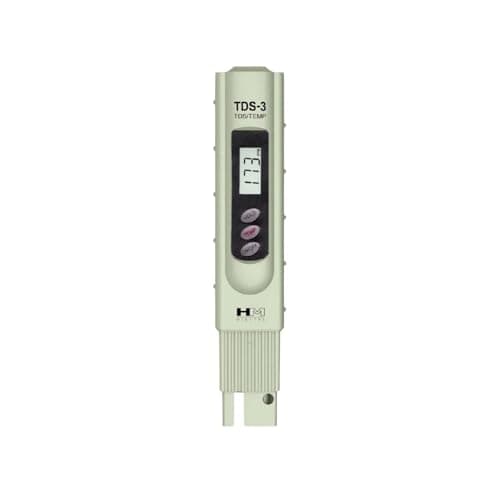 HM Digital TDS-3 Handheld TDS MeterFinding out what is actually in your tap water before spending on it | Buy this first, before any water | 9.0 | $14.25 - View on Amazon |
| 2 | 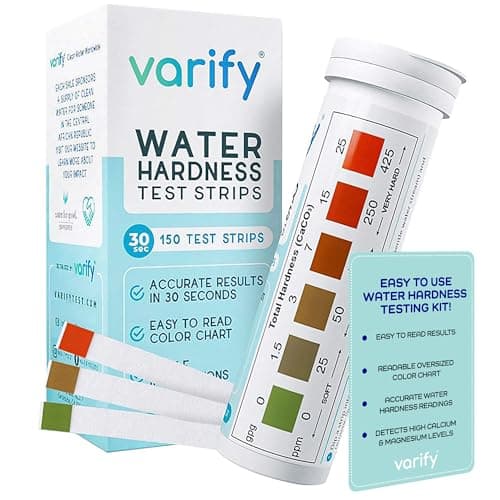 Varify Water Hardness Test Strips, 150 StripsAnswering is my water hard, in the units a water report uses | Cheapest answer to is my water hard | 8.0 | $9.99 - View on Amazon |
| 3 | 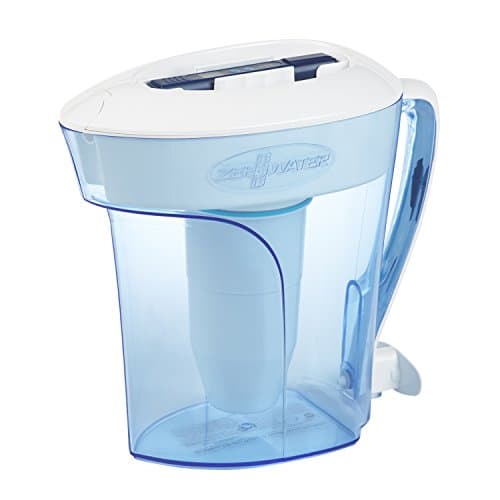 ZeroWater 10-Cup Ready-Pour Pitcher, 5-Stage FilterMineral-free water for a few sensitive plants, without collecting rain | The only filter that moves the number | 8.3 | $34.99 - View on Amazon |
| 4 | 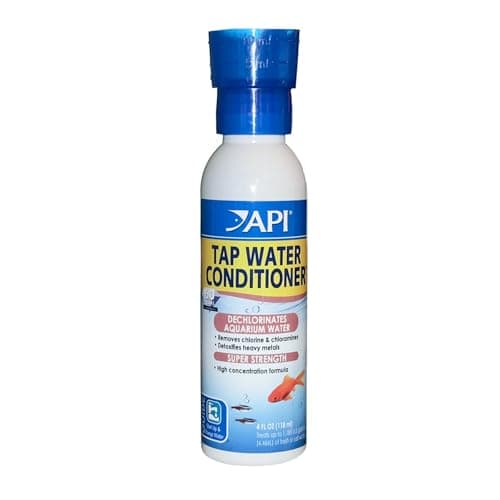 API Tap Water Conditioner, 4 ozDechlorinating a watering can now rather than standing it overnight | For chloramine, and nothing else | 6.5 | $4.78 - View on Amazon |
| 5 | 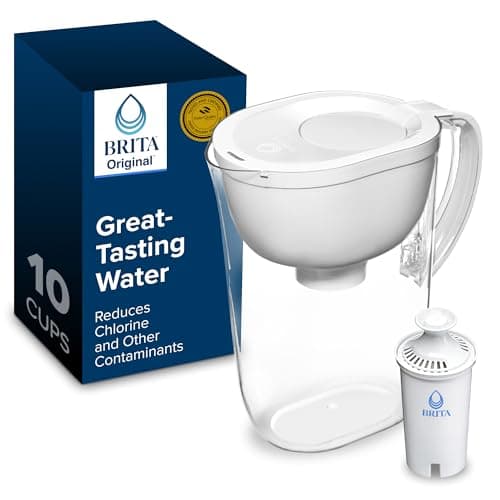 Brita Large 10-Cup Water Filter PitcherTaking chlorine out, if you already own the jug | Does not fix hard water - use it if you own it | 6.0 | $29.99 - View on Amazon |
Scores are our editorial judgment from published specifications. They are not test results, and they are deliberately not marked up as ratings in this page’s structured data.
Pick #1 - Buy this first, before any water
HM Digital TDS-3 Handheld TDS Meter
Finding out what is actually in your tap water before spending on it
Buy this before you buy any water. It publishes an accuracy figure - plus or minus 2% from 0 to 5000 ppm - which is more than any soil moisture meter on this site manages, and it turns the whole tap-water question from an argument into a number. Thirty seconds in a glass tells you whether your water is the problem or whether you have been solving an imaginary one.
#ad Price as of October 29, 2026, from Amazon. Prices change. How we make money.
Published specification
- Published accuracy
- Plus or minus 2% (0 to 5000 ppm)
- Measurement range
- 0 to 9990 ppm (mg/L) total dissolved solids
- Resolution
- 1 ppm from 0 to 999; 10 ppm from 1000 to 9990, shown with an x10 icon
- Temperature compensation
- Built-in sensor for automatic temperature compensation, 1 to 50 degrees C (33 to 122 degrees F)
- Calibration
- Factory calibrated with a 342 ppm NaCl solution; recalibrated with a mini-screwdriver
- Power
- 2 x 1.5V button cells (LR44 or equivalent), included
- Published accuracy: HM Digital published specification, hmdigital.com
- Measurement range: HM Digital published specification, hmdigital.com
- Resolution: HM Digital published specification, hmdigital.com
- Temperature compensation: HM Digital published specification, hmdigital.com
- Calibration: HM Digital published specification, hmdigital.com
- Power: HM Digital published specification, hmdigital.com
What is good about it
- Publishes a real accuracy tolerance and a calibration standard, both rare at this price
- Automatic temperature compensation, so a cold tap and a warm one read the same
- Measures total dissolved solids, which is the number both filters and softeners move
- Costs less than a bag of potting mix, so there is no reason left to guess
What is not
- TDS is not hardness - it totals every dissolved solid, so a high reading does not tell you it is calcium
- Factory calibration is against a salt solution, which is a proxy rather than your water
- Button cells, so it will be flat the one time you reach for it in two years
- Tells you nothing about chlorine or chloramine, which are not dissolved solids
Skip this one if
Skip it if you only want to know whether your water is hard. A hardness strip answers that specific question for less, and answers it in the units a water report uses.
How it scored
- Publishes accuracy
- 10.0
- Answers the hardness question
- 6.0
- Removes anything
- 1.0
- Ease of use
- 9.5
- Value for money
- 9.5
- Overall
- 9.0 / 10
Our editorial score, from published specifications and computed intervals. Not a test result. Specification source: HM Digital TDS-3 retail listing.
Pick #2 - Cheapest answer to is my water hard
Varify Water Hardness Test Strips, 150 Strips
Answering is my water hard, in the units a water report uses
The cheapest way to get the one number that decides whether the white crust on your pots is your water or your fertilizer. Hardness strips read calcium and magnesium specifically, which a TDS meter cannot separate out, and the USGS classifies anything above 180 mg/L as calcium carbonate as very hard - so a strip plus that threshold is a complete diagnosis for a few cents.
#ad Price as of October 29, 2026, from Amazon. Prices change. How we make money.
Published specification
- What it measures
- Water hardness - dissolved calcium and magnesium
- Strip count
- 150 strips
- Intended use
- Well and home water testing
- Published accuracy tolerance
- Not published by the manufacturer
- Reference thresholds for reading it
- Soft 0 to 60 mg/L, moderately hard 61 to 120, hard 121 to 180, very hard above 180, as calcium carbonate
- What it measures: Published product description, via retail listing
- Strip count: Published product title, via retail listing
- Intended use: Published product title, via retail listing
- Published accuracy tolerance: No tolerance stated on the retail listing
- Reference thresholds for reading it: USGS Water Science School, hardness of water
What is good about it
- Reads the calcium and magnesium specifically rather than lumping all solids together
- A few cents per test, and 150 strips outlasts the question
- No batteries, no calibration, nothing to go flat
- Gives a figure you can line up against the USGS hardness bands directly
What is not
- No published accuracy tolerance, so it gives a band rather than a measurement
- Color-pad reading is subjective in poor light
- Says nothing about sodium, which is the specific risk in softened water
- Single-use, unlike a meter you keep
Skip this one if
Skip it if you already have a recent water report from your utility. It will give you hardness in mg/L or grains per gallon already, and the strip adds nothing to that.
How it scored
- Publishes accuracy
- 3.0
- Answers the hardness question
- 10.0
- Removes anything
- 1.0
- Ease of use
- 9.0
- Value for money
- 10.0
- Overall
- 8.0 / 10
Our editorial score, from published specifications and computed intervals. Not a test result. Specification source: Varify water hardness test strips retail listing.
Pick #3 - The only filter that moves the number
ZeroWater 10-Cup Ready-Pour Pitcher, 5-Stage Filter
Mineral-free water for a few sensitive plants, without collecting rain
The only filter here that moves the number a houseplant actually cares about. ZeroWater claims a fresh filter reads 000 ppm on the TDS meter it ships with, which means near-mineral-free water out of a jug rather than out of a rain barrel. The catch lands hardest on exactly the households that need it: the maker's own figures put filter life at roughly 8 to 15 gallons where tap TDS is 301 to 400 ppm.
#ad Price as of October 29, 2026, from Amazon. Prices change. How we make money.
Published specification
- Filtration
- 5-stage filter; a TDS meter is included with the pitcher
- Published output claim
- A fresh filter should read 000 ppm; replace the filter at 006 ppm or more
- Certification
- IAPMO R&T system certified to NSF/ANSI 42 for chlorine taste and odor, and to NSF/ANSI 53 for lead, hexavalent chromium, PFOA, PFOS and mercury, for 15-gallon capacity
- Filter life
- Published as varying with tap TDS: up to 40 gallons claimed generally, around 25 gallons at 200 ppm or less, and roughly 8 to 15 gallons at 301 to 400 ppm
- Capacity
- 10 cups
- Filtration: ZeroWater published product information, zerowater.com
- Published output claim: ZeroWater published guidance, zerowater.com
- Certification: ZeroWater published certification statement, zerowater.com
- Filter life: ZeroWater published filter-life guidance, zerowater.com
- Capacity: Published product title, via retail listing
What is good about it
- Ships with the TDS meter, so the claim is one you can check yourself on day one
- The only option here that takes dissolved minerals out rather than just chlorine
- Certification names the standards and the contaminants rather than gesturing at purity
- Honest about filter life varying with input water, with figures to match
What is not
- In hard water the filter life collapses to 8 to 15 gallons, which is expensive water for a plant
- The certified capacity for the NSF/ANSI 53 claims is 15 gallons, below the headline 40
- Ten cups is a slow way to water a collection of any size
- Replacement filters are the real cost, and they are not cheap
Skip this one if
Skip it if you have somewhere to put a rain barrel or you run a dehumidifier. Both give you mineral-free water with no consumable at all, which is what extension guidance recommends first.
How it scored
- Publishes accuracy
- 8.0
- Answers the hardness question
- 7.0
- Removes anything
- 10.0
- Ease of use
- 7.5
- Value for money
- 6.0
- Overall
- 8.3 / 10
Our editorial score, from published specifications and computed intervals. Not a test result. Specification source: ZeroWater 10-cup pitcher retail listing.
Pick #4 - For chloramine, and nothing else
API Tap Water Conditioner, 4 oz
Dechlorinating a watering can now rather than standing it overnight
A genuine dechlorinator for a few dollars, and the honest reason it is ranked last is printed on its own product page: API publishes claims for chlorine, chloramine and heavy metals, and makes no claim about water hardness or dissolved minerals at all. It settles the chlorine question instantly. It does nothing about the white crust, which is the problem most people arrive with.
#ad Price as of October 29, 2026, from Amazon. Prices change. How we make money.
Published specification
- Published claims
- Instantly removes chlorine, neutralizes chloramines, detoxifies heavy metals including copper, lead and zinc
- Dose for chlorine and heavy metals
- 1 mL per 10 US gallons (38 L)
- Dose for chloramines
- 5 mL per 30 US gallons (114 L)
- Effect on hardness or dissolved minerals
- No claim published
- Intended market
- Sold as an aquarium water conditioner
- Published claims: API published product information, apifishcare.com
- Dose for chlorine and heavy metals: API published directions, apifishcare.com
- Dose for chloramines: API published directions, apifishcare.com
- Effect on hardness or dissolved minerals: No hardness or mineral claim on API's published product page
- Intended market: API published product information, apifishcare.com
What is good about it
- Publishes exact dose rates in milliliters per gallon, which almost nothing in plant care does
- Deals with chloramine, which standing water overnight does not reliably clear
- A few dollars, and 4 oz treats an absurd volume at the published rate
- Clear about what it does and silent about what it does not, which is the right way round
What is not
- No hardness claim, so the crust on your pots is untouched
- Dosing a 2-liter watering can means measuring a fraction of a milliliter
- It is an aquarium product, so no plant guidance is published for it
- Chlorine is the concern extension services disagree most about, so this may be solving nothing
Skip this one if
Skip it unless you specifically have chloraminated water and no patience. For plain chlorine, standing the water overnight is the free version and extension guidance says so.
How it scored
- Publishes accuracy
- 9.0
- Answers the hardness question
- 1.0
- Removes anything
- 5.0
- Ease of use
- 6.0
- Value for money
- 8.5
- Overall
- 6.5 / 10
Our editorial score, from published specifications and computed intervals. Not a test result. Specification source: API Tap Water Conditioner 4 oz retail listing.
Pick #5 - Does not fix hard water - use it if you own it
Brita Large 10-Cup Water Filter Pitcher
Taking chlorine out, if you already own the jug
Ranked here to answer a question rather than to recommend a purchase. A standard carbon pitcher is certified for chlorine taste and odor, not for dissolved minerals, so it will not change the hardness reading that causes the crust on your pots. If you already own one, use it - it handles the chlorine side. Do not buy one expecting it to fix hard water.
#ad Price as of October 29, 2026, from Amazon. Prices change. How we make money.
Published specification
- Certification claim
- WQA and NSF/ANSI certified, as stated on the product listing
- What the standard filter targets
- Chlorine taste and odor is the headline reduction claim for the standard filter
- Effect on hardness or TDS
- No hardness or total-dissolved-solids reduction claim is published
- Capacity
- 10 cups, one filter included
- TDS meter included
- No
- Certification claim: Published product description, via retail listing
- What the standard filter targets: Published product description, via retail listing
- Effect on hardness or TDS: No such claim stated on the retail listing
- Capacity: Published product title, via retail listing
- TDS meter included: Published product contents, via retail listing
What is good about it
- Deals with chlorine, which is the one tap-water concern some extension services do raise
- Cheaper filters and far longer intervals than a mineral-removing pitcher
- Most households already own one, which makes it free
- Widely available replacements, unlike niche filters
What is not
- No published hardness or TDS claim, so it does not address the crust problem at all
- No TDS meter, so nothing on the jug lets you verify what it did
- Marketing around purity invites exactly the assumption this entry exists to correct
- For chlorine alone, standing water overnight costs nothing and does the same job
Skip this one if
Skip buying one for plants. If chlorine is your only concern, Maryland and Illinois extension both say drawing the water a day ahead and letting it stand does it for free.
How it scored
- Publishes accuracy
- 5.0
- Answers the hardness question
- 2.0
- Removes anything
- 4.0
- Ease of use
- 9.0
- Value for money
- 7.0
- Overall
- 6.0 / 10
Our editorial score, from published specifications and computed intervals. Not a test result. Specification source: Brita Large 10-cup pitcher retail listing.
Questions people actually ask
- Is tap water bad for houseplants?
Usually not. University of Missouri Extension states that ordinary tap or well water is usually satisfactory for plants. The two real exceptions: softened water, which every extension service advises against because ion exchange adds sodium, and very hard water, whose minerals accumulate in the pot over months. Measure your tap with a TDS meter before assuming you have a problem.
- Should I let tap water sit out before watering plants?
Extension services disagree. Illinois Extension says to let water sit at least 24 hours so chlorine and fluoride can dissipate. Missouri Extension says chlorine and fluorine added to city water do not harm plants. UMD suggests drawing water the day before so chlorine can evaporate and minerals settle, then discarding the bottom inch or two. It costs nothing, so there is no reason not to - but do not expect it to fix hard water, because the minerals stay.
- Can I use softened water on houseplants?
No, and this is the one point every source agrees on. A softener exchanges calcium and magnesium for sodium, and UMD Extension says softened water should be avoided when watering houseplants. Missouri says it should not be used continuously for potted plants. Most installations leave one tap unsoftened - find it. No water filter sold for drinking removes sodium.
- What is the white crust on my plant pot?
Accumulated salts, from two sources at once: minerals in your water and residue from fertilizer. UMD lists salt deposits forming a crust around the pot at the soil line, around the drainage hole, or on clay pot exteriors. Scrape off the surface crust, then leach the pot with at least twice its volume of water and let it drain completely. In a bottom-watered or self-watering pot this builds up faster, because nothing ever washes through.
- Does hard water kill houseplants?
Not directly - calcium and magnesium are plant nutrients. The damage is cumulative: water leaves, minerals stay, and concentration rises. UMD lists the symptoms as reduced growth, brown leaf tips, lower leaf drop, dead root tips and wilting. Severe buildup pulls water back out of root tips. The remedy is leaching every four to six months, not a filter.
- Is distilled or filtered water better for plants?
Better for the few plants that are mineral-sensitive - orchids, peace lilies, carnivorous plants - and unnecessary for everything else. The free versions are better value than any pitcher: rainwater, which Missouri Extension calls an excellent water source, or the condensate from a dehumidifier drain pan, which UMD Extension names as distilled.
- Will a Brita filter help my houseplants?
Only with chlorine. A standard carbon pitcher is certified for chlorine taste and odor and publishes no hardness or dissolved-solids reduction claim, so it will not change the reading that causes the crust on your pots. Use one if you already own it. For actual mineral removal you need a filter that claims it and ships a TDS meter so you can verify it.
Sources
Sources
- Caring for Houseplants, University of Missouri Extension G6510
- Watering Indoor Plants, University of Maryland Extension
- Watering, Illinois Extension houseplant guidance
- Hardness of Water, USGS Water Science School
- Indoor Plants - Watering, Clemson Cooperative Extension Home & Garden Information Center
- Fertilizer Toxicity or High Soluble Salts in Indoor Plants, University of Maryland Extension
- HM Digital TDS-3 published specification
- Varify water hardness test strips retail listing
- ZeroWater published filtration, certification and filter-life guidance
- API Tap Water Conditioner published claims and dose rates
- Brita Large 10-cup pitcher retail listing