Roundup
Fertilizer for Self-Watering Pots
A sub-irrigated pot is the one container that waters from the bottom forever, which is exactly the condition extension services say builds a salt crust. That changes what you feed and how much.
By Scooter M. - Enthusiast. Reads the manuals, compiles the specs, does the math. | Published
Disclosure
We earn a commission if you buy through our links. It does not change what we recommend or what you pay. Full disclosure.
The short answer
Why a reservoir pot changes the fertilizer question
In an ordinary pot, fertilizer salts are managed by the watering itself. You water from the top until it runs out of the bottom, and the excess carries dissolved salts out with it. That is why watering thoroughly is the instruction every extension service gives, rather than watering little and often.
A sub-irrigated pot does the opposite, permanently and by design. Water enters at the bottom and moves up. Nothing runs out, because there is nothing to run out of. University of Maryland Extension states the consequence directly: fertilizer salts may accumulate on the surface of the potting media as a white crust, especially if bottom watered, and can cause stem collapse at the soil line.
University of Missouri Extension says the same thing from the other direction - salts may form a white accumulation on the soil surface if plants are watered regularly from the bottom, and occasional watering from the top helps wash out the salts. Both services are describing the exact mechanism a self-watering planter is built around.
How we judged these
Four criteria, in this order. They are deliberately different from the criteria you would use for a plant in an ordinary pot.
1. Does the analysis include calcium and magnesium? This is the criterion that reorders the whole category. In a conventional pot you supply calcium by working dolomite or lime into the surface. In a planted sub-irrigated pot the root ball sits on a wicking column you are not going to disturb, so a feed that brings calcium in the water is doing a job the alternative cannot. Only one liquid here publishes a calcium figure.
2. Is the dose published, and by whom? Over-application is the specific failure extension services warn about, and the dose is the only defense. We rank a published rate above an unpublished one every time, and a rate published by a university extension service above a rate published only by the maker.
3. How much salt does one feed leave behind? A weak analysis applied often leaves less residue per application than a strong one applied rarely. In a pot you cannot flush on demand, weak and frequent is the safer shape.
4. Can you dilute it? A liquid or a soluble powder can be taken down to a quarter strength the moment a pot shows crust. A pre-measured granule cannot be un-applied.
| Product | Analysis | Calcium published | Dose published by | Form |
|---|---|---|---|---|
| Dyna-Gro Foliage-Pro | 9-3-6 | Yes - 2.0% Ca, 0.5% Mg | Label only | Liquid concentrate |
| Espoma Organic Indoor! | 2-2-2 (on listings) | No | Espoma, on its own site | Liquid concentrate |
| EarthBox Natural Replant Kit | 8-3-5 | Dolomite supplied separately in the kit | EarthBox, pre-measured | Dry strip plus dolomite |
| Jack's Classic 20-20-20 | 20-20-20 | No | Missouri Extension - 1.5 tsp/gal | Soluble powder |
| PowerGrow replant kit | Not published | Dolomite lime included | Nobody | Dry kit |
Never into the reservoir, and here is why
This is the single most common mistake in sub-irrigated growing, and the reason is mechanical rather than chemical. The reservoir is a standing body of water with no outflow. Fertilizer put into it has nowhere to go but up the wick, at a concentration that only rises as the water level drops and the dissolved salts stay behind.
The EarthBox system solves this with geometry rather than chemistry: a dry fertilizer strip is laid in a band on the surface, under a fitted cover, deliberately away from the water. Roots grow toward the band and take what they need. Nothing dissolves into the reservoir, so nothing concentrates in it.
That is the model to copy whatever pot you own. Feed the surface. Let the plant decide how much of it to use.
The flush is not optional in a reservoir pot
Every extension service that discusses salt buildup gives the same remedy, with figures. University of Maryland Extension says to pour a lot of water - at least twice the volume of the pot - onto the potting soil and let it drain completely, and to do it every four to six months. It also gives an instruction people get backwards: leach a plant before you fertilize, so you are not washing away the fertilizer you just added.
NC State Extension describes the same step for container plants, noting that when using liquid fertilizers, salt accumulation can sometimes be a problem and is evident by a white crust on top of the potting mix - and that the media should then be leached by slowly running water through it for several minutes.
In a self-watering pot that means lifting the inner pot out if your design allows it, or taking the whole thing to a sink or outside and top-watering it hard. It is the one piece of maintenance a reservoir pot genuinely needs that an ordinary pot does not, and it takes five minutes twice a year.
| Question | Published answer | Source |
|---|---|---|
| How much water? | At least twice the volume of the pot | UMD Extension |
| How often? | Every four to six months | UMD Extension |
| Before or after fertilizing? | Before - otherwise you wash out the feed you just applied | UMD Extension |
| New plant? | Leach it the first time you water it | UMD Extension |
| Small pot, heavy crust? | Replace the growing media instead of flushing | UMD Extension |
Liquid or controlled-release?
Both work in a reservoir pot. They fail differently, which is the useful way to choose between them.
Controlled-release granules have one advantage that matters here more than anywhere else. NC State Extension lists it first: avoidance of high initial salt levels in the growing media, plus availability of nutrients for several months and reduction of nutrient losses from the container by leaching and runoff. In a pot that cannot leach, “no initial salt spike” is close to the ideal property. The cost is control - once the granules are in the mix, the dose is set.
Liquid feeds are quick-release and water-soluble, cost less per unit of nitrogen, and suit plants already in growth. Their advantage in a reservoir pot is that you can halve the concentration the moment you see a crust, and halve it again next time. Their disadvantage is that they have to be remembered, which on a site built for people who forget to water is not a small objection.
If you water your reservoir pot and nothing else, take the liquid and put a reminder somewhere. If you would rather do one thing in spring and not think about it, take a replant kit or a controlled-release granule and accept that the dose is fixed.
When not to fertilize at all
Three cases, all published, and all of them cheaper than buying anything on this page.
A newly bought plant. Missouri Extension says new plants seldom need additional fertilizer for a few weeks. NC State adds that commercial mixes often contain a small amount of fertilizer for an early boost, though those nutrients usually last only a couple of weeks. If you have just repotted into fresh mix, you have already fed it.
Winter, or any time there is no new growth. Missouri is blunt: plants do not need fertilizer in winter when no new growth is apparent. NC State gives the calendar version - once a month from March to October, and not from November to February unless deficiency symptoms appear.
A plant that looks unwell. Missouri warns specifically against fertilizing to stimulate growth in poor conditions, because poor light or poor watering is more often the cause and the fertilizer may cause further injury. If a plant in a reservoir pot is struggling, the first thing to check is not nutrition - it is whether the reservoir ever runs down. That page covers it.
Brown leaf tips are the symptom to read correctly
The complaint that brings most people to a fertilizer page is browning at the tips and margins, and it points in both directions at once. UMD lists the symptoms of high soluble salts as browning or dieback of leaf tips and margins, reduced growth, lower leaf drop, dead root tips and wilting, with salt deposits visible on the outsides of pots. Missouri lists burned or brown leaf tips and margins under too much fertilizer.
So the same symptom means too much feed far more often than too little - and in a bottom-watered pot, more often still. Before you buy a fertilizer to fix brown tips, check the surface of the mix for a pale crust and the outside of the pot for deposits. If either is there, the answer is a flush and a weaker feed, not a stronger one.
The other common cause is the water itself rather than the fertilizer. Hard tap water deposits its own minerals, and in a pot that never drains those accumulate alongside the fertilizer salts. A TDS reading on your tap tells you which of the two you are dealing with.
The EarthBox question, answered
A steady share of the people who find this site are looking specifically for what to put in an EarthBox-style grow box instead of the branded kit. Here is the honest answer.
The branded replant kit is three things: pre-measured fertilizer, a pound of dolomite, and two reversible mulch covers. EarthBox publishes which analysis suits which crop - 7-7-7 Standard described as suiting all plants and especially fruiting and root crops, 8-3-5 Natural recommended for leafy crops. It also publishes the cover instruction: black side up, switching to white when peak temperatures stay above 85 degrees F.
The third-party kit does the same job for roughly two-thirds of the price and does not publish its analysis. That is a real trade rather than a technicality, because in a box you cannot flush, the analysis is the specification. If you buy it, feed conservatively and watch the surface.
The third route is to assemble it: a bag of dolomite, a fertilizer whose analysis you chose, and the cover you already own. That is the cheapest option by a distance and the one that gives you the most control. It also requires you to measure, which is the part the kits exist to remove. Our alternatives page covers the boxes themselves.
Dolomite, and the calcium problem nobody mentions
Dolomite appears in every EarthBox-style kit for a reason, and it is the reason Foliage-Pro is ranked first here. Dolomitic lime supplies calcium and magnesium and moderates pH, and the conventional way to apply it is to mix it into the growing medium before planting or work it into the surface afterwards.
A grow box gets replanted every season, so there is an obvious moment to add it. A houseplant in a reservoir planter does not. It may sit in the same column for three years, and the window for amending that column closed the day you planted it.
That leaves two options: a feed that carries calcium in solution, or a repot. The first is a bottle; the second is a weekend and a disturbed root ball. This is the whole argument for choosing a complete analysis over a cheaper NPK-only feed in this specific kind of pot, and it is not an argument that applies to an ordinary plant pot at all.
What we would buy
One houseplant in a reservoir planter: Foliage-Pro, at half the label rate, roughly monthly in growth and not at all in winter. The calcium is the reason.
A collection of houseplants, and a worry about overdoing it: the Espoma, at its published two teaspoons per quart every two to four weeks. The weakest analysis here is the most forgiving thing to get wrong.
A grow box of vegetables: the replant kit for the crop you are growing - 7-7-7 for fruiting crops, the 8-3-5 Natural for leafy ones - and leave the liquids alone. The pre-measured strip plus dolomite plus cover is a system, and substituting one part of it piecemeal is how it stops working.
Anyone who likes control: the 20-20-20 powder at a quarter of the extension-published rate, which works out to roughly a third of a teaspoon per gallon. Add dolomite at repotting time to cover the calcium it lacks.
Ranked picks
Quick picks
Ranked on published specifications and the computed refill interval, not on looks. Tap any row for the full write-up, including who should skip it.
| # | Product | Best for | Score | Price |
|---|---|---|---|---|
| 1 | 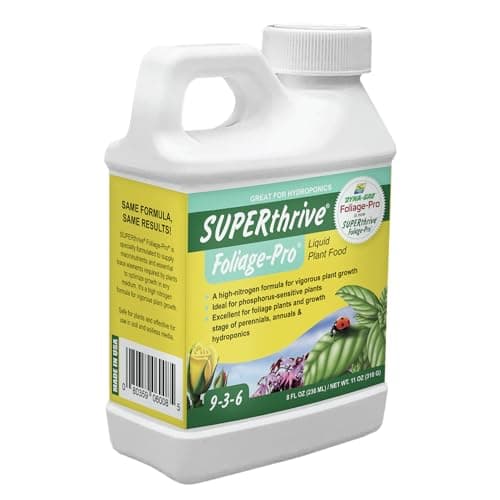 Superthrive Dyna-Gro Foliage-Pro 9-3-6, 8 ozA reservoir pot you want to feed from the watering can and nothing else | Best overall, and the only one with calcium | 8.8 | $18.49 - View on Amazon |
| 2 | 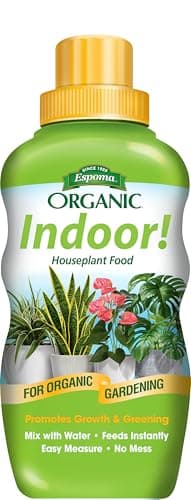 Espoma Organic Indoor! Plant Food, 8 oz concentrateA houseplant in a reservoir pot, fed little and often | Best for houseplants, lowest salt per feed | 8.2 | $9.41 - View on Amazon |
| 3 | 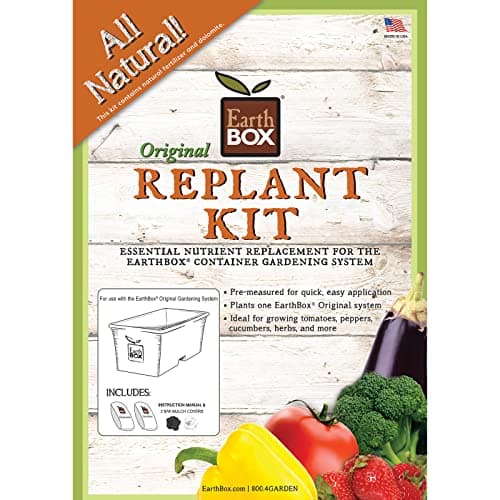 EarthBox 8-3-5 Natural Replant KitReplanting an EarthBox-style grow box with leafy crops | Best for a grow box, pre-measured | 8.5 | $18.99 - View on Amazon |
| 4 | 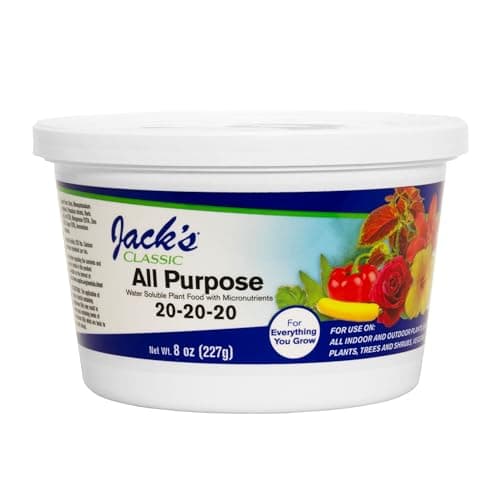 Jack's Classic 20-20-20 All Purpose Water-Soluble Fertilizer, 8 ozFeeding at a rate you chose, at quarter strength if you want it | Best if you want to set the dose yourself | 8.4 | $18.67 - View on Amazon |
| 5 | 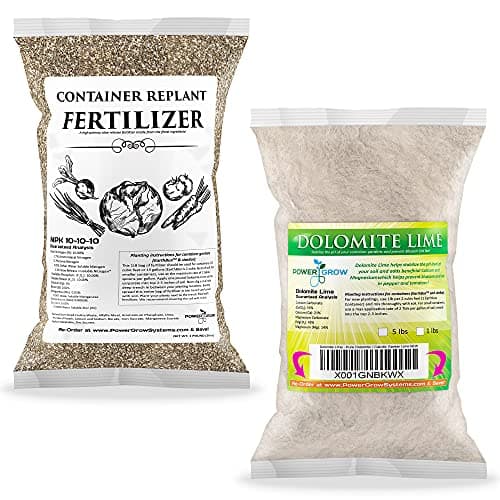 PowerGrow EarthBox Compatible Replanting Kit, Dolomite Lime and FertilizerReplanting a grow box cheaply, if you accept an unpublished analysis | Cheapest replant kit, unpublished analysis | 6.8 | $12.90 - View on Amazon |
Scores are our editorial judgment from published specifications. They are not test results, and they are deliberately not marked up as ratings in this page’s structured data.
Pick #1 - Best overall, and the only one with calcium
Superthrive Dyna-Gro Foliage-Pro 9-3-6, 8 oz
A reservoir pot you want to feed from the watering can and nothing else
The one liquid feed here whose guaranteed analysis includes calcium and magnesium - 2.0% and 0.5% - alongside the 9-3-6. That matters more in a reservoir pot than anywhere else, because the usual way to supply calcium is to work lime into the surface, and a sub-irrigated column is the one pot where you will not be digging around the roots once it is planted.
#ad Price as of October 29, 2026, from Amazon. Prices change. How we make money.
Published specification
- Guaranteed analysis
- 9-3-6. Total nitrogen 9.0% (2.9% ammoniacal, 6.1% nitrate), P2O5 3.0%, K2O 6.0%
- Calcium and magnesium
- Calcium 2.0%, magnesium 0.5%
- Nutrient count claimed
- All 16 essential nutrients - 6 macronutrients and 10 micronutrients
- Form
- Liquid concentrate, diluted into water before use
- Dilution rate
- Not published consistently across listings - use the rate printed on the bottle you receive
- Brand note
- Sold as Superthrive Foliage-Pro, formerly Dyna-Gro Foliage-Pro
- Guaranteed analysis: Guaranteed analysis as published on retail listings
- Calcium and magnesium: Guaranteed analysis as published on retail listings
- Nutrient count claimed: Manufacturer product description, via retail listings
- Form: Published product description, via retail listing
- Dilution rate: No single published figure found; the label is the authority
- Brand note: Retailer note on the name change
What is good about it
- Carries calcium and magnesium, which most houseplant liquids leave out entirely
- Nitrate-dominant nitrogen rather than mostly ammoniacal, which suits a permanently moist column
- One bottle covers foliage plants and vegetables, so there is nothing else to buy
- A liquid is the only form you can dilute down when a pot shows salt crust
What is not
- The dilution rate is not published the same way across listings, so you have to read the label you get
- More expensive per feed than a basic soluble powder
- A liquid feed has to be remembered, which is the failure mode this site exists for
- Nothing in the bottle addresses the salt it leaves behind - that is still your flush
Skip this one if
Skip it if you fertilize once in spring and then forget. A pre-measured replant kit suits that honestly better than a bottle you will not pick up again.
How it scored
- Completeness of analysis
- 10.0
- Suits a reservoir pot
- 9.0
- Published dose clarity
- 5.0
- Low salt per feed
- 7.0
- Value for money
- 8.0
- Overall
- 8.8 / 10
Our editorial score, from published specifications and computed intervals. Not a test result. Specification source: Dyna-Gro Foliage-Pro 8 oz retail listing.
Pick #2 - Best for houseplants, lowest salt per feed
Espoma Organic Indoor! Plant Food, 8 oz concentrate
A houseplant in a reservoir pot, fed little and often
The weakest feed here, and in a sub-irrigated pot that is a feature rather than a compromise. Espoma publishes the dose on its own site - half a cap, two teaspoons, per quart of water, every two to four weeks - which is more than most makers in this category manage, and a dilute feed is the least likely of these to leave a crust on a surface you never flush.
#ad Price as of October 29, 2026, from Amazon. Prices change. How we make money.
Published specification
- Published dose
- Half a cap (2 tsp) per quart of water
- Published frequency
- Feed every 2 to 4 weeks
- Guaranteed analysis
- 2-2-2 as stated on retail listings. Espoma's own product page does not carry the analysis in its page text
- Composition claimed
- Natural proteins with kelp extracts, humic acids and proprietary beneficial microbes
- Plants named
- For all houseplants; pothos, palms, fiddle leaf fig and monstera named
- Published dose: Espoma published directions, espoma.com
- Published frequency: Espoma published directions, espoma.com
- Guaranteed analysis: Retail listings; not confirmable from the maker's page text
- Composition claimed: Espoma published product description, espoma.com
- Plants named: Espoma published product description, espoma.com
What is good about it
- The maker publishes both the dose and the interval on its own site, which is rarer than it should be
- A low analysis means low salt per feed, and salt is the thing a reservoir pot cannot wash away
- Cheapest entry on this page outright
- Organic derivation suits anyone growing herbs or leaves they intend to eat
What is not
- 2-2-2 is a weak feed, so a plant in active growth will want it more often than a 9-3-6 would
- The analysis is on the label and on retailers but not in the maker's own page text
- No published calcium or magnesium figure
- Beneficial-microbe claims are not quantified anywhere we could find
Skip this one if
Skip it if you are feeding fruiting vegetables in a grow box. The analysis is too light for a tomato, and the replant kits exist precisely for that job.
How it scored
- Completeness of analysis
- 5.0
- Suits a reservoir pot
- 9.5
- Published dose clarity
- 9.5
- Low salt per feed
- 9.5
- Value for money
- 9.0
- Overall
- 8.2 / 10
Our editorial score, from published specifications and computed intervals. Not a test result. Specification source: Espoma Organic Indoor! Plant Food retail listing.
Pick #3 - Best for a grow box, pre-measured
EarthBox 8-3-5 Natural Replant Kit
Replanting an EarthBox-style grow box with leafy crops
The maker's own answer to feeding a sub-irrigated grow box, and the only product here that ships the three things the method needs together: pre-measured fertilizer, dolomite for calcium, and the reversible mulch cover that keeps the strip away from the water. EarthBox is explicit that the 8-3-5 Natural is recommended for leafy crops, which is a real limit and the reason this is not the pick for a tomato.
#ad Price as of October 29, 2026, from Amazon. Prices change. How we make money.
Published specification
- Fertilizer analysis
- 8-3-5 Natural. EarthBox also sells a 7-7-7 Standard kit
- Crops recommended
- 8-3-5 Natural recommended for leafy crops; 7-7-7 Standard described as suiting all plants, especially fruiting and root crops
- Dolomite included
- 1 lb bag of natural dolomite for the Original and Root and Veg kits
- Mulch covers included
- 2 black and white reversible mulch covers
- Cover orientation
- Black side up; switch to the white side when peak temperatures stay above 85 degrees F
- Not included
- Seeds and potting mix
- Fertilizer analysis: EarthBox published replant kit product page, earthbox.com
- Crops recommended: EarthBox published replant kit product page, earthbox.com
- Dolomite included: EarthBox published replant kit product page, earthbox.com
- Mulch covers included: EarthBox published replant kit product page, earthbox.com
- Cover orientation: EarthBox published replant instructions, earthbox.com
- Not included: EarthBox published FAQ, earthbox.com
What is good about it
- Pre-measured, so the one dose that matters in a grow box is not left to judgment
- Includes the dolomite, which is the calcium source a sealed sub-irrigated box otherwise lacks
- The cover is part of the fertility method, not packaging - it keeps the strip out of the water
- EarthBox states plainly which crops each analysis is for, which most makers do not
What is not
- 8-3-5 is recommended for leafy crops only, so it is the wrong kit for tomatoes and peppers
- Only useful if you own a box the covers fit
- More expensive than buying dolomite and a bag of fertilizer separately
- Replant kits are an annual purchase, which adds up over the life of a box
Skip this one if
Skip it if you are growing fruiting crops - take the 7-7-7 Standard instead - or if you do not own an EarthBox-shaped box for the covers to fit.
How it scored
- Completeness of analysis
- 9.0
- Suits a reservoir pot
- 10.0
- Published dose clarity
- 10.0
- Low salt per feed
- 8.0
- Value for money
- 6.5
- Overall
- 8.5 / 10
Our editorial score, from published specifications and computed intervals. Not a test result. Specification source: EarthBox 8-3-5 Natural Replant Kit retail listing.
Pick #4 - Best if you want to set the dose yourself
Jack's Classic 20-20-20 All Purpose Water-Soluble Fertilizer, 8 oz
Feeding at a rate you chose, at quarter strength if you want it
A 20-20-20 soluble powder is the one feed in this category with a dose rate published by a university extension service rather than only by its maker: University of Missouri Extension gives one and a half teaspoons in one gallon of water for a soluble 20-20-20. That makes it the easiest feed here to dilute deliberately, which is the whole skill in a pot you cannot flush on demand.
#ad Price as of October 29, 2026, from Amazon. Prices change. How we make money.
Published specification
- Guaranteed analysis
- 20-20-20, balanced nitrogen, phosphate and potash
- Form
- Water-soluble powder with targeted micronutrients
- Extension-published dose for a soluble 20-20-20
- One and a half teaspoons in 1 gallon of water
- Calcium or magnesium
- Not published in the headline analysis
- Pack size
- 8 oz; the same analysis is sold in 1.5 lb, 4 lb and 25 lb
- Guaranteed analysis: Product label, via retail listing
- Form: Published product description, via retail listing
- Extension-published dose for a soluble 20-20-20: Caring for Houseplants, University of Missouri Extension G6510
- Calcium or magnesium: Product label as published on the retail listing
- Pack size: Published pack sizes on retail listings
What is good about it
- The one analysis here with a dose published by an extension service, not just a maker
- A powder is trivial to under-dose on purpose, which is the right move in a reservoir pot
- Cheapest per feed of anything here once diluted
- 8 oz is a realistic amount for houseplants rather than a sack sized for a nursery
What is not
- No calcium or magnesium in the headline analysis, so a reservoir pot needs those from the mix or from dolomite
- 20-20-20 is more phosphate than a foliage houseplant needs
- Powder has to be dissolved properly or it settles and the dose stops being the dose
- Easy to over-apply, and over-application is the specific failure extension services warn about
Skip this one if
Skip it if you want one bottle that covers everything including calcium. Foliage-Pro does that; this does not, and topping up calcium in a planted reservoir pot is awkward.
How it scored
- Completeness of analysis
- 6.0
- Suits a reservoir pot
- 8.0
- Published dose clarity
- 10.0
- Low salt per feed
- 6.0
- Value for money
- 9.5
- Overall
- 8.4 / 10
Our editorial score, from published specifications and computed intervals. Not a test result. Specification source: Jack's Classic 20-20-20 8 oz retail listing.
Pick #5 - Cheapest replant kit, unpublished analysis
PowerGrow EarthBox Compatible Replanting Kit, Dolomite Lime and Fertilizer
Replanting a grow box cheaply, if you accept an unpublished analysis
The answer to the question people actually type, which is what to use instead of the branded replant kit. It is a third-party dolomite-plus-fertilizer kit sold for EarthBox-style containers at roughly two-thirds of the price, and the reason it is not ranked above the real thing is simple: it does not publish its fertilizer analysis anywhere we could find, and in a sub-irrigated box the analysis is the specification.
#ad Price as of October 29, 2026, from Amazon. Prices change. How we make money.
Published specification
- Contents
- Dolomite lime plus fertilizer, sold as an EarthBox-compatible replanting kit
- Fertilizer analysis
- Not published by the manufacturer
- Quantity of each component
- Not published by the manufacturer
- Mulch cover
- Not included - this is the nutrient components only
- Compatibility claim
- Sold as compatible with EarthBox and general container gardens
- Contents: Published product title and description, via retail listing
- Fertilizer analysis: No analysis stated on the retail listing
- Quantity of each component: No weights stated on the retail listing
- Mulch cover: Published product description, via retail listing
- Compatibility claim: Published product title, via retail listing
What is good about it
- Markedly cheaper than the branded replant kit
- Includes dolomite, so the calcium side of the method is covered
- Works in any sub-irrigated container, not only one brand of box
- It is the straightforward substitute when the branded kit is out of stock
What is not
- No published fertilizer analysis, which is the one number this site will not guess at
- No published component weights, so you cannot check it against the branded kit
- No mulch cover, and the cover is part of how a fertilizer strip stays out of the reservoir
- An unpublished analysis makes dosing a matter of judgment, which is how pots get burned
Skip this one if
Skip it if you want to know what you are applying. The branded kit publishes its analysis and its crop guidance; this one publishes neither, and in a box you cannot flush that is a real trade rather than a technicality.
How it scored
- Completeness of analysis
- 2.0
- Suits a reservoir pot
- 8.0
- Published dose clarity
- 3.0
- Low salt per feed
- 6.0
- Value for money
- 9.0
- Overall
- 6.8 / 10
Our editorial score, from published specifications and computed intervals. Not a test result. Specification source: PowerGrow EarthBox compatible replanting kit retail listing.
Questions people actually ask
- Can you put fertilizer in the reservoir of a self-watering pot?
No. The reservoir has no outflow, so dissolved fertilizer concentrates there as the water level drops and then travels up the wick at whatever strength it has reached. Feed the soil surface instead. The EarthBox method is the model: a dry fertilizer band on the surface under a cover, deliberately away from the water.
- What is the best fertilizer for self-watering pots?
For houseplants, a complete liquid that publishes calcium and magnesium - Dyna-Gro Foliage-Pro at 9-3-6 with 2.0% calcium is the one here that does. The reason is specific to this kind of pot: you cannot work dolomite into a planted sub-irrigated column later, so a feed that brings calcium in solution is doing a job no top-dress can. For a grow box, use the maker’s pre-measured replant kit, which includes dolomite.
- Why is there a white crust on the soil of my self-watering planter?
Because the pot waters from the bottom and nothing washes the salts out. University of Maryland Extension names this directly: fertilizer salts accumulate on the surface of the potting media as a white crust, especially if bottom watered, and can cause stem collapse at the soil line. Scrape the crust off, then leach with at least twice the pot’s volume of plain water and feed more weakly afterwards. Hard tap water adds to the same deposit.
- How often should you fertilize a self-watering planter?
Less often than the label suggests, and not at all out of season. NC State Extension gives once a month from March to October for indoor plants, and nothing from November to February unless deficiency symptoms appear. Missouri Extension adds that a newly bought plant seldom needs fertilizer for a few weeks, and that plants do not need it in winter when no new growth is apparent.
- What can I use instead of the EarthBox fertilizer strip?
Three options. A third-party replanting kit does the same job for less but does not publish its analysis. Assembling it yourself - dolomite plus a fertilizer whose analysis you chose, applied as a surface band under your existing cover - is cheapest and gives you the most control. Or buy the branded kit, which is the only one that publishes both the analysis and which crops it suits. What you should not do is dissolve any of them into the reservoir.
- Do I need dolomite in a self-watering pot?
In a grow box, yes - every maker’s replant kit includes it, and replanting gives you the moment to mix it in. In a houseplant reservoir planter you will not be amending the column once it is planted, so the practical substitute is a liquid feed that publishes calcium and magnesium in its analysis. Add dolomite at repotting time if you prefer the granular route.
- How do I flush a self-watering pot?
Empty the reservoir, then water from the top with at least twice the volume of the pot and let it drain right through - UMD Extension’s published figure. Lift the inner pot out if the design allows, or take the whole planter to a sink. Do it every four to six months, and do it before you fertilize rather than after, so you are not washing out the feed you just applied.
Sources
Sources
- Fertilizer Toxicity or High Soluble Salts in Indoor Plants, University of Maryland Extension
- Watering Indoor Plants, University of Maryland Extension
- Caring for Houseplants, University of Missouri Extension G6510
- Plants Grown in Containers, NC State Extension Gardener Handbook chapter 18
- EarthBox Replant Kit published contents and crop guidance
- Dyna-Gro Foliage-Pro 9-3-6 published guaranteed analysis, via retail listing
- Espoma Organic Indoor! Plant Food published directions
- Jack's Classic 20-20-20 published label, via retail listing
- EarthBox 8-3-5 Natural Replant Kit retail listing
- PowerGrow EarthBox compatible replanting kit retail listing