Roundup
EarthBox Alternatives
The EarthBox is the benchmark on this site because it publishes both numbers. Any alternative has to be judged on the same test, and most of them fail it - here is who passes, and what you give up.
By Scooter M. - Enthusiast. Reads the manuals, compiles the specs, does the math. | Published
Disclosure
We earn a commission if you buy through our links. It does not change what we recommend or what you pay. Full disclosure.
The short answer
What you are actually replacing
The EarthBox Original is the reference product on this site for one reason: it publishes a 3-gallon reservoir under 2.0 cubic feet of mix, which works out to 1.50 gallons of water per cubic foot of soil. Our full review works through that spec sheet, and every other reservoir product we rank gets measured against it.
So “is there something cheaper that does the same thing” is really two questions. Is there a box with a comparable reservoir under a comparable volume of soil? And does the maker tell you, or are you buying a description?
One practical note before the picks. The Garden Patch GrowBox - the alternative people most often name in the same breath as the EarthBox - is not sold on Amazon, so it is not on this page. We only feature products we can verify as currently purchasable through the buy links we use, and that rule costs us a genuinely popular product here rather than the other way round.
How we ranked them
We have not grown a season in these. There is no test plot here. What follows is each maker’s published listing, judged against the EarthBox’s published figures.
Does it publish a reservoir capacity? First, always. One of the four boxes here does. That is not a coincidence - it is the specification that makes the product claim checkable, so leaving it out is a choice.
Is the mechanism described or just asserted? A sub-irrigated box needs a barrier between water and root zone, and somewhere for excess rain to go. Emsco publishes both an aeration screen and overflow holes; that is the language of someone describing a real design.
What does it cost against the original? The EarthBox sits in the premium bracket for what it is. Alternatives that undercut it meaningfully are the reason this page exists.
What do you give up? Every pick here loses something to the original, and each product block says what.
| Box | Published reservoir | Published soil | Overflow holes | Aeration screen |
|---|---|---|---|---|
| EarthBox Original (benchmark) | 3 gal | 2.0 cu ft | Yes | Yes |
| Emsco City Picker | 2 gal | Not published | Yes | Yes |
| Bucket insert (GroBucket) | Not published | Your bucket | Yes, side fill port with overflow | Insert forms the barrier |
| Garden Elements elevated | Not published | 45 L (40 qt) | Not published | Aerated base |
| GreenStalk 5-tier | Top-fed, not published | About 5 cu ft | Not applicable | Not applicable |
| Emsco Big City Picker | Not published | Not published | Yes | Yes |
The bucket route, and why it is no longer the cheap one
A sub-irrigated box is a tank, a barrier and a wicking path, and for years the cheapest way to own all three was an insert dropped into a 5-gallon bucket. That is still the most flexible route - but on current pricing it is not the cheapest, because a bucket insert now costs more than the complete City Picker box above.
It is worth it in one specific case: you already own buckets, and you want several containers rather than one. Drop an insert in, fill with mix, and you have the EarthBox mechanism in a container you can buy anywhere. The conversion kits are ranked in full here. What you do not get is the footprint - a bucket is deep and narrow where an EarthBox is wide and shallow, and a wide shallow box suits two tomatoes far better than a bucket does.
It is also worth saying plainly: the EarthBox is not just a box. The method includes a fertilizer strip under a fitted cover, dolomite for calcium, and a replant routine. Buying a cheaper box and improvising the rest is a real trade, not a free win.
Vertical is a different trade, not a cheaper one
The GreenStalk turns up constantly in searches for container systems, and it is worth being precise about what it is. It is not sub-irrigated. There is no standing reservoir under the root zone; you fill a tray on top and water moves down through the tiers.
That is a real answer to a real problem - five cubic feet of growing area in a 19-inch footprint is more than any box here - but it does not answer the question this site usually asks. A top-fed tower needs filling on roughly the same schedule as ordinary pots. It saves floor space, not trips to the tap.
If watering less often is the goal, stay with a reservoir box and read how sub-irrigation actually works. If the goal is strawberries on a balcony, the tower wins on its own terms.
The box is not the whole product
Worth understanding before you save money on a substitute. The EarthBox is sold as a method, and the method is most of what the price buys: a fertilizer strip laid in a band under a fitted cover rather than mixed through the mix, dolomite for calcium and magnesium, and a replant kit to restore both at the start of each season.
The reason it works that way is sub-irrigation. Water moves upward through the mix, so nutrients mixed throughout get carried up and concentrated at the surface as water evaporates. A banded strip under a cover keeps the fertilizer away from the seedling roots and lets it dissolve gradually instead.
None of the alternatives here include that. Emsco supplies a mulch cover but no fertilizer system; the elevated box and the tower supply neither. That is a real difference rather than a marketing one, and it is the single best argument for paying the premium - you are buying a routine that has been worked out, not just a container with a tank.
If you go with a cheaper box, the practical substitute is a controlled-release fertilizer applied to the surface and a light, wicking mix that will actually lift water. What you must not do is feed into the reservoir, which raises the salt concentration in the water column the roots sit above.
Footprint decides what you can grow
Reservoir capacity gets the attention, but growing area decides the crop. A 24 by 20 inch box takes two tomatoes comfortably and four badly. A 48 by 20 inch box is a row of beans or six lettuces. Five stacked tiers at 19 inches square is strawberries and herbs, and not much else with a taproot.
Depth matters just as much and is published less often. Ten inches is the figure that recurs across sub-irrigated boxes, and it comfortably grows salad, bush beans, peppers, herbs and determinate tomatoes while ruling out long carrots and parsnips. The Garden Elements box publishes exactly that depth; the Emsco boxes publish overall height but not planting depth, which is a gap when you are planning a crop.
NC State Extension’s container chapter makes the underlying point: the smaller the soil volume relative to the plant, the more often it needs water and the less forgiving it is. A reservoir offsets that. It does not abolish it, and a box packed with more plants than its area supports will run dry between fills no matter how big the tank is.
Why so few of them publish the number
Four of the six rows in that table have no reservoir figure, including two boxes whose entire selling proposition is the reservoir. That pattern is not specific to this category - we found it in raised beds, in ceramic pots and in watering globes.
The consequence for a buyer is the same each time. Without the volume you cannot compare two products, you cannot check a duration claim, and you cannot work out whether the thing will cover a weekend away. “Self-watering” with no number attached is a category name, not a specification.
Where a maker does publish it - Emsco’s 2 gallons - the comparison becomes immediate: two thirds of the EarthBox’s capacity, in a box of similar footprint, at a much lower price. That is a decision you can actually make.
Five things to check before buying any of them
Is there a published reservoir capacity? If not, every duration claim attached to the product is unverifiable, before or after purchase.
Is there an overflow? A sub-irrigated box left outdoors fills from above in a wet week. Without overflow holes the reservoir becomes a bath and the air gap closes, which is the condition that rots roots.
What separates water from mix? An aeration screen, a platform or a wicking basket - some barrier has to hold the root zone above the water. A box that does not describe one is describing a bucket.
How deep is the planting area? Ten inches is the category norm and it is a hard limit on what will grow. Published depth is rarer than published width.
Can you move it when full? A box of wet mix plus a full reservoir is heavy enough to decide where it lives for the season. Casters answer this on three of the products here; none of them make a full box light.
How much mix does it take? Filling a large box is a real cost, and a light mix that actually wicks is not optional in a sub-irrigated container - garden soil will stop the whole mechanism working.
The honest cons on every pick
Emsco City Picker. Two gallons against three. No published soil capacity, so no ratio. Light resin construction, and none of the EarthBox’s fertilizer-strip system.
Garden Elements elevated. No reservoir volume published. A lot of plastic on legs holding wet mix, a dome covering only half the length, and 10 inches of depth.
GreenStalk. Not sub-irrigated at all, no published reservoir, top-heavy when planted, and five cubic feet of mix to buy before you start.
Emsco Big City Picker. Stops publishing the capacity its smaller sibling gives you, costs several times more, and repeats a listing bullet twice.
What we would buy
The City Picker if you want a box and a number. A bucket insert only if you already have the buckets and want several containers. The EarthBox itself if you want the system rather than the container - it is the most expensive option here and the only one whose figures we have never had to caveat.
And if the plan is a bed rather than a box, the self-watering raised beds are a different comparison with the same test applied.
Ranked picks
Quick picks
Ranked on published specifications and the computed refill interval, not on looks. Tap any row for the full write-up, including who should skip it.
| # | Product | Best for | Score | Price |
|---|---|---|---|---|
| 1 | 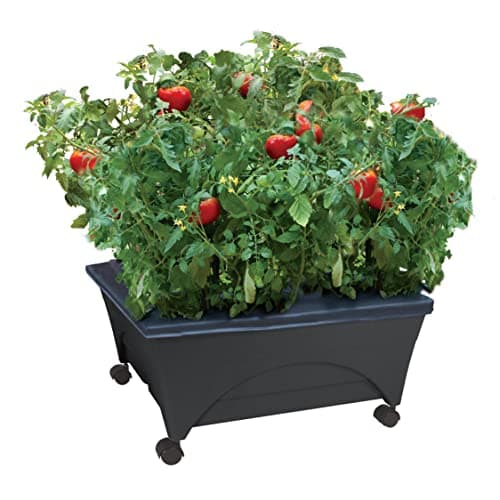 Emsco City Picker Raised Bed Grow BoxA patio box at roughly half the price of the original Emsco City Picker Raised Bed Grow BoxA patio box at roughly half the price of the original | Best overall, and it publishes the number | 8.7 | $33.78 - View on Amazon |
| 2 | 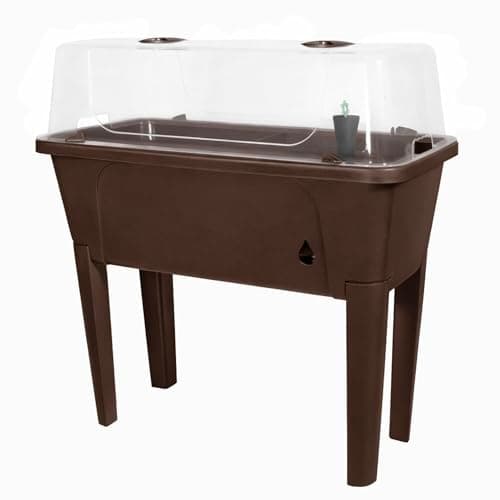 Garden Elements Elevated Self-Watering Planter Box with Grow DomeWaist-height growing with a cover for early sowings Garden Elements Elevated Self-Watering Planter Box with Grow DomeWaist-height growing with a cover for early sowings | Best at working height | 8.0 | $48.77 - View on Amazon |
| 3 | 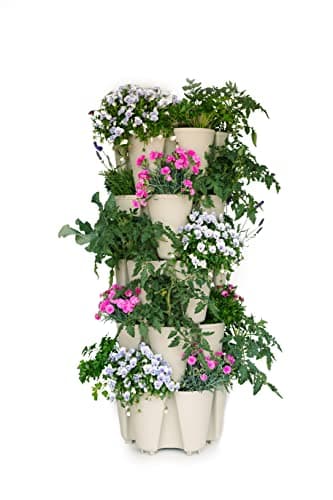 GreenStalk Large 5-Tier Vertical PlanterStrawberries, lettuce and herbs where floor space is the constraint GreenStalk Large 5-Tier Vertical PlanterStrawberries, lettuce and herbs where floor space is the constraint | Best if floor space is the problem | 7.8 | $158.97 - View on Amazon |
| 4 | 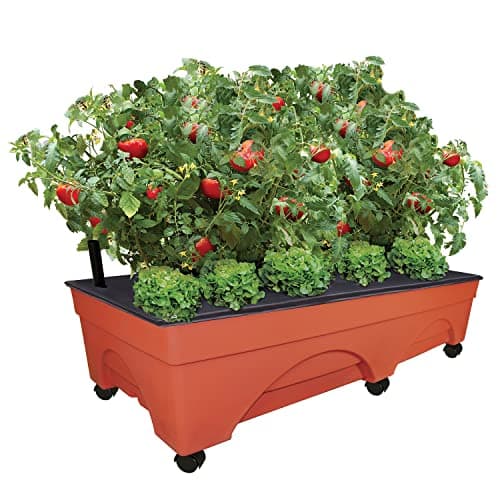 Emsco Big City Picker Raised Bed Grow Box, 48 x 20 inA long run of tomatoes or beans on a patio Emsco Big City Picker Raised Bed Grow Box, 48 x 20 inA long run of tomatoes or beans on a patio | Bigger, but stops publishing | 7.4 | $174.46 - View on Amazon |
Scores are our editorial judgment from published specifications. They are not test results, and they are deliberately not marked up as ratings in this page’s structured data.
Pick #1 - Best overall, and it publishes the number
Emsco City Picker Raised Bed Grow Box
A patio box at roughly half the price of the original
The closest thing to an EarthBox that publishes its reservoir: 2 gallons, against the EarthBox Original's 3. It also publishes the two details that decide whether a sub-irrigated box works - overflow holes so you cannot flood it, and an aeration screen holding the mix above the water.
#ad Price as of September 27, 2026, from Amazon. Prices change. How we make money.
Published specification
- Reservoir capacity
- 2 gallons
- Overflow protection
- Water overflow holes published as preventing overwatering
- Root zone separation
- Plants rest above an aeration screen over the reservoir
- Dimensions
- 24 x 20 x 11 in, 5.5 lb empty
- Mobility
- Four swivel casters
- Included
- Mulch cover and instructions
- Soil capacity
- Not published
- Reservoir capacity: Emsco published description
- Overflow protection: Emsco published description
- Root zone separation: Emsco published description
- Dimensions: Emsco published listing dimensions
- Mobility: Emsco published description
- Included: Emsco published description
- Soil capacity: Checked on the Emsco listing
Refill interval - computed, not tested
Not computed for an outdoor box, on purpose
Our refill interval multiplies a reservoir by the watering cadence Virginia Cooperative Extension publishes for container houseplants indoors. An outdoor box of tomatoes in July draws several times as much. The checkable comparison is capacity against the benchmark: 2 gallons here, 3 in the EarthBox Original - and without a published soil capacity there is no ratio to compute.
Assumes: Outdoor edibles in summer, which is outside the band we can defend. Light, temperature, humidity, soil mix and season all change how fast a pot dries, so treat this as a planning range and not a guarantee.
What is good about it
- Publishes the reservoir capacity, which most EarthBox alternatives do not
- Overflow holes mean rain cannot turn the reservoir into a bath
- An aeration screen is the correct mechanism, and it is named on the listing
- Casters, a mulch cover and a much lower price than the original
What is not
- Two gallons against the EarthBox's three, in a box of similar footprint
- Soil capacity is not published, so the reservoir-to-soil ratio cannot be worked out
- Thin resin body - 5.5 lb empty is light for something holding wet mix
- No fertilizer strip system, which is half of what the EarthBox method actually is
Skip this one if
Skip it if you want the whole EarthBox system rather than the box. The published casters and cover are good; the replant kits, dolomite and fertilizer strip routine that make the original work are not part of this.
How it scored
- Publishes reservoir
- 10.0
- Capacity vs EarthBox
- 7.0
- Mechanism published
- 9.5
- Build quality
- 6.5
- Value for money
- 9.5
- Overall
- 8.7 / 10
Our editorial score, from published specifications and computed intervals. Not a test result. Specification source: Emsco City Picker retail listing.
Pick #2 - Best at working height
Garden Elements Elevated Self-Watering Planter Box with Grow Dome
Waist-height growing with a cover for early sowings
An EarthBox-style box put on legs at working height, with a published 45 liter soil capacity and a ventilated dome for season extension. The reservoir itself is described with a water level indicator and never given a volume, which is the recurring failure of this whole category.
#ad Price as of September 27, 2026, from Amazon. Prices change. How we make money.
Published specification
- Soil capacity
- 45 L (about 40 quarts)
- Reservoir capacity
- Not published
- Planting area
- 15 x 29.5 in, 10 in deep
- Overall height
- 31 in on legs
- Fill level
- Water level indicator published
- Cover
- Ventilated grow dome, 14.5 x 29.5 x 8 in, with adjustable vents
- Soil capacity: Garden Elements published listing specification
- Reservoir capacity: Checked on the Garden Elements listing
- Planting area: Garden Elements published listing specification
- Overall height: Garden Elements published listing specification
- Fill level: Garden Elements published description
- Cover: Garden Elements published listing specification
Refill interval - computed, not tested
Not computed - no published capacity
Soil capacity is published at 45 liters but the reservoir is not sized, so the reservoir-to-soil ratio this site ranks beds on cannot be worked out. A water level indicator tells you when it is full, not how much full is.
Assumes: None - the input figure does not exist. Light, temperature, humidity, soil mix and season all change how fast a pot dries, so treat this as a planning range and not a guarantee.
What is good about it
- Publishes soil capacity in liters and quarts, which is more than most boxes manage
- Ten inches of planting depth at 31 inches working height, so no bending
- The grow dome is a genuine season extender and a pest barrier
- A water level indicator, so the fill state is visible rather than guessed
What is not
- No published reservoir volume, so the central claim cannot be checked
- Polypropylene on legs is a lot of plastic holding a lot of wet mix
- The dome covers 14.5 of the 29.5 inch length, so it is a partial cover
- Ten inches of depth rules out long carrots and a full indeterminate tomato
Skip this one if
Skip it if you are short of height rather than back. An elevated box dries faster from every side, and you are paying for legs you may not need.
How it scored
- Publishes reservoir
- 3.0
- Capacity vs EarthBox
- 7.5
- Mechanism published
- 7.5
- Build quality
- 7.0
- Value for money
- 8.0
- Overall
- 8.0 / 10
Our editorial score, from published specifications and computed intervals. Not a test result. Specification source: Garden Elements elevated self-watering planter retail listing.
Pick #3 - Best if floor space is the problem
GreenStalk Large 5-Tier Vertical Planter
Strawberries, lettuce and herbs where floor space is the constraint
The alternative that changes the shape of the problem rather than the size of the reservoir. Instead of one box with a tank underneath, it stacks five tiers and feeds them from a top reservoir - and the maker's claim is specifically that it waters all tiers at once rather than over-saturating the top to reach the bottom.
#ad Price as of September 27, 2026, from Amazon. Prices change. How we make money.
Published specification
- Watering mechanism
- Top reservoir fed to a 5-tier mark, distributing to all tiers
- Reservoir capacity
- Not published as a volume
- Soil capacity
- About 5 cubic feet of potting mix
- Dimensions
- 19 x 19 x 55 in, 16 lb empty
- Material
- BPA-free, UV-resistant plastic, made in the USA
- Warranty
- 5 years
- Watering mechanism: Greenstalk published description
- Reservoir capacity: Checked on the Greenstalk listing
- Soil capacity: Greenstalk published description
- Dimensions: Greenstalk published listing dimensions
- Material: Greenstalk published description
- Warranty: Greenstalk published description
Refill interval - computed, not tested
Not computed - top-fed, not sub-irrigated
This is not a reservoir pot in the sense the rest of this site uses. Water is poured into a top tray and distributed downward through the tiers, so there is no standing reservoir under the root zone to divide by a watering volume. The published figure that matters here is soil capacity - about 5 cubic feet.
Assumes: Not applicable to a top-fed tiered system. Light, temperature, humidity, soil mix and season all change how fast a pot dries, so treat this as a planning range and not a guarantee.
What is good about it
- Five cubic feet of growing area in a 19-inch footprint
- Publishes a five-year warranty and US manufacture, which almost nothing here does
- The watering claim is specific and falsifiable rather than vague
- UV-resistant plastic, which matters for something living outdoors year round
What is not
- Not sub-irrigated - there is no reservoir holding water under the roots between waterings
- No published reservoir volume, so duration between waterings is unknowable from the listing
- Tall and top-heavy once planted; it needs a sheltered spot or securing
- Five cubic feet of mix is a real expense on top of the planter
Skip this one if
Skip it if what you actually want is to water less often. A top-fed tower still needs filling on the same schedule as ordinary pots - it saves floor space, not trips.
How it scored
- Publishes reservoir
- 2.0
- Capacity vs EarthBox
- 9.0
- Mechanism published
- 8.0
- Build quality
- 9.0
- Value for money
- 7.0
- Overall
- 7.8 / 10
Our editorial score, from published specifications and computed intervals. Not a test result. Specification source: Greenstalk 5-tier vertical planter retail listing.
Pick #4 - Bigger, but stops publishing
Emsco Big City Picker Raised Bed Grow Box, 48 x 20 in
A long run of tomatoes or beans on a patio
Roughly double the growing area of the standard City Picker at 48 by 20 inches, with the same published mechanism - overflow holes and an aeration screen. What it does not repeat is the number: the reservoir is described but never sized.
#ad Price as of September 27, 2026, from Amazon. Prices change. How we make money.
Published specification
- Reservoir capacity
- Not published - described but not sized
- Dimensions
- 48 x 20 x 9.75 in
- Overflow protection
- Water overflow holes published as preventing overwatering
- Root zone separation
- Aeration screen above the reservoir
- Mobility
- Casters
- Reservoir capacity: Checked on the Emsco listing
- Dimensions: Emsco published listing specification
- Overflow protection: Emsco published description
- Root zone separation: Emsco published description
- Mobility: Emsco published description
Refill interval - computed, not tested
Not computed - no published capacity
The smaller City Picker publishes 2 gallons; this one publishes nothing. Without a number there is nothing to divide, and we will not scale the small box's figure up by area and present the result as a specification.
Assumes: None - the input figure does not exist. Light, temperature, humidity, soil mix and season all change how fast a pot dries, so treat this as a planning range and not a guarantee.
What is good about it
- Twice the growing area of the standard box for a serious crop
- Same published mechanism: overflow holes and an aeration screen
- Casters on a box this size genuinely help with sun tracking
- Mulch cover included, as on the smaller unit
What is not
- No published reservoir capacity, which is the whole reason to buy a self-watering box
- Several times the price of the standard City Picker
- Two of the five listing bullets are duplicated text, which is not a sign of care
- Filled with wet mix this is not something you move often, casters or not
Skip this one if
Skip it if capacity matters to you. The smaller City Picker publishes its 2 gallons; buy two of those and you know what you are getting for less money.
How it scored
- Publishes reservoir
- 2.0
- Capacity vs EarthBox
- 6.0
- Mechanism published
- 9.0
- Build quality
- 7.0
- Value for money
- 5.5
- Overall
- 7.4 / 10
Our editorial score, from published specifications and computed intervals. Not a test result. Specification source: Emsco Big City Picker retail listing.
Questions people actually ask
- What is the closest thing to an EarthBox?
The Emsco City Picker, on the figures. It is a sub-irrigated box of similar footprint that publishes a 2-gallon reservoir, overflow holes and an aeration screen - the same mechanism the EarthBox uses, at a much lower price. What it does not include is the EarthBox’s fertilizer strip and cover system, which is part of why the original costs what it does.
- Is the Garden Patch GrowBox available on Amazon?
Not when we checked. It is the alternative people most often name alongside the EarthBox, and it is sold through other channels rather than the retailer our buy links use, so we have not featured it. We only rank products we can verify as currently purchasable.
- Is a bucket conversion as good as an EarthBox?
Mechanically, close - an insert gives you a reservoir, a barrier above it and a wicking path, which is what sub-irrigation is. The differences are shape and system: a bucket is deep and narrow where an EarthBox is wide and shallow, and you supply your own fertilizer routine. Check the price before assuming it is the budget option - inserts have crept up, and a complete grow box can cost less than one insert.
- Is the GreenStalk a self-watering planter?
Not in the sense this site uses. There is no reservoir held under the root zone between waterings - you fill a tray at the top and water passes down through the tiers. It is an excellent answer to limited floor space and a poor answer to watering less often.
- Why do so few self-watering boxes publish their reservoir size?
Because nothing forces them to, and a number invites comparison. Of the boxes on this page only the City Picker gives one. The effect on a buyer is that duration claims cannot be checked before or after purchase - which is why this site ranks on published figures and says plainly when they are missing.
Sources
Sources
- EarthBox published system comparison table
- Emsco City Picker published specification, via retail listing
- Emsco Big City Picker published specification, via retail listing
- Garden Elements elevated self-watering planter published specification, via retail listing
- Greenstalk 5-tier vertical planter published specification, via retail listing
- Plants Grown in Containers, NC State Extension Gardener Handbook chapter 18