Roundup
Best Potting Mix for Self-Watering Pots
The most common reason a self-watering planter fails is not the planter. It is a full reservoir under a mix that will not lift water to the roots.
By Scooter M. - Enthusiast. Reads the manuals, compiles the specs, does the math. | Published
Disclosure
We earn a commission if you buy through our links. It does not change what we recommend or what you pay. Full disclosure.
The short answer
Why the mix decides whether a reservoir pot works
A sub-irrigated planter does not push water at the roots. It relies on capillary rise: water climbs from the reservoir through the mix, against gravity, because the pores in the medium are small enough to pull it. The full mechanism is here, and the wicking-versus-reservoir distinction matters because one relies on a rope and the other relies on the mix itself.
That gives you the two failure modes. Use a dense, heavy mix - or worse, garden soil - and the pores are too fine and too compacted to move water upward at a useful rate. The reservoir stays full, the surface stays dry, and the plant wilts above a tank of water. Use something so coarse it holds no water at all, and the column breaks the other way.
NC State Extension’s container chapter is the reference we keep coming back to here: media for containers are built from components chosen for pore space, with perlite and bark specifically there to keep the structure open. A container mix is engineered; garden soil is not.
How we ranked them
We have not run a wicking test. There is no column of mix on a bench here with a ruler beside it. What follows is each maker’s published listing, judged against what sub-irrigation needs.
Will it wick? First. Coir and peat-plus-perlite blends do; heavy, compost-rich and moisture-control mixes do it badly or hold too much.
Does it publish any chemistry? pH and EC decide whether a medium is ready to plant into. Exactly one product here publishes both.
Volume per dollar on the published quarts. A reservoir planter takes a lot of mix, and compressed blocks are several times cheaper per quart than bags.
Does it feed, and does that help or complicate things? In a sub-irrigated box the fertilizer strategy is different, and a mix with six months of feed in it is not automatically better.
| Mix | Base | Published pH | Volume | Feeds |
|---|---|---|---|---|
| Kempf coco coir block | Coir | 5.5 to 6.5, low EC | 72 qt | No |
| Burpee Premium Organic | Coir plus plant food | Not published | 9 qt | Up to 3 months |
| Legigo coarse perlite | Perlite amendment | Neutral | 15 qt | No |
| Miracle-Gro Organic Indoor | Peat and coir | Not published | 16 qt | Quick-start feed |
| Miracle-Gro Moisture Control | Peat, coir, wetting agent | Not published | 16 qt (2 bags) | Up to 6 months |
The mix to keep out of a reservoir pot
Moisture-control mixes are the most popular bags in the aisle and the worst choice for this application, and the listing tells you why without meaning to: it absorbs up to 33% more water than basic potting soil, using peat, coir and a wetting agent.
In a terracotta pot on a south-facing balcony that is a genuinely useful property. In a sub-irrigated planter you have already solved that problem with a tank. Stack the two and the root zone stays wetter for longer, the air gap that keeps roots oxygenated closes, and you are in the territory our root rot page describes - the wet, poorly drained condition NC State Extension names for Pythium, Phytophthora and Rhizoctonia.
Note also that the maker’s own instruction for that mix begins with selecting a pot with a drainage hole and watering until it drains. That is sound advice for the pot it was designed for, and it is not how a reservoir planter is used.
Never garden soil, and this is the one rule with no exceptions
We have said this on the vegetable planter page and it is worth repeating where people come looking for mix: topsoil and garden soil do not work in a sub-irrigated container. They compact, the pore structure closes, and capillary rise stops. The symptom is a planter that looks like it has failed mechanically - full reservoir, dry mix, wilting plant - when the reservoir is doing exactly what it was built to do and the soil is refusing to carry the water.
Coir, peat, or both?
Coir is the better base for a reservoir planter. It re-wets after drying, it lifts water readily, and the Kempf block publishes the pH and EC figures that tell you it is ready to plant into without rinsing or adjusting. Its weakness is nutrition: pure coir feeds nothing, so you are adding fertilizer or blending it with a fed mix.
Peat with perlite is the traditional container medium and works well while it stays moist - which, in a reservoir pot that is kept topped up, it largely does. The risk is the season when the reservoir runs dry unnoticed: peat that has dried hard resists taking water back up, and in a pot watered only from below that can be terminal.
Blending is what most experienced growers actually do: a bagged mix opened up with a few handfuls of coarse perlite per pot. That is the cheapest route to a medium with both the structure and the nutrition, and it is why perlite ranks third here despite being an ingredient rather than a product.
How much mix does a reservoir planter take?
More than people expect, because the growing chamber sits above the tank and is usually wider than a normal pot. Miracle-Gro is the only maker here that publishes a coverage figure - one 16 quart bag fills one 12-inch container - which is a useful anchor for the rest.
On that basis a large sub-irrigated box is several bags, and a compressed coir block that expands to about 72 quarts becomes the obvious way to buy it. If you are filling one of the large planters or a self-watering raised bed, the block is not a preference, it is the only sensible economics.
Fertilizer, and where it goes
One warning that applies to every product here. In a sub-irrigated box, fertilizer belongs on the surface of the mix, not in the reservoir. Feeding into the water column raises the salt concentration around roots that cannot escape it, and it also makes any moisture meter reading in that pot read wetter than the mix really is, because those meters respond to conductivity.
That is also the argument for an unfed coir base plus a controlled surface feed: you decide what goes in and when, rather than inheriting six months of slow-release fertilizer sitting in a permanently wet column.
The honest cons on every pick
Kempf coir block. No nutrients at all, and hydrating 10 lb of coir needs a tub and twenty minutes. No perlite, so you add your own aeration.
Burpee Premium Organic. Only 9 quarts a bag, no published pH or EC, and the coir-to-everything-else ratio is not published either.
Legigo perlite. An amendment, not a mix - nothing grows in it alone. Dusty to handle dry, and it floats to the surface over time.
Miracle-Gro Organic Indoor. Peat-heavy and prone to compaction in a deep column, with a moisture-regulating claim and no mechanism published behind it.
Miracle-Gro Moisture Control. Wrong tool for this job by design. Good mix, bad pairing, and stacking retention on top of a reservoir is how roots end up with no air.
What we would buy
A coir block for anything large, blended with a few handfuls of coarse perlite and fed from the surface. A bag of the Burpee for a single planter when hydrating a block is not worth the bother. And the moisture-control bag only for the ordinary pots on the windowsill that dry out too fast - which is the job it is genuinely good at.
Ranked picks
Quick picks
Ranked on published specifications and the computed refill interval, not on looks. Tap any row for the full write-up, including who should skip it.
| # | Product | Best for | Score | Price |
|---|---|---|---|---|
| 1 | 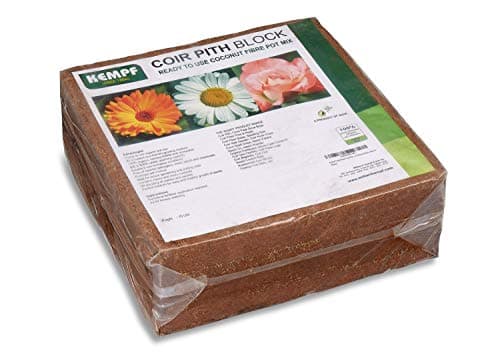 Kempf Compressed Coco Coir Block, 10 lbFilling a sub-irrigated planter with a medium that will actually wick Kempf Compressed Coco Coir Block, 10 lbFilling a sub-irrigated planter with a medium that will actually wick | Best overall, publishes pH and EC | 9.0 | $21.95 - View on Amazon |
| 2 | 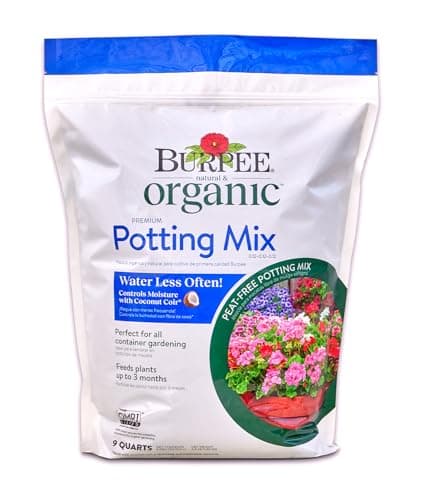 Burpee Premium Organic Potting Mix, 9 qtFilling a reservoir planter without hydrating anything first Burpee Premium Organic Potting Mix, 9 qtFilling a reservoir planter without hydrating anything first | Best ready-to-use bag | 8.5 | $14.95 - View on Amazon |
| 3 | 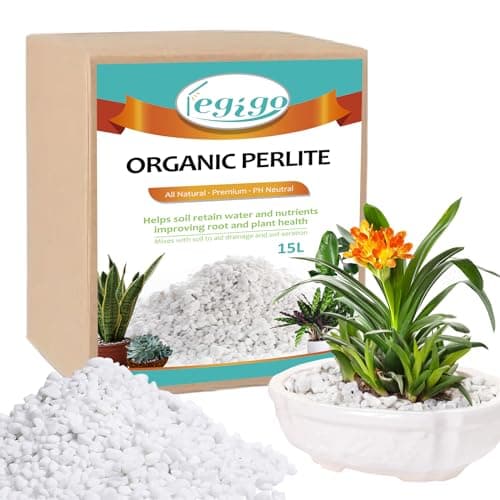 Legigo Coarse Horticultural Perlite, 15 qtOpening up a heavy mix so a reservoir pot can breathe Legigo Coarse Horticultural Perlite, 15 qtOpening up a heavy mix so a reservoir pot can breathe | Best fix for a heavy mix | 8.3 | $21.99 - View on Amazon |
| 4 | 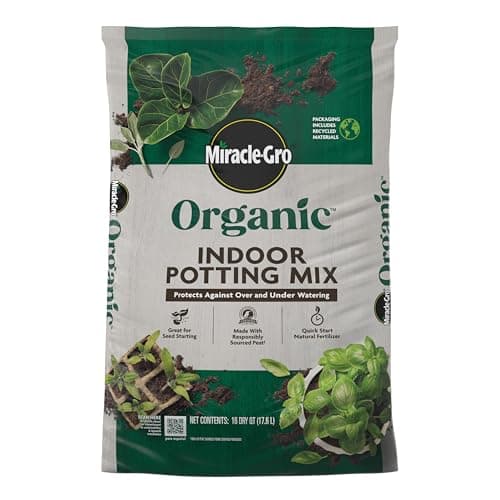 Miracle-Gro Organic Indoor Potting Mix, 16 qtFilling one medium houseplant pot without thinking about it Miracle-Gro Organic Indoor Potting Mix, 16 qtFilling one medium houseplant pot without thinking about it | Cheapest ready-to-use | 7.9 | $9.97 - View on Amazon |
| 5 | 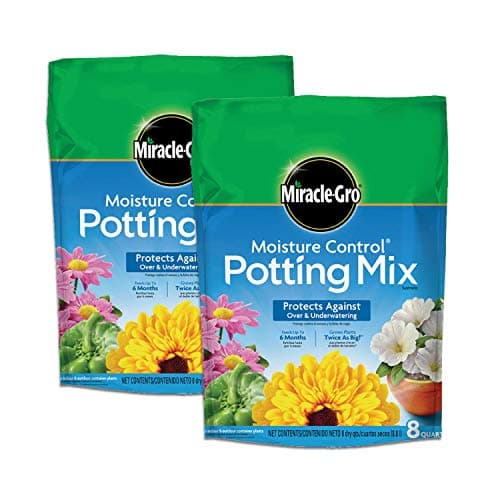 Miracle-Gro Moisture Control Potting Mix, 8 qt (2-Pack)Ordinary pots that dry out fast - not reservoir planters Miracle-Gro Moisture Control Potting Mix, 8 qt (2-Pack)Ordinary pots that dry out fast - not reservoir planters | Avoid in a reservoir pot | 6.4 | $13.56 - View on Amazon |
Scores are our editorial judgment from published specifications. They are not test results, and they are deliberately not marked up as ratings in this page’s structured data.
Pick #1 - Best overall, publishes pH and EC
Kempf Compressed Coco Coir Block, 10 lb
Filling a sub-irrigated planter with a medium that will actually wick
The only growing medium on this page that publishes the two numbers that decide whether it suits a reservoir pot: a pH of 5.5 to 6.5 and a low electrical conductivity. Coir also wicks water upward willingly, which is the entire mechanism a sub-irrigated planter depends on.
#ad Price as of September 21, 2026, from Amazon. Prices change. How we make money.
Published specification
- Published pH
- 5.5 to 6.5, described as neutral and ready to use without adjustment
- Published EC
- Low electrical conductivity
- Volume
- 10 lb block expanding to about 18 gallons (72 quarts)
- Water holding
- Holds up to 10 times its weight in water, per the maker
- Processing
- Pre-rinsed, triple-filtered and screened to remove sand, rocks and debris
- Fertilizer
- None - 100% coconut fiber with no additives
- Published pH: Kempf published description
- Published EC: Kempf published description
- Volume: Kempf published listing specification
- Water holding: Kempf published description
- Processing: Kempf published description
- Fertilizer: Kempf published description
What is good about it
- Publishes pH and EC, which is more chemistry than any bagged mix here discloses
- Coir re-wets and wicks upward, so a reservoir can actually reach the root zone
- 72 quarts from one block is the cheapest volume on this page by a wide margin
- Pre-rinsed, which matters because unwashed coir can carry salts
What is not
- Contains no nutrients at all - you must add fertilizer or mix it with something that has some
- Hydrating a 10 lb block needs a wheelbarrow, a tub or a very patient bucket
- No perlite, so aeration depends on what you blend it with
- Holds a great deal of water, which is a liability if you also keep the reservoir brim-full
Skip this one if
Skip it if you want to fill one small pot this afternoon. A 10 lb block is a project, and an unfed medium means buying fertilizer too.
How it scored
- Wicks in a reservoir pot
- 10.0
- Published chemistry
- 10.0
- Volume per dollar
- 10.0
- Ready to use
- 4.0
- Feeds the plant
- 2.0
- Overall
- 9.0 / 10
Our editorial score, from published specifications and computed intervals. Not a test result. Specification source: Kempf 10 lb compressed coco coir block retail listing.
Pick #2 - Best ready-to-use bag
Burpee Premium Organic Potting Mix, 9 qt
Filling a reservoir planter without hydrating anything first
A ready-to-use container mix built on coconut coir rather than straight peat, OMRI listed, with a published feeding window of up to three months. For a self-watering pot that is the right base material in a bag you can simply open.
#ad Price as of September 21, 2026, from Amazon. Prices change. How we make money.
Published specification
- Base material
- Formulated with coconut coir and plant food
- Certification
- OMRI listed for organic use
- Feeding
- Feeds instantly, then slow-release food for up to 3 months
- Volume
- 9 quarts
- pH figure
- Not published
- Base material: Burpee published description
- Certification: Burpee published description
- Feeding: Burpee published description
- Volume: Burpee published listing specification
- pH figure: Checked on the Burpee listing
What is good about it
- Coir-based, so it keeps the wicking behavior a sub-irrigated pot needs
- OMRI listed, and the certification is stated rather than implied
- Three months of feeding published, which is a real figure to plan around
- Open the bag and fill the pot - no hydrating, no mixing
What is not
- Nine quarts is a small bag; a large reservoir planter will need several
- No published pH or EC, unlike the coir block
- The coir-to-other-ingredients ratio is not published either
- Slow-release feed complicates the fertilizer-in-the-reservoir question
Skip this one if
Skip it if you are filling anything bigger than a couple of medium planters. At this bag size the coir block costs a fraction per quart, even after you add fertilizer.
How it scored
- Wicks in a reservoir pot
- 9.0
- Published chemistry
- 5.5
- Volume per dollar
- 5.5
- Ready to use
- 10.0
- Feeds the plant
- 8.5
- Overall
- 8.5 / 10
Our editorial score, from published specifications and computed intervals. Not a test result. Specification source: Burpee Premium Organic Potting Mix 9 qt retail listing.
Pick #3 - Best fix for a heavy mix
Legigo Coarse Horticultural Perlite, 15 qt
Opening up a heavy mix so a reservoir pot can breathe
Not a mix but the amendment that rescues one. Coarse perlite is pH neutral, resists compaction and holds about four times its weight in moisture while leaving air space - which is exactly what a dense bagged mix lacks when you put it in a reservoir planter.
#ad Price as of September 21, 2026, from Amazon. Prices change. How we make money.
Published specification
- Grade
- Coarse, evenly sized perlite
- pH
- Published as pH neutral
- Water holding
- Holds up to 4 times its weight in moisture, per the maker
- Volume
- 15 quarts
- Packaging
- Heavy-duty resealable pouch
- Grade: Legigo published description
- pH: Legigo published description
- Water holding: Legigo published description
- Volume: Legigo published listing specification
- Packaging: Legigo published description
What is good about it
- pH neutral, so it changes structure without changing the chemistry of your mix
- Resists compaction, which is the slow failure mode of any long-term container planting
- Coarse grade is the right one for containers - fine perlite floats and blows away
- Resealable bag, because you will use a few quarts at a time for years
What is not
- It is an amendment, not a growing medium - nothing grows in perlite alone
- Perlite dust is unpleasant to breathe, so dampen it before mixing
- It floats, so it migrates to the surface of a pot over time
- Costs about as much as a full bag of mix for something you use by the handful
Skip this one if
Skip it if your mix already lists perlite in its ingredients and drains freely. Adding more to an already-open mix just dilutes the nutrition you paid for.
How it scored
- Wicks in a reservoir pot
- 7.0
- Published chemistry
- 7.5
- Volume per dollar
- 6.0
- Ready to use
- 9.0
- Feeds the plant
- 1.0
- Overall
- 8.3 / 10
Our editorial score, from published specifications and computed intervals. Not a test result. Specification source: Legigo 15 qt coarse horticultural perlite retail listing.
Pick #4 - Cheapest ready-to-use
Miracle-Gro Organic Indoor Potting Mix, 16 qt
Filling one medium houseplant pot without thinking about it
The cheapest ready-to-use bag here, built on responsibly sourced peat plus coir with a quick-start fertilizer, and the only one that publishes how far a bag goes: one 16 quart bag fills a single 12-inch container. That coverage figure is more useful than most of what is printed on these bags.
#ad Price as of September 21, 2026, from Amazon. Prices change. How we make money.
Published specification
- Published ingredients
- Sphagnum peat moss (certified sources), coir and quick-start natural fertilizer
- Published coverage
- One 16 qt bag fills one 12-inch container
- Volume
- 16 quarts
- Maker's claim
- Helps regulate soil moisture and protects against over and under watering
- pH figure
- Not published
- Published ingredients: Miracle-Gro published description
- Published coverage: Miracle-Gro published description
- Volume: Miracle-Gro published listing specification
- Maker's claim: Miracle-Gro published description
- pH figure: Checked on the Miracle-Gro listing
What is good about it
- Publishes a coverage figure, so you can buy the right number of bags
- Names its ingredients, including the peat sourcing, which most brands skip
- Contains coir alongside peat, so it re-wets better than a pure peat mix
- Cheapest ready-to-use option per quart on this page
What is not
- The moisture-regulating claim has no mechanism published behind it
- Peat-based at its core, with the re-wetting drawback that carries
- Fertilizer is included, which complicates feeding a reservoir planter
- No pH or EC figure published
Skip this one if
Skip it if you are filling a deep sub-irrigated box. A peat-heavy mix compacts over a season in a tall column, and compaction is what stops a reservoir reaching the roots.
How it scored
- Wicks in a reservoir pot
- 7.0
- Published chemistry
- 6.0
- Volume per dollar
- 8.5
- Ready to use
- 10.0
- Feeds the plant
- 8.0
- Overall
- 7.9 / 10
Our editorial score, from published specifications and computed intervals. Not a test result. Specification source: Miracle-Gro Organic Indoor Potting Mix 16 qt retail listing.
Pick #5 - Avoid in a reservoir pot
Miracle-Gro Moisture Control Potting Mix, 8 qt (2-Pack)
Ordinary pots that dry out fast - not reservoir planters
A perfectly good mix for a terracotta pot on a hot patio, and the wrong mix for a self-watering planter. It publishes exactly why: a wetting agent that absorbs up to 33% more water than basic mix. In a pot that already holds a reservoir, more water retention is not the feature you need.
#ad Price as of September 21, 2026, from Amazon. Prices change. How we make money.
Published specification
- Water retention
- Absorbs up to 33% more water than basic potting soil, via peat, coir and a wetting agent
- Feeding
- Feeds up to 6 months
- Published coverage
- Each 8 qt bag fills two 8-inch containers
- Maker's instruction
- Select a pot with a drainage hole, water thoroughly and let drain
- Volume
- Two 8 quart bags
- Water retention: Miracle-Gro published description
- Feeding: Miracle-Gro published description
- Published coverage: Miracle-Gro published description
- Maker's instruction: Miracle-Gro published description
- Volume: Miracle-Gro published listing specification
What is good about it
- Publishes both a retention figure and a coverage figure, which is unusually specific
- Six months of feeding is the longest published window here
- Genuinely useful for hanging baskets and unglazed pots that dry out daily
- The instruction to use a pot with a drainage hole is the correct advice, plainly given
What is not
- A wetting agent plus a reservoir keeps the root zone wetter for longer - the opposite of what sub-irrigation needs
- The maker's own instruction assumes a drainage hole, which reservoir planters do not use the same way
- Six months of feed sits in the same water column you are keeping topped up
- Small bags, so the per-quart cost is mid-table at best
Skip this one if
Skip it for any sub-irrigated planter, self-watering pot or wicking container. It is designed to solve the problem those pots already solve, and stacking the two is how the air gap disappears.
How it scored
- Wicks in a reservoir pot
- 4.0
- Published chemistry
- 7.0
- Volume per dollar
- 6.0
- Ready to use
- 10.0
- Feeds the plant
- 9.5
- Overall
- 6.4 / 10
Our editorial score, from published specifications and computed intervals. Not a test result. Specification source: Miracle-Gro Moisture Control Potting Mix retail listing.
Questions people actually ask
- What is the best soil for self-watering pots?
A light, coir-based container mix, ideally with perlite for air space. Coir lifts water from a reservoir readily and re-wets after drying, which peat does poorly. Never garden soil or topsoil: they compact, capillary rise stops, and the planter looks broken when the problem is the medium.
- Can you use moisture control potting mix in a self-watering planter?
You can, and we would not. Moisture-control mixes contain a wetting agent and are published as absorbing up to a third more water than basic mix. A reservoir planter already keeps the mix supplied, so the combination keeps the root zone wetter for longer and closes the air gap roots need. Save that bag for pots that dry out fast.
- Do you need perlite in a self-watering pot?
Not always, but it is the cheapest fix if your mix is dense. Coarse perlite is pH neutral, resists compaction and keeps pore space open so water can rise and air can reach roots. If your bagged mix already lists perlite and drains freely, adding more just dilutes the nutrition you paid for.
- How much potting mix does a self-watering planter need?
More than a standard pot of the same width, because the growing chamber sits above the reservoir. Miracle-Gro publishes one useful anchor - a 16 quart bag fills one 12-inch container. For large planters and raised beds, a compressed coir block that expands to around 72 quarts is far cheaper per quart than bags.
- Should you put fertilizer in the reservoir?
No. Feed on the surface of the mix and let watering carry it down. Fertilizer in the water column raises salt concentration around roots that cannot drain away from it, and it skews any moisture meter reading in that pot, because those meters respond to conductivity rather than to water directly.
Sources
Sources
- Kempf compressed coco coir block published specification, via retail listing
- Burpee Premium Organic Potting Mix published specification, via retail listing
- Legigo coarse horticultural perlite published specification, via retail listing
- Miracle-Gro Organic Indoor Potting Mix published specification, via retail listing
- Miracle-Gro Moisture Control Potting Mix published specification, via retail listing
- Plants Grown in Containers, NC State Extension Gardener Handbook chapter 18
- Daughtry, Watering but Not Overwatering Houseplants, NC State Extension (2022)