Roundup
Best Wireless Soil Moisture Sensors
A wireless sensor changes where you read the number, not how good the number is. Here is what each one actually publishes, what it needs to work at all, and the one spec that separates them.
By Scooter M. - Enthusiast. Reads the manuals, compiles the specs, does the math. | Published

Disclosure
We earn a commission if you buy through our links. It does not change what we recommend or what you pay. Full disclosure.
The short answer
What wireless actually changes
One thing: where you read the number. A handheld probe requires you to walk to the plant, push it in and look. A wireless sensor lives in the pot and pushes the reading to a phone. For a single plant on a desk that is a solution in search of a problem. For twenty pots across three rooms, or a plant you leave behind on a trip, it is a genuine change in how the job works.
What it does not change is the measurement. These are the same soil sensors the rest of this hub covers, reporting the same physics to a radio instead of a needle. Our page on whether moisture meters are accurate applies to every device below without a word of amendment, and you should read it before spending money on any of them.
How we ranked them
Probe reach first, as everywhere on this site. The top inch of a pot dries first and fastest, so a short probe reads the driest part and tells you to water a plant whose root zone is still wet. Virginia Cooperative Extension recommends checking one to three inches down depending on container size, and for a 6-inch pot the useful depth is the middle. This is the spec that decides whether a reading means anything - and exactly one maker on this page publishes it.
What it needs to work, second. A wireless sensor is not one purchase. Some need a gateway, some need a Zigbee hub you may or may not own, and one needs a second bridge on top of the hub for Apple Home. The listing price is rarely the price.
Readability and alerts third. A number on a phone is only useful if it arrives when something has changed. Alert thresholds, history and export separate a monitoring device from a gadget.
Published accuracy last, because there is none. We check for it on every meter we cover and we have never found one. That is not a reason to avoid the category; it is a reason to read the number as a comparison against the same pot last week rather than as a fact about water content.
| Sensor | Connection | Published probe length | Published accuracy |
|---|---|---|---|
| Ecowitt GW1206 kit | Wi-Fi gateway included, 915 MHz | Not published | Not published |
| ThirdReality Gen2, 3 pack | Zigbee 3.0, hub required | Not published | Not published |
| RainPoint visual gauge | Standalone; Wi-Fi hub optional | 3.5 in, capacitive | Not published |
| RainPoint Bluetooth 2-in-1 | Bluetooth; Wi-Fi hub optional | Not published | Not published |
| Sustee Aquameter (not wireless) | None - color change | 4.7 in stick | Not published |
The probe-length problem
Four of the five devices here do not tell you how far into the pot they reach. The one that does publishes 3.5 inches, and that figure is worth sitting with, because it is roughly half the reach of the battery-free dial meter we recommend across the rest of this hub.
A 3.5-inch probe in a 4-inch pot is fine. In an 8-inch pot it samples the top third - the part that dries first - and a sensor that reports the top third as dry while the roots are still wet is not a neutral instrument. It is a device that will systematically ask you to overwater, and it will do so by push notification. The 7-inch probe we compare everything to costs a fraction of any sensor on this page.
So the honest reading of this table is: the more sophisticated the electronics, the less the maker tells you about the part that goes in the soil. If you buy one of the four that publishes nothing, the first thing to do is put it in a pot next to a long handheld probe for a week and see whether they agree.
Capacitive sensing is the one genuine upgrade
There is a real technical improvement in this category and it deserves credit. Most cheap meters read electrical conductivity between two electrodes, which tracks moisture but also responds to dissolved salts - which is why a heavily fertilized pot reads wetter than it is, a point our accuracy page makes at length.
ThirdReality publishes its Gen2 sensors as capacitive, and states that capacitive sensing is less affected by soil salinity and pH than traditional probes. RainPoint publishes its visual-gauge probe as capacitive too. That is a meaningful answer to the standing objection, and it is the main reason those two rank where they do despite the hub requirement and the short probe.
It is still not calibration. Capacitive sensing removes one source of error; it does not produce a traceable water-content figure, and neither maker claims it does. Read the number as a comparison over time in the same pot.
The hub tax
Read this column before the price. The Ecowitt kit includes its gateway, which is why we recommend the kit rather than the bare WH51 sensor - Ecowitt states plainly that the sensor cannot be used alone and cannot display a reading by itself. Buying the cheaper standalone sensor by mistake is the single most common way to waste money in this category.
ThirdReality needs a Zigbee 3.0 hub. Its listing names the compatible ones - an Echo 4th Gen, Echo Plus, eero 6, Home Assistant, Hubitat, SmartThings among others - and if you own one of those, the three-pack is excellent value. If you do not, buying a smart speaker to read a plant pot costs more than the plant. Apple Home and Google Home need the Smart Bridge MZ1 on top, sold separately again.
The two RainPoint devices are the honest exception: both work without a hub, one as an ordinary meter with a display and one over Bluetooth to a phone in the same room. In both cases the Wi-Fi hub that adds genuine remote monitoring is a separate purchase.
Batteries, and the failure mode you are choosing
The rest of this hub makes a repeated argument for battery-free analog meters: a device you use twice a month is exactly the device that greets you with a flat battery. Every wireless sensor here reintroduces that failure mode by design, and none of them publishes a battery life figure.
The mitigation is an alert, and the RainPoint Bluetooth sensor is the one that publishes a low-battery alert explicitly. It is a small feature that matters more than the headline ones, because a silent sensor and a healthy plant look identical on a phone.
The cheaper answer that is not wireless at all
The Sustee Aquameter is ranked fifth and it is not a wireless sensor, which is deliberate. It is a stick you leave in the pot that turns white when the plant needs water and blue when it does not, with a refillable core the maker publishes as lasting six to nine months. Five of them cost less than one of anything else on this page.
It is here because it does the thing people actually buy wireless sensors for - continuous, at-a-glance monitoring without touching the soil - and it does it with no battery, no hub, no app and no account. The published size is for 2 to 3 inch pots, so a large plant needs the bigger version. What it cannot do is tell you about a plant while you are somewhere else, and if that is genuinely your requirement then one of the four above is the right purchase.
Who should actually buy one
Buy wireless if you have a lot of plants or you travel. Eight pots on one gateway, or an alert while you are away, is a real capability a handheld probe cannot offer. That is the case, and it is a good one.
Do not buy wireless for accuracy. Nothing here publishes an accuracy figure, and a percentage on a screen is the same uncalibrated reading a needle gives you, displayed with more confidence than it has earned. If anything, the app makes the false precision worse.
Do not buy wireless to fix overwatering. That is a judgment problem, and information beats automation until you know which mistake you make. A five-dollar probe and the discipline to act on a dry reading fixes more plants than a notification does.
And check the pot first. For three plants in small pots your finger reaches the whole root zone, which is what extension guidance recommends anyway - the finger test page sets out where that stops being true.
The verdict
Ecowitt if you want the most transparent hardware and data you can export. ThirdReality if you already own the hub. RainPoint’s visual-gauge meter if you want something that still works when the Wi-Fi does not, with the 3.5-inch probe understood. Sustee if, on reflection, what you wanted was to see the state of a pot at a glance rather than to receive a message about it.
Ranked picks
Quick picks
Ranked on published specifications and the computed refill interval, not on looks. Tap any row for the full write-up, including who should skip it.
| # | Product | Best for | Score | Price |
|---|---|---|---|---|
| 1 | 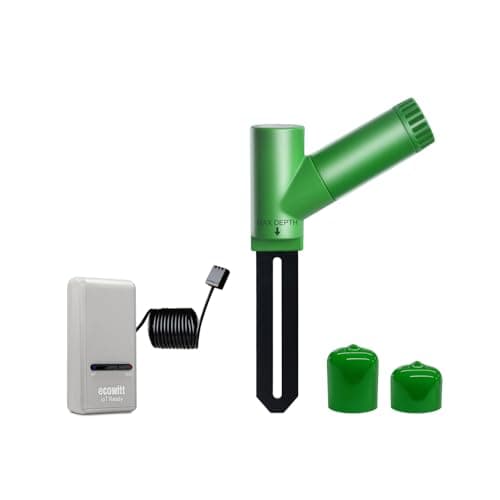 Ecowitt GW1206 Soil Moisture Kit (GW1200 Wi-Fi Gateway + WH51 Sensor)Monitoring several pots at once, with data you can actually export Ecowitt GW1206 Soil Moisture Kit (GW1200 Wi-Fi Gateway + WH51 Sensor)Monitoring several pots at once, with data you can actually export | Best overall, and the only real spec sheet | 8.2 | $55.99 - View on Amazon |
| 2 | 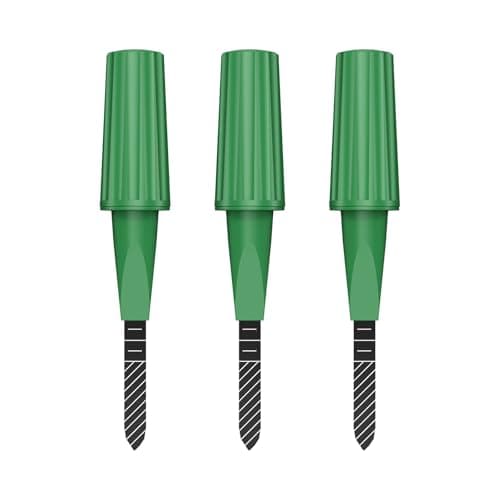 ThirdReality Smart Soil Moisture Sensor Gen2, 3 PackA smart home that already has a Zigbee hub and several plants ThirdReality Smart Soil Moisture Sensor Gen2, 3 PackA smart home that already has a Zigbee hub and several plants | Best if you already run Zigbee | 7.8 | $56.99 - View on Amazon |
| 3 | 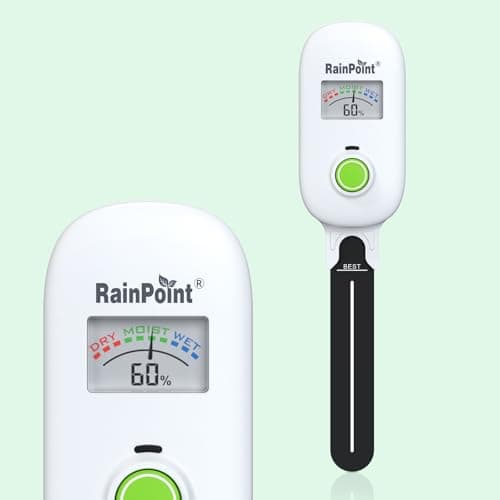 RainPoint Smart Soil Moisture Meter with Visual GaugeA first smart sensor, where you want a reading even without the app RainPoint Smart Soil Moisture Meter with Visual GaugeA first smart sensor, where you want a reading even without the app | Best that still works without the app | 7.3 | $19.95 - View on Amazon |
| 4 | 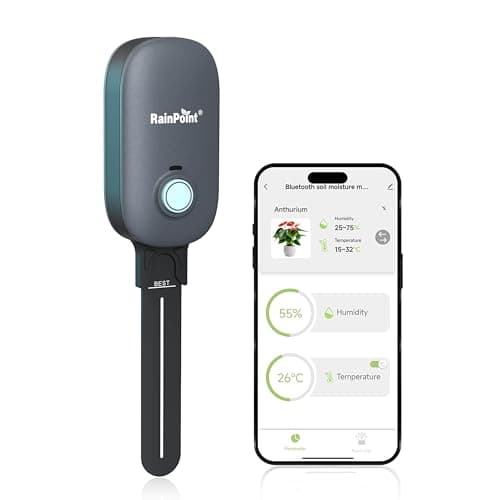 RainPoint Bluetooth 2-in-1 Soil Moisture and Air Temperature SensorOne or two plants you want on your phone without buying a hub RainPoint Bluetooth 2-in-1 Soil Moisture and Air Temperature SensorOne or two plants you want on your phone without buying a hub | Cheapest route onto a phone | 7.0 | $19.99 - View on Amazon |
| 5 | 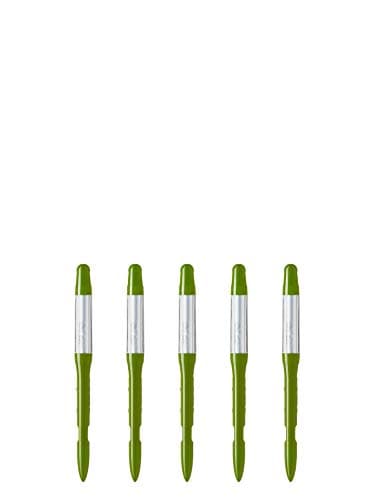 Sustee Aquameter Leave-In Moisture Indicator, Set of 5 (Small)Continuous monitoring of small pots without any electronics at all Sustee Aquameter Leave-In Moisture Indicator, Set of 5 (Small)Continuous monitoring of small pots without any electronics at all | Not wireless - and the honest alternative | 8.0 | $23.95 - View on Amazon |
Scores are our editorial judgment from published specifications. They are not test results, and they are deliberately not marked up as ratings in this page’s structured data.
Pick #1 - Best overall, and the only real spec sheet
Ecowitt GW1206 Soil Moisture Kit (GW1200 Wi-Fi Gateway + WH51 Sensor)
Monitoring several pots at once, with data you can actually export
The only wireless sensor here whose maker publishes real engineering numbers rather than adjectives: a 72-second reading time, an IP66 rating, a 915 MHz radio and a gateway that takes up to eight sensors. It is also the one that logs history you can download instead of a graph that lives inside an app.
#ad Price as of September 21, 2026, from Amazon. Prices change. How we make money.
Published specification
- What is in the box
- GW1200 Wi-Fi gateway plus one WH51 soil moisture sensor
- Reading time
- Collects soil moisture data within 72 seconds when fully inserted
- Sensors per gateway
- Up to 8 WH51 sensors, with editable channel names
- Radio frequency
- 915 MHz in North America (868 MHz Europe, 433 MHz elsewhere)
- Weather rating
- IP66 waterproof sensor, indoor and outdoor
- Data
- Uploads to the free ecowitt.net server; graph view, downloadable history and email alerts
- Probe length
- Not published by the manufacturer
- Published accuracy or calibration standard
- Not published by the manufacturer
- What is in the box: Ecowitt published listing specification
- Reading time: Ecowitt published listing specification
- Sensors per gateway: Ecowitt published listing specification
- Radio frequency: Ecowitt published listing specification
- Weather rating: Ecowitt published listing specification
- Data: Ecowitt published listing specification
- Probe length: Checked the listing; reading time and IP rating are given, probe length is not
- Published accuracy or calibration standard: Checked the listing, as we do for every meter in this category
What is good about it
- Publishes reading time, IP rating, radio frequency and sensor count - far more than anything else here
- Downloadable history from a free server, so the data is yours rather than an app's
- One gateway covers up to eight pots, which is where wireless finally beats walking around with a probe
- The gateway doubles as an indoor temperature, humidity and pressure station
What is not
- Probe length is not published, and on this site that is the spec that decides whether a reading means anything
- No accuracy figure or calibration method, exactly like every other meter we have checked
- The gateway is a second box that needs USB power and Wi-Fi setup
- Ecowitt states plainly the sensor measures moisture ONLY - no temperature, no light, no pH
Skip this one if
Skip it if you have three plants on one windowsill. A gateway, a Wi-Fi setup and a server account to replace a five-second finger check is a lot of apparatus for a problem you do not have.
How it scored
- Published specification
- 8.5
- Probe reach
- 4.0
- Readability and alerts
- 9.0
- Value for money
- 6.5
- Measurement honesty
- 5.0
- Overall
- 8.2 / 10
Our editorial score, from published specifications and computed intervals. Not a test result. Specification source: Ecowitt GW1206 soil moisture kit retail listing.
Pick #2 - Best if you already run Zigbee
ThirdReality Smart Soil Moisture Sensor Gen2, 3 Pack
A smart home that already has a Zigbee hub and several plants
For a house that already runs Zigbee. Three capacitive sensors that talk to an Echo, a SmartThings hub or Home Assistant, and the capacitive part is a genuine technical answer to the objection this site has been making about meters for months: capacitive sensing is less confused by dissolved salts than the conductivity probes everything else uses.
#ad Price as of September 21, 2026, from Amazon. Prices change. How we make money.
Published specification
- Hub requirement
- Zigbee 3.0 hub required - Echo 4th Gen, Echo Plus, Echo Studio, eero 6, eero Pro 6, Home Assistant, Hubitat, SmartThings and others
- Sensing method
- Capacitive, stated as less affected by soil salinity and pH than traditional probes
- Pack size
- 3 sensors
- Antenna
- Reinforced antenna for range across rooms, balcony and garden
- Apple Home and Google Home
- Supported only with the Smart Bridge MZ1, sold separately
- Probe length
- Not published by the manufacturer
- Published accuracy or calibration standard
- Not published by the manufacturer
- Hub requirement: ThirdReality published listing specification
- Sensing method: ThirdReality published listing specification
- Pack size: ThirdReality published listing specification
- Antenna: ThirdReality published description
- Apple Home and Google Home: ThirdReality published listing specification
- Probe length: Checked the listing, no probe length given
- Published accuracy or calibration standard: Checked the listing, as we do for every meter in this category
What is good about it
- Capacitive sensing is the one genuine measurement upgrade in this whole roundup
- Three sensors in a pack, which is the right number for the collection that justifies going wireless
- Feeds a real automation system rather than a single-brand app
- Over-the-air firmware updates
What is not
- Useless without a Zigbee hub, and the listing's compatibility list is where you check before buying
- Apple Home and Google Home need another separately sold bridge on top of the hub
- Probe length not published
- No accuracy figure or calibration method, same as the rest
Skip this one if
Skip it if you do not already own a Zigbee hub. Buying an Echo to read a plant pot inverts the cost of the problem, and a battery-free dial meter answers the same question for a tenth of the price.
How it scored
- Published specification
- 6.5
- Probe reach
- 4.0
- Readability and alerts
- 9.0
- Value for money
- 7.0
- Measurement honesty
- 7.0
- Overall
- 7.8 / 10
Our editorial score, from published specifications and computed intervals. Not a test result. Specification source: ThirdReality smart soil moisture sensor Gen2 retail listing.
Pick #3 - Best that still works without the app
RainPoint Smart Soil Moisture Meter with Visual Gauge
A first smart sensor, where you want a reading even without the app
The only one on this page that still works when the Wi-Fi does: it has a built-in gauge and digital display, and the hub is optional rather than required. It is also the only maker here that publishes a probe length, and the number it publishes is the reason we cannot rank it first.
#ad Price as of September 21, 2026, from Amazon. Prices change. How we make money.
Published specification
- Probe length
- 3.5 in, capacitive
- Hub requirement
- None for local use; a RainPoint Wi-Fi hub (sold separately) adds remote app monitoring
- Reading cadence
- Automatic every 3 minutes, or on demand with a short button press
- Display
- Always-on digital display with a color-coded scale, readable without the app
- Device dimensions
- 8.27 x 2.17 x 1.38 in overall
- In the box
- Meter, pH test strips, screwdriver
- Published accuracy or calibration standard
- Not published by the manufacturer
- Probe length: RainPoint published listing specification
- Hub requirement: RainPoint published listing specification
- Reading cadence: RainPoint published listing specification
- Display: RainPoint published listing specification
- Device dimensions: RainPoint published listing specification
- In the box: RainPoint published listing specification
- Published accuracy or calibration standard: Checked the listing, as we do for every meter in this category
What is good about it
- Publishes its probe length, which nothing else in this roundup does
- Works as an ordinary meter with no hub, no account and no app
- An always-on display means you can read it from the doorway rather than opening a phone
- Capacitive and rustproof rather than a bare conductivity probe
What is not
- Three and a half inches of probe reads the fastest-drying part of a pot, not the root zone
- The remote monitoring the name implies costs extra, because the hub is a separate purchase
- Automatic detection every three minutes is far more often than any houseplant changes
- No accuracy figure or calibration method published
Skip this one if
Skip it for pots deeper than about 5 inches. A 3.5-inch probe in an 8-inch pot samples the top third, which is the part that dries first and tells you to water a plant whose roots are still wet.
How it scored
- Published specification
- 7.5
- Probe reach
- 3.0
- Readability and alerts
- 8.5
- Value for money
- 8.5
- Measurement honesty
- 6.0
- Overall
- 7.3 / 10
Our editorial score, from published specifications and computed intervals. Not a test result. Specification source: RainPoint smart soil moisture meter retail listing.
Pick #4 - Cheapest route onto a phone
RainPoint Bluetooth 2-in-1 Soil Moisture and Air Temperature Sensor
One or two plants you want on your phone without buying a hub
The cheapest way onto a phone: Bluetooth straight to the app with no hub for local use, plus an air temperature reading and a library of preset plant profiles. It will also drive a RainPoint water timer, which is the only genuine automation story on this page.
#ad Price as of September 21, 2026, from Amazon. Prices change. How we make money.
Published specification
- Measures
- Soil moisture and air temperature
- Connection
- Bluetooth to the RainPoint app; a TWG009 Wi-Fi hub (sold separately) adds remote access
- Refresh rate
- 2 seconds
- Plant profiles
- 20 preset common plants, plus custom profiles
- Automation
- Links with the ITV102B water timer to adjust watering from live soil readings
- Alerts
- History logs, low battery alerts and device sharing
- Probe length
- Not published by the manufacturer
- Published accuracy or calibration standard
- Not published by the manufacturer
- Measures: RainPoint published listing specification
- Connection: RainPoint published listing specification
- Refresh rate: RainPoint published listing specification
- Plant profiles: RainPoint published listing specification
- Automation: RainPoint published listing specification
- Alerts: RainPoint published listing specification
- Probe length: Checked the listing, no probe length given
- Published accuracy or calibration standard: Checked the listing, as we do for every meter in this category
What is good about it
- No hub needed to read it on your phone in the same room
- The only sensor here that closes the loop by driving a watering timer
- A low-battery alert, which is the alert that actually matters on a battery device
- Air temperature is a real input to how fast a pot dries, unlike the pH readings cheap meters bolt on
What is not
- Bluetooth means in-the-same-room; remote monitoring needs the separately sold hub
- A 2-second refresh on a plant that changes over days is a specification aimed at a spec sheet
- The 20 preset plant profiles are the maker's thresholds, not published horticultural guidance
- Neither probe length nor accuracy is published
Skip this one if
Skip it if you wanted alerts while you are away. Without the hub this is a meter that happens to talk to a phone in the same room, and the phone is further away than the plant.
How it scored
- Published specification
- 6.0
- Probe reach
- 4.0
- Readability and alerts
- 7.5
- Value for money
- 8.5
- Measurement honesty
- 5.5
- Overall
- 7.0 / 10
Our editorial score, from published specifications and computed intervals. Not a test result. Specification source: RainPoint Bluetooth 2-in-1 sensor retail listing.
Pick #5 - Not wireless - and the honest alternative
Sustee Aquameter Leave-In Moisture Indicator, Set of 5 (Small)
Continuous monitoring of small pots without any electronics at all
Not wireless, not electronic, and on this page deliberately. A leave-in stick that turns white when the pot needs water and blue when it does not, with a refillable core the maker publishes as lasting six to nine months. It answers the same question as everything above with no battery, no hub and no app.
#ad Price as of September 21, 2026, from Amazon. Prices change. How we make money.
Published specification
- How it reads
- Color change: white means the plant needs watering, blue means it has been watered
- Core life
- Approximately 6 to 9 months per refillable core
- Dimensions
- 4.7 in long (small size)
- Pot sizes
- Intended for 2, 2.5 and 3 inch pots; the maker suggests small succulents
- Pack size
- 5 sticks
- Development
- Design and function developed with Tokyo University of Agriculture
- Power
- None required
- Published accuracy or calibration standard
- Not published by the manufacturer
- How it reads: Sustee published listing specification
- Core life: Sustee published listing specification
- Dimensions: Sustee published listing specification
- Pot sizes: Sustee published listing specification
- Pack size: Sustee published listing specification
- Development: Sustee published listing specification
- Power: Sustee published description
- Published accuracy or calibration standard: Checked the listing; no meter in this category publishes one
What is good about it
- Leave-in and continuous, which is the one thing a handheld probe genuinely cannot do
- No battery, no hub, no app and no account
- Five sticks for less than one wireless sensor
- The maker names the university it developed the design with, which is more provenance than anything else here offers
What is not
- It is not wireless and will never send you a notification
- The small size is published for 2 to 3 inch pots, so a big floor plant needs the larger version
- The core is a consumable, replaced every 6 to 9 months
- A color change is a coarser signal than a number, which is either honest or frustrating depending on the reader
Skip this one if
Skip it if the actual requirement is being told about a plant while you are somewhere else. That is the one job this cannot do, and it is the only good reason to buy anything else on this page.
How it scored
- Published specification
- 7.5
- Probe reach
- 6.0
- Readability and alerts
- 5.0
- Value for money
- 9.5
- Measurement honesty
- 8.5
- Overall
- 8.0 / 10
Our editorial score, from published specifications and computed intervals. Not a test result. Specification source: Sustee Aquameter retail listing.
Questions people actually ask
- Are wireless soil moisture sensors accurate?
No more accurate than a handheld meter, and none of them publishes an accuracy figure or calibration method - we check on every meter we cover. Capacitive sensors, which ThirdReality and one RainPoint model publish, are less affected by dissolved salts than conductivity probes, which is a real improvement but not calibration. Read the number as a comparison against the same pot last week.
- Do wireless soil sensors need a hub?
It depends and it is the thing to check before buying. The Ecowitt kit includes its Wi-Fi gateway - the bare WH51 sensor cannot be used alone and Ecowitt says so. ThirdReality requires a Zigbee 3.0 hub such as an Echo 4th Gen, Home Assistant or SmartThings. Both RainPoint devices work without a hub, with the hub adding remote monitoring as a separate purchase.
- How deep do wireless soil moisture sensors reach?
Usually the maker does not say. Of the devices here, only the RainPoint visual gauge publishes a probe length, at 3.5 inches - roughly half the reach of the 7-inch handheld we recommend elsewhere. A short probe samples the fastest-drying top layer, so in a pot deeper than about 5 inches it will tend to report dry while the root zone is still wet.
- Are smart plant sensors worth it?
For a lot of plants, or for monitoring while you are away, yes - that is something a handheld probe genuinely cannot do. For one or two plants in small pots, no: your finger reaches the root zone, which is what extension guidance recommends, and a battery-free dial meter covers the rest for a fraction of the price.
- What is the difference between a capacitive and a conductivity soil sensor?
A conductivity probe measures electrical conduction between two electrodes, which tracks moisture but also responds to dissolved salts - so a heavily fertilized pot reads wetter than it is. Capacitive sensing is published by its makers as less affected by salinity and pH. It is a genuine improvement in the measurement, though neither type produces a calibrated water-content figure.
Sources
Sources
- Ecowitt GW1206 soil moisture kit published specification, via retail listing
- ThirdReality Smart Soil Moisture Sensor Gen2 published specification, via retail listing
- RainPoint smart soil moisture meter published specification, via retail listing
- Sustee Aquameter published specification, via retail listing
- Criscione and Holliday-Goulart, Properly Watering Container Houseplants, Virginia Cooperative Extension SPES-804 (2026)
- Royal Horticultural Society, Watering plants wisely