Roundup
Best Indoor Self-Watering Planters
Ranked on the only specification that decides how long you can leave one alone, which is the specification most brands do not print.
By Scooter M. - Enthusiast. Reads the manuals, compiles the specs, does the math. | Published
Disclosure
We earn a commission if you buy through our links. It does not change what we recommend or what you pay. Full disclosure.
The short answer
How we ranked these
On one number, mostly: published reservoir capacity, divided by the volume of one thorough watering for the pot size the planter suits. That gives waterings held. Multiply by the cadence Virginia Cooperative Extension publishes for a tropical houseplant - once or twice a week - and you have a refill interval in days. The arithmetic is on every card and the full method is published so you can substitute your own pot size.
The second criterion is whether the manufacturer publishes anything at all. This sounds like a formality until you go looking. Of the planters in this roundup, two brands publish reservoir capacity as a number and one does not publish it anywhere we could find. A planter whose central specification is absent cannot be ranked on that specification, and we would rather rank it last with an explanation than quietly leave it out.
The capacity table, before the reviews
| Product | Published reservoir | Waterings held | Computed interval |
|---|---|---|---|
| Lechuza Classico Color 21 | 5 L | 14.3 (6 in pot) | 49 to 98 days |
| Lechuza Cubico Color 22 | 6 L | 7.5 (8 in pot) | 28 to 56 days |
| GS adjustable insert, extended | 4.7 L | 5.9 (8 in pot) | 21 to 42 days |
| GroBuddy insert | 3.8 L | 4.7 (8 in pot) | 17 to 35 days |
| GS adjustable insert, compressed | 1.4 L | 1.8 (8 in pot) | 6 to 12 days |
| Bloem Ariana 12 in | Not published | Unknown | Cannot be computed |
Two things jump out of that table. The first is that the smallest planter has the longest interval, because it is paired with the smallest plant. The second is the range on the adjustable insert: the same product is six days or six weeks depending on how deep your pot lets you extend it, which is why we care that they publish both ends rather than the flattering one.
What actually goes wrong with these indoors
Almost every bad experience with an indoor self-watering planter traces to one of three things, and none of them is a design flaw.
Top-watering out of habit. A sub-irrigated planter is filled at the reservoir. Watering it from the top as well saturates the mix and closes the air gap that keeps roots out of standing water. NC State Extension is direct about what happens next: root rots are caused by fungal and fungus-like organisms that thrive in wet, poorly drained soil. A correctly used reservoir planter is not poorly drained. A double-watered one is.
Never priming it. Capillary action needs a continuous moist column to start. A new planter with dry mix and a full reservoir will simply sit there. Water thoroughly from the top once, let it drain, then switch to the reservoir permanently.
Putting a succulent in one. The published cadence for succulents and cacti is once or twice a month, which is a completely different regime. A reservoir that keeps the root zone continuously moist is exactly wrong for them. If you want a forgiving succulent, the answer is a plant with a wide cadence band in an ordinary pot, not a reservoir.
Insert or new planter?
If you already own pots you like, an insert is usually the better buy. It is cheaper, it keeps the container you chose, and the good ones publish capacity. The catch is depth: an insert occupies the bottom of the pot, so a shallow container trades root room for reservoir at a poor rate. Below about ten inches of internal depth, buy the planter instead. We cover the conversion kits in detail if that is the route you are taking.
If you are unconvinced by the whole category, that is a reasonable position and we answer it honestly rather than selling. And if what you actually need is to cover a two-week trip rather than a normal week, a planter is the wrong tool and we will say so.
Every planter on this page is plastic, and that is not an accident: plastic brands publish the capacity this ranking is built on. The ceramic and terracotta pots are ranked separately, on what you can check when no maker prints a capacity at all.
And if it is the top pick in particular you are weighing up, our full review of the Lechuza Classico Color 21 goes through the published specification, the arithmetic behind the interval, and the two reasons to skip it.
Ranked picks
Quick picks
Ranked on published specifications and the computed refill interval, not on looks. Tap any row for the full write-up, including who should skip it.
| # | Product | Best for | Score | Price |
|---|---|---|---|---|
| 1 | 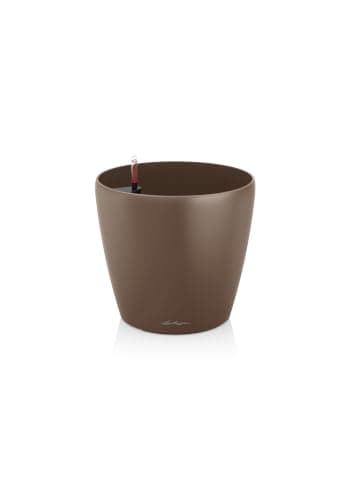 Lechuza Classico Color 21A desk or shelf plant you want to stop thinking about Lechuza Classico Color 21A desk or shelf plant you want to stop thinking about | Longest computed interval | 8.8 | $49.99 - View on Amazon |
| 2 |  Lechuza Cubico Color 22A floor plant in a corner you would rather not water weekly Lechuza Cubico Color 22A floor plant in a corner you would rather not water weekly | Best for a floor plant | 8.4 | Check price on Amazon |
| 3 | 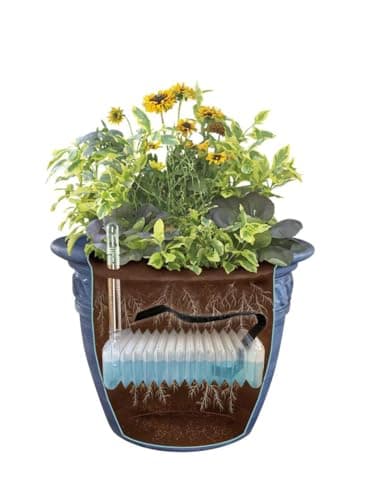 Gardener's Supply Adjustable Self-Watering InsertTurning a planter you already own and like into a self-watering one Gardener's Supply Adjustable Self-Watering InsertTurning a planter you already own and like into a self-watering one | Best if you keep your pots | 8.6 | $36.99 - View on Amazon |
| 4 |  GroBucket GroBuddy Self-Watering Pot InsertA medium floor plant in a pot deep enough to hide the insert GroBucket GroBuddy Self-Watering Pot InsertA medium floor plant in a pot deep enough to hide the insert | Biggest insert reservoir | 8.1 | Check price on Amazon |
| 5 | 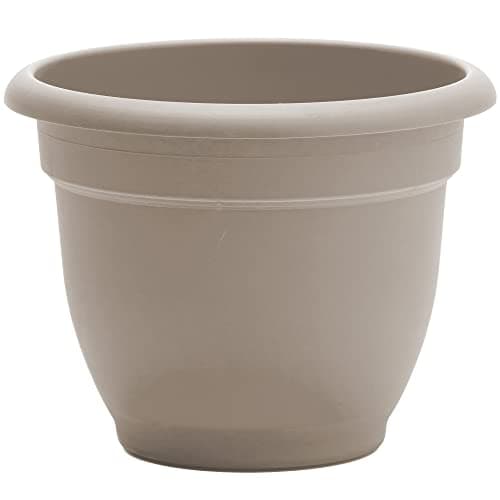 Bloem Ariana 12 in Self-Watering PlanterLooks, on a budget, when refill interval is not the deciding factor Bloem Ariana 12 in Self-Watering PlanterLooks, on a budget, when refill interval is not the deciding factor | Best looking, worst documented | 6.4 | $12.31 - View on Amazon |
Scores are our editorial judgment from published specifications. They are not test results, and they are deliberately not marked up as ratings in this page’s structured data.
Pick #1 - Longest computed interval
Lechuza Classico Color 21
A desk or shelf plant you want to stop thinking about
The only planter in this roundup whose maker publishes the reservoir capacity in liters, which is the single number that decides how long you can leave it. Five liters against a 6-inch tropical root ball is the longest computed interval on this page by a wide margin.
#ad Price as of October 18, 2026, from Amazon. Prices change. How we make money.
Published specification
- Reservoir capacity
- 5 liters
- External dimensions
- 9 x 9 x 8 in (21 x 21 x 20 cm)
- Water level indicator
- Yes, float gauge
- Drainage plug
- Yes, for outdoor use
- Material
- Frost and UV resistant polypropylene
- Reservoir capacity: Lechuza published specification, via retail listing
- External dimensions: Lechuza published specification, via retail listing
- Water level indicator: Lechuza published specification
- Drainage plug: Lechuza published specification
- Material: Lechuza published specification
Refill interval - computed, not tested
Roughly 7 to 14 weeks between refills
5,000 ml reservoir divided by 350 ml per thorough watering of a 6-inch pot is 14.3 waterings. At the published cadence for a tropical houseplant of once or twice a week, that is 49 to 98 days.
Assumes: 6-inch tropical root ball, indoors, average room conditions. Light, temperature, humidity, soil mix and season all change how fast a pot dries, so treat this as a planning range and not a guarantee.
What is good about it
- Publishes the reservoir capacity, which almost nothing else in this category does
- The float gauge means you never have to guess whether it needs topping up
- The drainage plug lets the same planter work outdoors without drowning the plant in a wet week
- Sub-irrigation from a granulate layer rather than a wick, so there is no wick to rot or clog
What is not
- Expensive for a 9-inch pot, and the price is most of the argument against it
- The system is built around Lechuza's own mineral granulate, so you are buying into a way of potting, not just a pot
- A 5-liter reservoir under an 8-inch or larger plant is a much shorter interval than the headline suggests
Skip this one if
Skip it if you want one pot to cover a large floor plant. The reservoir is sized for a small-to-medium root ball, and the interval collapses as the plant gets bigger. Skip it too if you like repotting into ordinary potting mix, because the granulate layer is part of the design.
How it scored
- Published capacity
- 10.0
- Computed interval
- 9.5
- Build and materials
- 9.0
- Value for money
- 6.5
- Ease of setup
- 8.5
- Overall
- 8.8 / 10
Our editorial score, from published specifications and computed intervals. Not a test result. Specification source: Lechuza Classico Color 21 retail listing.
Pick #2 - Best for a floor plant
Lechuza Cubico Color 22
A floor plant in a corner you would rather not water weekly
The same published-capacity honesty as the Classico in a tall floor-standing shape, with a 6-liter reservoir. It is a bigger reservoir under a bigger plant, so the interval comes out shorter than the Classico's, not longer, which is exactly the trade nobody in this category explains.
#ad We do not currently hold a live price for this, so we do not show one. How we make money.
Published specification
- Reservoir capacity
- 6 liters
- External dimensions
- 9 x 9 x 16 in (22 x 22 x 41 cm)
- Water level indicator
- Yes, float gauge
- Material
- Shockproof poly-resin, matte finish
- Indoor and outdoor
- Both, with drainage hole
- Reservoir capacity: Lechuza published specification, via retail listing
- External dimensions: Lechuza published specification, via retail listing
- Water level indicator: Lechuza published specification
- Material: Lechuza published specification
- Indoor and outdoor: Lechuza published specification
Refill interval - computed, not tested
Roughly 4 to 8 weeks between refills
6,000 ml reservoir divided by 800 ml per thorough watering of an 8-inch pot is 7.5 waterings. At once or twice a week for a tropical houseplant, that is 28 to 56 days.
Assumes: 8-inch tropical root ball, indoors, average room conditions. Light, temperature, humidity, soil mix and season all change how fast a pot dries, so treat this as a planning range and not a guarantee.
What is good about it
- One of very few floor planters with a published reservoir figure at all
- The tall body puts the reservoir under a genuinely floor-sized plant rather than under a desk pot
- Float gauge, so the fill state is visible without digging
What is not
- Bigger reservoir, bigger plant: the interval is shorter than the smaller Classico's, which is counterintuitive at the shelf
- Costs more than most people expect to pay for a plastic planter
Skip this one if
Skip it if you were buying the bigger size expecting a longer gap between refills. It does not work that way, and we would rather say so than sell you the upgrade.
How it scored
- Published capacity
- 10.0
- Computed interval
- 8.0
- Build and materials
- 9.0
- Value for money
- 6.0
- Ease of setup
- 8.5
- Overall
- 8.4 / 10
Our editorial score, from published specifications and computed intervals. Not a test result. Specification source: Lechuza Cubico Color 22 retail listing.
Pick #3 - Best if you keep your pots
Gardener's Supply Adjustable Self-Watering Insert
Turning a planter you already own and like into a self-watering one
The one conversion kit here that publishes its reservoir capacity at both ends of its adjustment range, so you can work out what you are getting before you buy. Compressed it is a week. Extended it is a month and a half.
#ad Price as of October 18, 2026, from Amazon. Prices change. How we make money.
Published specification
- Reservoir capacity, compressed
- 1.5 quarts (about 1.4 liters)
- Reservoir capacity, extended
- 5 quarts (about 4.7 liters)
- Fill tube height
- Adjustable 11.5 to 22 in
- Container shapes
- Round, square and rectangular
- Watering method
- Wicking from a below-soil reservoir, filled through a tube
- Reservoir capacity, compressed: Gardener's Supply published specification, via retail listing
- Reservoir capacity, extended: Gardener's Supply published specification, via retail listing
- Fill tube height: Gardener's Supply published specification, via retail listing
- Container shapes: Gardener's Supply published description
- Watering method: Gardener's Supply published description
Refill interval - computed, not tested
About 6 days compressed, up to about 6 weeks fully extended
Compressed: 1,420 ml divided by 800 ml per thorough watering of an 8-inch pot is 1.8 waterings, so 6 to 12 days at once or twice a week. Extended: 4,732 ml divided by 800 ml is 5.9 waterings, so 21 to 42 days.
Assumes: 8-inch tropical root ball, indoors. Light, temperature, humidity, soil mix and season all change how fast a pot dries, so treat this as a planning range and not a guarantee.
What is good about it
- Publishes capacity at both ends of the adjustment, so the range is checkable rather than a marketing claim
- Lets you keep a planter you already like instead of buying a new one for its plumbing
- The tall fill tube means you top up without disturbing the plant
What is not
- Useful capacity depends entirely on how deep your existing pot is, and a shallow pot gets the 1.5-quart end of the range
- Costs a meaningful fraction of what a new self-watering planter costs
Skip this one if
Skip it if your pots are shallow. Compressed to fit an 8-inch-deep container it holds a quart and a half, which for a medium houseplant is about a week, barely better than remembering.
How it scored
- Published capacity
- 10.0
- Computed interval
- 8.0
- Flexibility
- 9.5
- Value for money
- 7.5
- Ease of setup
- 7.5
- Overall
- 8.6 / 10
Our editorial score, from published specifications and computed intervals. Not a test result. Specification source: Gardener's Supply adjustable insert retail listing.
Pick #4 - Biggest insert reservoir
GroBucket GroBuddy Self-Watering Pot Insert
A medium floor plant in a pot deep enough to hide the insert
A one-gallon reservoir with a refill indicator, dropped into a pot you already own. The published gallon figure is the reason it makes this list ahead of the unlabeled inserts sitting next to it in the search results.
#ad We do not currently hold a live price for this, so we do not show one. How we make money.
Published specification
- Reservoir capacity
- 1 gallon (about 3.8 liters)
- Refill indicator
- Yes
- Watering method
- Below-soil reservoir with wicking to the root zone
- Reservoir capacity: GroBucket published specification, via retail listing
- Refill indicator: GroBucket published description
- Watering method: GroBucket published description
Refill interval - computed, not tested
About 2.5 to 5 weeks
3,785 ml divided by 800 ml per thorough watering of an 8-inch pot is 4.7 waterings. At once or twice a week, that is 17 to 35 days.
Assumes: 8-inch tropical root ball, indoors. Light, temperature, humidity, soil mix and season all change how fast a pot dries, so treat this as a planning range and not a guarantee.
What is good about it
- A published gallon of reservoir is genuinely large for an insert
- The refill indicator removes the guesswork that sinks most conversion kits
- Cheaper than replacing a pot you already like
What is not
- Needs real depth to disappear. In a shallow pot the insert eats the root zone
- One fixed size, so it fits the pots it fits
Skip this one if
Skip it if your pot is under about 10 inches deep. The insert takes up the bottom of the container, and in a shallow pot you are trading root room for reservoir at a bad exchange rate.
How it scored
- Published capacity
- 9.0
- Computed interval
- 8.5
- Flexibility
- 6.5
- Value for money
- 8.5
- Ease of setup
- 8.0
- Overall
- 8.1 / 10
Our editorial score, from published specifications and computed intervals. Not a test result. Specification source: GroBuddy insert retail listing.
Pick #5 - Best looking, worst documented
Bloem Ariana 12 in Self-Watering Planter
Looks, on a budget, when refill interval is not the deciding factor
A good-looking, inexpensive resin planter with a self-watering disk, and no published reservoir capacity anywhere we could find, which means nobody, including us, can tell you how long a fill lasts. It is here because it sells well and you deserve to know that gap exists before you buy.
#ad Price as of October 18, 2026, from Amazon. Prices change. How we make money.
Published specification
- Reservoir capacity
- Not published by the manufacturer
- Total planter capacity
- 3 gallons (12 quarts) of growing media
- External dimensions
- 13 x 13 x 10.25 in
- Watering method
- Self-watering grid above a hidden bottom reservoir
- Material
- Recycled plastic resin
- Reservoir capacity: Checked Bloem product listings, no figure published
- Total planter capacity: Bloem published specification, via retail listing
- External dimensions: Bloem published specification, via retail listing
- Watering method: Bloem published description
- Material: Bloem published specification
Refill interval - computed, not tested
We cannot compute one, and that is the finding
Our refill interval is reservoir capacity divided by the volume of one thorough watering. Bloem does not publish a reservoir capacity for the Ariana, so the numerator does not exist. We will not estimate it, because a made-up numerator produces a real-looking answer.
Assumes: None available. The input is missing. Light, temperature, humidity, soil mix and season all change how fast a pot dries, so treat this as a planning range and not a guarantee.
What is good about it
- Genuinely attractive for the money, in a category full of ugly plastic
- Twelve quarts of growing media is a lot of root room at this price
- Made from recycled resin, which the more expensive planters here are not
What is not
- No published reservoir capacity, so the one number that decides how long you can leave it is unavailable
- The self-watering disk sits low in a wide shallow body, so the reservoir is inherently modest relative to the soil above it
- Without a level indicator you are guessing at the fill state
Skip this one if
Skip it if you are buying specifically to extend the gap between waterings. You cannot verify that it will, and neither can we. Buy it for the way it looks and treat the reservoir as a bonus.
How it scored
- Published capacity
- 1.0
- Computed interval
- 2.0
- Build and materials
- 7.0
- Value for money
- 9.0
- Looks
- 9.0
- Overall
- 6.4 / 10
Our editorial score, from published specifications and computed intervals. Not a test result. Specification source: Bloem Ariana 12 in retail listing.
Questions people actually ask
- How long does a self-watering planter really last between refills?
It is the reservoir capacity divided by how much water your plant uses per watering. For a 6-inch tropical houseplant using about 350 ml per thorough watering at once or twice a week, a 5-liter reservoir computes to 49 to 98 days and a 1-liter reservoir to about 10 to 20 days. Light, temperature and season all move that, so treat it as a planning range.
- Do self-watering planters cause root rot?
Used as designed, no more than any other pot. Root rot is caused by waterlogged, poorly drained conditions, and a working sub-irrigation system keeps an air gap between the reservoir and the root zone. The common cause of rot in these pots is people top-watering them as well as filling the reservoir. We go through the mechanism in full.
- Can I put any houseplant in a self-watering planter?
Not comfortably. They suit plants whose published watering cadence is once or twice a week - most tropical foliage houseplants. Succulents and cacti are published at once or twice a month and are not a good fit for a continuously moist root zone.
- Why do bigger self-watering planters need refilling more often?
Because the plant scales faster than the tank. What matters is the ratio of reservoir volume to root-ball volume, not the absolute reservoir size. A 6-liter reservoir under an 8-inch plant computes to a shorter interval than a 5-liter reservoir under a 6-inch plant.
- How do I know when to refill if there is no water level indicator?
You do not, reliably, which is why an indicator is worth paying for. Without one, the usual workaround is to fill on a fixed schedule shorter than your computed interval, which wastes most of the benefit. A float gauge turns the question into a glance.
Sources
Sources
- Criscione and Holliday-Goulart, Properly Watering Container Houseplants, Virginia Cooperative Extension SPES-804 (2026)
- Daughtry, Watering but Not Overwatering Houseplants, NC State Extension (2022)
- EarthBox published system comparison table
- Plants Grown in Containers, NC State Extension Gardener Handbook chapter 18