Roundup
Best Self-Watering Window Boxes
A window box is shallow by definition, which means it holds little water and dries fast. The good ones put a real reservoir under a removable liner and tell you how big it is.
By Scooter M. - Enthusiast. Reads the manuals, compiles the specs, does the math. | Published
Disclosure
We earn a commission if you buy through our links. It does not change what we recommend or what you pay. Full disclosure.
The short answer
Why a window box needs a reservoir more than a pot does
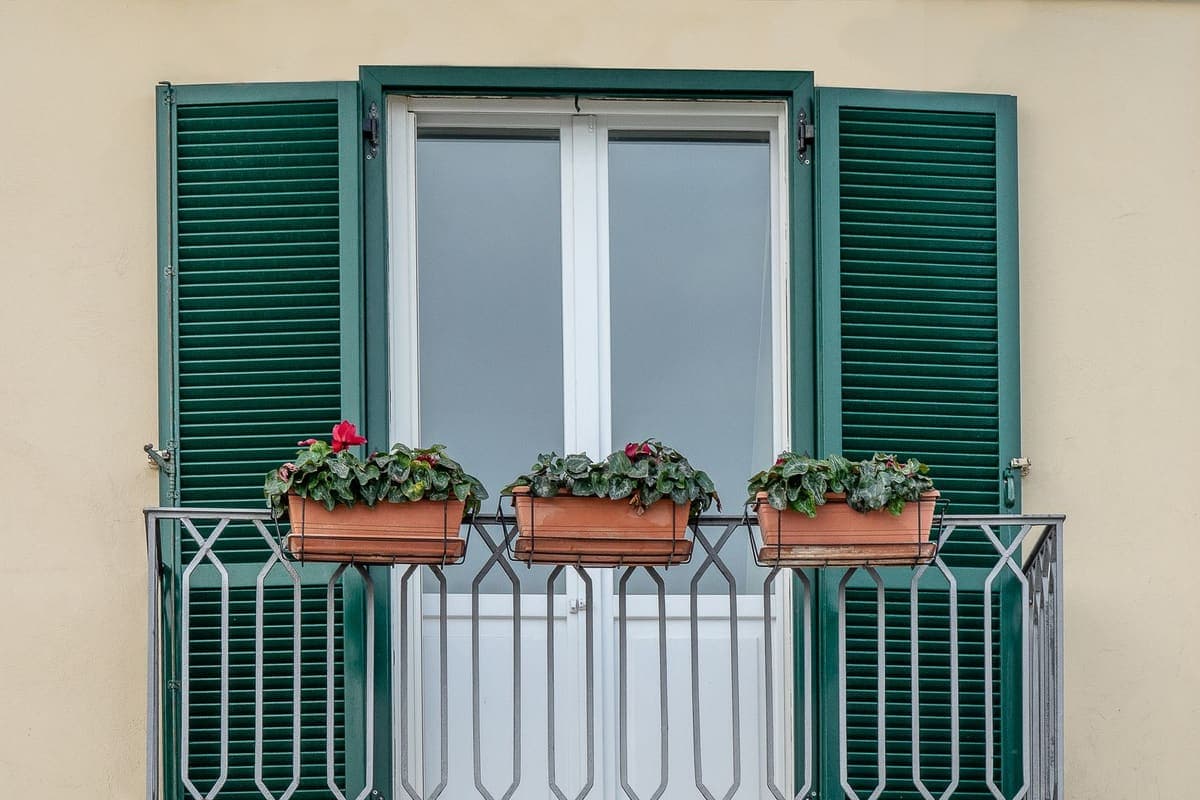
Depth. A window box is long and shallow so that it fits a sill or a rail, and shallow mix holds little water and gives it up fast. NC State Extension’s container chapter puts it simply: the smaller the soil volume relative to the plant, the more often it needs water. A 4.5-inch planting depth in full sun is the hardest watering job on a balcony, and it is the container most often watered by somebody leaning out of a window with a jug.
A reservoir under the mix changes the job from daily to weekly, and a level indicator changes it from guessing to reading. Those two features are what separate the boxes on this page from the ordinary plastic troughs sold next to them.
How we ranked them
Published reservoir first, published soil volume second. The refill interval needs both, and one maker here publishes both for every size it sells. Where a number is missing we say so rather than fill it in.
Outdoor drainage third. A window box lives outside. A reservoir box with no way to let rain out fills from above in a wet week, the air gap between the water and the roots closes, and you get the waterlogged condition that root-rot organisms need. A drain screw or an overflow is not optional out there.
Liner and mounting fourth. A lift-out liner means you can replant without unbolting the box from a rail, and it means the reservoir stays clean. Brackets are the part everybody forgets to budget for.
| Box | Reservoir | Soil volume | Length | Our computed range |
|---|---|---|---|---|
| Lechuza Balconera Color 80 | 1.5 gal (5.7 L) | 3 dry gal | 31 in | 8 to 15 days |
| Lechuza Balconera Color 50 | 1 gal (3.8 L) | 2 dry gal | 19.5 in | 8 to 15 days |
| EarthBox Junior | 1.15 gal (4.4 L) | 1.0 cu ft | 23 in | 3 to 5 weeks, indoor herbs |
The arithmetic on the Balconera
Three dry gallons is about 13.2 liters of mix, and one thorough watering is 20 percent of that in our method, roughly 2,640 ml. The published 5.7 liter reservoir is 2.2 waterings. At Virginia Cooperative Extension’s published tropical cadence of once or twice a week, that is 7.5 to 15 days. The 50 computes to the same range from a smaller reservoir under a smaller soil volume, because Lechuza scales the two together.
The caveat is the one we make for every outdoor product. The cadence band is for container houseplants indoors. A box of petunias on a south-facing rail in July draws far more than a pothos on a shelf, and the same arithmetic then flatters the box. Treat 8 to 15 days as the shaded, foliage figure, and treat a sunny box of annuals as something you check twice a week. The reservoir is still the difference between a missed day and a dead box.
Why the EarthBox Junior is here
It is not sold as a window box, and it is not pretty. It is a 23-inch, 9.5-inch-wide sub-irrigated planter with a published 1.15 gallon reservoir under a cubic foot of mix, which makes it window-box shaped with the largest reservoir-to-soil ratio on this page. EarthBox publishes its whole range in one table, and we review the range in detail. For a sill of basil and parsley it is the better growing container; for a rail of geraniums it is the wrong look, and it has no rail brackets at all.
Its computed interval - about 3 to 5 weeks for indoor herbs - is on a different basis from the Balconera figures: a full cubic foot of mix under a smaller, deeper-rooted planting. It is not directly comparable, which is why it sits third rather than first.
The depth limit, stated plainly
The Balconera liners are 4.5 inches deep. That is a window box, not a bed, and no reservoir changes it. Annuals, trailing foliage, most herbs and shallow-rooted greens are fine. Anything with a taproot, any fruiting vegetable, and anything that wants to be a shrub is not. If the plan is tomatoes on a balcony, the sub-irrigated vegetable boxes are a different product with a different depth.
Winter, and the reservoir you forgot about
A window box stays on the rail after the plants are finished, and the reservoir stays in it. Lechuza publishes the body as frost resistant, which covers the plastic; it does not cover a sealed cavity full of water in a hard freeze, where the ice has nowhere to go. Empty the reservoir before the first frost - the drain screw is the tool for that - and leave the screw out over winter so rain runs through rather than filling it. In spring, put the screw back, prime the mix from the top once, and let the indicator take over.
The honest cons on every pick
Balconera Color 80. Expensive, and the rail brackets are sold separately, so the real price is higher than the box price. Shallow. Built around Lechuza’s mineral substrate layer, like the rest of the range.
Balconera Color 50. Same shallow depth, same separate brackets, and a premium price for a 20-inch plastic box. If the sill is over two feet you will end up buying two.
EarthBox Junior. It looks like equipment because it is equipment. No brackets, no rail option, and a cubic foot of mix is a modest reservoir once herbs fill in. Buy it for a sill of herbs, not a rail of flowers.
Mounting, and the part that costs extra
A full Balconera 80 is 5.7 liters of water and 13 liters of wet mix on a bracket. Lechuza publishes the brackets as a separate purchase, and they are the right ones to use - they fit into the back of the box and take the load as designed. A generic rail hook under a box this heavy is the failure mode to avoid. On a sill, none of this applies and the box simply sits.
Ranked picks
Quick picks
Ranked on published specifications and the computed refill interval, not on looks. Tap any row for the full write-up, including who should skip it.
| # | Product | Best for | Score | Price |
|---|---|---|---|---|
| 1 | 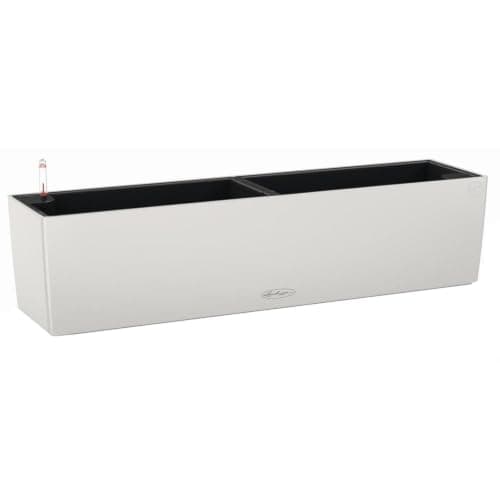 Lechuza Balconera Color 80 Self-Watering Window BoxA full-width balcony rail or sill where you want one box to do the job Lechuza Balconera Color 80 Self-Watering Window BoxA full-width balcony rail or sill where you want one box to do the job | Best overall, one box for a full rail | 8.7 | $102.99 - View on Amazon |
| 2 |  Lechuza Balconera Color 50 Self-Watering Window BoxA standard window sill or a short rail section Lechuza Balconera Color 50 Self-Watering Window BoxA standard window sill or a short rail section | Best for a standard sill | 8.4 | Check price on Amazon |
| 3 | EarthBox JuniorHerbs on a sunny windowsill or a narrow balcony rail | Best for herbs, and the biggest reservoir | 8.2 | Check price on Amazon |
Scores are our editorial judgment from published specifications. They are not test results, and they are deliberately not marked up as ratings in this page’s structured data.
Pick #1 - Best overall, one box for a full rail
Lechuza Balconera Color 80 Self-Watering Window Box
A full-width balcony rail or sill where you want one box to do the job
A 31-inch railing box with a published 1.5-gallon reservoir under three dry gallons of mix, a water-level indicator, and a drainage screw for the weeks it rains. It is the window box we would buy, and it is priced like it.
#ad Price as of September 21, 2026, from Amazon. Prices change. How we make money.
Published specification
- Reservoir capacity
- 1.5 liquid gallons (about 5.7 liters)
- Plant volume
- 3 dry gallons
- Dimensions
- 31 x 7.5 x 7.5 in, two removable liners of 14.5 x 6 x 4.5 in, planting depth 4.5 in
- Water level indicator
- Yes
- Drainage
- Drainage screw on the underside for outdoor use; UV and frost resistant
- Mounting
- Railing brackets sold separately
- Reservoir capacity: Lechuza published specification table
- Plant volume: Lechuza published specification table
- Dimensions: Lechuza published specification table
- Water level indicator: Lechuza published description
- Drainage: Lechuza published description
- Mounting: Lechuza published description
Refill interval - computed, not tested
About 8 to 15 days in shade or indoors; a sunny rail in July is shorter
3 dry gallons is about 13.2 liters of mix, so one thorough watering is roughly 2,640 ml. The published 5,678 ml reservoir is 2.2 waterings, which at once or twice a week is 7.5 to 15 days. That is the indoor houseplant band; a box of annuals in full afternoon sun draws more, and the same arithmetic then flatters the product.
Assumes: Tropical foliage or shade annuals, box out of direct afternoon sun. Light, temperature, humidity, soil mix and season all change how fast a pot dries, so treat this as a planning range and not a guarantee.
What is good about it
- Reservoir and soil volume both published, so the interval is checkable
- Two removable liners mean you can lift half the planting out to replant without disturbing the rest
- The drainage screw is the outdoor feature that matters: a wet week does not turn the reservoir into a flood
- Water-level indicator readable from inside the window
What is not
- Expensive, and the brackets you need to hang it on a rail are extra
- Planting depth is only 4.5 inches, which rules out anything with a deep root
- Built around Lechuza's mineral substrate layer, like the rest of the range
Skip this one if
Skip it if you want to grow anything deeper-rooted than annuals and herbs. Four and a half inches of planting depth is a window box, not a bed, and the box will not change that.
How it scored
- Published capacity
- 10.0
- Computed interval
- 8.5
- Build and materials
- 9.0
- Value for money
- 6.0
- Ease of setup
- 7.5
- Overall
- 8.7 / 10
Our editorial score, from published specifications and computed intervals. Not a test result. Specification source: Lechuza Balconera Color published specification table.
Pick #2 - Best for a standard sill
Lechuza Balconera Color 50 Self-Watering Window Box
A standard window sill or a short rail section
The 20-inch Balconera: one gallon of published reservoir under two dry gallons of mix, in a single removable liner. Same ratio as the 80, so the same computed interval - it just fits a narrower sill.
#ad We do not currently hold a live price for this, so we do not show one. How we make money.
Published specification
- Reservoir capacity
- 1 liquid gallon (about 3.8 liters)
- Plant volume
- 2 dry gallons
- Dimensions
- 19.5 x 7.5 x 7.5 in, one removable liner of 18.5 x 6 x 4.5 in, planting depth 4.5 in
- Water level indicator
- Yes
- Drainage
- Drainage screw for outdoor use; UV and frost resistant
- Reservoir capacity: Lechuza published specification table
- Plant volume: Lechuza published specification table
- Dimensions: Lechuza published specification table
- Water level indicator: Lechuza published description
- Drainage: Lechuza published description
Refill interval - computed, not tested
About 8 to 15 days in shade or indoors
2 dry gallons is about 8.8 liters of mix, so one thorough watering is roughly 1,760 ml. The published 3,785 ml reservoir is 2.2 waterings, which at once or twice a week is 7.5 to 15 days. Lechuza scales the reservoir with the soil, which is why the 50 and the 80 compute to the same range.
Assumes: Tropical foliage or shade annuals, box out of direct afternoon sun. Light, temperature, humidity, soil mix and season all change how fast a pot dries, so treat this as a planning range and not a guarantee.
What is good about it
- Published reservoir and soil volume
- Fits a genuine window sill, which the 31-inch box will not
- Single liner lifts out for replanting
What is not
- Same shallow 4.5-inch planting depth as the rest of the range
- Brackets are sold separately for rail mounting
- A premium price for a 20-inch plastic box
Skip this one if
Skip it if the rail or sill is over 24 inches. You will end up buying two, and the 80 is one box for the same width.
How it scored
- Published capacity
- 10.0
- Computed interval
- 8.5
- Build and materials
- 9.0
- Value for money
- 6.0
- Ease of setup
- 8.0
- Overall
- 8.4 / 10
Our editorial score, from published specifications and computed intervals. Not a test result. Specification source: Lechuza Balconera Color published specification table.
Pick #3 - Best for herbs, and the biggest reservoir
EarthBox Junior
Herbs on a sunny windowsill or a narrow balcony rail
The small EarthBox: 1.15 gallons of reservoir under a cubic foot of mix, in a windowsill-friendly footprint. Published numbers again, which is why it is here instead of one of the dozens of unlabeled boxes at the same price.
#ad We do not currently hold a live price for this, so we do not show one. How we make money.
Published specification
- Reservoir capacity
- 1.15 gallons (about 4.4 liters)
- Growing media capacity
- 1.0 cubic foot
- External dimensions
- 23 x 9.5 x 7.25 in
- Watering method
- Sub-irrigation from a bottom reservoir
- Reservoir capacity: EarthBox published comparison table
- Growing media capacity: EarthBox published comparison table
- External dimensions: EarthBox published comparison table
- Watering method: EarthBox published description
Refill interval - computed, not tested
About 3 to 5 weeks for indoor herbs
4,353 ml reservoir divided by 800 ml per thorough watering of the equivalent 8-inch root volume is 5.4 waterings. At once or twice a week indoors, that is 19 to 35 days.
Assumes: Indoor herbs in moderate light. Outdoors in summer, far shorter. Light, temperature, humidity, soil mix and season all change how fast a pot dries, so treat this as a planning range and not a guarantee.
What is good about it
- Narrow enough to sit on a real windowsill, which the Original is not
- Same published-spec discipline as the rest of the EarthBox range
- A cubic foot of mix is enough root room for basil and parsley to stop bolting the moment you forget them
What is not
- 1.15 gallons is a modest reservoir once the plants fill in
- Still a plastic box, aesthetically
Skip this one if
Skip it if you want to grow anything fruiting. A cubic foot of mix and a gallon of reservoir will not carry a tomato through a hot week. Buy the Original for that.
How it scored
- Published capacity
- 10.0
- Reservoir size
- 6.5
- Build and materials
- 8.5
- Value for money
- 8.0
- Looks
- 5.5
- Overall
- 8.2 / 10
Our editorial score, from published specifications and computed intervals. Not a test result. Specification source: EarthBox published system comparison table.
Questions people actually ask
- How long does a self-watering window box last between refills?
About 8 to 15 days for the Lechuza Balconera boxes on our arithmetic - the published reservoir against 20 percent of the published soil volume, at the tropical cadence of once or twice a week - for foliage in shade. A box of annuals in full afternoon sun in summer is shorter, and we would check it twice a week.
- What can I grow in a self-watering window box?
Anything shallow-rooted: annuals, trailing foliage, most culinary herbs and salad greens. The Lechuza liners are 4.5 inches deep, which rules out taproots, fruiting vegetables and shrubs. For tomatoes on a balcony you want a deeper sub-irrigated box.
- Do self-watering window boxes work in the rain?
Only with a drain. The Balconera publishes a drainage screw on the underside for outdoor use; remove it and rain runs out instead of flooding the reservoir and closing the air gap above it. A sealed reservoir box left outdoors fills from above in a wet week.
- Are Lechuza window boxes worth the money?
If you will use the published numbers and the level indicator, yes - they are the reason to pay the premium over a plain trough. Budget for the brackets, which are a separate purchase. If you were going to water it by eye anyway, a plain box does the same job for much less.
- Which is bigger, the Balconera 50 or 80?
The 80 is 31 inches long with a 1.5 gallon reservoir and two liners; the 50 is 19.5 inches with 1 gallon and one liner. Both compute to the same refill range because the reservoir scales with the soil, so choose on the width of the rail or sill rather than on duration.
Sources
Sources
- Lechuza Balconera Color published specification table
- EarthBox published system comparison table
- Criscione and Holliday-Goulart, Properly Watering Container Houseplants, Virginia Cooperative Extension SPES-804 (2026)
- Plants Grown in Containers, NC State Extension Gardener Handbook chapter 18
- Daughtry, Watering but Not Overwatering Houseplants, NC State Extension (2022)