Single-product review
Sustee Aquameter Review
It answers one question, continuously, with no battery and no app - and it is a consumable, which is the part the listings bury.
By Scooter M. - Enthusiast. Reads the manuals, compiles the specs, does the math. | Published
Disclosure
We earn a commission if you buy through our links. It does not change what we recommend or what you pay. Full disclosure.
The short answer
What it actually is
The Aquameter is a slim plastic body with a replaceable insert - polycarbonate outside, a preservative-treated nonwoven core inside, both named on the refill listing. You push it into the pot and leave it there. The window changes color with the moisture in the surrounding mix: white for dry, blue for watered.
That makes it a fundamentally different instrument from the probes that dominate our indoor meter roundup. A handheld probe gives you a number on demand and then goes back in a drawer. The Sustee gives you a state, permanently, in the pot, visible from across the room.
Sustee publishes one piece of provenance almost nothing else in this category offers: the design and function were developed with Tokyo University of Agriculture, and the sticks are made in Japan. That is not an accuracy claim, but it is a checkable statement about who built it.
The specification, and the gap in it
What Sustee publishes: length by size (4.7 inches small, 7.09 inches medium), the pot sizes each is intended for, the color logic, a core life of approximately six to nine months, no battery requirement, and the materials in the refill.
What it does not publish - and this will be familiar to anyone who has read our page on whether moisture meters are accurate - is any accuracy figure or calibration standard. There is no stated moisture percentage at which the window turns, no tolerance, and no reference method.
In fairness, that gap is universal here: not one meter in this category publishes a calibration method. But it matters slightly differently for the Sustee, because the listing states the indicator "changes color depending on soil type". That is an admission that the trigger point moves with the medium - which is honest, and also means the reading is relative to your mix rather than absolute.
Two states is less information, and that is mostly fine
A number feels more useful than a color. In practice, for the decision most people are making - water now, or wait - two states is enough, and it is arguably more honest than a 1-to-10 dial that implies precision nobody has calibrated.
Where two states falls short is trend. A probe read weekly tells you the pot is drying faster this month than last, which is how you notice a plant becoming root-bound or a room getting warmer. The Sustee tells you the pot is dry today, not that it got dry two days sooner than usual.
The other limit is depth. At 7.09 inches the medium reaches well into a 6-inch pot, and that is the length doing the work: it reads the root zone rather than the surface. Put a small stick in a large pot and you are back to measuring the top inch, which is the failure mode we describe on how to use a moisture meter.
The running cost nobody quotes
This is the part of the product that no listing leads with, so here is the arithmetic in full. A set of five medium sticks is the initial purchase. The cores are published as lasting six to nine months, and refills are sold four to a pack.
Taking the published interval at face value, five sticks need roughly seven to ten refill inserts over three years. At four inserts per pack that is two to three refill packs, each costing a substantial fraction of the original set. Over three years the consumable is the larger cost.
Two honest observations about that. First, it is still inexpensive in absolute terms compared with a wireless sensor that needs a hub and a battery. Second, the four-per-pack refill against five-per-set sticks is an irritation you will notice every time.
Which size, and why it matters more than usual
Sustee publishes three sizes with explicit pot ranges, and getting this wrong is the most likely way to be disappointed.
| Size | Published length | Intended pot sizes | Typical use |
|---|---|---|---|
| Small | 4.7 in | 2, 2.5 and 3 in | Succulents, seedlings, propagation |
| Medium | 7.09 in | 3.5, 4, 5 and 6 in | Most houseplants |
| Large | Published separately by Sustee | Larger pots | Floor plants |
Most houseplants people worry about - pothos, peace lilies, calathea, ferns - are in 4 to 6 inch pots, which is the medium. The small size is a specialist item, and the listing says so: intended for 2 to 3 inch pots and ideal for small succulents. Buy the small for a windowsill of succulents and you will be pleased; buy it for a 6-inch peace lily and it will read the top third of the pot.
Who it is genuinely for
People who forget. This is the real use case. A handheld probe only helps if you remember to use it; a leave-in indicator is visible whether you were thinking about the plant or not.
Households where someone else waters. A white stick is an instruction anybody can follow without being taught what a reading of 3 means.
Plants that punish overwatering. Peace lilies, calathea and ferns tolerate frequent water; snake plants and succulents do not, and the symptoms of overwatering arrive slowly enough to be missed. A continuous dry-signal suits the second group particularly well.
Anyone who dislikes apps. There is no pairing, no account, no firmware and no notification. For some readers that is the entire argument.
Who should skip it
If you want to be told remotely. It cannot do that. A Sustee in an empty flat tells nobody anything. That is the one job that justifies the extra cost and complexity of a wireless sensor with a hub.
If you want a number to compare week to week. Two states will frustrate you. A cheap probe from the budget roundup costs less and gives you a scale, albeit an uncalibrated one.
If the pot is large. Match the size to the pot or do not bother; the published ranges exist for a reason.
If you resent consumables. Six to nine months per core is published plainly, and it is the thing most buyers do not price in.
Where to put it, and what that changes
Placement decides what the stick is telling you, and the instructions are quieter about this than they should be. Push it in between the pot wall and the root ball, roughly halfway out from the stem, and all the way to the depth the size is built for.
Too shallow and it reads the top inch, which dries first and dries fastest - producing a white window while the root zone is still wet. That is the same error people make with a handheld probe, and it is the reason depth matters more than the reading itself. Too close to the stem and you disturb the roots you are trying to monitor.
One stick per pot is the honest requirement, which is why they are sold in fives. A single stick moved between pots loses the entire advantage - the point is that the reading is already there when you walk past, not that you have a tool you have to remember to use.
How it compares with the alternative approaches
Against a handheld probe: the Sustee wins on consistency and loses on resolution. The probe is cheaper up front and free to run.
Against a wireless sensor: the Sustee wins on price, simplicity and having nothing to fail, and loses outright the moment you want a notification.
Against the finger test: honestly, a finger is free and works to about two inches. The Sustee’s advantage is depth and the fact it is always there - we compare the two properly here.
Against a self-watering pot: different problems. A reservoir pot removes the decision; a Sustee informs it. That comparison has its own page.
The verdict
It is the best leave-in indicator we have looked at, and it is still a product with one honest gap and one hidden cost. The gap is the same one the entire category has: no published accuracy, no calibration standard, and a trigger point the maker admits varies with soil type. The cost is the core, every six to nine months.
What it buys you is a permanent, batteryless, app-free answer to the only question most houseplant owners actually have. For the right person - someone who forgets, who shares the watering with a housemate, or who keeps plants that die of kindness - that is worth a great deal more than a decimal place.
The product reviewed
The product, and what to buy instead
Chosen from the same registry as our roundups, on published specifications and the computed refill interval.
Sustee Aquameter, Medium, Set of 5
Standard 4 to 6 inch houseplant pots
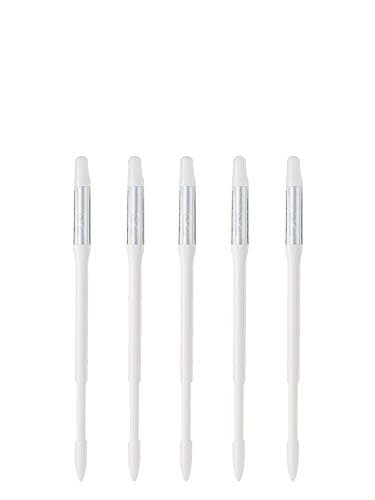
The size most houseplants actually need. Sustee publishes the medium as 7.09 inches long and intended for 3.5, 4, 5 and 6 inch pots - which covers the bulk of a normal collection, where the small size tops out at 3 inch pots.
#ad Price as of September 27, 2026, from Amazon. Prices change. How we make money.
Published specification
- Published pot sizes
- 3.5, 4, 5 and 6 in
- Length
- 7.09 in (0.39 x 0.31 in cross-section)
- How it reads
- White means the plant needs watering; blue means it has been watered
- Core life
- Approximately 6 to 9 months per refillable core
- Power
- None - published as maintenance-free with no battery
- Origin
- Made in Japan; design developed with Tokyo University of Agriculture
- Published accuracy or calibration standard
- Not published by the manufacturer
- Published pot sizes: Sustee published listing specification
- Length: Sustee published listing specification
- How it reads: Sustee published listing specification
- Core life: Sustee published listing specification
- Power: Sustee published description
- Origin: Sustee published listing specification
- Published accuracy or calibration standard: Checked the listing; no meter in this category publishes one
What is good about it
- Publishes the exact pot sizes it is built for, which almost no meter does
- Leave-in and continuous, so the reading is there whenever you walk past
- No battery, no app, nothing to charge or pair
- Five sticks covers a shelf for the price of one wireless sensor
What is not
- The core is a consumable - budget a refill every 6 to 9 months
- A two-state color change is coarser than a number
- Still no published accuracy figure, in common with the whole category
- 7 inches of stick is visible in a small decorative pot
Skip this one if
Skip it for pots above 6 inches; Sustee publishes a large size for those, and a stick that does not reach the root zone tells you about the surface instead.
How it scored
- Published specification
- 8.5
- Fits common pot sizes
- 10.0
- Continuous reading
- 10.0
- Running cost
- 5.5
- Value for money
- 8.0
- Overall
- 8.6 / 10
Our editorial score, from published specifications and computed intervals. Not a test result. Specification source: Sustee Aquameter medium retail listing.
Sustee Aquameter Leave-In Moisture Indicator, Set of 5 (Small)
Continuous monitoring of small pots without any electronics at all
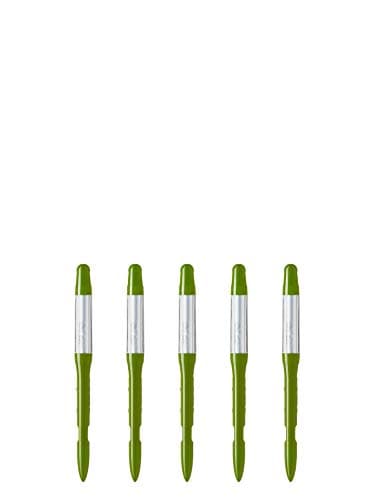
Not wireless, not electronic, and on this page deliberately. A leave-in stick that turns white when the pot needs water and blue when it does not, with a refillable core the maker publishes as lasting six to nine months. It answers the same question as everything above with no battery, no hub and no app.
#ad Price as of September 27, 2026, from Amazon. Prices change. How we make money.
Published specification
- How it reads
- Color change: white means the plant needs watering, blue means it has been watered
- Core life
- Approximately 6 to 9 months per refillable core
- Dimensions
- 4.7 in long (small size)
- Pot sizes
- Intended for 2, 2.5 and 3 inch pots; the maker suggests small succulents
- Pack size
- 5 sticks
- Development
- Design and function developed with Tokyo University of Agriculture
- Power
- None required
- Published accuracy or calibration standard
- Not published by the manufacturer
- How it reads: Sustee published listing specification
- Core life: Sustee published listing specification
- Dimensions: Sustee published listing specification
- Pot sizes: Sustee published listing specification
- Pack size: Sustee published listing specification
- Development: Sustee published listing specification
- Power: Sustee published description
- Published accuracy or calibration standard: Checked the listing; no meter in this category publishes one
What is good about it
- Leave-in and continuous, which is the one thing a handheld probe genuinely cannot do
- No battery, no hub, no app and no account
- Five sticks for less than one wireless sensor
- The maker names the university it developed the design with, which is more provenance than anything else here offers
What is not
- It is not wireless and will never send you a notification
- The small size is published for 2 to 3 inch pots, so a big floor plant needs the larger version
- The core is a consumable, replaced every 6 to 9 months
- A color change is a coarser signal than a number, which is either honest or frustrating depending on the reader
Skip this one if
Skip it if the actual requirement is being told about a plant while you are somewhere else. That is the one job this cannot do, and it is the only good reason to buy anything else on this page.
How it scored
- Published specification
- 7.5
- Probe reach
- 6.0
- Readability and alerts
- 5.0
- Value for money
- 9.5
- Measurement honesty
- 8.5
- Overall
- 8.0 / 10
Our editorial score, from published specifications and computed intervals. Not a test result. Specification source: Sustee Aquameter retail listing.
Sustee Aquameter Refill Inserts, Medium, 4 Sticks
Keeping existing Sustee sticks working past their first year
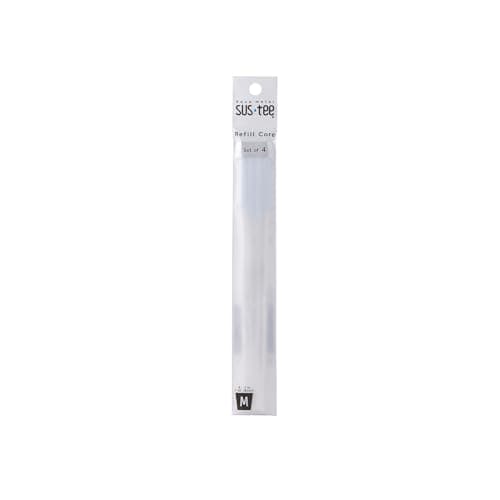
The consumable half of the product, and the reason to work out the running cost before buying in. Four medium inserts, published as replaced every 6 to 9 months, with the materials named: polycarbonate body and a preservative-treated nonwoven core.
#ad Price as of September 27, 2026, from Amazon. Prices change. How we make money.
Published specification
- Contents
- 4 replacement inserts (2 packs of 2), inserts only
- Replacement interval
- Every 6 to 9 months
- Materials
- Polycarbonate main body; nonwoven fabric treated with preservatives for the refill
- Size
- Medium, 7.1 in
- Origin
- Made in Japan
- Contents: IPPINKA published listing specification
- Replacement interval: IPPINKA published description
- Materials: IPPINKA published description
- Size: IPPINKA published listing specification
- Origin: IPPINKA published listing specification
What is good about it
- Publishes the materials, which is unusual candour for a consumable
- Refilling is cheaper and less wasteful than replacing whole sticks
- Same 6 to 9 month interval as the original cores, so the schedule is predictable
- Keeps a set of five sticks running for years
What is not
- Four inserts for a set of five sticks, so the maths never quite lines up
- Refills cost a significant fraction of a new set
- Inserts only - no bodies, so a cracked stick still needs replacing
- The preservative treatment is named but not specified
Skip this one if
Skip it if you have not yet bought the sticks. Work the refill cost into the decision first - over three years the consumable costs more than the original set.
How it scored
- Published specification
- 9.0
- Fits common pot sizes
- 8.0
- Continuous reading
- 8.0
- Running cost
- 4.0
- Value for money
- 6.5
- Overall
- 7.8 / 10
Our editorial score, from published specifications and computed intervals. Not a test result. Specification source: Sustee medium refill insert retail listing.
Questions people actually ask
- How does the Sustee Aquameter work?
It is a leave-in stick with a replaceable absorbent core. The window shows white when the surrounding mix has dried and blue when it has been watered. There is no battery and no electronics. Sustee states the color change depends on soil type, so the trigger point is relative to your mix rather than an absolute moisture percentage.
- How long does a Sustee last?
Sustee publishes approximately six to nine months per core, after which you replace the insert rather than the whole stick. Refills are sold four to a pack. Over three years the refills cost more than the original set of five sticks, which is worth pricing in before you buy.
- Which Sustee size do I need?
Match it to the pot. Sustee publishes the small at 4.7 inches for 2 to 3 inch pots, and the medium at 7.09 inches for 3.5 to 6 inch pots - the range most houseplants occupy. A larger size is published for bigger pots. An undersized stick reads the top of the pot rather than the root zone.
- Is the Sustee Aquameter accurate?
Sustee publishes no accuracy figure or calibration standard, and neither does any other meter we have checked in this category. It also states that the color change depends on soil type. Treat it as a reliable relative indicator for a given pot and mix, not as a calibrated measurement.
- Is it better than a normal moisture meter?
It is better at being there. A handheld probe gives a number but only when you remember to use it; the Sustee gives a state continuously without a battery. If you want a reading you can compare week to week, or want to be alerted while away, a probe or a wireless sensor suits you better.
Sources
Sources
- Sustee Aquameter published specification, via retail listing
- Sustee Aquameter medium published specification, via retail listing
- Sustee medium refill insert published specification, via retail listing
- Criscione and Holliday-Goulart, Properly Watering Container Houseplants, Virginia Cooperative Extension SPES-804 (2026)