Roundup
Best Cache Pots and Decorative Pot Covers
The tidiest way to keep a houseplant is also the easiest way to drown one. Ranked on the two things the listings usually leave out: what size pot actually fits, and where the water goes.
By Scooter M. - Enthusiast. Reads the manuals, compiles the specs, does the math. | Published
Disclosure
We earn a commission if you buy through our links. It does not change what we recommend or what you pay. Full disclosure.
The short answer
The problem with a pot that has no hole
A cachepot is a decorative outer pot with no drainage. That is not a design flaw - it is the entire point, because it keeps water off the furniture. The flaw is what happens next.
Water the plant in place and the runoff collects in the bottom of the cover, under the nursery pot, where you cannot see it. The mix wicks it back up, the base of the root ball stays saturated, and you get the wet, poorly drained condition NC State Extension names for root rot organisms. The mechanism is the same one we describe for reservoir pots, with one important difference: a reservoir pot is engineered with an air gap between water and roots, and a cachepot is not.
It is the same failure as a saucer left full, only worse, because a saucer is visible and a cachepot hides the evidence. Clemson Extension’s instruction for indoor plants - water until it drains, then do not let the pot stand in what came out - is harder to follow when you cannot see what came out.
How we ranked them
We have not filled these and watched them overflow. What follows is each maker’s published listing, judged on four things.
Does it publish what fits? First, and it is the question buyers actually have. A “6 inch” cachepot may or may not take a 6-inch nursery pot, because one figure is the outside and the other is the inside. Two products here publish enough to know.
Where does water go? A fitted liner, a sealed ceramic body, or nothing at all. Unlined natural fiber is the combination to be careful with.
Can you lift the plant out? Handles, weight and depth decide whether the correct watering routine is realistic or a nuisance you will abandon in a fortnight.
Then looks and price, which is, after all, why anyone buys one.
| Cover | Published fit | Liner | Handles | Drainage |
|---|---|---|---|---|
| Arcadia cover pot | 6 in nursery pot; 6.6 in top, 4.4 in base | Sealed plastic body | No | None, published as drillable |
| Seagrass with liner | 10 to 12 in nursery pots | Pre-fitted plastic | No | None |
| INGOFIN ceramic set | Outer 4, 5 and 6 in only | Sealed ceramic | No | None |
| HONCESTA jute | 8 to 10 in pots | Not published | Yes, reinforced | None |
| Blueming seagrass | 10 in pots, 10.5 in opening | Not included | No | None |
Sizing, and why the numbers disagree
Nursery pots are sold by their top diameter and they taper. As we found measuring trade pots, a pot sold as 6 inches is 6.7 inches across the rim and 5.1 across the base. A cachepot sold as 6 inches might be 6 inches across its own rim, which means the nursery pot will not go in.
Arcadia solves this the correct way by publishing both: a 6.6 inch top on the cover, and a statement that it fits standard 6-inch nursery pots. Blueming does the same thing more briefly with a published 10.5 inch opening for 10 inch pots. INGOFIN publishes only its outer sizes, which tells you what the pot looks like and nothing about what goes in it.
The safe rule when only the outer size is published: assume the inside is half an inch to an inch smaller, and buy a cover one nominal size up from your nursery pot.
Three ways to use one without drowning the plant
Lift it out. The correct method, and the reason handles matter. Take the nursery pot to a sink, water until it drains, let it stop dripping, and put it back. This also flushes salts, which watering in place never does.
Put a saucer inside. If lifting a heavy plant is not realistic, stand the nursery pot on a saucer inside the cover. You still have to empty it, but the pot base is not sitting in the runoff meanwhile.
Raise the pot. A few inches of gravel, a trivet or a couple of pot feet inside the cover keeps the drainage hole above whatever collects. It does not remove the water, and it does buy you time between checks.
What does not work is watering in place, in small amounts, hoping the plant uses it before it becomes a problem. That is how the surface stays wet enough to support fungus gnats while the lower root ball drowns.
Lined, sealed or neither
Sealed plastic or ceramic is the most predictable. Water goes in, nothing comes out, and it is on you to tip it. Both the Arcadia cover and the INGOFIN ceramics work this way, and INGOFIN deserves credit for publishing the advice to put a pad underneath on good furniture.
A fitted liner gives a natural-fiber basket the same behavior. The seagrass basket here publishes a seamless plastic liner, which is the difference between a cover that lasts and one that wicks water into your floorboards. Note the contradiction in its own listing, though: it claims the weave lets moisture evaporate, which a sealed liner largely prevents.
Unlined natural fiber is the risk. Jute and seagrass absorb, stain and eventually rot, and the water passes through to whatever is underneath. Two of these five publish no liner. They are perfectly good covers for a plant that sits on its own saucer inside them - and a slow disaster for one watered in place.
Matching a cover to the plant you own
Work from the nursery pot outward. A plant bought at a garden center is almost always in a 4, 6, 8 or 10 inch nursery pot, and those are the four numbers to shop against - not the size of the plant, which changes.
The published fits on this page cover three of them: Arcadia for 6 inch pots, HONCESTA for 8 to 10, the lined seagrass basket for 10 to 12. Nothing here is built for a 4 inch pot, which is the size most desk plants arrive in - for those, the INGOFIN ceramic set is the only option, and it publishes outer sizes only.
Height matters as much as width and is published even less. A cover deeper than the nursery pot swallows the plant and hides the rim you need to grip; a cover shallower than the pot leaves plastic showing, which defeats the purpose. Arcadia is the only product here publishing its own height, at 6.5 inches for a 6 inch pot that is typically around 6.9 inches tall - so the rim sits just proud, which is exactly right for lifting it out.
If it already has water in it
Most people find this page after discovering an inch of stale water at the bottom of a basket. The recovery is straightforward and worth doing properly.
Lift the nursery pot out and tip the cover. Let the pot drain somewhere it can - a sink, a bath, outdoors - for an hour rather than a minute, because the mix at the bottom is saturated and will keep releasing water. Check the roots while it is out: firm and pale is fine, brown and soft means the rot has started and the plant needs more than a dry cover.
Then change the routine rather than the pot. Extension guidance for houseplants is to water thoroughly and let the excess drain away, which a cachepot can only do if the inner pot comes out. If lifting is impractical, put the plant on a saucer inside the cover or raise it on pot feet so the drainage hole is never submerged.
The one thing not to do is compensate by watering less. A pot that never gets a thorough soak accumulates fertilizer salts, and the flushing that removes them only happens when water runs freely out of the bottom.
When to skip the cover entirely
If the plant is heavy enough that you will never lift it out, a cachepot is working against you. A large floor plant is better off in a pot with real drainage standing on a saucer you can see and empty, or in a reservoir planter designed for standing water with a proper air gap between the water and the roots.
That is the honest hierarchy. A reservoir planter is engineered for this problem. A saucer makes the water visible. A cachepot hides it - which is fine, as long as you are the kind of person who lifts the pot out.
The cheapest version of this idea
A cachepot does not have to be bought. Any watertight container wider than the nursery pot works - a ceramic mixing bowl, a metal bucket, a tin - provided you treat it the same way: lift the plant out to water, or stand it on something inside.
Cover pots outdoors fill themselves
One risk that applies to none of the indoor advice above. A cachepot left on a balcony or porch has no drainage, so rain fills it - and unlike a saucer, you cannot see that it has.
A plant can sit in several inches of rainwater for a week without anything looking wrong from above. If you use covers outdoors, drill the base (Arcadia publishes theirs as drillable), tip them after heavy rain, or accept that the cover is really a summer decoration to be brought in.
The honest cons on every pick
Arcadia cover pot. No drainage as supplied, no published capacity, one size only, and it looks like the plastic it is.
Seagrass with liner. A sealed liner is a bucket. The breathability claim contradicts the liner, and it is the priciest cover here.
INGOFIN ceramic. Publishes outer sizes only, so fit is guesswork. Sealed ceramic is unforgiving if you overfill, and the finish water-spots.
HONCESTA jute. No liner published, so it depends on a tray you supply. Natural fiber stains, and it is light enough for a tall plant to tip.
Blueming seagrass. No liner and no tray included - the listing says so - so without your own saucer the first thorough watering goes on the floor.
What we would buy
The Arcadia covers for a shelf of 6-inch plants, because knowing what fits is worth more than any finish. The lined seagrass basket for a floor plant, and the jute one with handles if that plant is going to the sink every fortnight.
Then the habit that makes any of them safe: lift, water, drain, replace. If that sounds like too much, buy a planter with drainage and a saucer instead - it is the same decision, made honestly.
Ranked picks
Quick picks
Ranked on published specifications and the computed refill interval, not on looks. Tap any row for the full write-up, including who should skip it.
| # | Product | Best for | Score | Price |
|---|---|---|---|---|
| 1 | 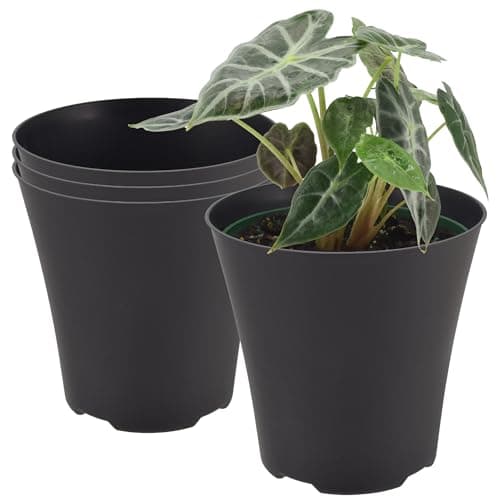 Arcadia Garden Cover Pot, Fits 6 in Nursery Pot, 4 PackDropping a standard 6-inch nursery pot straight in Arcadia Garden Cover Pot, Fits 6 in Nursery Pot, 4 PackDropping a standard 6-inch nursery pot straight in | Best overall, publishes the fit | 9.0 | $17.20 - View on Amazon |
| 2 | 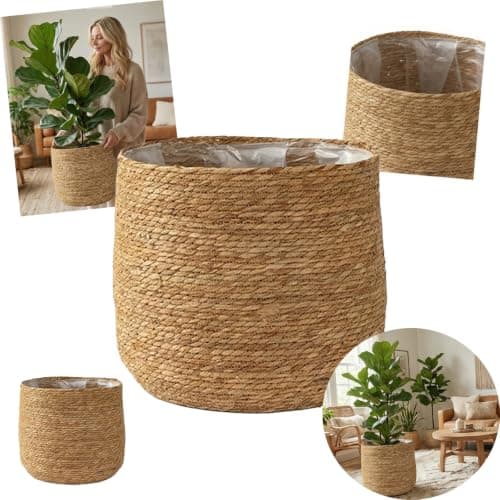 Woven Seagrass Planter Basket with Plastic Liner, 11.8 inA large floor plant where the cover has to survive real watering Woven Seagrass Planter Basket with Plastic Liner, 11.8 inA large floor plant where the cover has to survive real watering | Best for a large plant | 8.5 | $39.99 - View on Amazon |
| 3 | 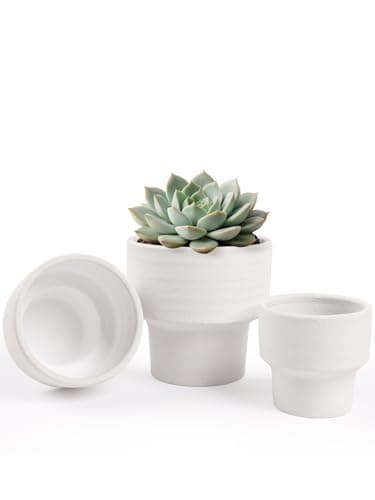 INGOFIN Ceramic Cachepot Set of 3 (4, 5, 6 in)A desk or shelf group where the pots are part of the decor INGOFIN Ceramic Cachepot Set of 3 (4, 5, 6 in)A desk or shelf group where the pots are part of the decor | Best looking on a desk | 8.0 | $19.99 - View on Amazon |
| 4 | 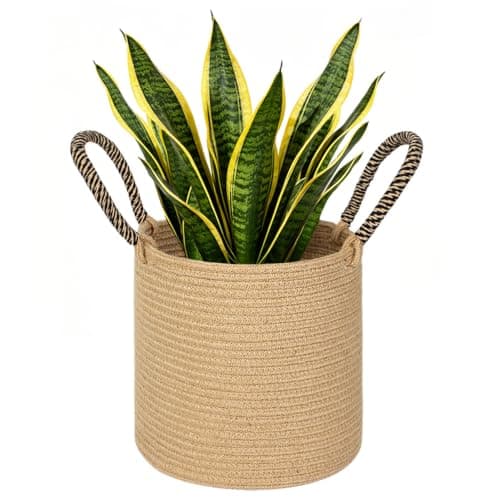 HONCESTA Woven Jute Plant Basket, 11 inA large plant you will carry to the sink to water HONCESTA Woven Jute Plant Basket, 11 inA large plant you will carry to the sink to water | Best handles for lift-out watering | 7.6 | $14.99 - View on Amazon |
| 5 | 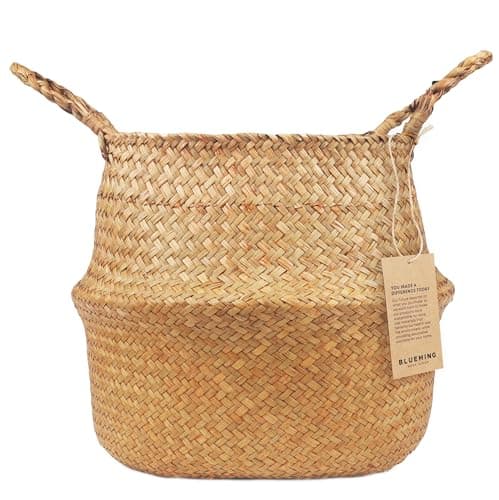 Blueming Home Decor Seagrass Planter Basket, 10 inA light cover for a plant that already sits on its own tray Blueming Home Decor Seagrass Planter Basket, 10 inA light cover for a plant that already sits on its own tray | Lightest, but bring your own tray | 7.3 | $23.99 - View on Amazon |
Scores are our editorial judgment from published specifications. They are not test results, and they are deliberately not marked up as ratings in this page’s structured data.
Pick #1 - Best overall, publishes the fit
Arcadia Garden Cover Pot, Fits 6 in Nursery Pot, 4 Pack
Dropping a standard 6-inch nursery pot straight in
The only cover here that publishes the three figures that decide whether your plant will actually sit in it - 6.6 inch top, 4.4 inch bottom, 6.5 inch tall - and states the nursery pot size it is built around. It also publishes something almost nothing else does: the base is drillable if you change your mind about drainage.
#ad Price as of September 27, 2026, from Amazon. Prices change. How we make money.
Published specification
- Published fit
- Standard 6 in nursery pots
- Dimensions
- 6.6 in top diameter, 4.4 in bottom, 6.5 in tall
- Drainage
- No drainage hole, published as drillable
- Intended use
- Indoor cover pot to protect surfaces; drop the nursery pot in without repotting
- Pack
- 4 covers
- Published fit: Arcadia published listing specification
- Dimensions: Arcadia published description
- Drainage: Arcadia published listing specification
- Intended use: Arcadia published description
- Pack: Arcadia published listing specification
What is good about it
- Publishes top diameter, bottom diameter, height and the nursery size it fits
- Drillable base, so it can become a real planter later
- Four covers means a shelf of mismatched nursery pots can look like a set
- Light enough to lift the whole thing to a sink without a second person
What is not
- No drainage hole as supplied, so runoff collects in the bottom where you cannot see it
- Plastic, and at this price it looks like plastic
- One size only - a 4 inch or 8 inch pot needs a different product
- No published capacity, so how much water it can hold before overflowing is unknown
Skip this one if
Skip it if you intend to plant directly into it. Without drilling, a sealed pot has no way to shed excess water, and the plant sits in whatever collects.
How it scored
- Published fit
- 10.0
- Water handling
- 7.0
- Lift-out access
- 9.0
- Looks
- 6.0
- Value for money
- 9.0
- Overall
- 9.0 / 10
Our editorial score, from published specifications and computed intervals. Not a test result. Specification source: Arcadia Garden 6-inch cover pot retail listing.
Pick #2 - Best for a large plant
Woven Seagrass Planter Basket with Plastic Liner, 11.8 in
A large floor plant where the cover has to survive real watering
A basket that publishes the detail most baskets leave out: a seamless plastic liner already fitted inside. That single feature is the difference between a decorative cover and a slowly rotting basket with a water stain under it.
#ad Price as of September 27, 2026, from Amazon. Prices change. How we make money.
Published specification
- Liner
- Pre-fitted seamless plastic inner liner
- Dimensions
- 11.8 x 11.8 in (30 x 30 cm)
- Published fit
- Standard 10 to 12 in nursery pots
- Material
- Natural seagrass and jute fibers
- Liner drainage
- None - the liner is sealed
- Liner: Published listing specification
- Dimensions: Published listing specification
- Published fit: Published description
- Material: Published description
- Liner drainage: Our reading of the published description
What is good about it
- The liner is published and pre-fitted, not an accessory you have to find
- Publishes the nursery pot range it takes, which most baskets do not
- Big enough for a fiddle leaf fig or monstera in a 10 to 12 inch pot
- Light to move for something that size
What is not
- A sealed liner means water collects invisibly under the nursery pot
- The listing claims the weave lets moisture evaporate, which the plastic liner largely prevents
- Natural fiber will still mark if water gets between liner and basket
- Most expensive cover on this page
Skip this one if
Skip it if you water heavily and forget to check. A lined basket is a bucket: whatever drains out of the pot stays there until you tip it out.
How it scored
- Published fit
- 9.0
- Water handling
- 8.0
- Lift-out access
- 7.0
- Looks
- 9.0
- Value for money
- 6.5
- Overall
- 8.5 / 10
Our editorial score, from published specifications and computed intervals. Not a test result. Specification source: Seagrass planter basket with liner retail listing.
Pick #3 - Best looking on a desk
INGOFIN Ceramic Cachepot Set of 3 (4, 5, 6 in)
A desk or shelf group where the pots are part of the decor
Three sandblasted ceramic covers in stepped sizes, sold honestly as cachepots rather than planters. The listing earns credit for a warning most makers leave out: put a pad underneath if the furniture matters.
#ad Price as of September 27, 2026, from Amazon. Prices change. How we make money.
Published specification
- Sizes
- 4, 5 and 6 in
- Drainage
- No drainage hole, published as intended to protect surfaces
- Maker's caveat
- Recommends placing a pad under the pot on expensive furniture
- Intended plants
- Small nursery pots and shallow-rooted plants such as pothos and succulents
- Material
- Sandblasted ceramic
- Sizes: INGOFIN published listing specification
- Drainage: INGOFIN published description
- Maker's caveat: INGOFIN published description
- Intended plants: INGOFIN published description
- Material: INGOFIN published listing specification
What is good about it
- Sold explicitly as a cachepot, so nobody is misled into planting directly into it
- Three coordinated sizes for a grouped display
- The furniture warning is published rather than discovered
- Ceramic is heavy enough that a top-heavy plant will not tip it
What is not
- No inner dimensions published, so which nursery pot fits is trial and error
- Ceramic with no drainage is the least forgiving combination if you overfill
- Sandblasted finish marks with water spots
- Small sizes only - nothing here suits a floor plant
Skip this one if
Skip it if you want to know what fits before it arrives. Only the outer sizes are published, and a 6-inch cachepot does not necessarily take a 6-inch nursery pot.
How it scored
- Published fit
- 5.0
- Water handling
- 6.5
- Lift-out access
- 8.0
- Looks
- 9.5
- Value for money
- 8.0
- Overall
- 8.0 / 10
Our editorial score, from published specifications and computed intervals. Not a test result. Specification source: INGOFIN ceramic cachepot set retail listing.
Pick #4 - Best handles for lift-out watering
HONCESTA Woven Jute Plant Basket, 11 in
A large plant you will carry to the sink to water
Jute rope with reinforced handles, published as fitting 8 to 10 inch pots. The handles are the reason it is here - moving a large plant to a sink to water it is the single habit that makes cache pots safe, and most baskets give you nothing to hold.
#ad Price as of September 27, 2026, from Amazon. Prices change. How we make money.
Published specification
- Dimensions
- 11 x 11 x 11 in
- Published fit
- Most 8 to 10 in flower pots
- Handles
- Built-in reinforced handles
- Material
- Durable jute rope
- Liner
- Not published
- Dimensions: HONCESTA published listing specification
- Published fit: HONCESTA published description
- Handles: HONCESTA published description
- Material: HONCESTA published description
- Liner: Checked on the HONCESTA listing
What is good about it
- Handles, which makes the lift-out-and-water routine realistic
- Publishes the pot size range it takes
- Cheapest cover on this page and the largest of the low-cost options
- Doubles as storage when the plant outgrows it
What is not
- No liner published, so any water that escapes goes straight into jute and then into the floor
- Natural fiber will stain and eventually rot if repeatedly wetted
- No published inner diameter, only the pot range
- Light enough that a tall plant can pull it over
Skip this one if
Skip it unless you keep the nursery pot on a saucer inside the basket, or lift it out to water. Unlined jute and standing water is a combination with one outcome.
How it scored
- Published fit
- 8.0
- Water handling
- 3.5
- Lift-out access
- 10.0
- Looks
- 8.5
- Value for money
- 9.0
- Overall
- 7.6 / 10
Our editorial score, from published specifications and computed intervals. Not a test result. Specification source: HONCESTA jute plant basket retail listing.
Pick #5 - Lightest, but bring your own tray
Blueming Home Decor Seagrass Planter Basket, 10 in
A light cover for a plant that already sits on its own tray
A collapsible seagrass basket that publishes the one measurement that decides fit - a 10.5 inch opening for 10 inch pots. It is the lightest and most packable cover here, and it has no liner at all, which the listing is at least open about by noting that pot and tray are not included.
#ad Price as of September 27, 2026, from Amazon. Prices change. How we make money.
Published specification
- Published fit
- 10 in pots; opening width 10.5 in
- Dimensions
- 11 in tall
- Material
- Handcrafted natural seagrass
- Storage
- Collapsible when not in use
- Liner and tray
- Not included, per the maker
- Published fit: Blueming published description
- Dimensions: Blueming published listing dimensions
- Material: Blueming published description
- Storage: Blueming published description
- Liner and tray: Blueming published description
What is good about it
- Publishes the opening width, which is the figure that actually decides fit
- Collapses flat for storage, unlike every rigid cover here
- Very light, so repositioning a big plant is easy
- States plainly that no pot or tray is included
What is not
- No liner, so it depends entirely on the tray you supply
- Seagrass marks and degrades with repeated wetting
- Light construction offers little resistance to a top-heavy plant
- No published height-to-base taper, so a tall narrow pot may sit low in it
Skip this one if
Skip it if the plant has no saucer of its own. This is a cover, not a container, and without a tray inside it the first thorough watering ends up on the floor.
How it scored
- Published fit
- 9.0
- Water handling
- 3.0
- Lift-out access
- 8.5
- Looks
- 8.0
- Value for money
- 7.5
- Overall
- 7.3 / 10
Our editorial score, from published specifications and computed intervals. Not a test result. Specification source: Blueming Home Decor seagrass planter basket retail listing.
Questions people actually ask
- What is a cache pot?
A decorative outer pot with no drainage hole, designed to hide a plain nursery pot and protect the surface underneath. The plant stays in its nursery pot and the cachepot is just the cover. It is a good system as long as you lift the inner pot out to water, or at minimum stand it on a saucer inside the cover.
- Can you plant directly into a cache pot?
We would not. With no drainage hole there is nowhere for excess water to go and no way to flush accumulated salts, so the base of the root ball stays saturated after every watering. If a cover is the pot you want to use, buy one published as drillable - the Arcadia cover here is - and put a hole in it.
- What size cache pot do I need for a 6-inch plant?
One published as fitting a 6-inch nursery pot, which is not the same as one labeled 6 inches. Nursery pots taper and are measured at the rim, so a 6-inch pot is about 6.7 inches across the top. Arcadia publishes a 6.6 inch opening and states the fit; where only the outer size is given, go one nominal size up.
- Do cache pots cause root rot?
Not by themselves - water left in the bottom does. The pot hides the runoff under the nursery pot, the mix wicks it back up, and the lower roots stay wet. Lift the inner pot out to water, or raise it on pot feet or a saucer inside the cover so the drainage hole is never underwater.
- Do woven baskets need a liner?
Yes, unless the plant sits on its own saucer inside. Jute and seagrass absorb water, stain, and eventually rot, and whatever passes through lands on the floor. Some baskets publish a fitted plastic liner; the ones here that do not are covers for a potted plant that already has a tray.
Sources
Sources
- Arcadia Garden 6-inch cover pot published specification, via retail listing
- Seagrass planter basket with liner published specification, via retail listing
- INGOFIN ceramic cachepot set published specification, via retail listing
- HONCESTA jute plant basket published specification, via retail listing
- Blueming Home Decor seagrass planter basket published specification, via retail listing
- Daughtry, Watering but Not Overwatering Houseplants, NC State Extension (2022)