Roundup
Best Nursery Pots
Trade pots are sold by a gallon figure that is not a measurement. Here is what the published dimensions actually work out to, and which packs tell you enough to plan around.
By Scooter M. - Enthusiast. Reads the manuals, compiles the specs, does the math. | Published
Disclosure
We earn a commission if you buy through our links. It does not change what we recommend or what you pay. Full disclosure.
The short answer
The gallon on the label is not a gallon
Nursery pots are sold in trade sizes, and a trade gallon is a name rather than a measurement. Most buyers never notice, because nothing on the pot invites you to check - but one listing here publishes enough to do the arithmetic.
GroTheory gives three figures for its 1-gallon pot: 6.7 inches across the top, 5.1 inches across the bottom, 6.9 inches tall. Run those through the volume of a tapered pot and you get about 190 cubic inches. A US gallon is 231 cubic inches. So the pot holds roughly 0.8 gallons, or about 3.1 liters.
That is not an accusation of dishonesty - trade sizing has worked this way for decades, and every nursery in the country uses the same convention. It matters for two practical reasons. If you are buying potting mix by volume, a hundred “1-gallon” pots need about 80 gallons of mix, not 100. And if you are matching a pot to a plant, the published diameter and depth tell you far more than the gallon figure does.
| Pot | Published size | Drainage holes | Pack | Clear or black |
|---|---|---|---|---|
| CARPATHEN square | 3.5 x 3.5 in, 3.9 in tall | 4 | 60 | Black |
| GroTheory 1 gal | 6.7 in top, 5.1 in base, 6.9 in tall (about 0.8 gal) | 12 | 100 | Black |
| Bluepro clear | 5, 6, 8 and 10 in | Base openings, count not published | 12 | Clear |
| Gro Pro 3 gal tall | Not published | Not published | 1 | Black |
| Tulpeed square | Listing says both 4 in and 2 in | 20 | 50 | Black |
How we ranked them
We have not grown a season in these. What follows is each maker’s published listing, judged on what a grower actually plans around.
Published dimensions first. Not the trade size - the real numbers. Diameter and depth decide whether a pot fits a tray, a shelf or a cachepot, and whether it holds enough mix for the plant going into it.
Drainage second. Nursery pots exist to drain freely. Hole count varies from four to twenty across this page, and more holes means less chance of the saturated base layer that starts root rot.
Tray fit third. If the pots will sit on a 1020 flat or a heat mat, how many fit is the number that decides your whole bench layout. One maker publishes it.
Then durability and price. Trade pots are semi-disposable, but injection-molded plastic lasts years longer than thermoformed.
Buying by the flat
If you grow at any scale, the unit to think in is the 1020 flat rather than the pot. Eighteen 3.5-inch squares fill one, which sets how many seedlings a shelf, a heat mat or a grow light actually supports - and it is the number that stops you buying pots that will not fit the trays you already own.
What you are not paying for
Nursery pots are the cheapest containers in the hobby because they leave out everything that is not structural: no saucer, no finish, no UV stabilizer in most cases, and no pretence of matching your furniture. A trade pot is designed to be filled by machine, stacked wet, shipped, and eventually recycled.
That is worth knowing because it sets expectations honestly. Thin walls flex - which is a feature when you are removing a root ball and a nuisance when you are carrying one. Black plastic degrades in years of direct sun rather than decades. And nothing here is food-safe, weatherproofed or warrantied in the way a garden planter is.
Square or round, black or clear
Square pots waste less bench space - they tessellate, where round pots leave gaps - and they resist tipping. That is why most propagation benches run square and most retail displays run round.
Black is the nursery default for a reason: it blocks light to the root zone, which stops algae growing on the inside of the pot wall. The cost is heat. A black pot in direct summer sun can cook roots at the pot wall, which is why commercial growers space and shade their pots.
Clear reverses both. You can see root development and moisture - genuinely useful indoors, and the same argument we make for clear orchid pots - at the cost of algae wherever light meets damp medium. Indoors that trade is usually worth it; outdoors it rarely is.
Flexibility is a feature, not cheapness
Three of these listings mention the plastic flexing, and it reads like an excuse for thin walls. It is not. A pot you can squeeze releases a root ball intact; a rigid one has to be pulled, and the plant comes out by the stem.
That matters most at the point where seedlings move up a size, which extension guidance puts shortly after the first true leaves. Our seed tray page covers the cell sizes that come before this, and the mix to fill them with is a separate decision again.
When to pot on, and by how much
The mistake that wastes a pack of pots is jumping several sizes at once. University of Minnesota Extension’s guidance for seedlings outgrowing their cells is to move them into containers 1 to 2 inches wider in diameter - not into the biggest pot you own.
The reason is the same physics this whole site runs on. A large volume of mix around a small root ball holds water the roots cannot reach, and that unused reservoir stays wet for days. It is the condition root rot organisms need, created by generosity rather than neglect.
In practice that means a seedling moves from a 3.5-inch square into something around 5 inches, then into a 6.7-inch trade pot, rather than going straight from a cell to a gallon. The published dimensions on these listings are what let you plan that ladder rather than guess it.
The signal to move is roots showing at the drainage holes, or a plant that dries out noticeably faster than its neighbors. Clemson Extension’s advice on transplanting seedlings puts the timing shortly after the first true leaves for cells; for established plants the pot itself tells you.
Wash them, and why it matters more than it sounds
Every maker here publishes reusability as a selling point, and every one of them leaves out the step that makes reuse safe. Old mix and root debris left in a pot carry the fungi and water molds that kill seedlings.
Clemson Extension notes that soilless mixes reduce soil-borne diseases such as damping-off, which is precisely why reusing a pot full of last season’s residue undoes the advantage of buying a clean mix in the first place. The fix is unglamorous: empty them, scrub the residue off, rinse, and let them dry.
Polypropylene pots take that treatment for years. Polystyrene goes brittle with age and cold, and injection-molded trade pots outlast both - which is the honest case for paying more per pot when the pots live outdoors.
Nursery pots are not display pots
Everything on this page is a growing container: thin, black, functional, designed to be reused and eventually recycled. None of it is meant to sit in a living room.
The usual arrangement is to grow in a nursery pot and drop it inside something decorative, which is a genuinely good system as long as you lift the inner pot out to water and let it drain. The saucer page covers what happens when runoff has nowhere to go, and it is the same failure mode either way.
If the plan is to plant directly into something attractive, ceramic pots and reservoir planters are the two pages to read instead - and both publish more about themselves than the trade pots here do.
The pots your plants already arrived in
Most houseplants are sold in a nursery pot inside something decorative, which means you already own a stack of these. They are worth keeping and worth checking.
Check the drainage holes are clear - retail displays sit pots in sleeves and trays for weeks, and compacted mix or a stuck label will block the base. Check the root ball is not circling the pot wall, which is the sign the plant needed potting on before you bought it. And check the mix surface for the fungus gnat larvae that thrive in nursery conditions, because an infestation usually arrives with a plant rather than appearing spontaneously.
Trade pots that arrive with plants are usually thinner than the ones sold in packs, because they were made for a single journey. They are fine as liners inside a decorative cover and less good as long-term homes for anything heavy.
How many, and which sizes
Multipacks are the only sensible way to buy these. The per-pot cost of a hundred pack is a fraction of a single pot, and the sizes you need are dictated by what you grow rather than by taste.
A practical starting set for a home grower is one pack of 3.5-inch squares for seedlings and cuttings, and one pack of the 6.7-inch trade “gallon” pots for potting on. That covers the two moves most plants make in their first year. Larger trade sizes - 3 gallon and up - are worth buying one at a time as specific plants need them, which is where a heavy-duty injection-molded pot earns its price.
The honest cons on every pick
CARPATHEN. A seedling size only, four drainage holes where others give twelve or twenty, and polystyrene is brittle in cold.
GroTheory. The gallon label overstates the real volume by about a fifth. Thin walls, black plastic in sun, and a hundred pots to store.
Bluepro clear. Algae on the inside wherever light hits damp mix. No published wall thickness, only three pots per size, and the highest price per pot here.
Gro Pro. Publishes no dimensions at all, and sells one pot at a time at a price where others sell fifty.
Tulpeed. The listing calls the same pots 4 inch and 2 inch, with no dimensions to settle it - which makes planning around them impossible.
What we would buy
A pack of CARPATHEN squares and a pack of GroTheory trade gallons covers almost everything a home grower does in a year, for less than the cost of two decorative pots. Add clear pots only for plants that live indoors where you want to watch the roots.
And whatever the label says, plan with the published dimensions. A pot is a volume and a depth, not a word.
Ranked picks
Quick picks
Ranked on published specifications and the computed refill interval, not on looks. Tap any row for the full write-up, including who should skip it.
| # | Product | Best for | Score | Price |
|---|---|---|---|---|
| 1 | 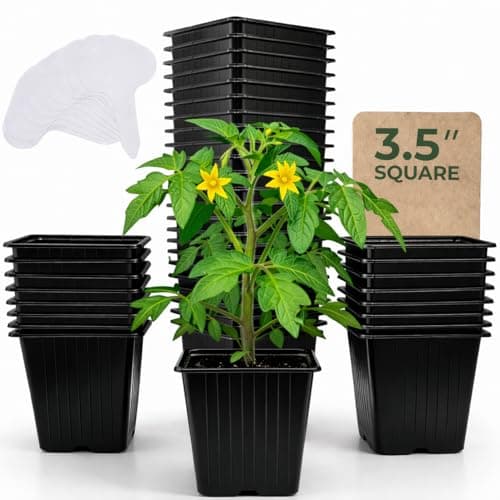 CARPATHEN Square Nursery Pots, 3.5 in, 60 PackSeedlings and cuttings on a standard 1020 tray CARPATHEN Square Nursery Pots, 3.5 in, 60 PackSeedlings and cuttings on a standard 1020 tray | Best overall, full spec sheet | 9.0 | $13.35 - View on Amazon |
| 2 | 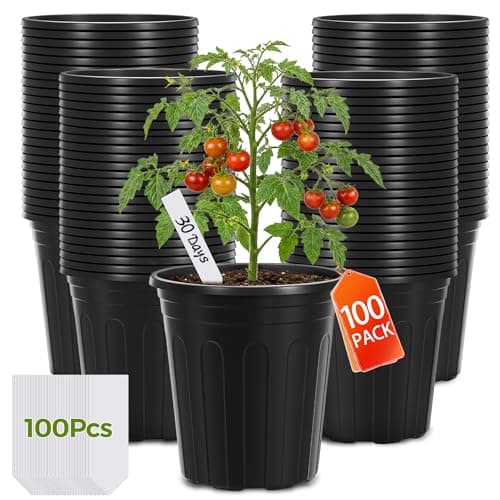 GroTheory 1-Gallon Nursery Pots, 100 PackPotting on a nursery's worth of plants at the lowest cost per pot GroTheory 1-Gallon Nursery Pots, 100 PackPotting on a nursery's worth of plants at the lowest cost per pot | Best value, and it publishes the taper | 8.6 | $29.99 - View on Amazon |
| 3 | 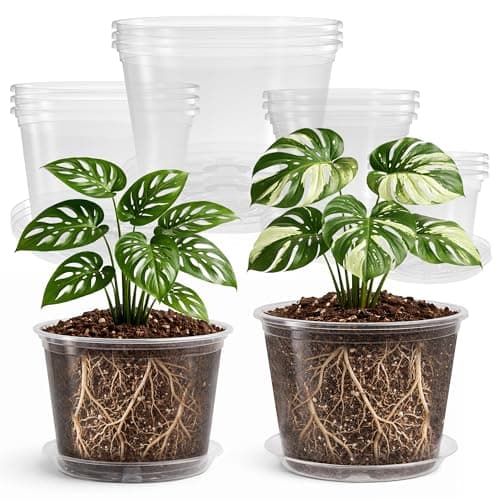 Bluepro Clear Nursery Pots with Saucers, 12 Pack (5, 6, 8, 10 in)Indoor plants you want to check without unpotting Bluepro Clear Nursery Pots with Saucers, 12 Pack (5, 6, 8, 10 in)Indoor plants you want to check without unpotting | Best for indoor plants | 8.4 | $29.99 - View on Amazon |
| 4 | 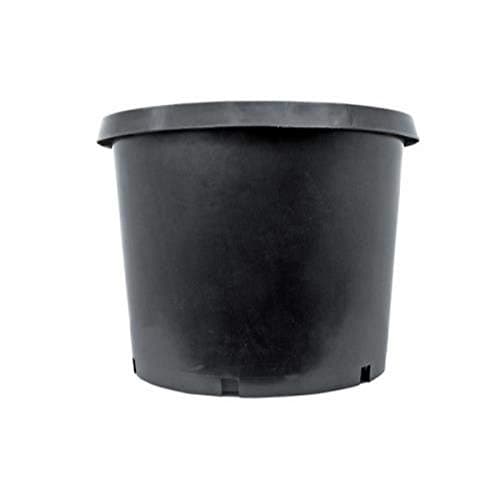 Gro Pro Premium Tall Nursery Pot, 3 GallonOne large plant that will be moved around a lot Gro Pro Premium Tall Nursery Pot, 3 GallonOne large plant that will be moved around a lot | Toughest, for one big plant | 7.6 | $12.61 - View on Amazon |
| 5 | 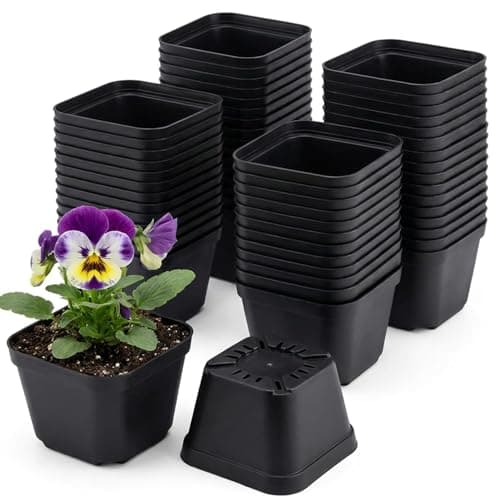 Tulpeed Square Nursery Pots, 50 PackBulk seedling pots if you can live with unclear sizing Tulpeed Square Nursery Pots, 50 PackBulk seedling pots if you can live with unclear sizing | Cheapest, if sizing does not matter | 7.0 | $12.99 - View on Amazon |
Scores are our editorial judgment from published specifications. They are not test results, and they are deliberately not marked up as ratings in this page’s structured data.
Pick #1 - Best overall, full spec sheet
CARPATHEN Square Nursery Pots, 3.5 in, 60 Pack
Seedlings and cuttings on a standard 1020 tray
The only nursery pot here that publishes everything a grower actually needs: 3.5 inches square by 3.9 inches tall, four drainage outlets, reinforced PS, and the figure nobody else gives - 18 pots to a standard 1020 flat. That last number is what decides whether your shelf, tray and heat mat all work together.
#ad Price as of September 27, 2026, from Amazon. Prices change. How we make money.
Published specification
- Dimensions
- 3.5 x 3.5 in, 3.9 in tall
- Pots per 1020 flat
- 18
- Drainage
- 4 inlaid drainage outlets per pot
- Material
- Reinforced PS, published as CAL65 compliant and flexible for root-ball release
- Pack
- 60 pots with 10 reusable labels
- Dimensions: CARPATHEN published description
- Pots per 1020 flat: CARPATHEN published description
- Drainage: CARPATHEN published description
- Material: CARPATHEN published description
- Pack: CARPATHEN published listing specification
What is good about it
- Publishes dimensions, drainage count, material and pots-per-flat - a complete spec sheet
- Square pots waste less bench space than round ones and do not tip
- Flexible walls, so a root ball pops out instead of being pulled by the stem
- Labels included, which sounds trivial until you have 60 unmarked pots
What is not
- 3.5 inches is a seedling size - anything established needs potting on quickly
- Four drainage holes is fewer than some competitors offer
- Polystyrene is more brittle in cold than the PP pots here
- Black plastic hides both roots and moisture
Skip this one if
Skip it if you are potting on rather than starting. These are the size you move plants out of, not into.
How it scored
- Published dimensions
- 10.0
- Drainage
- 8.0
- Fits standard trays
- 10.0
- Durability
- 7.0
- Value for money
- 9.5
- Overall
- 9.0 / 10
Our editorial score, from published specifications and computed intervals. Not a test result. Specification source: CARPATHEN 60-pack square nursery pot retail listing.
Pick #2 - Best value, and it publishes the taper
GroTheory 1-Gallon Nursery Pots, 100 Pack
Potting on a nursery's worth of plants at the lowest cost per pot
A hundred pots at a price that makes them near-disposable, and - unusually - the listing publishes the full taper: 6.7 inch top, 5.1 inch bottom, 6.9 inches tall. Those three figures let you check the gallon on the label, and the answer is instructive: it works out to about 0.8 US gallons, not one.
#ad Price as of September 27, 2026, from Amazon. Prices change. How we make money.
Published specification
- Dimensions
- 6.7 in top diameter, 5.1 in bottom, 6.9 in tall
- Actual volume
- About 190 cubic inches - roughly 0.8 US gallons (3.1 liters)
- Drainage
- 12 small holes in the base
- Material
- Flexible plastic, published as returning to shape after flexing
- Pack
- 100 pots with 100 plant labels
- Dimensions: GroTheory published description
- Actual volume: Our arithmetic from the three published dimensions
- Drainage: GroTheory published description
- Material: GroTheory published description
- Pack: GroTheory published listing specification
What is good about it
- Publishes top diameter, bottom diameter and height, so the real volume is checkable
- Twelve drainage holes is the most generous drainage on this page
- Flexible enough to squeeze a root ball out without damaging it
- Cheapest per pot of anything here by a wide margin
What is not
- The 1-gallon label is nominal: the published dimensions work out to about 0.8 gallons
- Thin walls - these are trade pots, not display pots
- Black plastic gets hot in direct summer sun, which cooks roots at the pot wall
- A hundred pots is a storage problem if you needed ten
Skip this one if
Skip it if you are buying by the gallon for a recipe - for potting mix volumes or plant sizing, use the published dimensions rather than the number on the label.
How it scored
- Published dimensions
- 10.0
- Drainage
- 10.0
- Fits standard trays
- 6.0
- Durability
- 5.5
- Value for money
- 10.0
- Overall
- 8.6 / 10
Our editorial score, from published specifications and computed intervals. Not a test result. Specification source: GroTheory 100-pack 1-gallon nursery pot retail listing.
Pick #3 - Best for indoor plants
Bluepro Clear Nursery Pots with Saucers, 12 Pack (5, 6, 8, 10 in)
Indoor plants you want to check without unpotting
Clear pots in four sizes with a matching saucer for every one, which makes this the set to buy if the pots are staying indoors. Transparent walls turn root development and soil moisture into something you can check before watering rather than after.
#ad Price as of September 27, 2026, from Amazon. Prices change. How we make money.
Published specification
- Sizes
- 3 each of 5, 6, 8 and 10 in
- Saucers
- One matching saucer per pot
- Transparency
- Published as letting you check root development and soil moisture
- Drainage
- Base openings, published as suited to use with the saucers
- Flexibility
- Flexes under light pressure to help release the root ball
- Wall thickness
- Not published
- Sizes: Bluepro published listing specification
- Saucers: Bluepro published description
- Transparency: Bluepro published description
- Drainage: Bluepro published description
- Flexibility: Bluepro published description
- Wall thickness: Checked on the Bluepro listing
What is good about it
- Clear walls show root growth and moisture, which black nursery pots cannot
- Saucers included for every pot, so nothing marks a windowsill
- Four sizes, so a plant can be potted on within the same set
- Flexible enough for clean root-ball removal
What is not
- Light reaching roots encourages algae on the inside of the pot
- No published wall thickness, and clear plastic is usually thinner than black
- Twelve pots across four sizes is only three of each
- Dearest per pot on this page
Skip this one if
Skip it for outdoor growing. Clear pots in sunlight grow algae and heat the root zone, which is exactly why commercial nurseries use black.
How it scored
- Published dimensions
- 7.0
- Drainage
- 7.5
- Fits standard trays
- 5.0
- Durability
- 6.5
- Value for money
- 7.0
- Overall
- 8.4 / 10
Our editorial score, from published specifications and computed intervals. Not a test result. Specification source: Bluepro 12-pack clear nursery pot retail listing.
Pick #4 - Toughest, for one big plant
Gro Pro Premium Tall Nursery Pot, 3 Gallon
One large plant that will be moved around a lot
An injection-molded trade pot with a grip lip, sold one at a time - the kind of pot that survives being dragged across concrete for several seasons. It publishes almost nothing beyond that, which is the price of buying professional rather than consumer packaging.
#ad Price as of September 27, 2026, from Amazon. Prices change. How we make money.
Published specification
- Nominal size
- 3 gallon, tall profile
- Construction
- Injection molded, published as heavy duty thick black plastic
- Handling
- Grip lip
- Pack
- Sold as a single unit
- Dimensions
- Not published in the listing text
- Nominal size: Gro Pro published listing specification
- Construction: Gro Pro published description
- Handling: Gro Pro published description
- Pack: Gro Pro published listing specification
- Dimensions: Checked on the Gro Pro listing
What is good about it
- Injection molded rather than thermoformed, which is a genuine durability difference
- A grip lip makes a heavy wet pot far easier to lift
- Tall profile suits deep-rooted plants better than a squat 3-gallon
- A known trade brand rather than an anonymous import
What is not
- No published dimensions, so the tall profile cannot be checked against a shelf
- Sold singly, so covering a collection costs many times the multipacks here
- Like every nursery pot, the gallon figure is nominal rather than measured
- Black plastic, so no view of roots or moisture
Skip this one if
Skip it if you need several. Buying one heavy-duty pot at a time is how a potting shed ends up with a dozen mismatched sizes and no spares.
How it scored
- Published dimensions
- 3.0
- Drainage
- 6.0
- Fits standard trays
- 5.0
- Durability
- 9.5
- Value for money
- 6.0
- Overall
- 7.6 / 10
Our editorial score, from published specifications and computed intervals. Not a test result. Specification source: Gro Pro 3-gallon tall nursery pot retail listing.
Pick #5 - Cheapest, if sizing does not matter
Tulpeed Square Nursery Pots, 50 Pack
Bulk seedling pots if you can live with unclear sizing
Fifty square PP pots with a published 20 drainage holes each - more than any other pot here - at the lowest outlay on the page. The reason it ranks last is the listing itself: the title sells them as 4 inch and a bullet calls them 2 inch, and no dimensions resolve it.
#ad Price as of September 27, 2026, from Amazon. Prices change. How we make money.
Published specification
- Stated size
- Titled as 4 in; the listing text also calls them 2 in pots
- Drainage
- 20 holes per pot
- Material
- PP, published as reusable across seasons without deforming
- Shape
- Square, published as more stable against tipping
- Pack
- 50 pots
- Stated size: Checked on the Tulpeed listing
- Drainage: Tulpeed published description
- Material: Tulpeed published description
- Shape: Tulpeed published description
- Pack: Tulpeed published listing specification
What is good about it
- Twenty drainage holes per pot is the most generous drainage here
- PP rather than PS, so they flex in the cold instead of cracking
- Square footprint packs tightly and resists tipping
- Lowest total price on this page
What is not
- The listing contradicts itself on size - 4 inch in the title, 2 inch in the text
- No height, top or bottom diameter published to settle it
- No labels or tray-fit figure, unlike the CARPATHEN set
- Black plastic, so no view of the root ball
Skip this one if
Skip it if the pots have to fit something specific - a tray, a shelf, a cachepot. You cannot plan around a size the listing cannot state consistently.
How it scored
- Published dimensions
- 2.0
- Drainage
- 10.0
- Fits standard trays
- 5.0
- Durability
- 7.5
- Value for money
- 9.5
- Overall
- 7.0 / 10
Our editorial score, from published specifications and computed intervals. Not a test result. Specification source: Tulpeed 50-pack square nursery pot retail listing.
Questions people actually ask
- How much does a 1-gallon nursery pot actually hold?
Less than a gallon. Using the three dimensions GroTheory publishes for its pot - 6.7 in top, 5.1 in base, 6.9 in tall - the volume works out to about 190 cubic inches, and a US gallon is 231. That is roughly 0.8 gallons, or 3.1 liters. Trade sizing is a naming convention, so buy mix by the pot’s real dimensions rather than by the number on the label.
- Are square or round nursery pots better?
Square for benches and trays, round for display. Square pots tessellate, so more fit a 1020 flat and none of them tip; CARPATHEN publishes 18 to a flat. Round pots waste the corners but suit retail shelves and cachepots. For growing, square wins on every practical measure except looks.
- Should nursery pots be black or clear?
Black outdoors, clear indoors. Black blocks light and stops algae on the pot wall, which is why nurseries use it - the trade-off is heat in direct sun. Clear lets you see root development and moisture, which is genuinely useful on a windowsill, at the cost of algae growth wherever light reaches damp medium.
- How many drainage holes should a nursery pot have?
More is better, within reason. The pots here range from four holes to twenty. A free-draining base stops the saturated bottom layer that starts root rot, and it matters more in a pot standing on a solid surface than one on a bench. What matters as much is that the holes are not blocked - by a saucer full of water, a cachepot, or compacted mix.
- Can you reuse nursery pots?
Yes, and most makers here publish reusability as a feature. Wash them between uses: old mix and root debris carry the fungi and water molds that cause damping-off in seedlings. Polypropylene pots survive cold better than polystyrene, and injection-molded trade pots outlast both.
Sources
Sources
- CARPATHEN square nursery pot published specification, via retail listing
- GroTheory 1-gallon nursery pot published specification, via retail listing
- Bluepro clear nursery pot published specification, via retail listing
- Gro Pro 3-gallon tall nursery pot published specification, via retail listing
- Tulpeed square nursery pot published specification, via retail listing
- Plants Grown in Containers, NC State Extension Gardener Handbook chapter 18