Guide
Capillary Mats for Watering Plants While Away
No pump, no batteries, no valve and nothing to fail. Its weak point is the tray, and its wrong plant is the succulent.
By Scooter M. - Enthusiast. Reads the manuals, compiles the specs, does the math. | Published
Disclosure
We earn a commission if you buy through our links. It does not change what we recommend or what you pay. Full disclosure.
The short answer
What it actually is
Commercial greenhouses have used capillary matting for decades, and the domestic version is the same idea shrunk to a windowsill. A synthetic felt mat lies in or beside a shallow tray. One edge, or the whole underside, stays in contact with standing water. Water climbs through the felt by capillary action and stops there until something drier touches it.
That something is your potting mix, reaching down through the drainage holes in the base of the pot. Water moves from the wetter felt into the drier mix, and it keeps moving for as long as the mix is drier than the mat. When the mix is saturated the gradient disappears and transfer effectively stops. The plant, in other words, sets the rate.
It is the same physics as the wick in a self-watering planter, with the reservoir moved outside the pot and shared between several plants at once.
What one tray realistically covers
The arithmetic is the same as everywhere else on this site: tank divided by draw. Six 4-inch pots each take about 100 ml per thorough watering, so a 2 liter tray holds about 3.3 waterings per pot. At the published tropical cadence of once or twice a week, that is roughly 12 to 23 days.
| Setup | Pots covered | Computed cover | Main risk |
|---|---|---|---|
| 2 liter tray, 4-inch pots | About six | 12 to 23 days | Open-tray evaporation in a sunny window |
| 2 liter tray, 6-inch pots | Two or three | About 6 to 12 days | Bigger pots drain the same tray far faster |
| Larger basin, mixed pots | Whatever fits flat | Set by the basin | Pots must all sit flat and have drainage holes |
Be honest with yourself about the second row. Capillary matting is a small-pot technique. The moment the pots get to 6 inches the same tray is covering a long weekend rather than a fortnight, and at that size a terracotta spike with a bottle gives you a bigger reservoir per plant for about the same money.
The two ways it fails
Evaporation from the tray. This is the big one and it is entirely predictable. An open tray of water in a sunny south-facing window loses volume to the air as well as to the plants, and in a warm room it can lose a great deal of it. The mitigation is straightforward: put the whole arrangement in bright indirect light rather than direct sun, use a deeper basin than looks necessary, and cover any part of the water surface that is not doing work. That also cuts the ordinary consequence of standing water indoors, which is mosquito larvae.
Loss of contact. The mat has to touch the mix, not the pot. Three things break that contact: a pot with no drainage holes, a pot with feet or a ridged base that holds it off the felt, and a thick layer of decorative gravel or bark between the mix and the drainage holes. All three produce the same symptom - a wet mat, a full tray and a bone-dry plant. Check by lifting a pot after a day and looking at whether the mix at the base has darkened.
Who should not use one
Succulents and cacti. Their published cadence is once or twice a month, and their whole adaptation is to survive a dry period. Continuous moisture at the base of the pot is precisely the condition NC State Extension names for root rot - Pythium, Phytophthora, Rhizoctonia and Fusarium all thrive in wet, poorly drained soil. A capillary mat under a succulent is not a slow win, it is a slow loss.
The same caution, more mildly, applies to snake plants, ZZ plants and hoyas, for exactly the reasons that keep them out of self-watering pots. If your collection is mostly drought-adapted, a device that stops delivering when the soil is wet - a ceramic cone or a terracotta spike - is a much better fit than one that keeps a constant supply on tap.
What it is genuinely best at
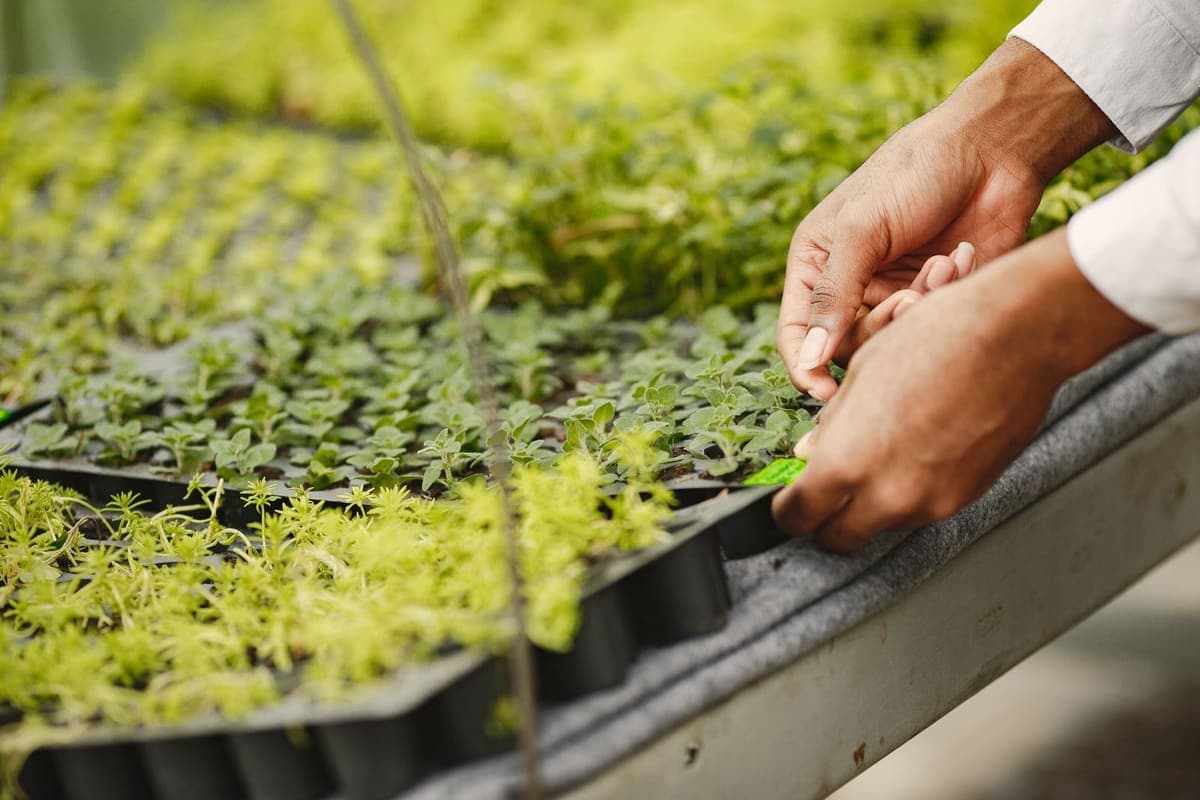
Seedlings and propagation trays. This is the use case the technique was invented for. Bottom watering avoids disturbing a seed surface, keeps the mix evenly moist, and keeps the surface itself drier than top-watering does, which discourages damping-off and fungus gnats.
A windowsill of small tropicals. Ferns, calathea and other plants that hate drying out are exactly the plants a constant supply suits, and small pots are where the arithmetic works.
Anyone who does not trust a pump. There is nothing here to fail. No battery to go flat, no emitter to clog, no cone to de-aerate. Compared with a timer-driven watering system, the failure mode of a capillary mat is gradual and visible rather than sudden and silent.
Setting one up properly
Cut the mat to sit flat in the tray with an edge running up the side if your tray is deep, so it can lift water. Soak the mat thoroughly before you place anything on it: a dry mat has air in its pores and will not start wicking on its own, the same priming problem a new self-watering planter has. Water every pot from the top once, so the mix is already moist and the capillary path is continuous.
Then stand the pots on it, press them down so the mix at the drainage holes is actually in contact, and fill the tray. Do this a week before you travel rather than the night before. A week of watching tells you your real evaporation rate, which is the only number on this page that depends on your house rather than on arithmetic.
The verdict
For a tray of small, moisture-loving pots, capillary matting is the most dependable thing in this section, and it costs almost nothing per plant. For big pots, for succulents, or for a sunny window with an open tray, it is the wrong tool - the head-to-head against globes and drip systems sets out which of those to reach for instead.
What we would buy for this
The gear that fits this problem
Chosen from the same registry as our roundups, on published specifications and the computed refill interval.
Capillary Matting for Plant Trays
A tray of small pots on a windowsill while you are away
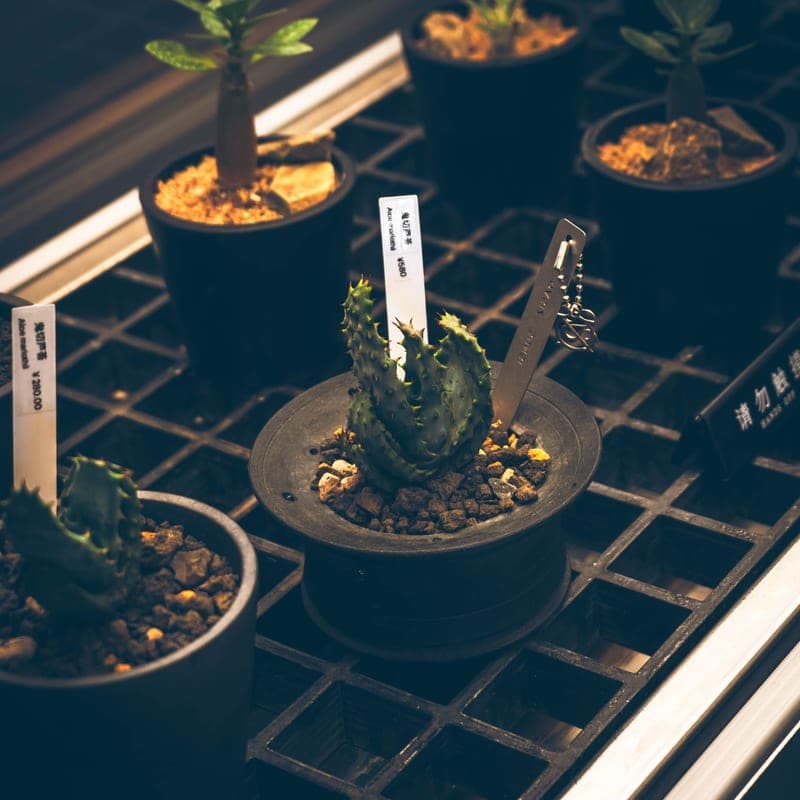
The greenhouse trick, scaled down: a felt mat with one end in a water tray wicks moisture up into every pot standing on it. No mechanism, no batteries, and it works for as long as the tray holds out.
#ad We do not currently hold a live price for this, so we do not show one. How we make money.
Published specification
- Reservoir
- Whatever tray or basin you supply
- Watering method
- Capillary wicking through a felt mat into drainage holes
- Requirement
- Pots must have drainage holes and sit flat on the mat
- Reservoir: Published product descriptions
- Watering method: Published product descriptions
- Requirement: Published product descriptions
Refill interval - computed, not tested
Set by the tray, and the tray is usually the weak point
A 2 liter tray split across six 4-inch pots at 100 ml per thorough watering each is 3.3 waterings per pot, or about 12 to 23 days, if the tray does not evaporate first. In a sunny window it will.
Assumes: Six 4-inch pots on a 2 liter tray, indoors out of direct sun. Light, temperature, humidity, soil mix and season all change how fast a pot dries, so treat this as a planning range and not a guarantee.
What is good about it
- No moving parts at all, so nothing to fail while you are away
- One tray serves every pot standing on it, so cost per plant is trivial
- Bottom watering by design, which keeps the surface dry and discourages fungus gnats
What is not
- Only works with pots that have drainage holes and flat bases
- The mat has to stay in contact with the mix, so no thick layer of decorative gravel
- Evaporation from an open tray in a sunny window can beat the plants to the water
- Constant moisture at the base is a root-rot risk for succulents
Skip this one if
Skip it for succulents and cacti. Continuous bottom moisture is precisely wrong for plants whose published cadence is once or twice a month, and you will come home to rot.
How it scored
- Published specification
- 5.5
- Computed interval
- 7.0
- Reliability risk
- 9.5
- Value for money
- 9.5
- Plant compatibility
- 5.0
- Overall
- 7.4 / 10
Our editorial score, from published specifications and computed intervals. Not a test result. Specification source: Capillary matting retail listings.
Terracotta Watering Spikes, Multipack
Covering a whole windowsill of plants cheaply before a trip
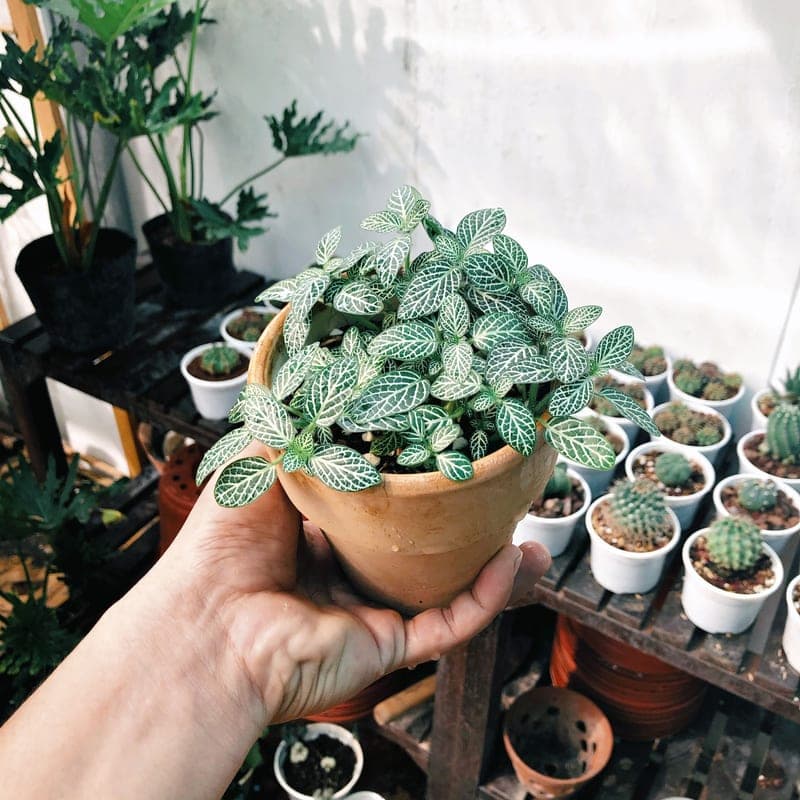
Generic unbranded terracotta spikes, usually four to ten a pack, all working on the same porous-clay principle as Plant Nanny at a fraction of the price. Capacity is whatever bottle you screw on, which is exactly why they beat globes.
#ad We do not currently hold a live price for this, so we do not show one. How we make money.
Published specification
- Reservoir
- Any screw-top bottle you supply
- Common listed capacity claim
- Some listings state 1 liter, giving roughly 7 to 10 days
- Material
- Unglazed terracotta
- Pack size
- Commonly 4, 6 or 10 per pack
- Reservoir: Published product descriptions across the category
- Common listed capacity claim: Published retail listings
- Material: Published product descriptions
- Pack size: Published retail listings
Refill interval - computed, not tested
About 10 to 20 days with a 1 liter bottle on a 6-inch pot
1,000 ml divided by 350 ml per thorough watering of a 6-inch pot is 2.9 waterings. At once or twice a week, that is 10 to 20 days. The commonly listed claim of 7 to 10 days is conservative against that.
Assumes: 6-inch tropical root ball, indoors, 1 liter bottle. Light, temperature, humidity, soil mix and season all change how fast a pot dries, so treat this as a planning range and not a guarantee.
What is good about it
- Cheapest way to cover a lot of pots at once
- Capacity is set by your bottle, so it is a number you actually control
- Same self-throttling porous-clay behavior as the branded versions
What is not
- Quality varies pack to pack, and some spikes are fired too dense to release water usefully
- Thread fit with real bottles is hit and miss on the cheapest packs
- Fragile, so expect to break one pushing it into dense soil
Skip this one if
Skip it if you only have one or two plants to cover. For that, the branded Plant Nanny is a couple of dollars more and far more consistent between units.
How it scored
- Published capacity
- 6.5
- Computed interval
- 8.5
- Honesty of claims
- 8.0
- Value for money
- 9.5
- Build consistency
- 5.0
- Overall
- 7.8 / 10
Our editorial score, from published specifications and computed intervals. Not a test result. Specification source: Terracotta watering spike multipack retail listing.
Plastic Watering Globes, Multipack
Small pots in a household where glass in soil is a bad idea
The plastic version of the same idea, usually sold six or twelve to a pack. They do not break, which is a real advantage in a house with a floor. They hold the same small volume, which is the same real problem.
#ad We do not currently hold a live price for this, so we do not show one. How we make money.
Published specification
- Reservoir capacity
- Not published by the manufacturer
- Material
- Plastic, usually with a spike or stem tip
- Pack size
- Commonly 4, 6 or 12 per pack
- Reservoir capacity: Checked multipack listings, capacity per globe not published
- Material: Published product descriptions
- Pack size: Published product listings
Refill interval - computed, not tested
Same order as a small glass globe: 1 to 2 days on a 6-inch pot
Plastic globes sit in the same size bracket as small glass globes. At a representative 118 ml against 350 ml per thorough watering of a 6-inch pot, that is 0.3 of a watering, or 1.2 to 2.4 days.
Assumes: Small globe volume, tropical houseplant indoors. Light, temperature, humidity, soil mix and season all change how fast a pot dries, so treat this as a planning range and not a guarantee.
What is good about it
- Will not shatter into potting mix, which matters with pets or small children
- Cheap per unit in a multipack, so you can put one in every small pot
- Lighter, so less likely to tip a small pot over
What is not
- Same capacity problem as glass, with none of the looks
- Plastic stems are more likely to crack at the tip than glass is to break
- Capacity per globe is not published on any multipack listing we checked
Skip this one if
Skip it if you were hoping the plastic version somehow holds more. It does not. The advantage is safety, not duration.
How it scored
- Published capacity
- 1.0
- Computed interval
- 2.5
- Build and materials
- 6.5
- Value for money
- 8.0
- Honesty of claims
- 3.0
- Overall
- 5.4 / 10
Our editorial score, from published specifications and computed intervals. Not a test result. Specification source: Homes and Gardens, overview of plant watering globes.
Questions people actually ask
- How long does a capillary mat keep plants watered?
It depends entirely on the tray, not on the mat. Six 4-inch pots on a 2 liter tray computes to about 12 to 23 days at the published tropical watering cadence. The same tray under 6-inch pots is closer to 6 to 12 days. Evaporation from an open tray in a bright window will shorten both figures.
- Do capillary mats work for all plants?
No. They suit plants published in the tropical band that dislike drying out, and seedlings above all. They are wrong for succulents and cacti, whose published cadence is once or twice a month and whose main failure mode is constant moisture at the base of the pot.
- Do pots need drainage holes for a capillary mat?
Yes, and that is not negotiable. The mat has to make contact with the potting mix through the base of the pot. A sealed cachepot, a pot standing on feet, or a thick layer of decorative gravel over the drainage holes will all give you a wet mat and a dry plant.
- Can I use a towel instead of capillary matting?
The physics is the same - any absorbent material with fine continuous pores wicks water. What you give up is consistency: purpose-made matting is engineered to hold and move a predictable amount and to resist rotting when permanently wet. If you are improvising, test it for a week before you rely on it.
- Why is my capillary mat wet but the plant still dry?
Almost always a contact problem. Either the mix is not touching the felt through the drainage holes, or the mat was never soaked before use and has air in its pores rather than a continuous water path. Lift a pot, check whether the mix at the base has darkened, and re-prime by watering each pot from the top once.
Sources